Robert Lucas: Labor Reform and Crisis Recovery
28 Jan 2022 Leave a comment
in applied price theory, applied welfare economics, business cycles, comparative institutional analysis, econometerics, economic growth, economic history, economics of regulation, labour economics, labour supply, macroeconomics, Robert E. Lucas Tags: employment law
The Era of Cheap Renewables Grinds To A Halt
27 Jan 2022 Leave a comment

 Digging for cobalt [image credit: mining.com]
When was that, you may ask. Anyway, whoever thinks there was such a time is about to find out it’s becoming a memory only, according to this article. For one thing, the required mining has been exposed as lacking investor appeal due to its environmental footprint, so to speak. Also, demand is likely to accelerate and the mining industry could well struggle to keep pace.
– – –
Supply chain disruptions, rising raw materials costs, and geopolitical tensions have jolted the price of solar panels, wind turbines, and EV batteries, and some analysts now think that the era of cheap renewable energy is over, says OilPrice.com.
The continual decline in production cost for wind, solar, and EV batteries was touted as the driver of their growing adoption and ultimate takeover of the global grid.
Up until two years ago, there was no other…
View original post 378 more words
Mercedes owner ‘horrified’ new battery will cost him £15,000 – more than the car is worth
27 Jan 2022 Leave a comment
Is the Labor Market Back?
27 Jan 2022 Leave a comment

Last month I asked if travel was back. Air travel has recovered a lot from the depths of the pandemic, but it was still only about 80-85% of pre-pandemic levels.
Labor markets also plummeted during the worst of the pandemic, and have slowly (and sometimes quickly) clawing their way back. But are we back to pre-pandemic levels?
The national unemployment rate is now under 4%, a level which is rarely reached even in the best of times. But there is considerable variation across states.
The latest BLS release of state unemployment data shows that some states are at their historic lows, with one state standing out: Nebraska currently has the lowest unemployment rate a state has ever recorded at 1.7% in December 2021 (the data go back to 1976). Utah is also just below 2% in December — at 1.9% it’s the 2nd lowest in history (after Nebraska, of…
View original post 412 more words
The List of School Choice Hypocrites Is Getting Longer
26 Jan 2022 Leave a comment

When contemplating the issue of school choice, it’s most important to focus on how we can improve educational outcomes, particularly for children from low-income communities.
But, as a fiscal economist, I can’t help thinking about how school choice is also good news for taxpayers.
And I also can’t help but notice that opponents are often very hypocritical.
- Such as Senator Elizabeth Warren of Massachusetts, who utilized private education for her offspring but endlessly fights against school choice for less-affluent families.
- Such as the high-level education bureaucrat from Alexandria, Virginia who sent his kids to private school while opposing educational options for less-affluent families.
 Such as the Democratic congressional candidate whose kids were enrolled in an elite private school, yet attacked his opponent for supporting choice for less-affluent families.
- Such as the head of a teacher union in California who had his daughter in a private school…
View original post 1,331 more words
European Energy Crisis, Updated: Germans Shut Down Perfectly Good Nuclear Plants, Utilities Send Socks to Shivering Customers and Advise Eating Porridge
26 Jan 2022 Leave a comment

As we noted in September, natural gas prices are sky-high in Europe. Coal-burning power plants have been shut down and the windmills have not spun as fast as expected, which led to a drawdown of European natural gas stocks for electric power generation. The Russians are not sending as much gas as hoped through their pipelines, so Europe is scratching around for (very, very expensive) liquified natural gas to be shipped by ship from the U.S. and the Middle East.
As noted, this hurts European economies in various ways. Fertilizer plants and aluminum smelters have shut down because of too-costly natural gas feedstock, consumers are paying much more in utility bills, and some governments are going deeper into deficit by paying subsidies to partially cushion consumers. This energy shortage also makes Europe very vulnerable to Russia, at a time when Putin is menacing Ukraine with invasion.
France derives about
View original post 497 more words
Subsidised Suicide: 2021 Revealed Wind & Solar To Be Unreliable & Utterly Useless
25 Jan 2022 Leave a comment

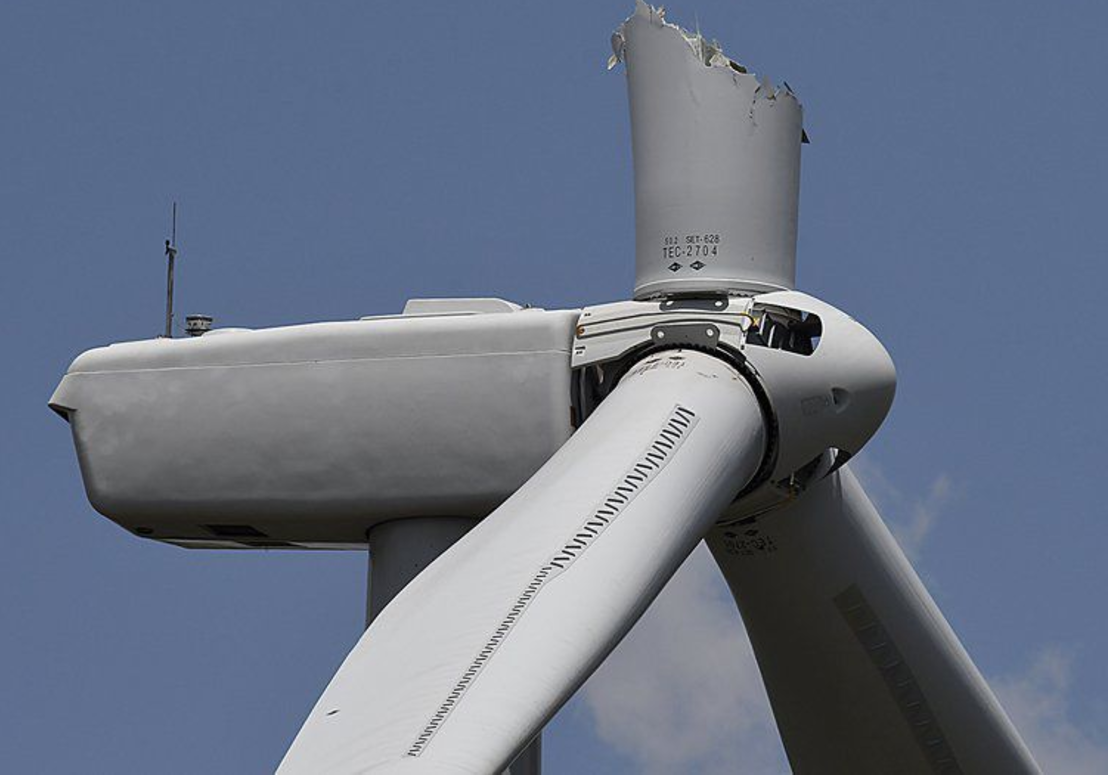
Wind and solar are said to be ‘cheap’, but then so’s talk. 2021 was the year when wind and solar were revealed to be thoroughly useless, thanks to their inherent intermittency and general lack of reliability.
Starting in September last year, for months on end, Europe’s wind power fleet struggle to produce any consistent power of any value, at all. Week after week, wind power output barely registered in Germany and the UK.
Unable to deliver even occasional bursts of power, Europe’s wind industry was relegated to the status of a laughingstock, while Germans and British fired up their old coal-fired power plants, the only thing preventing a wholesale grid collapse.
The renewable energy debacle wasn’t confined to Europe, as Robert Bryce details below.
Seven Top Energy Stories of 2021
Forbes
Robert Bryce
31 December 2021
It has been a chaotic year in the energy sector. And with just a…
View original post 2,146 more words
IMF Bailouts and Moral Hazard
25 Jan 2022 Leave a comment
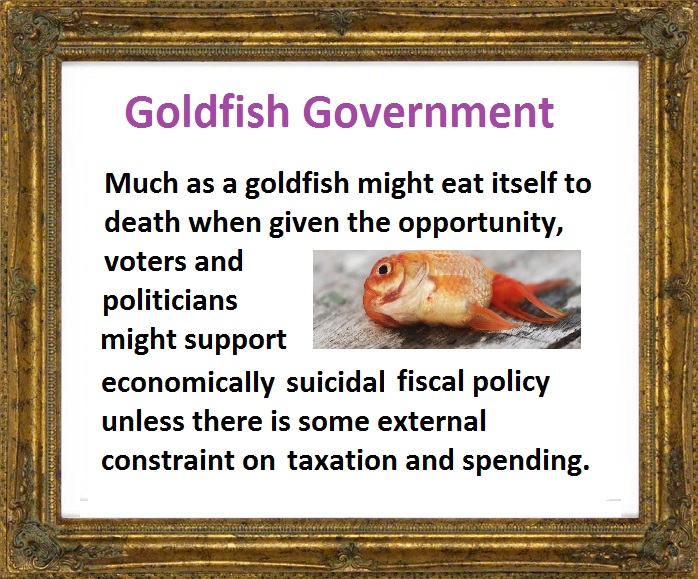
One of the (many) unfortunate tendencies of politicians is that they focus on the short run (i.e., their upcoming reelection battles).
Why is this unfortunate? Because there are some policy changes that may be costly in the short run, but they are nonetheless very worthwhile because they generate big long-run benefits.
- Shifting to a system of personal retirement accounts means trillions of dollars of near-term “transition costs” in order to protect current retirees and older workers, but reform will solve the program’s long-term $40 trillion-plus unfunded liability.
- Messy fights over the debt limit create (almost certainly exaggerated) concerns about potential default, but that potential cost would be trivial compared to the long-run benefits of figuring out how to limit the growing burden of federal spending.
- When bad monetary policy causes a financial bubble or housing bubble, shifting to good monetary policy presumably will…
View original post 637 more words
Carthage Must Be Destroyed by Richard Miles (2010)
24 Jan 2022 Leave a comment

According to legend Carthage was founded in 814 BC. Its history came to an end in 146 BC, the year in which Rome defeated and utterly destroyed it. Richard Miles is a young historian whose book, Carthage Must Be Destroyed, sets out to record everything we know about Carthage, from the legends of its founding, through its umpteen wars, up to the final catastrophe.
Carthage Must Be Destroyed is long, 373 pages of text, 77 pages of notes, 34 page bibliography and a 66-page index = 521 pages.
It is not a social or political history. There is hardly anything about Carthage’s form of government, a reasonable amount about its economy (trade and some agriculture), a surprising amount about the evolving design and metallurgy of its coinage (in the absence of other evidence, coins are a good indicator of cultural changes and economic success), and quite a lot about…
View original post 6,225 more words
Energy High Treason: The ‘Environmental’ Groups Sabotaging Reliable & Affordable Power Supplies
24 Jan 2022 Leave a comment

Outfits like the Sierra Club ought to be charged with High Treason, for trying to destroy reliable and affordable power supplies – supplies critical to peace, prosperity and the survival of Western civilisation.
As to defence, in a high-tech world of internet surveillance, satellite reconnaissance and remotely controlled drones, try protecting the Realm without electricity available around-the-clock.
Over the last 20 years, so-called ‘green’ groups have given up on saving the environment and have directed their hate towards reliable and affordable power.
Openly committed to the destruction of power sources generated with fossil fuel and fervently dedicated to resisting the CO2 emissions-free nuclear power that ought to placate their doom and gloom forecasts about the climate, it’s as if these characters are intent on destroying their own societies, from within.
With the hapless Joe Biden in the White House, and Bernie Sanders and his Squad intent on directing energy policy…
View original post 866 more words
Guest Post: Was Henry IV A Usurper? By Michele Morrical
24 Jan 2022 Leave a comment

 Some medieval English kings have unfairly gotten a bad rap. Others are deservedly vilified (Richard III, I’m talking to you).
Our modern-day perception of English kings is largely constructed from only a few sources. Of course, we have the writings of Shakespeare which were generally based on the real events of English monarchs but had lots of extra drama added in to spice things up. We also have the writings of chroniclers who actually lived in the middle ages, but they aren’t always reliable. Just imagine if you were hired by Henry VIII to write the history of his reign. You would definitely write it in a way that reflected very well on the king. And we have modern-day historians who try to bring the past to life with new interpretations of English monarchs and their new explanations of their controversial actions.
One of the English kings who has received very…
View original post 2,375 more words
To what end?
24 Jan 2022 Leave a comment

It is two years today since my first post about pandemics (and the economy). Rereading it, and another the following week, over the weekend and it was interesting to reflect on what issues had (and hadn’t) sprung to mind. But back then, however fearful people might or might not have been initially, few would have supposed that two years on we’d be labouring under new, and even more onerous, restrictions, and that for the best part of two years few of us would have been able to travel.
I was quite supportive of the need for restrictions, especially at the border, for quite a long time. Even last year, when the government was so slow to roll out the vaccine, doing everything possible to keep the virus out would have seemed appropriate (ie more than the government actually did). As for domestic restrictions, in both 2020 and 2021 the…
View original post 1,766 more words


Recent Comments