Should We Abolish Fossil Fuels to Stop Global Warming? A Soho Forum Debate
01 Nov 2021 1 Comment
in applied price theory, applied welfare economics, development economics, energy economics, environmental economics, global warming Tags: carbon tax, carbon trading, climate alarmists, pessimism bias
Edward Glaeser on Survival of the City
01 Nov 2021 Leave a comment
in applied price theory, applied welfare economics, comparative institutional analysis, development economics, economic history, economics of bureaucracy, economics of crime, economics of education, economics of regulation, entrepreneurship, human capital, income redistribution, industrial organisation, international economics, labour economics, labour supply, law and economics, occupational choice, poverty and inequality, property rights, Public Choice, public economics, rentseeking, survivor principle, transport economics, urban economics
Renewables Retreat: Europe’s Big Wind Power Drought Provides Major Reality Check
31 Oct 2021 Leave a comment


All of a sudden coal-fired power is back in vogue and everybody wants a nuclear power plant: what a difference a burst of calm weather can make.
The world’s ‘love’ affair with wind power was never going to last. It was always going to be like unveiling a mystery bride on the wedding night to find a toothless crone, instead of the nubile young thing that was promised to the hopeful groom.
As buyer’s remorse takes hold, it’s time to lift the veil and take a look at just how insane our energy policies have become, thanks to a heady mix of starry-eyed ideology and wishful thinking.
Matthew Sheahan takes a look at Europe’s wind power disaster from an Australian perspective.
Aussie Taxpayers to Subsidise Renewables and Coal to Keep the Lights On
Advance Australia
Matthew Sheahan
10 September 2021
Although millions have fallen for the nonsense that intermittent solar…
View original post 617 more words
Richard Tol argues that – cost wise – emission reduction can be modest
31 Oct 2021 Leave a comment
in applied price theory, applied welfare economics, comparative institutional analysis, development economics, econometerics, economic history, energy economics, environmental economics, global warming, growth disasters, growth miracles Tags: carbon tax, carbon trading
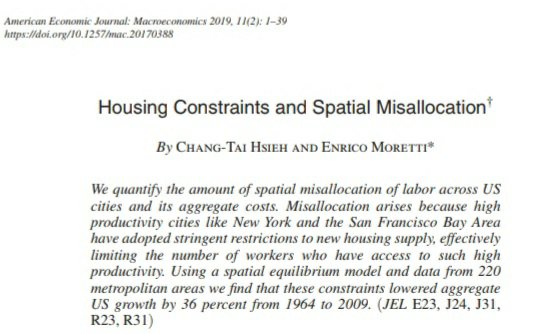
The great cost of NIMBYism
31 Oct 2021 Leave a comment
in applied price theory, applied welfare economics, econometerics, economic growth, economic history, economics of regulation, labour economics, labour supply, macroeconomics, politics - USA, urban economics Tags: housing affordability, land supply, zoning
Europe’s Epic Renewable Energy Fail Makes Transition to Nuclear Power Truly Inevitable
30 Oct 2021 Leave a comment

The fastest way to get people thinking about electricity, is to deprive them of it. Europe’s power pricing and supply calamity has sharpened thinking and provided a golden opportunity for engineers and free-market economists to wrest back control from ideologues and renewable energy rent-seekers.
Until the Big Calm hit Western Europe last month – causing wind power output to plummet across the continent and the UK – all the talk was about a purportedly ‘inevitable transition’ to an all wind and sun powered future.
Well, things aren’t looking so ‘inevitable’ for wind and solar, after all. Grid managers have been left scrambling for what little gas might be available to fuel open cycle gas turbines; and recently mothballed coal-fired power plants are being desperately pressed back into action, both in Germany, and in the UK.
Only those countries with substantial nuclear power generation capacity seem untroubled. Until recently, the French…
View original post 1,670 more words
The Global Warmists didn’t think this through
30 Oct 2021 Leave a comment

Apparently some activist group on Twitter, called “DCist” recently started running Global Warming Catastrophe stories to support the great COP26 conference in Scotland.
That’s the conference that has seen hundreds of political and bureaucratic worthies spewing thousands of tons of CO2 into Mother Earth’s atmosphere by flying from all over the world to a place where they can discuss how they can stop spewing meagatonnes of CO2 into Mother Earth’s atmosphere.
Here’s one example.
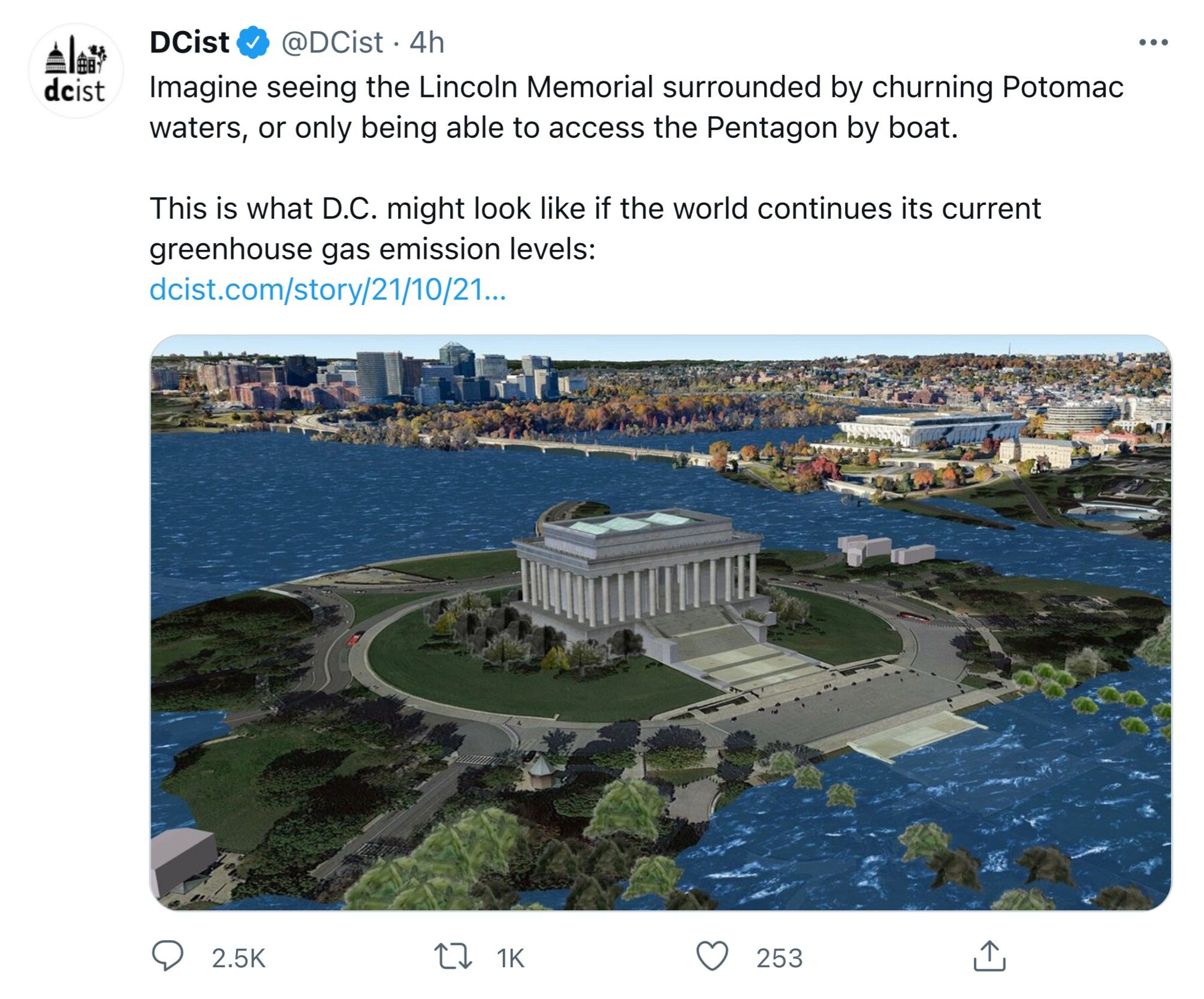
I said many years ago in these debates that people telling me with horror that “The great cities of the world like New York, Washington D.C, San Francisco and LA, will be flooded”, was not only not going to get me onboard the AGW-action train but produce the opposite reaction: “You mean I get to burn fossil fuels AND destroy Leftist enclaves? SIGN ME UP”.
And so…
This thread is even better for responses.
View original post 165 more words
David Friedman BSU Lecture – Part 2/4
30 Oct 2021 Leave a comment
in applied price theory, applied welfare economics, comparative institutional analysis, constitutional political economy, David Friedman, economics of crime, economics of education, law and economics, property rights
People (Ordinary, that is) need to change their diet and flying habits to help planet, chief scientific adviser Sir Patrick Vallance warns
30 Oct 2021 Leave a comment
Empire Lite: Nation-Building in Bosnia, Kosovo and Afghanistan by Michael Ignatieff (2003)
29 Oct 2021 Leave a comment

Nobody likes empires but there are some problems for which there are only imperial solutions. (p.11)
Nations sometimes fail, and when they do only outside help – imperial help – can get them back on their feet. (p.106)
A bit of biography
In the 1990s Ignatieff managed to combine being a tenured academic, a journalist making extensive foreign trips, and a TV presenter. Without planning it, Ignatieff fell into a rhythm of publishing every 2 or 3 years short books chronicling the unfolding of the failed states he visited, and the chaos which engulfed some countries after the end of the Cold War.
These short but engaging studies build up into a series of snapshots of the new world disorder unfolding through the 1990s and into the post 9/11 era, mixed with profound meditations on the morality of international affairs and humanitarian intervention:
- Blood and Belonging: Journeys Into the New…
View original post 5,269 more words
Mad Max Rides Again: Post-Renewables Europe Desperate For Fossil Fuels
29 Oct 2021 Leave a comment

Western Europe’s wind drought has them scrambling for fossil fuels, like their lives depend upon it, and it’s as if they didn’t see it coming! Who would ever have thought that the wind might stop blowing for extended spells?
The almost dystopian panic brings to mind George Miller’s dystopian post-Apocalypse action-thriller, Mad Max 2.
Mel Gibson’s Max Rockatansky – aka the Road Warrior – is an ex-cop, outcast and loner who had been roaming the wastelands for years, until he stumbles upon the desert compound and refuge of a clan of misfits and renegades (the Settlers), defending themselves against a marauding mob of cutthroats, led by the evil Lord Humungus (the Marauders).
Max manages to enter the compound and escape Humungus and his band of vicious thugs, for a time.
Max is already alive to the fact that the compound houses a petrol refinery and also, apparently, holds fuel…
View original post 554 more words
Organish Food and the Problem of Cult Cultivation
29 Oct 2021 Leave a comment

A not-too-distant dystopia
I often tell my students the worst career choice they can make is one where they are not inspired by their professional activity and unable to follow their passions. Then it becomes just a job for some extrinsic worth (eg, paying the rent). This is how European farmers must be feeling when activist fear campaigns have led to political and market pressure to produce more organic food. They don’t believe that organic is safer, they see the lower yields, increased infestations and a poverty of options. They would be forced to switch to growing organic to simply try to pay the rent. Unlike the organic activist farmers who loudly and proudly believe they are changing the world by bringing their cult beliefs into the cultivation process (with each horn they lovingly fill with dung), the conventional farmer, forced by market forces to switch to organic, is merely…
View original post 1,175 more words
THE AMBASSADOR: JOSEPH P. KENNEDY AT THE COURT OF ST. JAMES, 1938-1940 by Susan Ronald
29 Oct 2021 Leave a comment

:max_bytes(150000):strip_icc():format(webp)/portrait-of-the-kennedy-family-at-home-51379912-217f87c014704f659997064087973d4f.jpg)
Anyone familiar with the life of Joseph P. Kennedy, the father of John, Robert, and Edward Kennedy is aware of the flaws in his character and life story. These elements of his biography have been fully explored in studies like David Nasaw’s THE PATRIARCH: THE REMARKABLE LIFE AND TURBULENT TIMES OF JOSEPH P. KENNEDY, Richard J. Whalen’s THE FOUNDING FATHER: THE STORY OF JOSEPH P. KENNEDY, and Doris Kearns Goodwin’s THE FITZGERALDS AND THE KENNEDYS: AN AMERICAN SAGA. Kennedy’s life story is punctuated with “serial philandering,” a relationship with organized crime, his years as a Wall Street operator highlighted by repeated insider trading, lobotomizing his daughter Rosemary, an appeaser’s isolationist view of the world that led to his opposition to the Truman Doctrine, the Marshall plan, a cozy relationship with J. Edgar Hoover, and a world view that saw fascism as a means of overcoming a…
View original post 1,446 more words


Recent Comments