06 Oct 2021
by Jim Rose
in applied price theory
 Great Books Guy
Traffic (2000) Director: Steven Soderbergh
★★★☆☆
Based on a 1989 British television show called Traffik, a masterpiece theater series that tracked the movement of heroin from Turkish fields to the streets of Europe, Steven Soderbergh’s 2000 film Traffic explores the global dilemma of the international drug trade as it affects various people inside and outside the United States. The unique cinematography and editing in Traffic shows a remarkably bipolar world: the color tint in Mexico is yellow to convey a dusty desert akin to the wild west, whereas in the United States scenes are color-tinted blue to indicate cold, sterile, hopeless environs. Scenes in Mexico are portrayed as lawless and dangerous, whereas scenes in the U.S. are portrayed as calloused and unforgiving. Soderbergh won an Academy Award for Best Director for Traffic, and the film itself was nominated for Best Picture.
In the film we meet two Mexican…
View original post 204 more words
06 Oct 2021
by Jim Rose
in applied price theory
Great Books Guy
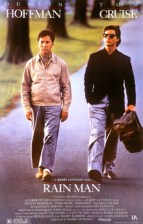
Rain Man (1988) Director: Barry Levinson
“Of course when they bring the pancakes after the maple syrup it’ll be too late…”
★★★☆☆
Rain Man is a bittersweet comedy/drama that occurs mainly on the open road. It is about the troubled relationship between two brothers, Raymond Babbitt (Dustin Hoffman) a high-functioning autistic savant who lives at the Wallbrook Mental Institution and whose life is timed by a rigid series of schedules in order to maintain psychological stability; and a slick Los Angeles hotshot named Charlie Babbitt (Tom Cruise) who is only interested in money. When Charlie Babbitt’s father dies he learns he has merely inherited a classic car and little else, and instead the bulk of his father’s fortune totaling $3M has been placed in a trust held by the Wallbrook Institution. Charlie travels across the country to the Wallbrook Institution where he discovers his previously unknown brother, Raymond.
When Charlie…
View original post 219 more words
06 Oct 2021
by Jim Rose
in applied price theory, applied welfare economics, Armen Alchian, comparative institutional analysis, economics of information, economics of regulation, Gary Becker, George Stigler, industrial organisation, law and economics, Ronald Coase, Sam Peltzman, survivor principle
05 Oct 2021
by Jim Rose
in applied price theory
 Point of Order
The Parliamentary seats put aside especially for Maori – they provided Labour with five MPs at the 2020 general election – are among the issues that are off limits during something described by RNZ as “a sweeping review of the country’s electoral laws”.
It will include voting age, the three-year term, party funding and the “coat-tailing” rule.
But the government has been careful to ensure the seven Maori electorates (although it lost two of them to the Maori Party at the last general election) aren’t swept away during this clean-up of our electoral system.
As Faafoi explained without the hint of a blush, the review will not consider changes to Māori seats, local elections, changing from the MMP system, or fundamental constitutional changes such as becoming a republic or having an upper house.
Moreover, he said some rule changes – he described these as “targeted” ones, such as changes to…
View original post 971 more words
04 Oct 2021
by Jim Rose
in applied price theory
 Point of Order
In Germany that is.
Age before beauty they say. But after last week’s inconclusive election in Germany it’s the forty-something leader of the Green party, Annalena Baerbock, and her generational compatriot, Christian Lindner of the market liberal Free Democrats (FDP), who are making the running in coalition negotiations, leaving the sexagenarians who head the Christian and Social Democrats out in the cold – for now.
View original post 580 more words
04 Oct 2021
by Jim Rose
in applied price theory
 STOP THESE THINGS
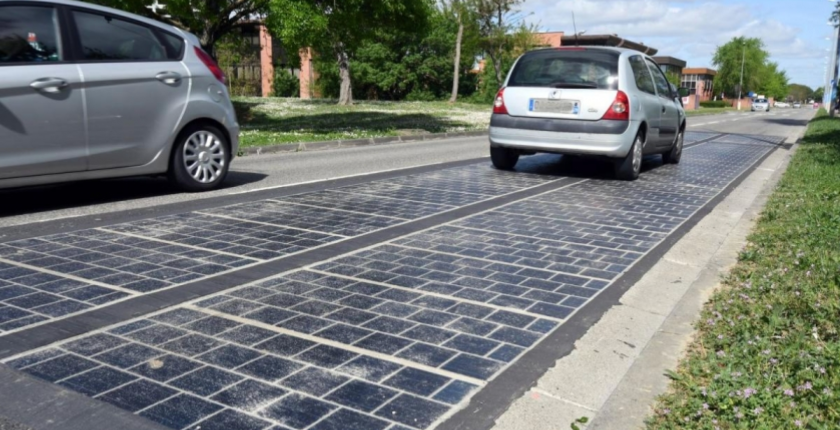
Whatever happened to solar roadways? A few years back, embedding PV cells into road surfaces was going to be the next big thing. And then, all of a sudden, it wasn’t.
True it is, that the wind and solar cult attracts all sorts of cranks and crackpots, promoting all sorts of harebrained schemes and subsidy-backed scams. But, as Sarah Marquart explains below, there were a host of reasons why this one would never roll.
Understanding Solar Roadways: An Engineering Failure of Epic Proportions
Interesting Engineering
Sarah Marquart
4 March 2021
Remember Solar Roadways? As a fresh reminder, Solar Roadways became massively viral in 2014 after claiming to be the end-all solution to the global energy crisis. The idea was simple: to implant solar panels into roads to produce electricity. The panels were allegedly also going to light up the roads with different LED patterns, replacing painted lines. For the winter, heating…
View original post 1,904 more words
03 Oct 2021
by Jim Rose
in applied price theory
STOP THESE THINGS

Wind power is, by definition, a wholly weather-dependent power source. So, it should come as no surprise that – whenever a burst of calm-weather hits – those charged with responsibility for delivering power, as and when we need it, scramble to obtain it from any convenient and, more importantly, reliable source. Which is why Germany and the UK have reverted to reliance on their ‘dreaded’ and purportedly ‘dirty’ coal-fired power plants.
Back in January this year, the Germans mandated the closure of 11 coal-fired power plants (with a total combined capacity of 4.7GW). But the legislative shutdown barely lasted a week, with all of those plants being hastily brought back online in response to an outbreak of, you guessed it, calm weather.
Likewise, the Brits have been forced to bring old (thought to be redundant) coal-fired power plants back into service. Again, in response to a burst of calm weather.
View original post 828 more words
03 Oct 2021
by Jim Rose
in applied price theory
Great Books Guy
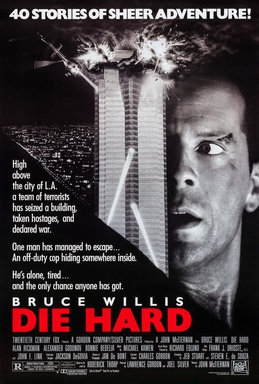
Die Hard (1988) Director: John McTiernan
“Come Out To The Coast, We’ll Get Together, Have A Few Laughs…”
★★★☆☆
Die Hard is a guilty pleasure movie, another amusing thriller from John McTiernan. It celebrates the great American working class hero, a lone everyman struggling against a sea of incompetence and bureaucracy -and the movie takes place on Christmas no less! It was widely expected to fail, and the decision to hire Bruce Willis, previously a television actor, for $5M against favored actors Arnold Schwarzenegger or Sylvester Stallone drew unfavorable press , but Die Hard has since become a Christmas “classic.” The story is based on a 1967 novel by Roderick Thorp called Nothing Lasts Forever.
Die Hard stars Bruce Willis, in his career-launching role as John McClane, a street-wise New York City cop who is flying out to Los Angeles for the holidays to salvage his collapsing marriage. His…
View original post 355 more words
03 Oct 2021
by Jim Rose
in applied price theory
 European Royal History
Richard III (October 2, 1452 – August 22, 1485) was King of England and Lord of Ireland from June 26, 1483 until his death in 1485. He was the last king of the House of York and the last of the Plantagenet dynasty. His defeat and death at the Battle of Bosworth Field, the last decisive battle of the Wars of the Roses, marked the end of the Middle Ages in England.
Richard was born on 2 October 1452, at Fotheringhay Castle in Northamptonshire, the eleventh of the twelve children of Richard Plantagenet, 3rd Duke of York, and Cecily Neville, and the youngest to survive infancy. His childhood coincided with the beginning of what has traditionally been labelled the ‘Wars of the Roses’, a period of political instability and periodic open civil war in England during the second half of the fifteenth century, between the Yorkists, who supported Richard’s father…
View original post 1,378 more words
03 Oct 2021
by Jim Rose
in applied price theory, applied welfare economics, comparative institutional analysis, development economics, economic history, economics of bureaucracy, economics of regulation, energy economics, environmental economics, global warming, growth miracles, international economic law, International law, politics - Australia, politics - New Zealand, politics - USA, Public Choice, public economics
Tags: carbon tax, carbon trading, climate clubs, free riding, international public goods
02 Oct 2021
by Jim Rose
in applied price theory, comparative institutional analysis, development economics, economic history, economics of bureaucracy, energy economics, environmental economics, global warming, international economic law, International law, Public Choice
Tags: carbon tax, carbon trading
02 Oct 2021
by Jim Rose
in applied price theory
 The Logical Place
by Tim Harding
(An edited version of this article was published in
“The Skeptic” Vol 32, No. 4, December 2012)
In game theory, ‘zero-sum’ describes a game where one player’s gain is a loss to other players; and the total amount of the available money or playing chips is fixed. A logical fallacy often occurs when this particular game theory is applied to real life economic or political discussions amongst non-economists – leading to false beliefs that the amount of wealth or jobs in the economy is fixed.
This mistaken view is illustrated by expressions such as ‘a larger slice of the pie’, which imply that ‘the pie’ has a fixed size and that net welfare cannot be improved by growing a bigger pie. That is, that people can only become richer by making others poorer; or that increasing labour productivity or immigration causes unemployment. In economics, this is…
View original post 373 more words
Previous Older Entries Next Newer Entries



Recent Comments