Essential Coase: The Problem of Social Cost
30 Sep 2021 Leave a comment
in applied price theory, comparative institutional analysis, environmental economics, history of economic thought, industrial organisation, law and economics, property rights, Public Choice, Ronald Coase
Scotland’s ‘Green’ Jobs Revolution Implodes: Wind Turbine Manufacturer Sacks Hundreds
29 Sep 2021 Leave a comment


A job that depends on subsidies, isn’t really a job, at all, it’s a make-work scheme cooked up by closet socialists. And, so it is, with the so-called “green jobs” that self-evidently exist, and only exist, while the renewable energy subsidies keep flowing.
There is no natural market for intermittent wind or solar power, because neither of them can be delivered as and when power consumers need power. In the absence of massive subsidies, there would be no wind or solar ‘industries’, so-called.
So, it should come as no surprise that the jobs “created” in association with those industries are an easy come, easy go, kind of affair.
The only thing ‘inevitable’ about the ‘transition’ to an all wind and sun powered future is bankruptcy for wind and solar outfits, the moment the subsidies get cut.
Of course, before these outfits wind up in insolvency, they generally attempt to shed…
View original post 963 more words
The Great Texas Freeze of 2021
29 Sep 2021 Leave a comment

In February 2021, the temperature in Texas dropped below zero. Not a big deal, right? Texas is the energy state. Just go home, turn on the heat, and hunker down. That’s how it should have gone. But it didn’t. What happened, and why?
When the ACLU has lost itself
29 Sep 2021 Leave a comment

The ACLU is the American Civil Liberties Union, and the first I’d heard about them was a reference in the 1980 movie, The Blues Brothers. It’s the scene where the American Nazi party is allowed to do a march in Skokie, Illinois (then with a large Jewish population, including many survivors of the Holocaust) and Jake and Ellwood charge their car at the protestors, forcing many to jump off a low bridge into a stream.
The real life event came as a result of the ACLU actually fighting in court for the right of the Nazi party to hold the march. It is considered to be a landmark US case on freedom of speech and freedom of assembly.
Sadly, the ACLU is not that organisation any longer. There have been internal documents in recent years where they have hedged on defending the US Bill of Rights first amendment, not…
View original post 358 more words
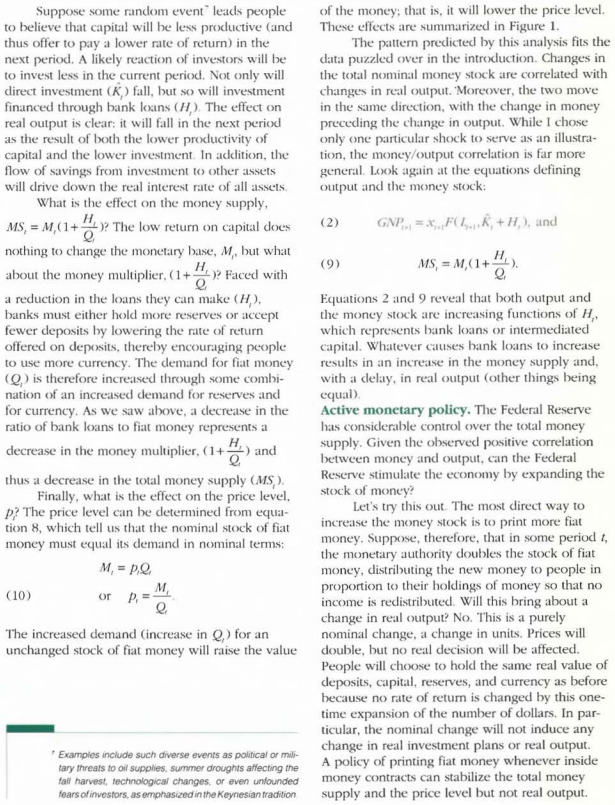
Scott Freeman on the money/output correlation.
29 Sep 2021 Leave a comment
in applied price theory, business cycles, economic growth, financial economics, history of economic thought, macroeconomics, monetarism, monetary economics
Thomas Sowell’s Maverick Insights on Race, Economics, and Society
29 Sep 2021 Leave a comment
in applied price theory, comparative institutional analysis, discrimination, economic history, economics of bureaucracy, economics of education, economics of love and marriage, George Stigler, history of economic thought, human capital, income redistribution, labour economics, labour supply, law and economics, liberalism, Marxist economics, Milton Friedman, occupational choice, poverty and inequality, Public Choice, public economics, rentseeking, Thomas Sowell, urban economics
Essential Coase: Who Was Ronald Coase?
29 Sep 2021 Leave a comment
in applied price theory, comparative institutional analysis, Ronald Coase
Wind Farm Noise Nuisance Case Uncovers Wind Industry’s Culture of Lies & Deceit
28 Sep 2021 Leave a comment
The wind industry’s entrenched culture of lying and deceit is well-known around the globe. Uncovering precisely what these characters get up to is more of a challenge.
A noise nuisance case being pursued by farmers in the Victorian Supreme Court against the operator of the Bald Hills wind farm (our post here) is revealing a whole lot more than the wind industry is ever open to admit.
The operator’s noise consultant, Marshall Day Acoustics has been destroying and deleting unhelpful noise data that it has gathered from non-compliant wind farms across Victoria for years, including at Bald Hills, which, we are told is one reason why it decided to not call any of its staff to give evidence during the trial. The usual ‘dog-ate-my-homework’ excuse used by MDA whenever its noise data disappears was, apparently, deemed unlikely to cut it in front of a Supreme Court Judge.
But…
View original post 2,483 more words
Claudia Goldin on Gender Equality in the Labor Market
28 Sep 2021 Leave a comment
in applied price theory, discrimination, economic history, economics of education, gender, history of economic thought, human capital, industrial organisation, labour economics, labour supply, occupational choice Tags: gender wage gap
Stephen Machin: Changes in Labour Market Inequality
28 Sep 2021 Leave a comment
in applied price theory, economic history, economics of education, entrepreneurship, health and safety, history of economic thought, human capital, industrial organisation, labour economics, labour supply, occupational choice, poverty and inequality, survivor principle Tags: top 1%
Adventures in Energy Economics | Robert P. Murphy
28 Sep 2021 Leave a comment
in applied price theory, Austrian economics, energy economics, environmental economics, global warming
With MMP the politicians have to decide what Germany has decided
27 Sep 2021 Leave a comment

Voters in the German federal election on Sunday had the opportunity to sweep away the detritus of 16 years of compromises from retiring Chancellor Angela Merkel.
The Green party led in the opinion polls by a good margin earlier in the year. Only a few days ago, the Guardian dared to dream of a red-blooded left-wing coalition between Social Democrats, Greens and the former communist Left Party united by desire for higher taxes, more pernickety controls and a slug of anti-Americanism.
In the end, the German voters did what they have done for much of the post-war era, giving victory to the parties of the right (acknowledging that these labels seem to be less meaningful these days).
View original post 427 more words
Did the Tohunga Suppression Act undermine Māori culture and wellbeing, enabling disharmony and inequity to persist until now?
27 Sep 2021 Leave a comment
The Tohunga Suppression Act was supported by all Māori MPs and received Royal Assent on 24 September 1907. It was followed in 1908 by The Quackery Prevention Act, which banned publication of untruthful claims about medicines.

In an opinion piece We must speak out against racism the Race Relations Commissioner Meng Foon stated that “Measures such as the 1907 Tohunga Suppression Act were introduced, undermining Māori culture and wellbeing, and enabling disharmony and inequity to persist until now.” Does the evidence support this contention?
In pre-European times, tohunga were expert practitioners of rongoā Māori,the traditional Māori healing system encompassing herbal remedies, physical therapies and spiritual healing. However, European contact and migration brought new diseases and a need for new knowledge to treat them. Some tohunga continued with their traditional practices and wove European health knowledge into them. However, others did not adapt, and fraudulent “tohunga” emerged who lacked both traditional and European knowledge. As with Pākehā charlatans and “quacks”, they preyed on people’s superstitions and credulity and offered to “cure” all kinds of illnesses, often with disastrous results.
Key advocates for the Tohunga Suppression Act were…
View original post 1,096 more words


Recent Comments