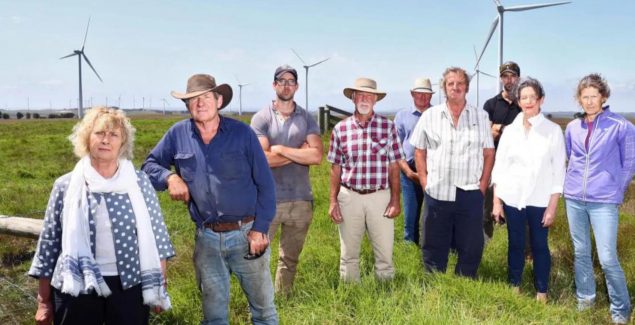
Morality Fail: Costly & Unreliable Wind & Solar Are Being Used To Keep Millions In Poverty

stopthesethings's avatarSTOP THESE THINGS

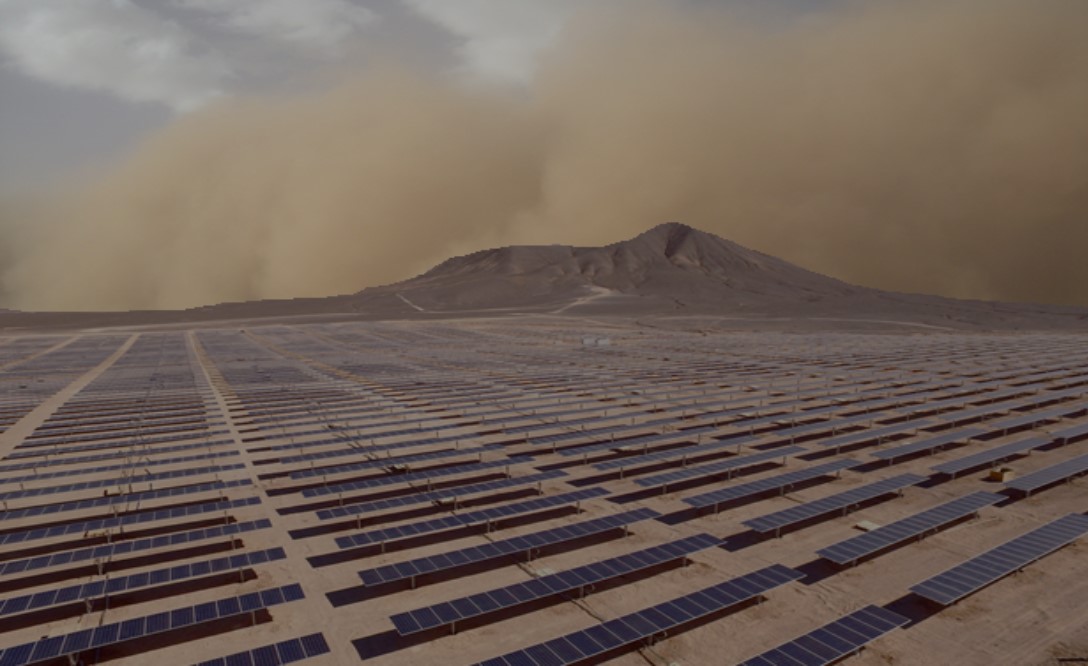
Electricity is a civilising force; once seen as a common good to be provided universally to those without it, but no longer. For the impoverished power is a path out of poverty and not just a means of lighting homes and cooking meals.

The political class that trumpet global warming as the singular threat to life on earth, clearly hate the poor.

Their obsession with subsidising expensive and utterly unreliable wind and solar has already put electrical power out of the reach of the poorest and first world countries, and would, if they could, render it an exclusive preserve of the upwardly mobile and unseemly rich: ie, themselves.

The path out of poverty is always and everywhere about reliable and affordable energy. And entrenched poverty is best explained by its absence.

Want to know how important electricity is to modern life? Try living a comfortable and civilised life without it.

View original post 3,848 more words

INFAMY: THE SHOCKING STORY of the JAPANESE INTERNMENT IN WORLD WAR II by Richard Reeves

szfreiberger's avatarDoc's Books

(The message American Japanese were confronted with after Pearl Harbor)

At a time when Donald Trump harangues the American electorate with his views on prohibiting Muslims from entering the United States in reaction to the horrific attack in San Bernardino, CA we find the Republican candidate as well as political pundits pointing to Franklin D. Roosevelt’s Executive Order 9066 which created “internment camps” for American Japanese during World War II.  If we are to accept what Trump says, then FDR’s actions set a precedent for going against the freedom of religion amendment to the United States Constitution.  With the repeated reference to the plight of American Japanese during the war on cable and network news it is propitious that veteran journalist and biographer, Richard Reeves’ latest book, Infamy: The Shocking Story of the Japanese Internment in World War II has recently been published.  The story that Reeves unveils was not…

View original post 1,757 more words

FACING THE MOUNTAIN: A TRUE STORY OF JAPANESE HEROES IN WORLD WAR II by Daniel James Brown

szfreiberger's avatarDoc's Books

During World War II the United States government violated its founding principles by incarcerating over 120,000 Japanese-Americans in “internment camps,” a euphemism for “concentration camps.” Families were separated, homes and businesses lost, and possessions sold for little value as people were sent to live in barracks in Wyoming, Colorado, California, Arkansas, and Utah. Of those sent to the camps, two-thirds were American citizens. Despite this treatment Japanese-Americans reacted to the bombing of Pearl Harbor in the same manner as their fellow countrymen with thousands either enlisting or being drafted into the US military. The treatment of these American citizens domestically and the courage and defiance shown by Japanese-American soldiers in Europe is the subject of Daniel James Brown’s latest book FACING THE MOUNTAIN: A TRUE STORY OF JAPANESE HEROES IN WORLD WAR II. Brown the author of the award winning THE BOYS IN THE BOAT: NINE AMERICANS AND THEIR…

View original post 1,214 more words

Policy Lessons from Marijuana Legalization

Dan Mitchell's avatarInternational Liberty

Like most libertarians, I favor drug legalization for the simple reason that people should have control over their own bodies, even if they’re doing something stupid.

But I’ve never claimed legalization is a zero-cost policy. Instead, as I wrote in 2018, “I think the social harm of prohibition is greater than the social harm of legalization.”

These two flowcharts both make the same point about why the War on Drugs is foolish.

Apparently, voters and politicians are beginning to get the message. More and more states have moved in the direction of legalization.

Have the results been positive?

In an article for National Review, Aron Ravin has a very critical assessment of legalization.

…the old-fashioned, party-pooper folk with whom I find myself sympathizing tend to fall back on one point: Weed is unhealthy. Since 2002, the proportion of Americans twelve and older who reported having used marijuana in…

View original post 1,000 more words

High price and range anxiety stops Germans from buying e-cars

oldbrew's avatarTallbloke's Talkshop

vw-id-promo VW ID. model

When it comes to personal transport Germans aren’t exactly rushing to play along with the infantile mythology of climate neutrality, contrary to the wishes of their supposedly ‘green’ leaders. Sales targets look increasingly like wishful thinking.
– – –
Germany wants to have 10 million electric cars on the road by 2030 in a bid to meet its climate targets, says DW.com.

But it’s not just the cost and limited range that’s deterring drivers to go along with this ambitious plan.

Germany’s long-established car industry is embarking on a historic transformation to try to shrink its carbon footprint.

View original post 315 more words

De-commission the Climate Change Commission

Matt Burgess's avatarGreat Society

Tim Hazeldine writes ($) in the Herald today on how the Climate Change Commission has gone so far off-target. It is hard to excerpt, the whole article is excellent.

Our climate change policy should be solely about climate change. “You can’t kill two birds with one stone” is a cliche but it is not trite. It is true and important in almost every policy context. Yet the Commission considers it should in future “consider broader well-being factors, like eradicating poverty, safeguarding food security and addressing other environmental outcomes”. Wrong, wrong, wrong and wrong.

Exactly. It is not that those other outcomes are undesirable. But insisting emissions policies also solve those other problems puts our emissions targets at risk. Allowing other objectives into the decision making carries a huge emissions penalty. Second-best emissions policies have roughly no effect on emissions.

It is farmers, other businesses, entrepreneurs, innovators, inventors, scientists, workers, and…

View original post 357 more words

Keep climate policy focused on the social cost of carbon

Matt Burgess's avatarGreat Society

A new paper in the journal Climate Policy says “Keep climate policy focused on the social cost of carbon”. Its abstract:

In the context of climate change, the application of cost-benefit analysis to inform mitigation policies can help to achieve the best outcomes and avoid the worst: spending trillions of dollars but failing to get the job done.

The job, of course, is to cut emissions.

The costs of a climate policy are the abatement costs of reducing emissions of carbon dioxide (CO2) (or other greenhouse gases). The standard measure of the benefits of a climate policy is the social cost of carbon (SCC), which measures the avoided economic damages associated with a metric ton of CO2 emissions. Recently, however, there have been calls for an alternative approach to policy evaluation that ignores the benefits of avoided climate damages and instead focuses only on minimizing the compliance costs of a given…

View original post 120 more words

GM  recall of all Chevy Bolts due to battery fire risk likely to cost $1 billion

oldbrew's avatarTallbloke's Talkshop

Chevy_Bolt21 Chevy Bolt [image credit: GM Authority] No hope of ever breaking even on that model now, if there was any to start with. Another edition of the recurring lithium-ion safety issue in the world of EVs: battery ’emissions’. 
– – –
DETROIT (AP) — General Motors is recalling all Chevrolet Bolt electric vehicles sold worldwide to fix a battery problem that could cause fires.

The recall raises questions about lithium ion batteries, which now are used in nearly all electric vehicles.

President Joe Biden wants to convert 50% of the U.S. vehicle fleet from internal combustion to electricity by 2050 as part of a broader effort to fight climate change.

View original post 91 more words

Government, Business, and American Economic History, Part 2 | Murray N. Rothbard

Reflections on The Age of Empire: 1875 to 1914 by Eric Hobsbawm (1987)

Simon's avatarBooks & Boots

Critique of Hobsbawm’s Marxisant approach

In the third of his mighty trilogy of histories of the long nineteenth century, The Age of Empire: 1875 to 1914, as in its two predecessors, Hobsbawm makes no attempt to hide his strongly Marxist point of view. Every page shouts his contempt for the era’s ‘bourgeois’ men of business, its ‘capitalists’ and bankers, the despicable ‘liberal’ thinkers of the period and so on. From time to time his contempt for the bourgeoisie rises to the level of actual abuse.

The most that can be said of American capitalists is that some of them earned money so fast and in such astronomic quantities that they were forcibly brought up against the fact that mere accumulation in itself is not an adequate aim in life for human beings, even bourgeois ones. (p.186)

Replace that final phrase with ‘even Jewish ones’ or ‘even Muslim ones’…

View original post 7,324 more words

Net zero switch threatens new oil shock, warns top economist

oldbrew's avatarTallbloke's Talkshop

energy1This economist clearly has faith in IPCC climate models and theories, but he may be in for his own shock by putting all his climate eggs in the carbon dioxide emissions basket. Meanwhile, brace for economic pain.
– – –
The vast expense of ending global warming [Talkshop comment: reality may differ] will trigger a blow to the world economy that is as damaging as the 1974 oil shock, a top international economist has warned. The Telegraph reporting.

A scramble to cut carbon emissions is likely to send energy prices rocketing and hold back living standards for years to come, Jean Pisani-Ferry said in a report published by the Peterson Institute for International Economics.

Mr Pisani-Ferry – a public policy expert who has served in senior economic roles in the European Union for decades – said that although the bill is both manageable and necessary to halt climate change…

View original post 234 more words

Funding for lending

Michael Reddell's avatarcroaking cassandra

I was, conditionally, sympathetic to the Funding for Lending programme the Reserve Bank put in place late last year. At the time they thought (and it seemed plausible they were right) that more monetary stimulus was needed, and – through their own neglect and incompetence over several years – they asserted that a negative OCR could not yet be implemented. The announcement of the scheme clearly narrowed the gap between wholesale and retail interest rates, lowering the latter. This chart from this week’s MPS is one way of illustrating the point.

FFL

The effect was achieved by making it known the scheme was coming, and then available. Relatively little was actually borrowed, especially early in the piece.

The scheme works by offering funding to banks (only) at an interest rate equal to the OCR (floating rate, so the rate changes as the OCR does) for terms of three years. The loans…

View original post 1,324 more words

Rand Paul successfully debates Jake Tapper on climate change

gjihad's avatarGreen Jihad

When President Trump announced he would withdraw the United States from the Paris Climate Agreement, Kentucky U.S. Senator Rand Paul was interviewed by Jake Tapper on CNN. In this interview, Paul does a masterful job of not only defending the president’s decision but also overcoming Tapper’s climate alarmism.

View original post

Image

August 19, 1596: Birth of Princess Elizabeth (Stuart) of England, Scotland and Ireland. Part I.

liamfoley63's avatarEuropean Royal History

Elizabeth Stuart (August 19, 1596 – February 13, 1662) was Electress of the Palatinate and briefly Queen of Bohemia as the wife of Friedrich V of the Palatinate. Because her husband’s reign in Bohemia as King and in the Palatinate as Prince-Elector lasted for just one winter, Elizabeth is often referred to as the “Winter Queen”.

Elizabeth was the second child and eldest daughter of James I-VI, King of England, Scotland and Ireland, and his wife, Anne of Denmark. Anne of Denmark was the second daughter of daughter of King Frederik II of Denmark and Norway and Sophie of Mecklenburg-Güstrow. Elizabeth had two siblings, infancy: Henry Frederick, Prince of Wales, who predeceased his parents and James’s future successor, Charles I. Other siblings, Margaret (1598–1600), Robert Bruce Stuart, Duke of Kintyre and Lorne (January 18, 1602 – May 27, 1602), Mary Stuart (1605–1607), and Sophia (June 22, 1606 – June 23…

View original post 917 more words

Primitive Keynesianism from the Joint Economic Committee

Dan Mitchell's avatarInternational Liberty

Washington is filled with dishonest and self-serving analysis. Much of that shoddy output is driven by privileged groups seeking bailouts, subsidies, protectionism, or a tilted playing field.

But that’s not the only type of dishonest and self-serving you find in Washington.

Let’s take the example of President Biden’s proposal to gut welfare reform with per-child handouts.

The micro-economic problem with that policy is that it reduces incentives to work – as illustrated by this Wizard-of-Id parody or this cartoon about socialism.

The macro-economic problem with that policy is that it’s part of a radical expansion in the burden of government that will make the U.S. more like Europe.

For today’s topic, though, I want to call attention to a recent…

View original post 308 more words

Previous Older Entries Next Newer Entries

Vincent Geloso

Econ Prof at George Mason University, Economic Historian, Québécois

Bassett, Brash & Hide

Celebrating humanity's flourishing through the spread of capitalism and the rule of law

Truth on the Market

Scholarly commentary on law, economics, and more

The Undercover Historian

Beatrice Cherrier's blog

Matua Kahurangi

Celebrating humanity's flourishing through the spread of capitalism and the rule of law

Temple of Sociology

Celebrating humanity's flourishing through the spread of capitalism and the rule of law

Velvet Glove, Iron Fist

Celebrating humanity's flourishing through the spread of capitalism and the rule of law

Why Evolution Is True

Why Evolution is True is a blog written by Jerry Coyne, centered on evolution and biology but also dealing with diverse topics like politics, culture, and cats.

Down to Earth Kiwi

Celebrating humanity's flourishing through the spread of capitalism and the rule of law

NoTricksZone

Celebrating humanity's flourishing through the spread of capitalism and the rule of law

Homepaddock

A rural perspective with a blue tint by Ele Ludemann

Kiwiblog

DPF's Kiwiblog - Fomenting Happy Mischief since 2003

The Dangerous Economist

Celebrating humanity's flourishing through the spread of capitalism and the rule of law

Watts Up With That?

The world's most viewed site on global warming and climate change

The Logical Place

Tim Harding's writings on rationality, informal logic and skepticism

Doc's Books

A window into Doc Freiberger's library

The Risk-Monger

Let's examine hard decisions!

Uneasy Money

Commentary on monetary policy in the spirit of R. G. Hawtrey

Barrie Saunders

Thoughts on public policy and the media

Liberty Scott

Celebrating humanity's flourishing through the spread of capitalism and the rule of law

Point of Order

Politics and the economy

James Bowden's Blog

A blog (primarily) on Canadian and Commonwealth political history and institutions

Science Matters

Reading between the lines, and underneath the hype.

Peter Winsley

Economics, and such stuff as dreams are made on

A Venerable Puzzle

"The British constitution has always been puzzling, and always will be." --Queen Elizabeth II

The Antiplanner

Celebrating humanity's flourishing through the spread of capitalism and the rule of law

Bet On It

Celebrating humanity's flourishing through the spread of capitalism and the rule of law

History of Sorts

WORLD WAR II, MUSIC, HISTORY, HOLOCAUST

Roger Pielke Jr.

Undisciplined scholar, recovering academic

Offsetting Behaviour

Celebrating humanity's flourishing through the spread of capitalism and the rule of law

JONATHAN TURLEY

Res ipsa loquitur - The thing itself speaks

Conversable Economist

In Hume’s spirit, I will attempt to serve as an ambassador from my world of economics, and help in “finding topics of conversation fit for the entertainment of rational creatures.”

The Victorian Commons

Researching the House of Commons, 1832-1868

The History of Parliament

Articles and research from the History of Parliament Trust

Books & Boots

Reflections on books and art

Legal History Miscellany

Posts on the History of Law, Crime, and Justice

Sex, Drugs and Economics

Celebrating humanity's flourishing through the spread of capitalism and the rule of law

European Royal History

Exploring the Monarchs of Europe

Tallbloke's Talkshop

Cutting edge science you can dice with

Marginal REVOLUTION

Small Steps Toward A Much Better World

NOT A LOT OF PEOPLE KNOW THAT

“We do not believe any group of men adequate enough or wise enough to operate without scrutiny or without criticism. We know that the only way to avoid error is to detect it, that the only way to detect it is to be free to inquire. We know that in secrecy error undetected will flourish and subvert”. - J Robert Oppenheimer.

STOP THESE THINGS

The truth about the great wind power fraud - we're not here to debate the wind industry, we're here to destroy it.

Lindsay Mitchell

Celebrating humanity's flourishing through the spread of capitalism and the rule of law

Alt-M

Celebrating humanity's flourishing through the spread of capitalism and the rule of law

croaking cassandra

Economics, public policy, monetary policy, financial regulation, with a New Zealand perspective

The Grumpy Economist

Celebrating humanity's flourishing through the spread of capitalism and the rule of law