August 19, 1596: Birth of Princess Elizabeth (Stuart) of England, Scotland and Ireland. Part I.

liamfoley63's avatarEuropean Royal History

Elizabeth Stuart (August 19, 1596 – February 13, 1662) was Electress of the Palatinate and briefly Queen of Bohemia as the wife of Friedrich V of the Palatinate. Because her husband’s reign in Bohemia as King and in the Palatinate as Prince-Elector lasted for just one winter, Elizabeth is often referred to as the “Winter Queen”.

Elizabeth was the second child and eldest daughter of James I-VI, King of England, Scotland and Ireland, and his wife, Anne of Denmark. Anne of Denmark was the second daughter of daughter of King Frederik II of Denmark and Norway and Sophie of Mecklenburg-Güstrow. Elizabeth had two siblings, infancy: Henry Frederick, Prince of Wales, who predeceased his parents and James’s future successor, Charles I. Other siblings, Margaret (1598–1600), Robert Bruce Stuart, Duke of Kintyre and Lorne (January 18, 1602 – May 27, 1602), Mary Stuart (1605–1607), and Sophia (June 22, 1606 – June 23…

View original post 917 more words

Primitive Keynesianism from the Joint Economic Committee

Dan Mitchell's avatarInternational Liberty

Washington is filled with dishonest and self-serving analysis. Much of that shoddy output is driven by privileged groups seeking bailouts, subsidies, protectionism, or a tilted playing field.

But that’s not the only type of dishonest and self-serving you find in Washington.

Let’s take the example of President Biden’s proposal to gut welfare reform with per-child handouts.

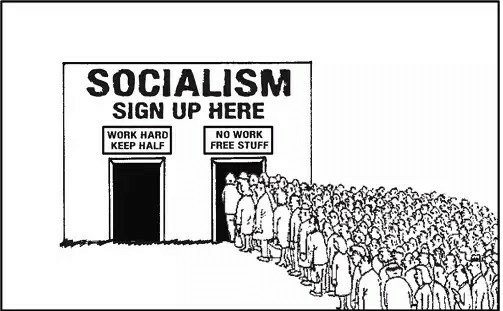
The micro-economic problem with that policy is that it reduces incentives to work – as illustrated by this Wizard-of-Id parody or this cartoon about socialism.

The macro-economic problem with that policy is that it’s part of a radical expansion in the burden of government that will make the U.S. more like Europe.

For today’s topic, though, I want to call attention to a recent…

View original post 308 more words

The iron law of electricity

“In 2019, the government’s Interim Climate Change Committee estimated 100% renewables could produce 100 times more blackouts than business as usual. “

Recalling a Parliament Already Dissolved? Not in Canada: the 43rd Parliament Is Dead

J.W.J. Bowden's avatarJames Bowden's Blog

Introduction

On 15 August 2021, Prime Minister Boris Johnson requested that the Speaker recall the House of Commons from its summer recess early so that MPs could hold an emergency debate over the fallout of the American withdrawal from Afghanistan, which the Taliban took as an opportunity to recapture Kabul and to install themselves as the de facto government once more.[1]The House of Commons would originally have reconvened on 6 September under its regular sitting calendar but met instead on 18 August.[2] The Lords Speaker also recalled the House of Lords for the same day. The British House of Commons and House of Lords could meet to discuss the British response and efforts to evacuate their diplomatic personnel and refugees because the two houses had merely adjourned for their regular summer recess. The British House of Commons has cut short its adjournments in such a manner…

View original post 2,459 more words

Another Discussion with David Friedman about interesting ideas

Why Justin Trudeau’s Snap Election in 2021 Does Not Break the Fixed-Date Elections Law

J.W.J. Bowden's avatarJames Bowden's Blog

The Signs Pointing to a Snap Election, June to August 2021

Since at least mid-June, the media had treated an early election as a fait accompli, and politicians and political parties began acting as if the writ had already begun by early July. On 15 June, several MPs in the House of Commons delivered their “Farewell Speeches”, including Jack Harris (New Democratic Member for St. John’s East), Simon Marcil (Blocist Member for Mirabel), and Kate Young (Liberal Member for London West).[1]The very same day, Elections Canada announced that it could administer a general election during the pandemic without the statutory amendments contemplated by Parliament which ultimately died on the Order Paper on 15 August.[2]On 22 June, Prime Minister Trudeau denounced the 43rd Parliament for its “obstructionism and toxicity,” not the sort of thing that one would say in advance of a…

View original post 4,532 more words

On the MPS

Michael Reddell's avatarcroaking cassandra

In the end, of course, the bottom line of yesterday’s Reserve Bank announcement was unsurprising and perhaps inevitable – action deferred on account of Covid. It wasn’t as if they were on some statutory schedule, so they could easily have postponed the decision for a couple of weeks, but in the scheme of things the difference between that and waiting for the next scheduled review (6 October) isn’t great. It is clear from the Bank’s forecast numbers they had not been minded to raise the OCR by 50 basis points this time, so if need be they can always catch up by acting a bit more firmly in October.

There was even something to praise. The Bank had revamped the look of the document and – bad-wig new logo aside – it was a definite improvement, even if it is hard to be sure what (if anything) the front cover…

View original post 1,331 more words

William I, the Conqueror, as King of the English. Part IV.

liamfoley63's avatarEuropean Royal History

Elite replacement

A direct consequence of the invasion was the almost total elimination of the old English aristocracy and the loss of English control over the Catholic Church in England. William systematically dispossessed English landowners and conferred their property on his continental followers. The Domesday Book meticulously documents the impact of this colossal programme of expropriation, revealing that by 1086 only about 5 percent of land in England south of the Tees was left in English hands. Even this tiny residue was further diminished in the decades that followed, the elimination of native landholding being most complete in southern parts of the country.

Natives were also removed from high governmental and ecclesiastical office. After 1075 all earldoms were held by Normans, and Englishmen were only occasionally appointed as sheriffs. Likewise in the Church, senior English office-holders were either expelled from their positions or kept in place for their lifetimes and…

View original post 369 more words

Origins of the Holy Roman Empire. Part II.

liamfoley63's avatarEuropean Royal History

Scholars generally concur, however, in relating an evolutionary process to the institutions and principles eventualy forming and constituting the empire, describing it as a gradual assumption of the imperial title and role of the emperor and the empire itself over the lands under its authority.

Let us delve deeper into the creation of the empire. First some background information leading to the rule of Charlemagne.

From the time of Roman Emperor Constantine I (r. 306–337), the Roman emperors had, with very few exceptions, taken on a role as promoters and defenders of Christianity. The reign of Constantine established a precedent for the position of the Christian emperor in the Church.

Roman Emperors considered themselves responsible to the gods for the spiritual health of their subjects, and after Constantine and his conversation to Christianity, the Emperors believed they had a duty to help the Church define and maintain orthodoxy. The emperor’s…

View original post 1,171 more words

Nineteen Eighty-Four by George Orwell (1949)

Simon's avatarBooks & Boots

‘If you want a picture of the future, imagine a boot stamping on a human face — for ever.’

I read this when I was 16 in 1977. The Soviet Union still existed, Eastern Europe was ruled by communist dictatorships and England was visibly falling to pieces. The external situation was bad enough but being a teenager and new to this kind of adult literature, it scared the bejesus out of me, in fact it helped introduce me to what books could really do, their power to change your entire view of life.

Quite clearly Nineteen Eighty-Four is the summary towards which all of Orwell’s writings were heading. It brings together numerous themes, ideas and obsessions which thread through all his previous work:

  • The theme of political lying, of the power of political propaganda if applied with ruthless consistency to utterly distort ‘the truth’ – something which Orwell had seen…

View original post 7,175 more words

The Age of Empire: 1875 to 1914 by Eric Hobsbawm (1987)

Simon's avatarBooks & Boots

Summary

This is a very mixed bag of a book. The first quarter or so is a thrilling global overview of the main trends and developments in industrial capitalism during the period 1875 to 1914, containing a vast array of fascinating and often thrilling facts and figures. But then it mutates into a series of long, turgid, repetitive, portentous, banal and ultimately uninformative chapters about social change, the arts, sciences, social sciences and so on, which are dreadful.

And underlying it all is Hobsbawm’s unconcealed contempt for the nineteenth century ‘bourgeoisie’ and their ‘bourgeois society’, terms he uses so freely and with so little precision that they eventually degenerate into just being terms of abuse.

And in his goal of insulting the 19th century ‘bourgeoisie’ as much as possible, Hobsbawm glosses over a huge range of crucial differences – between nations and regions, between political and cultural and religious traditions…

View original post 6,250 more words

Loaded Dice: How The Wind Industry Rigged Noise ‘Rules’ So It Could Ruin Neighbours’ Lives

stopthesethings's avatarSTOP THESE THINGS

When it comes to the noise that drives neighbours nuts, wind power outfits get away with blue murder. And there’s a reason for that.

Over the years, hundreds of our posts have covered the topic of the adverse health effects caused by turbine generated incessant low-frequency noise and infrasound; the woefully inadequate, indeed, utterly irrelevant noise standards written by the wind industry; and the institutional corruption that:

a) allowed those standards to become the “benchmarks” in the first place; and

b) witnesses public authorities, with a responsibility to protect public health, not only sitting on their hands, but barracking in favour of the wind industry, at the expense of the very people these planning and public health agencies and authorities are paid handsomely to protect.

In this post from February 2015 – Three Decades of Wind Industry Deception – STT set out a chronology of what the wind industry and…

View original post 3,070 more words

Challenging UN, Study Finds Sun—not CO2—May Be Behind Global Warming

Podcast with Nick Gillespie at Reason on IPCC and Climate

Bryan Caplan – The Case Against Education

Previous Older Entries Next Newer Entries

Arin’s Substack

Celebrating humanity's flourishing through the spread of capitalism and the rule of law

David Andolfatto

Celebrating humanity's flourishing through the spread of capitalism and the rule of law

Monetary Non-Neutrality

Celebrating humanity's flourishing through the spread of capitalism and the rule of law

Reason Magazine

Celebrating humanity's flourishing through the spread of capitalism and the rule of law

Coyote Blog

Celebrating humanity's flourishing through the spread of capitalism and the rule of law

Thoughts from the North

Celebrating humanity's flourishing through the spread of capitalism and the rule of law

Fardels Bear

A History of the Alt-Right

Vincent Geloso

Econ Prof at George Mason University, Economic Historian, Québécois

Bassett, Brash & Hide

Celebrating humanity's flourishing through the spread of capitalism and the rule of law

Truth on the Market

Scholarly commentary on law, economics, and more

The Undercover Historian

Beatrice Cherrier's blog

Matua Kahurangi

Celebrating humanity's flourishing through the spread of capitalism and the rule of law

Temple of Sociology

Celebrating humanity's flourishing through the spread of capitalism and the rule of law

Velvet Glove, Iron Fist

Celebrating humanity's flourishing through the spread of capitalism and the rule of law

Why Evolution Is True

Why Evolution is True is a blog written by Jerry Coyne, centered on evolution and biology but also dealing with diverse topics like politics, culture, and cats.

NoTricksZone

Celebrating humanity's flourishing through the spread of capitalism and the rule of law

Homepaddock

A rural perspective with a blue tint by Ele Ludemann

Kiwiblog

DPF's Kiwiblog - Fomenting Happy Mischief since 2003

The Dangerous Economist

Celebrating humanity's flourishing through the spread of capitalism and the rule of law

Watts Up With That?

The world's most viewed site on global warming and climate change

The Logical Place

Tim Harding's writings on rationality, informal logic and skepticism

Doc's Books

A window into Doc Freiberger's library

The Risk-Monger

Let's examine hard decisions!

Uneasy Money

Commentary on monetary policy in the spirit of R. G. Hawtrey

Barrie Saunders

Thoughts on public policy and the media

Liberty Scott

Celebrating humanity's flourishing through the spread of capitalism and the rule of law

Point of Order

Politics and the economy

James Bowden's Blog

A blog (primarily) on Canadian and Commonwealth political history and institutions

Science Matters

Reading between the lines, and underneath the hype.

Peter Winsley

Economics, and such stuff as dreams are made on

A Venerable Puzzle

"The British constitution has always been puzzling, and always will be." --Queen Elizabeth II

The Antiplanner

Celebrating humanity's flourishing through the spread of capitalism and the rule of law

Bet On It

Celebrating humanity's flourishing through the spread of capitalism and the rule of law

History of Sorts

WORLD WAR II, MUSIC, HISTORY, HOLOCAUST

Roger Pielke Jr.

Undisciplined scholar, recovering academic

Offsetting Behaviour

Celebrating humanity's flourishing through the spread of capitalism and the rule of law

JONATHAN TURLEY

Res ipsa loquitur - The thing itself speaks

Conversable Economist

In Hume’s spirit, I will attempt to serve as an ambassador from my world of economics, and help in “finding topics of conversation fit for the entertainment of rational creatures.”

The Victorian Commons

Researching the House of Commons, 1832-1868

The History of Parliament

Articles and research from the History of Parliament Trust

Books & Boots

Reflections on books and art

Legal History Miscellany

Posts on the History of Law, Crime, and Justice

Sex, Drugs and Economics

Celebrating humanity's flourishing through the spread of capitalism and the rule of law

European Royal History

Exploring the Monarchs of Europe

Tallbloke's Talkshop

Cutting edge science you can dice with

Marginal REVOLUTION

Small Steps Toward A Much Better World