Labour leader Chris Hipkins has joined the chorus of those opposing changes to pay equity legislation. Does this mean he knows what a woman is now? It is easy for opposition parties and their allies to criticise proposed changes but Heather du Plessis-Allan points out the problem with existing legislation: . . . Those pay […]
Does he know what a woman is now?
Does he know what a woman is now?
07 May 2025 Leave a comment
in applied price theory, discrimination, economics of education, gender, health and safety, human capital, labour economics, labour supply, occupational choice, politics - New Zealand, poverty and inequality, Public Choice, rentseeking Tags: gender wage gap, sex discrimination
Tabarrok on the Movie Tariff
07 May 2025 1 Comment
in applied price theory, international economics, movies, politics - USA, Public Choice, rentseeking Tags: 2024 presidential election, free trade, tariffs
The Hollywood Reporter has a good piece on Trump’s proposed movie tariffs: Even if such a tariff were legal — and there is some debate about whether Trump has the authority to impose such levies — industry experts are baffled as to how, in practice, a “movie tariff” would work. “What exactly does he want […]
Tabarrok on the Movie Tariff
The best tariff threat is one you do not have to use
06 May 2025 1 Comment
in applied price theory, international economics, politics - USA Tags: 2024 presidential election, free trade, game theory, tariffs
Following up on an earlier post, Reciprocal tariffs as a tit-for-tat strategy in a repeated prisoners’ dilemma From NY Times:Trump imposed, quickly withdrew and then threatened to bring back huge tariffs on dozens of countries. Immediately, they began calling and asking what they could do to stop him. “More than 100 countries have already come to…
The best tariff threat is one you do not have to use
The price of “free” healthcare is the wait
06 May 2025 Leave a comment
in applied price theory, economic history, health economics, politics - USA Tags: Canada, health insurance
While healthcare in Canada’s single-payer health care system is technically free, its real price is measured in wait times. In 2023, the median wait time from a general practitioner’s referral to treatment reached 27.7 weeks—the longest ever and nearly triple the 9.3 weeks reported in 1993. (MuskegonPundit) To see this, think of “free” as…
The price of “free” healthcare is the wait
Some weak evidence in favour of an information intervention in economics to close the gender gap
05 May 2025 Leave a comment
in applied price theory, discrimination, econometerics, economics of education, experimental economics, gender, labour economics, labour supply, occupational choice Tags: gender gap, sex discrimination
I’ve written a couple of times about information interventions designed to attract more female students to study economics (see here and here). The results have generally been disappointing. That shouldn’t be too much of a surprise. If it was really simple to get people to change their behaviour with information, then advertising would be far…
Some weak evidence in favour of an information intervention in economics to close the gender gap
Twisted Illogic
02 May 2025 Leave a comment
in applied price theory, history of economic thought, industrial organisation, international economics, politics - USA, Public Choice, rentseeking Tags: 2024 presidential election, free trade, tarrifs
TweetHere’s a letter to The Hill. Editor: Pres. Trump said that “China probably will eat those tariffs” (“Trump says China ‘probably will eat those tariffs’,” April 29). So the president believes that the tariffs will be ‘eaten’ by China – meaning, he believes the tariffs won’t result in higher prices in America of Chinese goods.…
Twisted Illogic
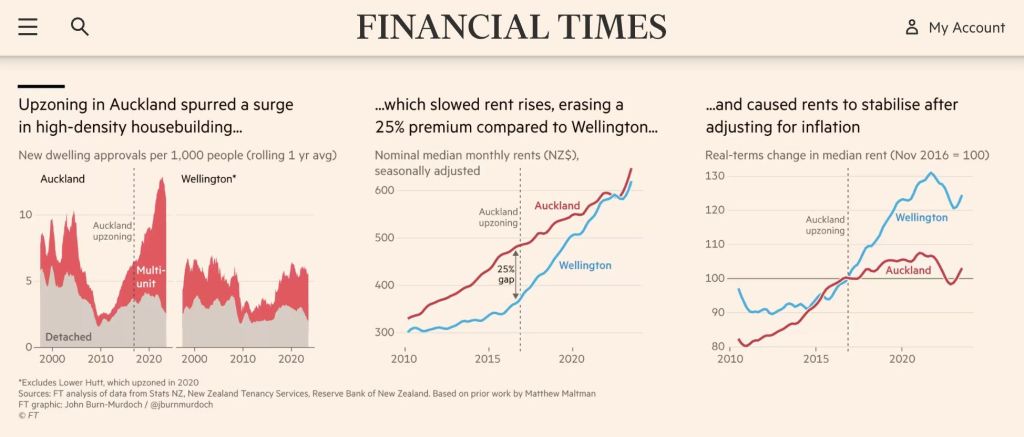
Housing affordability
01 May 2025 Leave a comment
in applied price theory, economics of regulation, income redistribution, law and economics, politics - New Zealand, property rights, Public Choice, rentseeking, urban economics Tags: housing affordability, land supply, zoning
Capitalism, Socialism, and Social Desirability Bias
01 May 2025 Leave a comment
in applied price theory, comparative institutional analysis, development economics, economic history, entrepreneurship, history of economic thought, industrial organisation Tags: capitalism and freedom
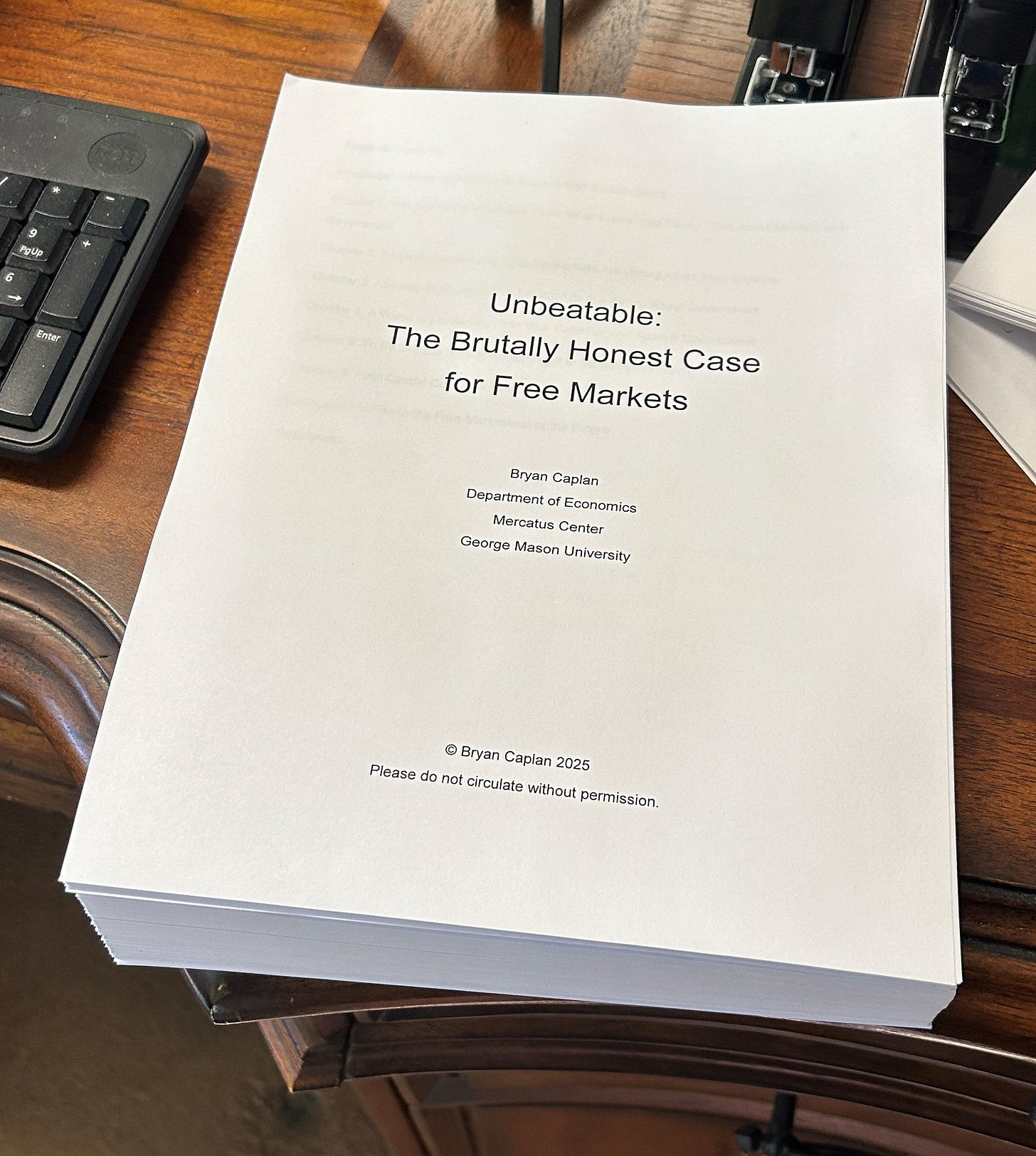
An excerpt from the Introduction of *Unbeatable*
Capitalism, Socialism, and Social Desirability Bias
Bad advice on public sector discount rates
30 Apr 2025 Leave a comment
in applied price theory, applied welfare economics, economics of bureaucracy, politics - New Zealand, Public Choice Tags: discount rates

A couple of months ago now I wrote a post about the new set of discount rates government agencies are supposed to use in undertaking cost-benefit analysis, whether for new spending projects or for regulatory initiatives. The new, radically altered, framework had come into effect from 1 October last year, but with no publicity (except […]
Bad advice on public sector discount rates
In Praise of the Danish Mortgage System
30 Apr 2025 Leave a comment
in applied price theory, entrepreneurship, financial economics
When interest rates go up, the price of bonds goes down. As Tyler and I discuss in Modern Principles, the inverse relationship between interest rates and prices holds for any asset that pays out over time. In particular, as Patrick McKenzie points out, when interest rates go up, the value of a loan goes down. […]
In Praise of the Danish Mortgage System
Why the housing market imploded
29 Apr 2025 Leave a comment
in applied price theory, behavioural economics, economic history, economics of information, financial economics, global financial crisis (GFC), great recession, macroeconomics, monetary economics
In a recent paper, Christopher L. Foote, Kristopher S. Gerardi, and Paul S. Willen report (pdf): This paper presents 12 facts about the mortgage market. The authors argue that the facts refute the popular story that the crisis resulted from financial industry insiders deceiving uninformed mortgage borrowers and investors. Instead, they argue that borrowers and […]
Why the housing market imploded
Can Trump’s Tariff Offensive Deliver New American Jobs?
28 Apr 2025 Leave a comment
in applied price theory, entrepreneurship, industrial organisation, international economics, politics - USA Tags: 2024 presidential election, free trade, tariffs
By Lauren Weber of The WSJ. Excerpts:”Most economists and other experts are skeptical that job creation will happen on a large scale because planning and building new factories is an incredibly complex and lengthy process. Businesses will be reluctant to do that unless they’re sure the investment is worth it over the long term. A fairly…
Can Trump’s Tariff Offensive Deliver New American Jobs?
‘Rule of Two’ medicines approval needs improving
28 Apr 2025 Leave a comment
in applied price theory, economics of bureaucracy, economics of regulation, health economics, politics - New Zealand, Public Choice Tags: drug lags
Eric Crampton writes – Come the next pandemic, we are going to be in the same stupid mess that we were in during the last one. Trusted pharmaceutical regulators overseas, like those in Australia, Canada, Europe, and the UK, will have given provisional approvals for vaccines that are safe. And Kiwis will have to wait, […]
‘Rule of Two’ medicines approval needs improving
How a Secretive Gambler Called ‘The Joker’ Took Down the Texas Lottery
26 Apr 2025 Leave a comment
in applied price theory, economics of information, economics of media and culture
A global team of gambling whizzes hatched a scheme to snag the jackpot; millions of tickets in 72 hoursBy Joe Wallace and Katherine Sayre of The WSJ. Excerpts:”There were 25.8 million potential number combinations. The tickets were $1 apiece. The jackpot was heading to $95 million. If nobody else also picked the winning numbers, the…
How a Secretive Gambler Called ‘The Joker’ Took Down the Texas Lottery
Socialism Is an Economic Cancer
26 Apr 2025 Leave a comment
in applied price theory, comparative institutional analysis, development economics, economic history, growth disasters, Marxist economics Tags: economics of central planning

Building on my four-part series (here, here, here, and here) explaining the case against socialism and my five-part series (here, here, here, here, and here) on socialism in the modern world, today’s column will look at the economic argument against that statist ideology. Practically speaking, this seems unnecessary. After all, we can simply look at […]
Socialism Is an Economic Cancer
 Utopia, you are standing in it!
Recent Comments