
We explore the consequences of ethnic partitioning, a neglected aspect of the Scramble for Africa, and uncover the following. First, apart from the land mass and water bodies, split and non-split groups are similar across several dimensions. Second, the incidence, severity, and duration of political violence are all higher for partitioned homelands which also experience frequent military interventions from neighboring countries. Third, split groups are often entangled in a vicious circle of government-led discrimination and ethnic wars. Fourth, respondents from survey data identifying with split ethnicities are economically disadvantaged. The evidence highlights the detrimental repercussions of the colonial border design.
This is from Stelios Michalopoulos and Elias Papaioannou, in the American Economic Review.
Is there a way of out this quagmire for Africa? The status quo, with its multilateral institutions, doesn’t seem to be working (perhaps because multilateral institutions have been grafted on to the old imperial structures
View original post 36 more words









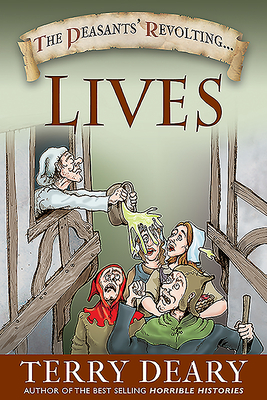 When we study history, we tend to focus on the lives of the elite and the royalty because their lives are well documented. However, there was a large majority of the population who tends to be forgotten in the annals of the past. They are the lower classes who were the backbone of society for centuries, the people who we would call peasants. Now, if we know so much about the higher echelons of society, we must ask ourselves what was life like for those who had almost nothing in life. How did they work? When they did speak out about injustices through revolutions, how were they received? How did they worship? How were they educated? How did they relax after long days of back-breaking labor? Where did they live? These questions and more are answered in Terry Deary’s latest book, “The Peasants’ Revolting Lives”.


Recent Comments