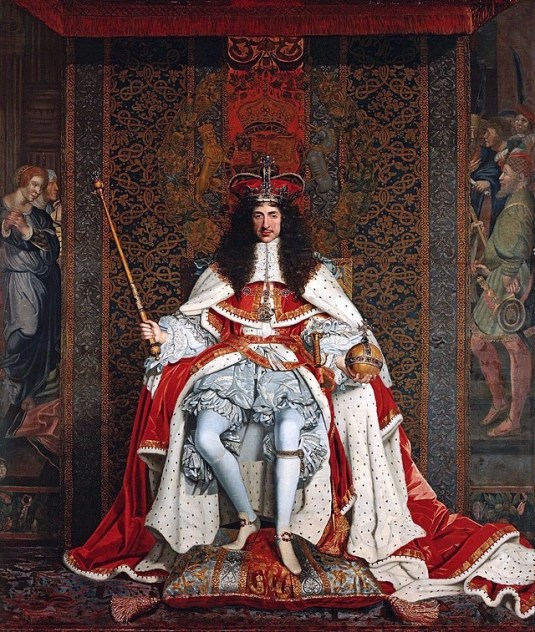
Unlikely MPs 3: Catholics in Parliament, 1604-1629

Paul Hunneyball's avatarThe History of Parliament

ukparliamentweek_logo_partner_tag_rgbThis week is Parliament Week, a programme of events and activities that connects people across the UK with Parliament and democracy. To mark it, every day this week we are publishing a blog on ‘unlikely parliamentarians’  – the men and women across history who became parliamentarians only unexpectedly.

In today’s blog, Dr Paul Hunneyball of the Lords 1603-29 section discusses a group of parliamentarians unlikely because of their religion – Catholics in the early Stuart period – and asks whether they were in fact able to act freely…

The religious settlement at the start of Elizabeth I’s reign saw the return of Anglican Protestantism as the official faith of England and Wales, and, by definition, the rejection of Catholicism. Elizabeth famously had no wish to ‘open windows into men’s souls’, but she did expect public conformity to the new patterns of worship. Those who refused to comply could…

View original post 748 more words

Peter Boettke on the History of GMU Economics (Part 1)

Masonomics's avatarThe Economics Society at George Mason University

Dr. Peter Boettke joins the podcast to talk about the history of GMU economics. He discusses his days as an undergraduate student at Grove City College and as a graduate student here at GMU. We learn who the major professors were back then and how the campus has grown to its present size. We talk college basketball and the Nobel Prize. We also learn who told Dr. Boettke to “wear a proper pair of trousers.” This episode is full of fun stories from Dr. Boettke’s life in economics, and it’s only Part 1. Stay tuned for Part 2 next Friday. Marcus Shera cohosts.

Loose, Vague, and Indeterminate is available on Spotify, Apple Podcasts, Google Podcasts, Podcast Addict, Overcast, RadioPublic, PocketCasts, and Breaker. You can listen and catch up on old episodes on any of those platforms in addition to our Anchor page at go.gmu.edu/LVI.

View original post

Nobel Prize 2014: Jean Tirole

afinetheorem's avatarA Fine Theorem

A Nobel Prize for applied theory – now this something I can get behind! Jean Tirole’s prize announcement credits him for his work on market power and regulation, and there is no question that he is among the leaders, if not the world leader, in the application of mechanism design theory to industrial organization; indeed, the idea of doing IO in the absence of this theoretical toolbox seems so strange to me that it’s hard to imagine anyone had ever done it! Economics is sometimes defined by a core principle that agents – people or firms – respond to incentives. Incentives are endogenous; how my bank or my payment processor or my lawyer wants to act depends on how other banks or other processors or other prosecutors act. Regulation is therefore a game. Optimal regulation is therefore a problem of mechanism design, and we now have mathematical tools that…

View original post 1,413 more words

Nobel Prize 2016 Part II: Oliver Hart

afinetheorem's avatarA Fine Theorem

The Nobel Prize in Economics was given yesterday to two wonderful theorists, Bengt Holmstrom and Oliver Hart. I wrote a day ago about Holmstrom’s contributions, many of which are simply foundational to modern mechanism design and its applications. Oliver Hart’s contribution is more subtle and hence more of a challenge to describe to a nonspecialist; I am sure of this because no concept gives my undergraduate students more headaches than Hart’s “residual control right” theory of the firm. Even stranger, much of Hart’s recent work repudiates the importance of his most famous articles, a point that appears to have been entirely lost on every newspaper discussion of Hart that I’ve seen (including otherwise very nice discussions like Applebaum’s in the New York Times). A major reason he has changed his beliefs, and his research agenda, so radically is not simply the whims of age or the pressures of politics, but…

View original post 2,533 more words

On Gary Becker

afinetheorem's avatarA Fine Theorem

Gary Becker, as you must surely know by now, has passed away. This is an incredible string of bad luck for the University of Chicago. With Coase and Fogel having passed recently, and Director, Stigler and Friedman dying a number of years ago, perhaps Lucas and Heckman are the only remaining giants from Chicago’s Golden Age.

Becker is of course known for using economic methods – by which I mean constrained rational choice – to expand economics beyond questions of pure wealth and prices to question of interest to social science at large. But this contribution is too broad, and he was certainly not the only one pushing such an expansion; the Chicago Law School clearly was doing the same. For an economist, Becker’s principal contribution can be summarized very simply: individuals and households are producers as well as consumers, and rational decisions in production are as interesting to…

View original post 868 more words

The Election of a Speaker

Paul Seaward's avatarReformation to Referendum: Writing a New History of Parliament

The first Speaker?

The remarkable account in the Anonimalle Chronicle of the so-called ‘Good Parliament’ of 1376 provides what is generally taken to be the first reference to a ‘Speaker’ of the Commons, Sir Peter de la Mare. The account is extraordinarily detailed and circumstantial – so unusual for an account of any event in the fourteenth century, let alone a Parliament, that many have been tempted to call it an eyewitness account, though it’s impossible to tell. (The Chronicle is available in digitised form from the University of Leeds website here: the account of the Good Parliament starts about f. 313; you can get at an edited version of some of the original Norman French text here, from p. 83; and there is a translation of the bit relating to the Good Parliament available on the California State University website .) The Chronicle describes how once the…

View original post 4,075 more words

Prorogation and Adjournment

Paul Seaward's avatarReformation to Referendum: Writing a New History of Parliament

The modern practice of prorogation and adjournment is in theory, at least, clearly enough understood. Prorogation is an act of the Crown, usually used to mark the end of one session and fix a date for the start of another. Adjournment is an act of each House of Parliament, used routinely to end each day’s sitting, and to interrupt the normal succession of daily sittings, so that the House can take a break for its holidays, or some other purpose. In modern political memory, prorogation is a brief pause that acts as a routine way of marking the end of one parliamentary and political year and the start of another. There are plenty of earlier instances – leaving aside the much argued-over case of 1997 and the rather sui generis case of 1948 – in which prorogation is said to have been used in order to block one or other…

View original post 5,083 more words

The Veto

Elizabeth I is known to have vetoed 72 bills during the 42 years of her reign. James I vetoed six (or possibly seven), all in the Parliament of 1624; and Charles I, remarkably, only vetoed a single bill, in 1628

Paul Seaward's avatarReformation to Referendum: Writing a New History of Parliament

An astonishing rumour has been current of late. A certain section of the Unionist party is said to be encouraging the idea that it is possible, as a matter of practical politics, for the King to refuse the Royal Assent to the Home Rule Bill next May, when for the third time it has passed the House of Commons and has complied with all the requirements of the Parliament Act. … The danger may seem fanciful to many. It is impossible, it will be said, that so mad an idea could be entertained for a moment by responsible politicians. But it comes from Ulster, and though constitutional doctrine from Ulster requires very cautious acceptance just now, Ulster is strong in the councils of the party.

‘Auditor Tantum’, ‘The Veto of the Crown’, Fortnightly Review, Sept. 1913

In the last few weeks an increasingly abstruse but sometimes irritable debate has…

View original post 3,732 more words

Votes of no confidence

Paul Seaward's avatarReformation to Referendum: Writing a New History of Parliament

The principle that an administration can only function if it has the backing of a majority in the House of Commons is acknowledged to be a fundamental part – perhaps the fundamental part – of not only the British, but of any parliamentary constitution. It expresses the idea that Parliament itself cannot exercise executive power, but gives its authority to a smaller group who can, trusting them to use it wisely. The meaning of a vote of no confidence – indicating the withdrawal of that trust – is obvious enough in principle. But as arguments mount about what might happen in September, what it means in practice has come to seem considerably more complicated and uncertain; and the idea of a vote of no confidence has come under a degree of scrutiny that it is scarcely able to bear. For although it has now acquired a specific meaning as incorporated…

View original post 5,016 more words

Black Rod and the Door of the House of Commons

Paul Seaward's avatarReformation to Referendum: Writing a New History of Parliament

Image: UK Parliament via Flickr CC

The earliest description of the ceremony in which the Commons are summoned to the Lords by Black Rod comes in a notebook that belonged to Sir Thomas Duppa, who filled the position between 1683 and 1694, and had been deputy to his predecessor, Sir Edward Carteret, from 1675. The description is part of a set of procedural notes dated 14 August 1679, presumably given to Duppa in anticipation of his having to fulfil the role at the opening of the new parliament, only recently elected. The note reads:

When the King is sett [seated], either he or my Lord Great Chamberlain gives you Order to call the House of Commons. Then you go immediately, and when you come there, you knock with the end of your rod four or five times, and when the Doors are open, and [you] come in as high as…

View original post 2,263 more words

A Bigger Picture: Thank Malcolm Turnbull For Australia’s Power Pricing & Supply Calamity

stopthesethings's avatarSTOP THESE THINGS

Malcolm Turnbull’s miserable presence endures in the Snowy 2.0 pumped hydro project, a white elephant that’ll cost taxpayers at least $10billion.

Before he was ditched as PM by his Liberal Party over his pitch to expand subsidies to chaotically intermittent wind and solar and to extend those subsidies until the end of time, Malcolm Turnbull and his son, Alex were considered the dynamic duo among renewable energy rent seekers.

Turnbull the Younger managed to throw $millions at a nearly bankrupt wind power outfit (Infigen) just before daddy signed the Paris Climate Agreement, which lifted Infigen’s stocks and made the canny young investor a veritable fortune. Talk about lucky!: Born Lucky: Stars Align Perfectly for PM’s Son with Mammoth Bet on Wind Power Outfit Infigen

There’s plenty to dislike about Malcolm Turnbull, a man who should have headed up the Greens, rather than Australia’s notionally conservative party, the Liberals. He secretly assisted…

View original post 1,536 more words

Horten H.XVIIIB

MSW's avatarWeapons and Warfare

In 1944 the RLM issued a requirement for an aircraft with a range of 11000 km (6835 miles) and a bomb load of 4000 kg (8818 lbs). This bomber was to be able to fly from Germany to New York City and back without refueling. Five of Germany’s top aircraft companies had submitted designs, but none of them met the range requirements for this Amerika Bomber. Their proposals were redesigned and resubmitted at the second competition, but nothing had changed. The Hortens were not invited to submit a proposal because it was thought that they were only interested in fighter aircraft.

After the Hortens learned of these design failures, they the went about designing the XVIII A Amerika Bomber. During the Christmas 1944 holidays, Reimar and Walter Horten worked on the design specifications for their all-wing bomber. They drew up a rough draft and worked on weight calculations, allowing for…

View original post 943 more words

Inconvenient Truths: MSM Attempts to Bury Mike Moore’s Planet of the Humans

stopthesethings's avatarSTOP THESE THINGS

Propagandists know that it’s best to run silent when they’re under siege from ‘friendlys’, which is how the media has responded to Planet of the Humans, Michael Moore’s withering attack on the power and money behind the renewable energy scam (see above).

For the best part of 20 years, the mainstream press has been parroting the climate cult’s line that the only solution to the planet’s ‘imminent doom’ is more windmills and solar panels. Subsidised, of course, with your money.

The film – produced by Moore and made by Jeff Gibbs – has been uploaded to YouTube to allow all and sundry to get the message: renewable energy is the greatest economic and environmental fraud of all time. STT first covered it here: Blood & Gore: Mike Moore’s ‘Planet of The Humans’ Unmasks The Power & Money Behind Renewables Scam

The film’s attack on characters like David Blood and Al Gore…

View original post 653 more words

Image

The Pandemic’s 4th Wave

Joe Babaian's avatarhcldr

holger-link-RGvwatYi0-Q-unsplash

Blog Post by Joe Babaian

Today’s blog is inspired by the so-called human-centered waves of the current pandemic. Attribution and design credits to Victor Tseng @VectorSting for the amazing work seen here.

Take a look at Dr. Tseng’s graphic – it’s representative and not keyed to precise times as of today. He created this to be a start to conversation – it’s wonderful for that purpose and more. Or particular concern is the 4th Wave – what comes after. What comes after is going to define and change society in ways we are just beginning to grasp.

EUX2TipWoAMa_19

  • 1st Wave: Immediate mortality and morbidity of COVID-19.
  • 1st Wave Tail: Post-ICU and admission recovery for many patients.
  • 2nd Wave: Impact of resource restrictions on non-COVID conditions – all the usual urgent things that people need immediate treatment for – acute.
  • 3rd Wave: The impact of interrupted care of chronic conditions (people stayed…

View original post 186 more words

Is it a Rhinoceros or an Elephant in the Room?: Reflections on Truth

Mark Wallace's avatarThe Victorian Sage

A point that interests me greatly is the status of the concept of truth in contemporary intellectual thought. Insofar as postmodern and poststructuralist modes of thought remain hegemonic in intellectual culture, truth has very little currency. Similarly with our pluralistic and multicultural politics, which privilege a very relativistic approach to issues, rather than an insistence on a particular truth. Terry Eagleton writes, “No idea is more unpopular with contemporary cultural theory than that of absolute truth” (After Theory, Verso, 2004, p. 103). Rather than offer a devastating and unanswerable critique of this position in this blog post, I can only begin by noting that this idea has never been acceptable to me. I cannot do without the notion of truth.

The absurdities of a position entirely dispensing with the notion are well illustrated by the famous anecdote about Wittgenstein and the Rhinoceros in the Room. On one…

View original post 1,014 more words

Previous Older Entries Next Newer Entries

Fardels Bear

A History of the Alt-Right

Vincent Geloso

Econ Prof at George Mason University, Economic Historian, Québécois

Bassett, Brash & Hide

Celebrating humanity's flourishing through the spread of capitalism and the rule of law

Truth on the Market

Scholarly commentary on law, economics, and more

The Undercover Historian

Beatrice Cherrier's blog

Matua Kahurangi

Celebrating humanity's flourishing through the spread of capitalism and the rule of law

Temple of Sociology

Celebrating humanity's flourishing through the spread of capitalism and the rule of law

Velvet Glove, Iron Fist

Celebrating humanity's flourishing through the spread of capitalism and the rule of law

Why Evolution Is True

Why Evolution is True is a blog written by Jerry Coyne, centered on evolution and biology but also dealing with diverse topics like politics, culture, and cats.

Down to Earth Kiwi

Celebrating humanity's flourishing through the spread of capitalism and the rule of law

NoTricksZone

Celebrating humanity's flourishing through the spread of capitalism and the rule of law

Homepaddock

A rural perspective with a blue tint by Ele Ludemann

Kiwiblog

DPF's Kiwiblog - Fomenting Happy Mischief since 2003

The Dangerous Economist

Celebrating humanity's flourishing through the spread of capitalism and the rule of law

Watts Up With That?

The world's most viewed site on global warming and climate change

The Logical Place

Tim Harding's writings on rationality, informal logic and skepticism

Doc's Books

A window into Doc Freiberger's library

The Risk-Monger

Let's examine hard decisions!

Uneasy Money

Commentary on monetary policy in the spirit of R. G. Hawtrey

Barrie Saunders

Thoughts on public policy and the media

Liberty Scott

Celebrating humanity's flourishing through the spread of capitalism and the rule of law

Point of Order

Politics and the economy

James Bowden's Blog

A blog (primarily) on Canadian and Commonwealth political history and institutions

Science Matters

Reading between the lines, and underneath the hype.

Peter Winsley

Economics, and such stuff as dreams are made on

A Venerable Puzzle

"The British constitution has always been puzzling, and always will be." --Queen Elizabeth II

The Antiplanner

Celebrating humanity's flourishing through the spread of capitalism and the rule of law

Bet On It

Celebrating humanity's flourishing through the spread of capitalism and the rule of law

History of Sorts

WORLD WAR II, MUSIC, HISTORY, HOLOCAUST

Roger Pielke Jr.

Undisciplined scholar, recovering academic

Offsetting Behaviour

Celebrating humanity's flourishing through the spread of capitalism and the rule of law

JONATHAN TURLEY

Res ipsa loquitur - The thing itself speaks

Conversable Economist

In Hume’s spirit, I will attempt to serve as an ambassador from my world of economics, and help in “finding topics of conversation fit for the entertainment of rational creatures.”

The Victorian Commons

Researching the House of Commons, 1832-1868

The History of Parliament

Articles and research from the History of Parliament Trust

Books & Boots

Reflections on books and art

Legal History Miscellany

Posts on the History of Law, Crime, and Justice

Sex, Drugs and Economics

Celebrating humanity's flourishing through the spread of capitalism and the rule of law

European Royal History

Exploring the Monarchs of Europe

Tallbloke's Talkshop

Cutting edge science you can dice with

Marginal REVOLUTION

Small Steps Toward A Much Better World

NOT A LOT OF PEOPLE KNOW THAT

“We do not believe any group of men adequate enough or wise enough to operate without scrutiny or without criticism. We know that the only way to avoid error is to detect it, that the only way to detect it is to be free to inquire. We know that in secrecy error undetected will flourish and subvert”. - J Robert Oppenheimer.

STOP THESE THINGS

The truth about the great wind power fraud - we're not here to debate the wind industry, we're here to destroy it.

Lindsay Mitchell

Celebrating humanity's flourishing through the spread of capitalism and the rule of law

Alt-M

Celebrating humanity's flourishing through the spread of capitalism and the rule of law