19th century Bank of England was well on to stigma effects in a banking crisis
09 Feb 2020 Leave a comment
in applied price theory, business cycles, economic history, economics of bureaucracy, economics of information, fisheries economics, industrial organisation, law and economics, macroeconomics, monetary economics, property rights, Public Choice, survivor principle Tags: adverse selection, asymmetric information, bank runs, banking crises, banking panics, lender of last resort, monetary policy, screening

February 8, 1587: Execution of Mary I, Queen of Scotland.
09 Feb 2020 Leave a comment
Mary I, Queen of Scots (December 8, 1542 – February 8, 1587), reigned over Scotland from December 8, 1542 to July 24, 1567.
Mary was born on December 8, 1542 at Linlithgow Palace, Scotland, to King James V and his French second wife, Mary of Guise. She was said to have been born prematurely and was the only legitimate child of James’ to survive him. She was the great-niece of King Henry VIII of England, as her paternal grandmother, Margaret Tudor, was Henry VIII’s sister. On December 14, six days after her birth, she became Queen of Scotland when her father died, perhaps from the effects of a nervous collapse following the Battle of Solway Moss or from drinking contaminated water while on campaign.

She spent most of her childhood in France while Scotland was ruled by regents, and in 1558, she married the Dauphin of France, François. Mary was…
View original post 1,204 more words
February 8, 1960: Creation of the Surname Mountbatten-Windsor.
09 Feb 2020 Leave a comment
Mountbatten-Windsor is the personal surname used by some of the male-line descendants of Queen Elizabeth II and Prince Philip, Duke of Edinburgh. Under a declaration made in Privy Council on February 8, 1960, the name Mountbatten-Windsor applies to male-line descendants of the Queen without royal styles and titles. Individuals with royal styles do not usually use a surname, but some descendants of the Queen with royal styles have used Mountbatten-Windsor when a surname was required.

The British monarchy asserts that the name Mountbatten-Windsor is used by members of the Royal Family who do not have a surname, when a surname is required. For example, Prince Andrew, Duke of York, and Anne, Princess Royal, children of the Queen, used the surname Mountbatten-Windsor in official marriage registry entries in 1986 and 1973 respectively. Likewise, Prince William, Duke of Cambridge, used the name when filing a French lawsuit related to the topless pictures…
View original post 589 more words
Gender Identity Laws and Basic Freedoms
08 Feb 2020 Leave a comment

I am presenting a paper on Feb 8, 2020 at the NCC National Conference 2020 “Strengthening Family, Faith, Freedom and Sovereignty in an ideologically hostile world”. The paper concerns the interaction between laws on “gender identity discrimination” and other basic freedoms, including freedom of speech and freedom of religion. The paper can be downloaded here:
Fired for using the wrong pronouns
08 Feb 2020 Leave a comment
Two cases have been highlight overseas recently where a Christian employee has been fired for declining to use the “preferred pronoun” of a person who identifies as a different gender to their biological sex. The cases illustrate that religious freedom, and free speech generally, in the workplace can be under challenge in circumstances involving “gender identity” issues. It is not clear how such cases would be resolved in Australia.
View original post 3,279 more words
So long as a Democrat becomes President, does it matter which one?
08 Feb 2020 Leave a comment
One of my friends was telling me the other day that she would never vote for Bernie Sanders, for she simply hated the guy. (This friend is a liberal and a Democrat.) She said that she wouldn’t vote for anyone if it came down to Sanders vs. Trump in November. In response to my saying that that could be equivalent to a vote for Trump, she responded that she lived in a Democratic state anyway, so it didn’t matter.
So I sent her this article by Paul Krugman, which claims that, so long as the Senate becomes Democratic—and that’s a big if—it really doesn’t matter which of the Democratic candidates wins. (I would go further: if the Senate remains Republican, then it surely doesn’t matter which Democrat wins.)
Krugman uses as an example the fact that the lying scum Trump was elected on a platform that was itself a lie…
View original post 707 more words
The Myth of the Rational Voter – Bryan Caplan
08 Feb 2020 Leave a comment
in applied price theory, comparative institutional analysis, constitutional political economy, econometerics, economic history, economics of bureaucracy, economics of information, economics of regulation, income redistribution, industrial organisation, international economics, labour economics, labour supply, law and economics, macroeconomics, politics - Australia, politics - New Zealand, politics - USA, Public Choice, public economics, rentseeking Tags: anti-foreign bias, anti-market bias, make-work bias, pessimism bias, rational ignorance, rational irrationality
Shock News : Green Energy Not Fit for the Grid
07 Feb 2020 Leave a comment
“Giving society cheap, abundant energy would be the
equivalent of giving an idiot child a machine gun.”
– Prof Paul Ehrlich, Stanford University
“Isn’t the only hope for the planet that the
industrialized civilizations collapse?
Isn’t it our responsiblity to bring that about?”
– Maurice Strong,
founder of the UN Environment Programme (UNEP)
Viv Forbes
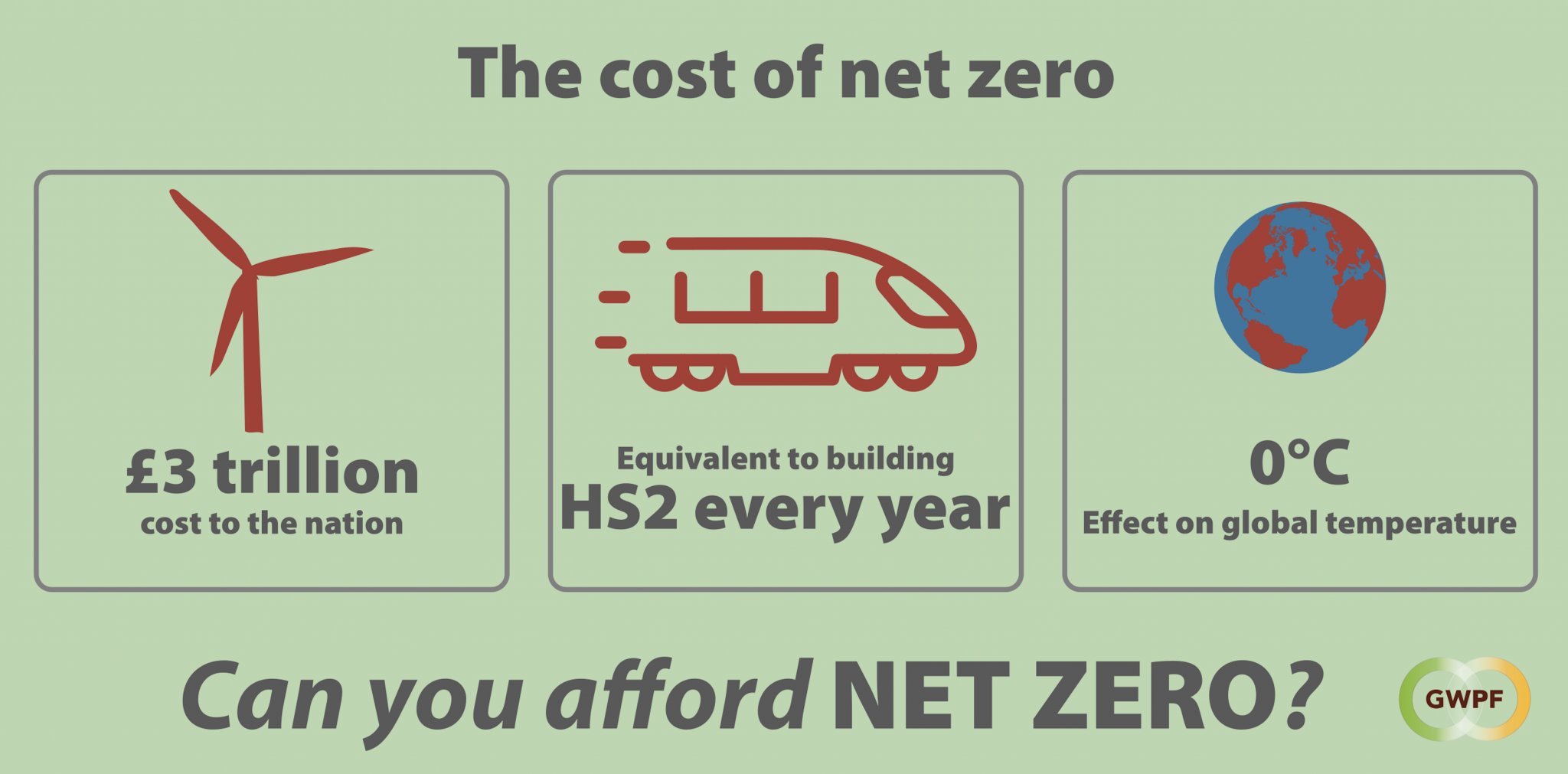
Germany’s wind and solar power generation came to a standstill in late 2013. More than 23,000 wind turbines ran out of wind and most of the one million photovoltaic systems ran out of sunlight. For a whole week, coal nuclear and gas-powered plants generated an estimated 95 percent of Germany’s electricity.
Britain has 3,500 wind turbines, but during a period of extreme cold they produced just 1.8% of UK’s electricity. But, gluttons for punishment, politicians intend building more.
When electricity demand peaked at the height of the recent heatwave in…
View original post 1,184 more words
Cash Cow: UK Wind Farms Paid £650,000,000 in ‘Constraint Payments’ To NOT Produce Power
07 Feb 2020 Leave a comment
In the history of commerce, there’s never been a financial scam that comes anywhere near rivalling subsidised wind power.
In the past, sharp, entrepreneurial types have made plenty of easy money from ‘selling’ the London Bridge and the Eiffel Tower to unwitting dupes.
But scamming fools with too good to be true offers is nothing compared to what’s up for grabs in the so-called wind ‘industry’.
There aren’t many businesses where a major source of revenue is being paid to not produce what it is that your business is meant to produce.
STT is at a loss to find many other current examples that match the profligacy of paying what are called “constraint payments” to wind power outfits, so that they won’t deliver power to the grid when the wind is blowing.
And were not talking small beer, either. Over the last decade, British wind power outfits have collected over…
View original post 1,786 more words
UC Santa Cruz begins vetting job candidates using only their diversity statements: if yours isn’t up to snuff, you get tossed
07 Feb 2020 Leave a comment
On the last day of 2019, I reported on a new way of hiring faculty at the University of California. It has already started on the Berkeley campus, and is poised to begin at both the Santa Cruz and Davis campuses.
The method, as implemented at Berkeley, is to require candidates for faculty jobs—not all of them yet, just those applying to some selected departments in the life sciences—to submit “diversity statements” with their applications. These statements require three features: they must express your philosophy of diversity, they must recount your past efforts to promote diversity, and they must describe your plans to increase diversity at the UC campus where you’re applying.
The invidious aspect of this process at Berkeley is that the diversity statements were vetted by a committee, not the department itself, and they were scored on a scale that goes from 1 (worst) to 5 (best) in…
View original post 1,200 more words
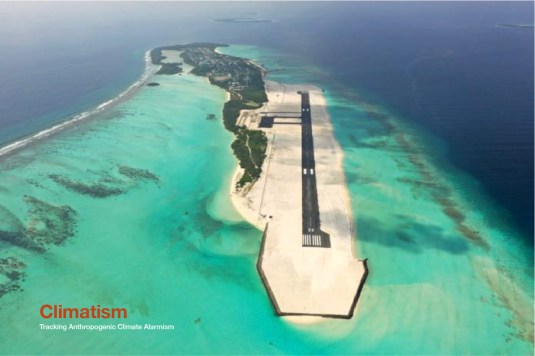
Cuomo’s Curse: New York Governor’s $47,000,000,000 Wind & Solar Boondoggle
07 Feb 2020 Leave a comment
A decade from now, New Yorkers will rue the day that Andrew Cuomo determined to run their state on chaotically intermittent wind and solar.
Like everywhere else that’s attempted to run on sunshine and breezes, New York’s power prices are bound to rocket out of control and its enviable grid reliability will soon become a thing of the past.
That wind and solar obsessed South Australia, Denmark and Germany fight for line honours in the world’s highest power prices stakes is no surprise.
But the fact that power prices will inevitably rise to unaffordable levels hasn’t deterred New York’s Governor, who seems hellbent on following those dismal examples.
A gobsmacked Roger Caiazza sets out to tally up the staggering price tag attached to Cuomo’s wind and solar obsession, which may well reach a breathtaking $47,000,000,000.
New York Energy Bill from Cuomo to Consumers Could Top $47 Billion!
Natural Gas Now
View original post 1,973 more words
Why a central role for party members in leadership elections is bad for parliamentary democracy
07 Feb 2020 Leave a comment
The Labour Party is currently engaged in picking a new leader. In recent years greater and greater powers have been given to party members in such elections, at the cost of parliamentarians. Meg Russell argues that these changes have destabilised the dynamics of parliamentary democracy, weakening essential lines of accountability. She suggests that there is a need to properly review these effects. In the meantime she proposes some short-term solutions for Labour.
Labour’s leadership election is underway, with a final decision due after a ballot of party members and affiliated supporters on 4 April. Currently, four candidates are pursuing nominations from constituency parties and affiliated organisations, following an initial round of nominations by Labour MPs (and MEPs). Under Labour’s present system, the party’s MPs have relatively little control over the outcome – serving solely as ‘gatekeepers’ to the ballot. As occurred in 2015, a leader could hence emerge who has…
View original post 1,294 more words


Recent Comments