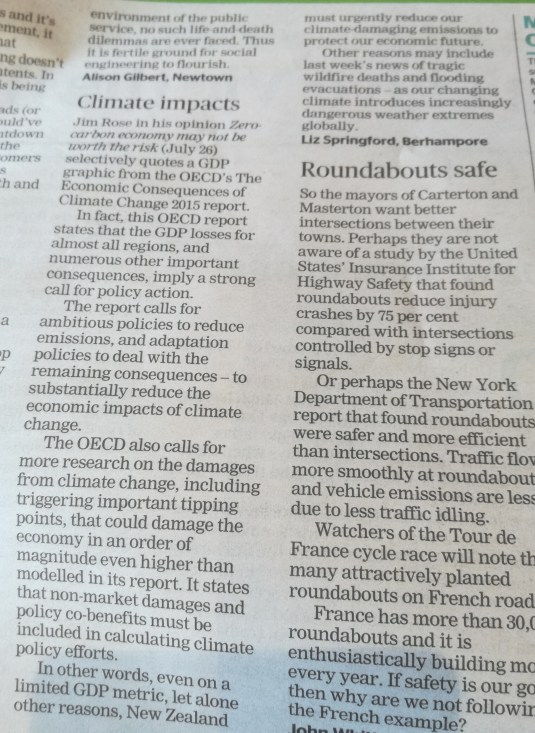
Reply to @DomPost op-ed another reason for @jamespeshaw to come clean on cost of #globalwarming to NZ
31 Jul 2018 3 Comments
in applied price theory, applied welfare economics, environmental economics, global warming, politics - New Zealand Tags: climate alarmism
Indy backgrounder on ‘Gaza-Israel conflict’ riddled with distortions
31 Jul 2018 Leave a comment

The Independent’s new Mid-East correspondent Bel Trew penned a backgrounder on the ‘Gaza-Israel conflict’ that’s full of distortions.
Here are some of the highlights from the July 27th article.
Trew asks: “Why has there been an upsurge in violence”, to which she explains:
“At the heart of the latest escalation is 16 weeks of Palestinian protests that have taken place at the border fence between Gaza and Israel”.
However, what’s been occurring at the border each week since March 31st can not accurately be characterised as merely “protests”. Rather, the Great Return March has, since the beginning, included violent riots and terror attacks by Palestinians (including Hamas and Islamic Jihad terrorists) who brought guns, pipe bombs, machetes and various incendiary devices. Their goal was to breach the security fence, sneak into Israeli communities and murder civilians.
On April 6, Hamas leader Yihya Sinwar appeared in one of the tents near the border and…
View original post 833 more words
Does it Feel Good or Does it Do Good? Left vs. Right
31 Jul 2018 Leave a comment
in applied price theory, comparative institutional analysis, constitutional political economy, defence economics, economics of education, economics of regulation, environmental economics, health economics, politics - USA Tags: expressive politics, political correctness, regressive left, The fatal conceit
The Left’s War on Science
31 Jul 2018 Leave a comment
in applied price theory, economics of information, economics of media and culture, economics of regulation, energy economics, environmental economics, health economics Tags: Anti-Science left
Human progress and how we might blow it (Jonah Goldberg’s “Suicide of the West”)
31 Jul 2018 Leave a comment
in applied price theory, applied welfare economics, development economics, economic history, economics of bureaucracy, Public Choice Tags: pessimism bias, regressive left, The Great Enrichment
A primer on DSGE Models
30 Jul 2018 Leave a comment

DSGE Models are being thrashed everywhere. These are actually based on New Keynesian thinking which had become a vogue till this crisis. The New Keyensian thinking merges Keynes ideas (markets can fail) with classical economics (rational human beings). Wikipedia nicely explains it:
Two main assumptions define the New Keynesian approach to macroeconomics. Like the New Classical approach, New Keynesian macroeconomic analysis usually assumes that households and firms have rational expectations. But the two schools differ in that New Keynesian analysis usually assumes a variety of market failures. In particular, New Keynesians assume prices and wages are “sticky“, which means they do not adjust instantaneously to changes in economic conditions.
Wage and price stickiness, and the other market failures present in New Keynesian models, imply that the economy may fail to attain full employment. Therefore, New Keynesians argue that macroeconomic stabilization by the government (using fiscal…
View original post 378 more words
Difference between Old Keynesian and New Keynesian economics
30 Jul 2018 Leave a comment
Alex Cukierman of Tel Aviv University has written an excellent paper comparing Old Keynes thinking with the New Keynesian thinking. The paper is mainly on differences and similarities between Great Depression and Great Financial Crisis.
He begins the paper reviewing developments in macroeconomics from Keynes to Friedman to New Keynesian. He then compares the GD with GFC which is pretty much known by now.
There is a nice discussion on the policy lessons from the two episodes. He divides it into two:
- Lessons learnt from GD which have been applied in GFC usefully – Monetary expansion, Fiscal Policy expansion, bank runs have disappeared, no to trade protectionism
- Lessons from GFC which are Open Issues now- i-bank runs, leverage, too big to fail, risk mismanagement, liquidity trap revisited
View original post 409 more words
50 years on and the role of monetary policy is still debated
30 Jul 2018 Leave a comment

The latest attempt comes from Neel Kashkari (the new “NK” at the Minnesota Fed, the previous one being Narayana Kocherlakota).
In 1967, Friedman´s “centerfold” for the role of monetary policy was:
“Provide a stable background for the economy”
NK´s “top of the list” role:
“Creating and maintaining a stable monetary environment”
In perfect agreement.
To Friedman, that meant:
keep the machine well oiled, to continue Mill’s analogy. Accomplishing the first task [avoid monetary disorder] will contribute to this objective, but there is more to it than that.
Our economic system will work best when producers and consumers, employers and employees, can proceed with full confidence that the average level of prices will behave in a known way in the future-preferably that it will be highly stable.
Under any conceivable institutional arrangements, and certainly under those that now prevail in the United States, there is only a limited…
View original post 386 more words
In 1992, Milton Friedman Said the Fed Was Too Tight!
30 Jul 2018 Leave a comment
A Benjamin Cole post
“The Federal Reserve has reduced the federal funds rate repeatedly from nearly 10% in 1989 to about 3% recently. According to conventional wisdom on Wall Street, that is evidence that monetary policy has been extremely easy, that the Fed has done all it can to stimulate the economy, and that it is pushing on a string, as another ancient cliché has it. This wisdom may be conventional, but it is incorrect.”—Milton Friedman, The Wall Street Journal, October 23, 1992.
It was October 1992, inflation as measured by the CPI was running at about 3.2 percent, and real GDP was expanding at about 4.0%.
Yet the title of Friedman’s op-ed concerning the Fed? “Too Tight For A Strong Recovery”
The monetary master added, “It is hard to escape the conclusion that the restrictive monetary policy of the Federal Reserve deserves much of the…
View original post 175 more words
How capitalism (read entrepreneurship) brought ice cream to the masses
30 Jul 2018 Leave a comment
Fascinating piece on how ice-cream moved from being a dish of aristocracy to being a dish of masses.
Britain’s blistering heat wave has created a record-breaking demand for the treat that, over the course of the last century, has become a summer favorite the world over: ice cream. Sales have increased 100 percent year on year, and London is even hosting an ice-cream themed pop-up exhibition, fittingly titled ‘Scoop’.
Just 350 years ago, ice cream was a rare delicacy, reserved for kings and the richest of aristocrats. To enjoy it a person had to be able to afford refrigeration, which in the pre-industrial world was arduous and expensive.
But thanks to technological and scientific progress, ice cream has become available to pretty much everyone.
Back then, to refrigerate foodstuffs, people needed the land to build an ice house (to store the ice), freshwater access, and servants to cut and hull the ice…
View original post 227 more words
History of Commercial Bank Architecture Design
30 Jul 2018 Leave a comment
A superb post by NY Fed’s Liberty Blog. It points to this nice short history of commercial bank architecture design.
Most might ask why is this important? Well it is, because earlier banks were designed and constructed with a solid structure, tall walls etc to give people a feel that bank is secure:
View original post 291 more words
First elected NUS Trans Officer Jess Bradley suspended under investigation for alleged public flashing, indecent exposure
30 Jul 2018 Leave a comment
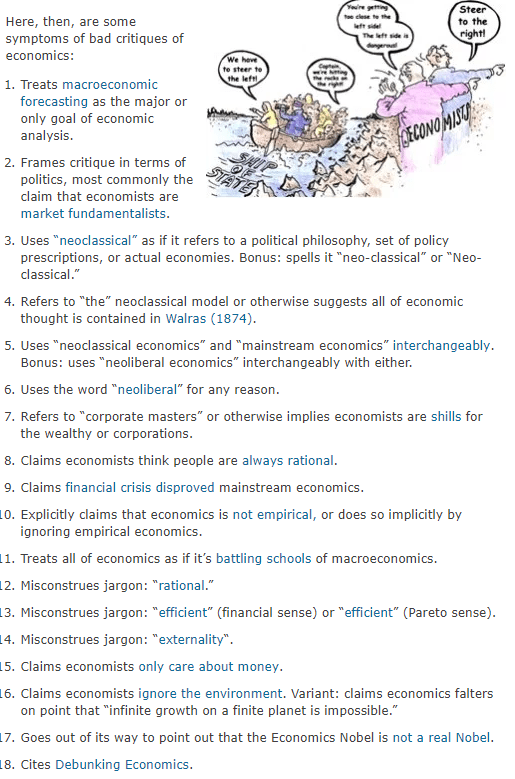
18 signs you’re reading bad criticism of economics by @Chris_Auld
30 Jul 2018 Leave a comment
in applied price theory, applied welfare economics, financial economics, history of economic thought, macroeconomics
The Last Duel in Paris
30 Jul 2018 Leave a comment

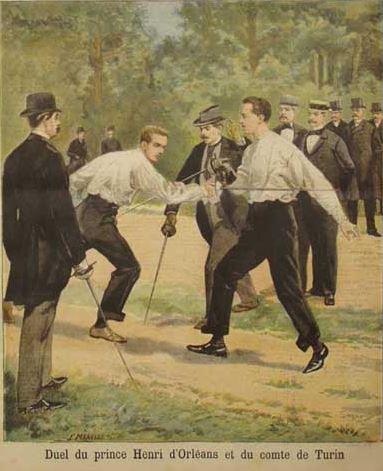
In the A Tramp Abroad, published in 1880, Mark Twain mocked the French practice of dueling:
“Much as the modern French duel is ridiculed by certain smart people, it is in reality one of the most dangerous institutions of our day. Since it is always fought in the open air, the combatants are nearly sure to catch cold. M. Paul de Cassagnac, the most inveterate of the French duelists, had suffered so often in this way that he is at last a confirmed invalid; and the best physician in Paris has expressed the opinion that if he goes on dueling for fifteen or twenty years more—unless he forms the habit of fighting in a comfortable room where damps and droughts cannot intrude—he will eventually endanger his life.”
Paul de Cassagnac, who fought twenty-two duels, will be mentioned again in this post and in the embedded video you will be able to see…
View original post 696 more words


Recent Comments