Lifting productivity: what I’d do

Pretty good list

Michael Reddell's avatarcroaking cassandra

When, a week or so ago, I wrote about how our political (and bureaucratic) leaders appeared to have given up hope, and to have lost any serious interest in turning around New Zealand’s dismal long-term productivity performance (and even worse short-term performance), and linked to my recent speech on such themes, a few commenters asked what policies I would implement, given the option.  One was specific enough to invite a “top 10 policies” list.

In what follows, I’m not suggesting that all these proposals are equally important.  It is also worth recogising that some are designed to directly improve economic performance, at least one is primarily about compensating some potential losers who might otherwise be a roadblock in the way of overdue reform, and some at improving confidence in our political system and associated institutions.   Part of what needs to accompany any significant reform package is a strong accepted…

View original post 1,372 more words

Did US ever default? It did in 1930s..

Amol Agrawal's avatarMostly Economics

Prof Sebastian Edwards of UCLA says most believe US has never defaulted but it did in 1930s:

One of the most pervasive myths about the United States is that the federal government has never defaulted on its debts. Every time the debt ceiling is debated in Congress, politicians and journalists dust off a common trope: the US doesn’t stiff its creditors.

There’s just one problem: it’s not true. There was a time, decades ago, when the US behaved more like a “banana republic” than an advanced economy, restructuring debts unilaterally and retroactively. And, while few people remember this critical period in economic history, it holds valuable lessons for leaders today.

In April 1933, in an effort to help the US escape the Great Depression, President Franklin Roosevelt announced plans to take the US off the gold standard and devalue the dollar. But this would not be…

View original post 164 more words

Image

How are interest rates determined? Böhm-Bawerk vs. the Neoclassical School

Amol Agrawal's avatarMostly Economics

Jesús Huerta de Soto discusses the differences in two schools:

Neoclassical economists believe that capital supply and demand jointly determine the interest rate in equilibrium, that subjective considerations of time preference determine supply, but that entrepreneurs determine demand based on the marginal productivity of capital (that is, based on predominantly objective considerations). This approach parallels the one that Marshall developed to explain price determination in the market, and that Böhm-Bawerk and the Austrian school reject and emphasize that when entrepreneurs demand funds, they act as mere intermediaries for workers and owners of factors of production, who are the final demanders of present goods in the form of wages and rents, and in exchange they transfer to entrepreneurs the ownership of future goods of greater value (which will only become available when the process of production concludes).

Consequently, from the perspective of Austrian economists, both sides – the supply of…

View original post 73 more words

Cake Wars: Is the Indiana RFRA Coverage Skirting The Difficult Questions Of Conflict Between Anti-Discrimination Law and Free Exercise?

jonathanturley's avatarJONATHAN TURLEY

Wedding_cake_with_pillar_supports,_2009This week, I appeared on the CNN special addressing the Religious Freedom Restoration Act (RFRA) in Indiana. While I have been a long-standing supporter of same-sex marriage, I raised concerns over the dismissive treatment of religious concerns over the scope of anti-discrimination laws and how they may curtail free exercise of religion. I have previously written both columns and academic work on this collision between the two areas of law. In the program, I raised an example of the growing conflicts that we discussed earlier on this blog of a bakery that refused to make a cake deemed insulting to homosexuals while other bakers are objecting to symbols that they view as insulting to their religious views. This issue also came up with an advocate for LGBT rights on the show:

View original post 490 more words

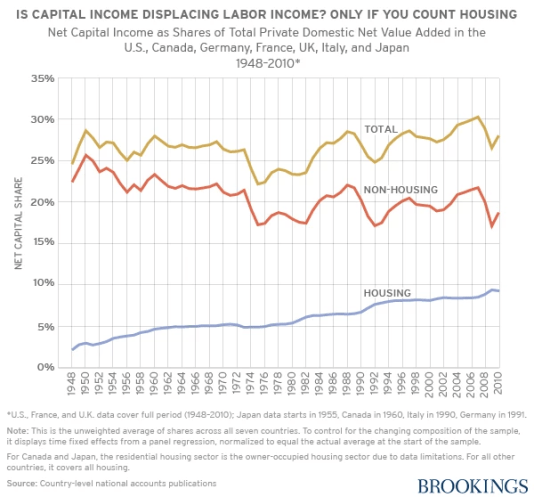
The top 1% are getting richer because everyone’s house is worth more

Image

Kahneman’s Time Interview Fails to Allay Concerns About Behavioral Law and Economics

Image

Welcome to “Free to Choose?: A Symposium on Behavioral Law and Economics”

Happy Birthday Carl Sagan

George Mason University, the Koch Brothers, and Academic Bias

Dan Mitchell's avatarInternational Liberty

I received my Ph.D. from George Mason University in Fairfax, VA, and I have very fond memories of that experience, including interactions with great economists such as James Buchanan and Walter Williams.

But not everyone has favorable views of GMU’s market-friendly program. There’s a group, UnKoch My Campus, that pretends to be horrified that the school has attracted contributions from philanthropists such as Charles Koch and David Koch.

In a column for the Washington Post, Steven Pearlstein opines about the ostensible controversy.

Thanks to a group of courageous and persistent students, George Mason University was recently forced to acknowledge that it had accepted millions of dollars from billionaire Charles Koch and other conservatives under arrangements that gave the donors input into several appointments at the university’s famously libertarian economics department. These arrangements violated traditional norms meant to insulate academic institutions from donor influence… The story fits neatly into the…

View original post 1,185 more words

History: The Great War – E04/26 – Our Hats We Doff To General Joffre

adamsmith1922's avatarThe Inquiring Mind

From Wikipedia

The Great War is a 26-episode documentary series from 1964 on the First World War. The documentary was a co-production of the Imperial War Museum, the British Broadcasting Corporation, the Canadian Broadcasting Corporation and the Australian Broadcasting Commission. The narrator was Michael Redgrave, with readings by Marius Goring, Ralph Richardson, Cyril Luckham, Sebastian Shaw and Emlyn Williams. Each episode is c.40 minutes long.

In August 1963, at the suggestion of Alasdair Milne, producer of the BBC’s current affairs programme Tonight, the BBC resolved to mark the fiftieth anniversary of the outbreak of the First World War with a big television project. The series was the first to feature veterans, many of them still relatively fit men in their late sixties or early seventies, speaking of their experiences after a public appeal for veterans was published in…

View original post 492 more words

BBC News plays down Hamas role in Gaza violence – part one

Hadar Sela's avatarBBC Watch

A filmed report by the BBC’s Middle East editor Jeremy Bowen which was aired on BBC One’s ‘News at Ten’ and on the BBC News Channel on May 16th was also posted on the BBC News website under the headline “Gaza: The bullets stop, the burials go on“.

“More funerals have taken place for the Palestinians killed by Israeli troops in Gaza on Monday.

An emergency session of the UN Security Council has heard condemnation of both Israel and the militant group, Hamas.

Today marks the 70th anniversary of what Palestinians call the Catastrophe, when hundreds of thousands of people fled – or were expelled from their homes – when the state of Israel was established.

Our Middle East editor Jeremy Bowen sent this report from Gaza.”

Bowen – who appears to have actually filmed the report on May 15th – began by giving a context-free…

View original post 1,012 more words

Moral Blameworthiness and Elasticity

coasetocoase's avatarCoase to Coase AM

Bryan Caplan’s next big project is entitled Poverty: Who to Blame, a cornerstone topic of which will be “moral blameworthiness“.  Caplan discusses the concept in short in a recent exchange with Robin Hanson:

Unlike Robin, I should add, I’m a big believer in moral blameworthiness.  Whether we’re discussing poverty or involuntary celibacy, I think we should always start by investigating whether the sufferer is culpable for his own woes.  And empirically, I think the sufferer usually is highly culpable…At the same time, though, I freely admit that a sizable minority of people suffer blamelessly. A severe congenital handicap could easily lead to both severe poverty and isolation despite exemplary behavior. Should government do anything about this? I don’t know…

This analysis, and the forthcoming book, relies on deontological moral philosophy that is pretty alien to economic analysis, which almost presoposes consequentialism.  While Caplan would reply that even the most…

View original post 378 more words

Why was the post office so unpopular back when it delivered three, four times a day?

Image

10 Fascinating Examples of Unintended Consequences

History: BBC – The Great War – E03/26 – We Must Hack Our Way Through

adamsmith1922's avatarThe Inquiring Mind

From Wikipedia

The Great War is a 26-episode documentary series from 1964 on the First World War. The documentary was a co-production of the Imperial War Museum, the British Broadcasting Corporation, the Canadian Broadcasting Corporation and the Australian Broadcasting Commission. The narrator was Michael Redgrave, with readings by Marius Goring, Ralph Richardson, Cyril Luckham, Sebastian Shaw and Emlyn Williams. Each episode is c.40 minutes long.

In August 1963, at the suggestion of Alasdair Milne, producer of the BBC’s current affairs programme Tonight, the BBC resolved to mark the fiftieth anniversary of the outbreak of the First World War with a big television project. The series was the first to feature veterans, many of them still relatively fit men in their late sixties or early seventies, speaking of their experiences after a public appeal for veterans was published in…

View original post 492 more words

Previous Older Entries Next Newer Entries

Coordination Problem

Celebrating humanity's flourishing through the spread of capitalism and the rule of law

Libertarian Land

Celebrating humanity's flourishing through the spread of capitalism and the rule of law

Arin’s Substack

Celebrating humanity's flourishing through the spread of capitalism and the rule of law

David Andolfatto

Celebrating humanity's flourishing through the spread of capitalism and the rule of law

Monetary Non-Neutrality

Celebrating humanity's flourishing through the spread of capitalism and the rule of law

Reason Magazine

Celebrating humanity's flourishing through the spread of capitalism and the rule of law

Coyote Blog

Celebrating humanity's flourishing through the spread of capitalism and the rule of law

Thoughts from the North

Celebrating humanity's flourishing through the spread of capitalism and the rule of law

Fardels Bear

A History of the Alt-Right

Vincent Geloso

Econ Prof at George Mason University, Economic Historian, Québécois

Bassett, Brash & Hide

Celebrating humanity's flourishing through the spread of capitalism and the rule of law

Truth on the Market

Scholarly commentary on law, economics, and more

The Undercover Historian

Beatrice Cherrier's blog

Matua Kahurangi

Celebrating humanity's flourishing through the spread of capitalism and the rule of law

Temple of Sociology

Celebrating humanity's flourishing through the spread of capitalism and the rule of law

Velvet Glove, Iron Fist

Celebrating humanity's flourishing through the spread of capitalism and the rule of law

Why Evolution Is True

Why Evolution is True is a blog written by Jerry Coyne, centered on evolution and biology but also dealing with diverse topics like politics, culture, and cats.

NoTricksZone

Celebrating humanity's flourishing through the spread of capitalism and the rule of law

Homepaddock

A rural perspective with a blue tint by Ele Ludemann

Kiwiblog

DPF's Kiwiblog - Fomenting Happy Mischief since 2003

The Dangerous Economist

Celebrating humanity's flourishing through the spread of capitalism and the rule of law

Watts Up With That?

The world's most viewed site on global warming and climate change

The Logical Place

Tim Harding's writings on rationality, informal logic and skepticism

Doc's Books

A window into Doc Freiberger's library

The Risk-Monger

Let's examine hard decisions!

Uneasy Money

Commentary on monetary policy in the spirit of R. G. Hawtrey

Barrie Saunders

Thoughts on public policy and the media

Liberty Scott

Celebrating humanity's flourishing through the spread of capitalism and the rule of law

Point of Order

Politics and the economy

James Bowden's Blog

A blog (primarily) on Canadian and Commonwealth political history and institutions

Science Matters

Reading between the lines, and underneath the hype.

Peter Winsley

Economics, and such stuff as dreams are made on

A Venerable Puzzle

"The British constitution has always been puzzling, and always will be." --Queen Elizabeth II

The Antiplanner

Celebrating humanity's flourishing through the spread of capitalism and the rule of law

Bet On It

Celebrating humanity's flourishing through the spread of capitalism and the rule of law

History of Sorts

WORLD WAR II, MUSIC, HISTORY, HOLOCAUST

Roger Pielke Jr.

Undisciplined scholar, recovering academic

Offsetting Behaviour

Celebrating humanity's flourishing through the spread of capitalism and the rule of law

JONATHAN TURLEY

Res ipsa loquitur - The thing itself speaks

Conversable Economist

In Hume’s spirit, I will attempt to serve as an ambassador from my world of economics, and help in “finding topics of conversation fit for the entertainment of rational creatures.”

The Victorian Commons

Researching the House of Commons, 1832-1868

Books & Boots

Reflections on books and art

Legal History Miscellany

Posts on the History of Law, Crime, and Justice

Sex, Drugs and Economics

Celebrating humanity's flourishing through the spread of capitalism and the rule of law

European Royal History

Exploring the Monarchs of Europe

Tallbloke's Talkshop

Cutting edge science you can dice with