Here is my recent Mint piece where I argue how the year 2018 is significant for two developments in monetary economics. First is the 50th anniversary of much celebrated Milton Friedman’s lecture titled “The role of monetary policy”. Second is the Reserve Bank of NZ adding employment to its price stability mandate.
Both the events are obviously connected as I explain in the piece. How RBNZ adding employment to its price stability objective is against Friedman’s advice given in 1968. Friedman argued a central bank should only focus on price stability and leave other objectives to polity. So just like life, monetary policy and central banking also keeps going in circles…
Researchers are analysing icecaps to figure minting activity in Roman empire:
e know a lot about the Roman Empire. Not only did famous Romans like Julius Caesar write about their own accomplishments and plaster their names and works on public buildings, historians also chronicled the rise and fall of the powerful civilization. But sometimes it’s hard to know how the average person in the Empire was doing—while Caesar was off conquering Gaul, was the economy good? During the Year of the Four Emperors, when intrigue and infighting rocked the empire, was the government still minting money? As Katie Langin at Science reports, researchers recently found some insight locked in Greenland’s ice cap.
Besides the power of the legions, Rome’s might lay in its wealth, the cornerstone of which was a silver coin known as a denarius. Producing the silver needed to mint…
Published in 1988, “The Intellectuals” by Paul Johnson (born 1928) is a unique book. Not only for its quality but because there aren’t many like it. There is “The Betrayal of the Intellectuals” (1927) by Julien Benda, “The intellectuals and the masses (1990)” by John Carey, “Intellectuals and Society” (2010) by Thoma Sowell, and I guess “Fire in the Minds of Men: Origins of the Revolutionary Faith” (1980) by James H. Billington, which also deals with a somewhat similar subject. But, acknowledging these exceptions, one has to admit that there aren’t many books about the “intellectual class”, its origins, impact, and so on. That seems to be changing, but studying the intellectuals is still taboo. Not surprising if one realizes they have become a new kind of priesthood.
Submission to Select Committee: International treaty examination of the Comprehensive and Progressive Agreement for Trans-Pacific Partnership
By
Jim Rose
This submission is in my personal capacity. I am an economic consultant in Wellington who has worked in the past for the Ministry of Business, Innovation and Employment, the Department of Labour, the Ministry of Social Development, Child, Youth and Families Department and the New Zealand Treasury, and in Canberra for the Productivity Commission, the Department of Prime Minister and Cabinet, and the Department of Finance. I have Masters degrees in economics and in public policy from the Australian National University and from the now National Graduate Institute for Policy Studies in Tokyo respectively. I have written op-eds on the Trans-Pacific Partnership Agreement and other topics for the New Zealand Herald, Dominion Post and National Business Review. I blog at www.utopiayouarestandinginit.com
Free trade agreements are at best suspect. That is not me saying this. That is Paul Krugman, his generation’s leading trade theorist.
Krugman argues that you should start as a mild opponent of any free trade agreement. Closely inspect the baggage they carry; environment and labour chapters, intellectual property, investor state dispute settlement (ISDS) and government procurement such as Pharmac. Start with a sceptical eye.
These add-on chapters are the costs of free trade agreements that are relatively obvious to the untrained eye. No technical economics is yet required to suspect that any trade agreement will be an opportunity for special interests on the right and the left, both unions and big corporations, to feather their own nest. Longer patent lives, more stringent enforcement of overseas copyrights, Pharmac buying more expensive drugs, and so on in return for tariff cuts in export markets.
But let us start with what is claimed as the benefits by the government. In a TPPA without the USA, in about 30-years’ time, as little as 0.3% extra GDP and at most 1% more GDP in sum will be generated. Less than one quarter of these modest gains over 30 years come from tariff cuts.
The rest of the gains are from behind the border changes from streamlining customs to investor state dispute settlement. Never easy to quantify because even the most impartial spectators can disagree amongst themselves on whether these regulations are a plus or minus to begin with, so they cannot agree on whether reducing or increasing them are a plus or not. The 20 odd carve-outs and side letters negotiated by the new government was all about prying back this baggage. This suggests that most of this baggage should not have been loaded up to begin with.
The only time tariff cuts are suspect is when they are part of a free trade agreement. The reason is trade diversion. A technical concept which MFAT does not know about because I received a nil response to an Official Information Act request about their TPPA advice to ministers about the costs and benefits including any reference to trade diversion.
We have been of the rough end of trade diversion in the two biggest trade agreements to affect us. When Britain entered the Common Market in 1973, they stop buying cheap New Zealand lamb in favour of expensive French lamb. The tariff revenue collected by the British on our lamb exports was converted into payments to prop up hopelessly inefficient French farmers. British consumers paid the same or more for lamb and there was no tariff revenue to collect.
New Zealand car buyers then got screwed by Closer Economic Relations. Instead of buying cheap Japanese imports and collecting a tariff, Holdens and Fords became cheap because they did not pay this tariff. Cars were not cheaper for New Zealand buyers; the tariff revenue went off to Australian car manufacturers as higher import prices to keep their hopelessly inefficient car plants open.
With the USA out of the TPPA, the tariff cuts are less even if there was no trade diversion and we still have all the baggage in the agreement from environment and labour chapters, intellectual property, threats to Pharmac, and ISDS. The costs have not gone down but the benefits have because of the loss of the single biggest market planning to join the agreement.
Investor state dispute settlement has no place in trade agreements between democracies. They have the rule of law where investors can take their chances in domestic politics just like the rest of us. Yes, there will be breathless populism from the left or right from time to time, such as recently over foreign land sales, but by and large foreign investment is welcome and gets a fair deal.
Developing countries offered to sign on to investor state dispute settlement because their own courts are corrupt. Maybe investor state dispute settlement worked 50 years ago when investment in developing countries was tiny and handled by a few big players who might get picked on by politicians looking for a few cheap votes or more likely, a backhander to the Swiss bank account.
Now there is broad-based trade and investment in developing countries despite their corrupt courts and dodgy politicians. Many exporters and investors are willing to take their chances. When the local politicians and bureaucrats get rough, investors have already factored that in by backing investments with high enough returns to compensate for these risks. Tourists buy travel insurance and keep their eyes open; investors know the rules abroad are different and must be just as watchful.
Japan, Singapore, South Korea, Hong Kong, Taiwan and the other Asian Tigers and now India too managed to have development miracles without investor state dispute settlement. Extreme poverty dropped by about 1/3rd around the globe over the decade or so course of the TPPA negotiations and far more than that in China so I think they are getting on pretty well without it.
Most of these points are lost in the debate on the TPPA because too many of its opponents are motivated by anti-capitalist or anti-foreign sentiments rather than cost benefit analysis. They would oppose a trade agreement solely about tariffs that lowered prices to New Zealand consumers.
Not every trade negotiation is successful. For some, you reach the point where you must walk away. More so because of all the baggage loaded up into trade agreements in the last few decades.
There should be a hard-nosed benefit cost analysis and when the USA was in, the TPPA might have been worth the risk, just. More access to the US market may have made up for all the other baggage. The price has gone up on signing the TPPA, so much so we probably should give it a miss.
One of the challenges faced by a music streaming service is to figure out what music to play for the brand-new listener. The first listening experience of a new listener can be critical to gaining that listener as a long time subscriber. However, figuring out what to play for that new listener is very difficult because often there’s absolutely no data available about what kind of music that listener likes. Some music services will interview the new listener to get an idea of their music tastes.
Selecting your favorite genres is part of the nifty user interview for Beat’s music
However, we’ve seen that for many listeners, especially the casual and indifferent listeners, this type of enrollment may be too complicated. Some listeners don’t know or care about the differences between Blues, R&B and Americana and thus won’t be able to tell you which they prefer. A listener whose only experience…
In 2011, Naruto, a seven-year-old crested macaque played with a cameraman’s equipment, taking several selfies that have since gone viral. It’s the sort of feel-good animal story that anyone would love.
Unfortunately, the story took a dark turn when PETA filed a lawsuit “on the monkey’s behalf” alleging the photographer was violating the monkey’s copyright in the selfies. Over the next two years, the litigation would nearly bankrupt the photographer.
The case was a high profile test of the rights-of-nature theory—the idea that activists can file lawsuits in the name of animals, trees, rivers, etc. to protect environmental interests. Most efforts have failed, and for good reason.
As I recently explained when an activist group brought a lawsuit in the name of the Colorado River,
Courts have no way of deciding who represents the true interests of an inanimate object. A river has no preferences, at least none that…
The Gaza Health Ministry reported that an 8 month old girl was among those killed on Monday during border protests, the victim, the Hamas run ministry claimed, of Israeli tear gas. Leaving aside the question (unexplored by the media thus far) of why a Palestinian adult would bring a baby to violent protest, the claim that Israel was responsible for her death was undermined that same day by a Gaza health official, who said the baby, Layla Ghandour, “had a preexisting medical condition and that he did not believe her death was caused by tear gas”.
The Independent reported on the incident yesterday, and, despite a sensational headline and evocative photo suggesting Israel was responsible for the death, their reporter, Bethan McKernan, did at least cite the comments by Gaza health official undermining Hamas’s claims.
“Embracing free speech in these controversies will not mean that people can be turned away due to their religion, race, gender or sexual orientation. It would only apply to expressive acts where a business owner is asked to prepare something that is deemed as offensive. The Constitution would still protect against refusal to serve based not on the act of free speech but on the class or identity of the customer.”
You either protect free speech for everyone or give the government the power to determine what speech is permitted and what is proscribed, from coffee shops to cake shops.
Below is my column in The Hill newspaper on how liberals in New York are supplying the Supreme Court ample reason to rule for a Colorado cake shop owner in the Masterpiece Cakeshop case. As the Court decides whether a baker can refuse to bake a cake deemed offensive, many liberals are asserting the right to refuse to serve conservatives based on their political views or associations.
The Electronic Frontier Foundation is a pretty sturdy defender of free speech rights online. Therefore, in many ways, it is no surprise that EFF decided to take up a case in which PETA alleges their free speech rights were violated when Texas A&M deleted comments by the group about the university lab’s use of dogs in its muscular dystrophy experiments on Texas A&M’s Facebook page.
According to EFF’s press release the group contends:
The school, the nation’s second-largest public university by student enrollment, won’t publish any post containing the animal rights group’s name, or posts containing at least 11 words, including “cruelty,” “abuse,” “torture,” “lab,” “testing,” and “shut.” The censorship started after PETA began an advocacy campaign against Texas A&M for a medical research lab studying muscular dystrophy in dogs for the purposes of finding a cure for the human version of the disease. The lab breeds golden retrievers to…
That was my immediate reaction yesterday when someone asked me view of Reserve Bank Governor Adrian Orr’s latest public comments, on the Christchurch rebuild, PPPs, government infrastructure spending, and so on.
Here was just a sample of what the Reserve Bank Governor said, as reported by Stuff’s Hamish Rutherford
Orr, who is now the governor of the Reserve Bank, made an enthusiastic plea for New Zealand to embrace “third party capital” – a reference to public private partnerships – as a means of boosting investment in infrastructure.
“This country, we’ve gone through the lowest ever global interest rates, we’re in good fiscal health. Why aren’t we investing?” Orr said in an interview.
“Personally, as a citizen of New Zealand I’m very pleased to see public investment being planned and trying to get underway, and I’m even more pleased as a citizen of the world that third party capital is…
Why Evolution is True is a blog written by Jerry Coyne, centered on evolution and biology but also dealing with diverse topics like politics, culture, and cats.
In Hume’s spirit, I will attempt to serve as an ambassador from my world of economics, and help in “finding topics of conversation fit for the entertainment of rational creatures.”


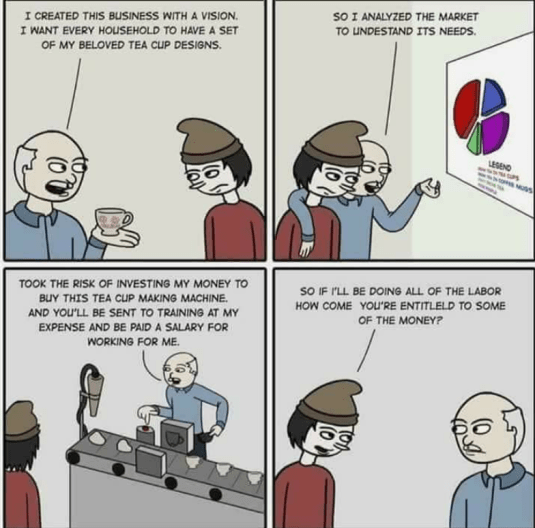

 Selecting your favorite genres is part of the nifty user interview for Beat’s music

 In 2011, Naruto, a seven-year-old crested macaque played with a cameraman’s equipment,


 Below is my column in The Hill newspaper on how liberals in New York are supplying the Supreme Court ample reason to rule for a Colorado cake shop owner in the


Recent Comments