Does addiction and mental illness dull responses to incentives
01 Nov 2017 Leave a comment
in applied price theory, economics of crime, health economics
I found the chapter in Tullock and McKenzie’s book on token economies in mental hospitals to be most enlightening in regard to addictions and mental illness clouding judgement.
The tokens in a token economy were spending money at the hospital canteen and trips to town and other privileges. They were earned by keeping you and your area clean and helping out with chores at the mental asylum.

The first token economies were for chronic, treatment-resistant psychotic inpatients. In 1977, a major study, still considered a landmark, successfully showed the superiority of a token economy compared to the standard treatments of these type of psychotic inpatients.
Experiments which would now be unethical showed that the occupational choices and labour supply of certified lunatics responded to incentives in the normal, predictable way. For example, tokens were withdrawn for helping clean halls and common areas. The changes in occupational choice and reductions in labour supply was immediate and as predicted by standard economics.
Some patients would steal the tokens for other patients, so the tokens were individually marked. The thefts almost stopped. Crime must pay even for criminally insane inpatients. Kagel reported that:
The results have not varied with any identifiable trait or characteristic of the subjects of the token economy – age, IQ, educational level, length of hospitalization, or type of diagnosis. Most people age out of addiction to drugs or to alcohol. By age 35, half of patients with active alcoholism or addiction diagnoses during their teens and 20s no longer take drugs or drink:
The average cocaine addiction lasts four years, the average marijuana addiction lasts six years, and the average alcohol addiction is resolved within 15 years. Heroin addictions tend to last as long as alcoholism, but prescription opioid problems, on average, last five years. In these large samples, which are drawn from the general population, only a quarter of people who recover have ever sought assistance in doing so (including via 12-step programs). This actually makes addictions the psychiatric disorder with the highest odds of recovery.
Studies of demand elasticity normally find that consumption of hard drugs is quite sensitive to price. Addicts respond to incentives, in particular, to price rises by cutting back on their drug taking.
At the beginning of this century, the Dutch government controlled the opium market in the Dutch East Indies–nowadays Indonesia–for several decades. This state monopoly was called the opiumregie. Using information gathered during the opiumregie, this paper estimates price elasticities of opium consumption. It appears that short-term price elasticities of opium use are about -0.7. Long-term price elasticities are about -1.0.
Econ Duel: Is Education Signaling or Skill Building?
29 Oct 2017 Leave a comment
in applied price theory, economics of education, labour economics, labour supply, occupational choice Tags: signalling
Trading Pollution: How Pollution Permits Paradoxically Reduce Emissions
25 Oct 2017 Leave a comment
in applied price theory, environmental economics Tags: carbon tax, carbon trading
But is a living wage policy still worth a try?
24 Oct 2017 Leave a comment
in applied price theory, applied welfare economics, minimum wage, politics - New Zealand, politics - USA
https://twitter.com/EconBizFin/status/626687442834300928
Demands for massive pay rises for the low-paid are not just confined to New Zealand. The US debate is worth reviewing because their living wage advocates are so upfront about the job losses.
US living wage activists such as Fight for $15 want to double their federal minimum wage from $7.25 per hour to $15 per hour. California, New York, San Francisco and Seattle are among the states and cities increasing their local minimum wages, currently of up to $12, to $15 by 2021 or 2022.
Some such as Arindrajit Dube say that these very large wage increases by cities and states in their federal system are experiments “worth running and monitoring” (Lane 2016). As Dube said recently:
“… 30 to 40 percent of the California workforce will get a raise … This will be a big experiment. It’s far outside of our evidence base…
If you’re risk-averse, this would not be the scale at which to try things. On the other hand, if you think that wages are really low and they’ve been low for a really long time and we can afford to take some risks, doing things at this scale will get us more evidence” (Lee 2016).
Noah Smith (2016) concluded that the empirical literature on minimum wages suggests that a 10% minimum wage increase would reduce employment by about 2% so doubling the federal minimum wage would see the employment of young people go down by one-fifth. Smith (2016) said this is a “small but real effect — a $15 federal minimum wage might throw a million kids out of work”.
Should activists use minimum wage breadwinners for policy experiments? Noah Smith (2016) considers balancing the one million unemployed teenagers against the wage gains for adults as “necessary for a decision”.
Smith suggests that the large minimum wage increases in some US states and cities will tell us how big this welfare trade-off between jobs and wage rises is:
We don’t really know what happens when you raise the minimum wage to $15 — but soon, we will know. We will be able to see whether employment rates fall in L.A., Seattle, and San Francisco. We will be able to see whether people who can’t get work migrate from these cities to cities with lower minimum wages.
We will be able to see if employment growth suddenly slows after the enactment of the policy. In other words, federalism will do its job, by allowing cities to act as policy laboratories for the rest of the country (Smith 2015).
“Big experiments” involving large minimum wage increases to “provide clear evidence” to quote Dube’s words (Scheiber and Lovett 2016) are wrongheaded as Robert Lucas has explained:
I want to understand the connection between in the money supply and economic depressions. One way to demonstrate that I understand this connection–I think the only really convincing way–would be for me to engineer a depression in the United States by manipulating the U.S. money supply.
I think I know how to do this, though I’m not absolutely sure, but a real virtue of the democratic system is that we do not look kindly on people who want to use our lives as a laboratory. So I will try to make my depression somewhere else (Lucas 1988).
Leading reasons for economic theory, empirical research and the study of economic history are to warn the present against repeating past errors and not try experiments that are folly (Rosen 1993). There is too much group think and not enough courage of your vocation (see Dylan Matthew’s tweet below).
https://twitter.com/dylanmatt/status/720786520509165568
Australian-born economist Justin Wolfers is frank about the wishful thinking in the US debate:
But if you are interested in what level to set the minimum wage, the existing literature is nearly hopeless. Plausible reforms lie far outside the bounds of historical experience.
We don’t have useful estimates of the extent to which employment effects vary with the minimum wage. Since policymakers tend to implement short-run fixes, we know a lot about the effects of temporary reforms, but very little about the consequences of lasting reform (Wolfers 2016).
Most of the empirical studies are of the jobs lost over the next few years. When estimates have a 10 to 15-year horizon with time enough for entry, exit and technological adaptation and automation, a “long-run disemployment effect that is five times larger than the short-run effect” is in evidence (Aaronson, French, Sorkin 2016; Aaronson, French, Sorkin and To forthcoming; Sorkin 2015).
Construction is not a rising costs industry
22 Oct 2017 Leave a comment
in applied price theory, industrial organisation, urban economics
The literatures on urban, housing and construction economics all suggest that construction is a constant costs industry (Glaeser, Gyourko and Saiz 2008). Differences in building costs in the wider construction industry arise from differences in: local topology, local regulatory environments, the extent of unionisation, and the level of local wages generally (Glaeser, Gyourko and Saiz 2008).
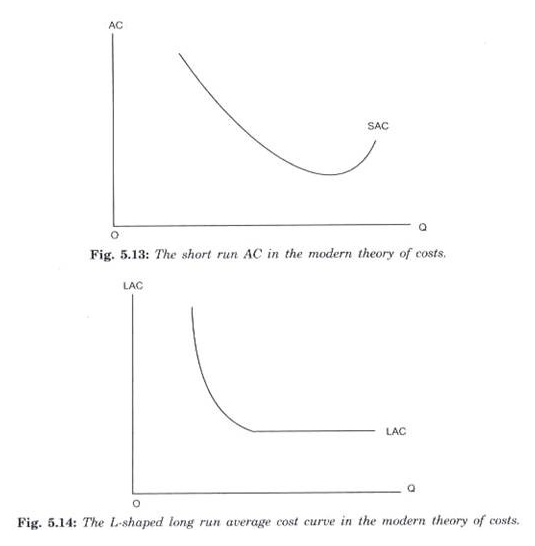
A constant costs industry can expand rapidly such as when a large project arises without putting pressure on costs. The construction industry everywhere developed with many small firms with prolific use of subcontractors much smaller than the head contractor. Firms in most industries including construction capture all available economies of scale at relatively small sizes. After that point where these scale economies are capture, there is a long region of production where the marginal cost of increases in production is constant (Stigler 1958, 1987; Barzel and Kochin 1992; and Shughart 1997).
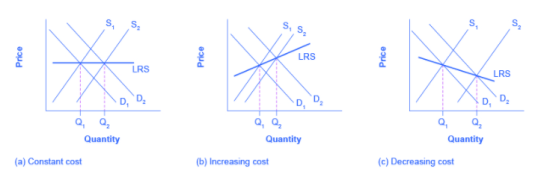
As an example of constant costs in construction, recall the construction boom in New Zealand between 2001 and 2008. The Department of Labour (2011) found the construction industry found a great many additional workers to meet this rapidly rising demand without large increases in labour costs. There was a 54% increase in employment between 2001 and 2008, from 125,000 in 2001 to 194,000 in 2008; employment across all industries over the same period increased by 23% (Department of Labour 2011). The majority of these new construction workers came from other industries with the rest were from outside the labour force or from relying on welfare benefits (Department of Labour 2011).
Despite this need to find a great mass of new workers, pay increases were only marginally higher than the construction industry than those across all industries, as the Department of Labour (2011) explains:
The Labour Cost Index (LCI), which adjusts for human capital and hours of work supplied, shows that wages in construction increased by 3.0% per year over this period compared with 2.8% for all industries. In what was a strong economy of the mid-2000s, the construction industry recruited many more workers without a relatively large increase in real labour costs.
The construction cost increases during the last housing boom were not due to input cost inflation. The industry wanted to build more houses on a faster timeline. This put a different type of pressure on costs.
Costs are sensitive to the speed of output as well as the total output planned (Alchian 1959; Stigler 1987). Producing the same thing sooner rather than later increases total, marginal, incremental, and average costs (Alchian 1959). Fast-tracking raises co-ordination costs, less efficient lower quality inputs must be used to increase the rate of production, and there is less time to identify the best inputs and lowest cost production processes. Wage premiums are paid for longer hours and lost weekends. There are few opportunities to learn by doing. Learning by doing reduces the cost of future output, but with fast tracking, more is produced now and less at the lower cost in the future (Alchian 1959; Stigler 1987).
Cost overruns is just not something that happens in the construction industry because costs rise rapidly with scale when a big project is underway. The industry is a constant costs industry. Something more fundamental must be driving cost blow-outs in road construction than purported diseconomies of scale.
Ferengi Rules of Acquisition [Complete List]
20 Oct 2017 2 Comments
in applied price theory, movies, television Tags: Deep Space Nine, star trek
Why Bernie Sanders’ Medicare for All is a Bad Idea
19 Oct 2017 Leave a comment
in applied price theory, health economics, politics - USA Tags: health insurance
Room for honest disagreement on tax policy?
16 Oct 2017 6 Comments
in applied price theory, Public Choice, public economics
Too much of tax policy is debated with pistols drawn at ten paces. Each side accusing the other of ignorance or being steeped in moral turpitude, and preferably often both.
Far too much time is spent feuding over the incentive effects of taxes. If you inspect closely the history of the warring sides, they all agree that incentives matter. If you tax something, you see less of it; if you cut taxes, you will see more of it. The difficulty is the advocates for various causes are disappointingly selective about when they admit this is so.
Incentives do matter
Thomas Piketty could not be more honest about the impact of a higher top tax rate. Piketty welcomes the strong incentive effects of high marginal tax rates!
Why? Piketty wants to use high taxes to put an end to top incomes. He wants few to earn a large income and if they do, they should face ruinously high 70-80% marginal tax rates.
This honesty of Piketty is the basis of a ceasefire. Let us all admit that taxes have incentive effects and argue whether that is good or bad or that other considerations are more important than efficiency. Too often in debates over income tax cuts, the opponents will not give an inch on the labour supply and investment effects of lower taxes.
Incentives count, especially when they bolster your case
But when the same groups argue about poverty traps when welfare benefits are wound back or when tax rates and Working for Families abatement rates interact, they admit that work must pay. Ordinary families will work less and second earners may stop working.
Those deeply troubled about poverty traps from high effective marginal tax rates deny point blank that putting the top tax rate back up to 39% or more will harm labour supply, investment, entrepreneurship and the incentive to go on to higher education.
On taxes on sugar and tobacco, consumers are said to be fairly responsive to higher taxes. Unkind words are said about the motives of those that disagree with these taxes.
The opposition is about how taxes on sugary drinks is a waste of time unless they are prohibitively high because there is plenty of substitute sources of sugar and fattening foods.
A higher tobacco tax is much more likely to cut smoking because there is no reasonable substitute. If the Government really wanted people to quit smoking, rather than raise more revenue, they would legalise the sale of the safer alternative — e-cigarettes containing nicotine.
Opponents of company tax cuts are unwilling to admit that in highly integrated global capital markets that a lower company tax wins more investment. They say that more tax is paid in the home country of the foreign investor if we cut our company tax.
In the next breath, they will rage against Facebook and Google for avoiding New Zealand company taxes. This is despite their previous argument implying this tax avoidance must be futile because Facebook and Google will pay more taxes off-shore if they pay less company tax in New Zealand.
European Union politicians will say in domestic elections that company taxes do not deter investment but still relentlessly bully the Irish for its 12.5% company tax rate because it was winning more investment at their expense. What is the point of the EU and G20 push for tax harmonisation unless it is to stop competition for investment through lower company taxes?
Clashing value judgements
It is perfectly reasonable to agree on the effect of a particular tax policy but have an honest disagreement about its desirability. A higher top tax rate will not raise as much revenue as some hope but that may not matter if you want less income inequality. Sugar taxes may not reduce obesity by much, but it could be a useful first signal about healthy eating.
Others disagree because sugar taxes are ineffective and because people should be able to live their lives for better or for worse by their own lights as long as they do not harm others. People meddling in the lives of others because they know better has always ended in tears.
At least we should keep the conversation civil. Incentives matter. Taxes bite. The disagreement is over who you want the taxes to bite. By how much usually depends on by how you value the competing goals of efficiency, equality and liberty.
Russian offsetting behaviour
16 Oct 2017 Leave a comment
in applied price theory, sports economics Tags: offsetting behaviour, unintended consequences

Doctor Strangelove – Doomsday Machine
14 Oct 2017 Leave a comment
in applied price theory, defence economics, movies Tags: game theory, mutually assured destruction
Facts About Taxes: Michael Keane
12 Oct 2017 Leave a comment
in applied price theory, fiscal policy, human capital, labour economics, labour supply, macroeconomics Tags: taxation and labour supply
Is Growth of Government Inevitable? | Sam Peltzman
12 Oct 2017 Leave a comment
in applied price theory, economic history, fiscal policy, macroeconomics, Public Choice, public economics, Sam Peltzman Tags: Director's Law, growth of government


Recent Comments