May 29th: Birthday (1630) and Restoration (1660) of Charles II, King of England, Scotland and Ireland.

liamfoley63's avatarEuropean Royal History

Charles II (May 29, 1630 – February 6, 1685) was King of Scotland from 1649 until 1651, and King of England, Scotland and Ireland from the 1660 Restoration of the monarchy until his death in 1685.

Charles II was the eldest surviving child of Charles I of England, Scotland and Ireland and Henrietta Maria of France. After Charles I’s execution at Whitehall on January 30, 1649, at the climax of the English Civil War, the Parliament of Scotland proclaimed Charles II king on February 5, 1649. However, England entered the period known as the English Interregnum or the English Commonwealth, with a government led by Oliver Cromwell. Cromwell defeated Charles II at the Battle of Worcester on September 3, 1651, and Charles fled to mainland Europe.

Cromwell became Lord Protector of England, Scotland and Ireland. Charles spent the next nine years in exile in France, the Dutch Republic and the…

View original post 536 more words

The Greens are more pro-development than National and ACT

Whiskey&Pie's avatarNo Minister

National has introduced a terrible housing policy that can only be a reaction of the struggling Chris Luxon to pressure from Nimbies. It means that an Auckland housing unit will have a land cost over $500k more per unit than the MDRS rules. See below for an example

Peter Cresswell has an on point critique here. A Green Party MP shepherded the rules through select committee.

SO WITH HOUSING ONCE again a political football, we await an election to sort out which fuckwits where get to tell us where and how we’re allowed to build, planning rules in and around our city are once again completely up in the air — as they were while we awaited certainty around the MRDS. And without that certainty, it’s impossible for developers and builders to make real plans, uncertain as they are as to how council’s planners might be allowed to curtail…

View original post 184 more words

BRIAN EASTON: The economic runup to the election

poonzteam5443's avatarPoint of Order

The Treasury released its budget economic forecasts. What do they say about the economy over the next four months?

  • Brian Easton writes –  

Let me begin me with an irritation. One post-budget headline was ‘Treasury optimistic over recession risk in Budget 2023‘. Treasury being optimistic is almost an oxymoron. They fire down the centre.

It is true that Treasury has lifted its forecast of economic activity (GDP) a little since its December 2022 exercise, reflecting stronger migration and tourism and the rebuild from the cyclones. Even so, it expects GDP per capita to fall fractionally between the June 2023 and June 2024 years. The next year is going to be tough, with some quickening of economic activity in the middle of 2024.

Moreover, while Treasury does not forecast the fans showing the degree of uncertainty in the forecasts, it provides guidance about its assessment of upside and downside…

View original post 889 more words

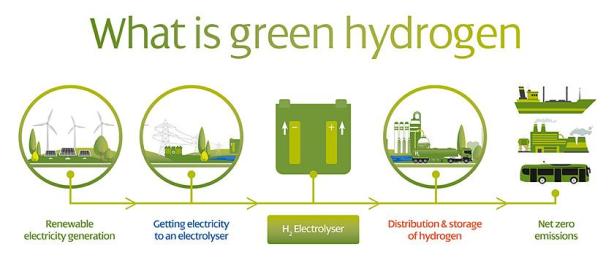
Is Green Hydrogen Being Overhyped? 

oldbrew's avatarTallbloke's Talkshop

Credit: Scottish Power
Plenty of talk but not very much action, it seems. The author notes that ‘the small size of hydrogen molecules poses safety and greenhouse gas-related risks that must be mitigated’, while most current gas grids can’t cope with more than 20% hydrogen content anyway. Affordability looks at least questionable. Such issues will require years of effort and expense to even attempt to get to grips with.
– – –
The global discourse on addressing climate change, energy transition, and investments is currently dominated by the topic of green hydrogen, says Dr. Cyril Widdershoven @ OilPrice.com.

The media frenzy surrounding the expanding array of projects, subsidy schemes, and international strategies is fueled by the influence of Washington’s IRA plans and the EU’s energy strategic projects.

It appears as if the choice for a post-hydrocarbon world has already been made, with green hydrogen or its derivative, green ammonia…

View original post 272 more words

Labour Party Promises to Do Nothing about Impending Bankruptcy

majorstar2022's avatarNo Minister

Labour party’s Congress is underway in Wellington. The country’s worst ever minister for ‘Social Development’ (a ministry which does not involve developing society at all) has unveiled their first policy to campaign on:

Deputy Prime Minister Carmel Sepuloni said a re-elected Labour government, led by Hipkins, would not raise the pension age from 65.

“New Zealand has one of the simplest superannuation schemes in the world. It is universal and generous,” Sepuloni said.

Labour would also continue making contributions to the NZ Super Fund and dishing out the winter energy payment.

That’s right. Despite soaring debt, an aging population and one of the most generous superannuation schemes in the world, Labour are committed to keeping it exactly as is.

Treasury had warned the cost of the ageing population was on an “unsustainable” track but Sepuloni stressed not changing the age was affordable “as long as we keep paying into…

View original post 217 more words

Feds launch RMA roadshow

homepaddock's avatarHomepaddock

Federated Farmers is working with the Taxpayers’ Union with a roadshow opposing the government’s replacement to the RMA:

“We all want to see reform of the RMA, but it needs to be done right to address the issues of cost and complexity that farmers face every time they want to do something productive with their land,” says Federated Farmers RMA Reform spokesperson Mark Hooper.

“The current legislation just ties farmers up in red tape, slows us down, and heaps on unnecessary costs – but the Government’s proposed reforms will only make that worse. It’s an absolute nightmare for farmers.

Federated Farmers strongly opposes the current reforms because they will shift land use planning away from democratically elected councils towards ‘Regional Planning Committees’, which will be at arm’s length from their local community,” Hooper said.

“We also have real concerns that the reforms will introduce new, vague and undefined concepts…

View original post 155 more words

Green Schemes Broken by Reality

Ron Clutz's avatarScience Matters

James E. Hanley provides a roundup of failed Green expensive ventures in his Real Clear Policy article Green Projects Hit Iron Wall.  Excerpts in italics with my bolds and added images.

Developers looking to build thousands of wind turbines off the Mid-Atlantic and New England coast are coming up against a force even more relentless than the Atlantic winds: the Iron Law of Megaprojects, offering a warning of the trouble ahead for green-energy projects.

The Iron Law, coined by Oxford Professor Bent Flyvbjerg, says that “megaprojects” — which cost billions of dollars, take years to complete, and are socially transformative — reliably come in over budget, over time, over and over.

From Boston’s Big Dig to California’s high-speed rail to
New York’s 12 years-overdue and 300% over-budget East Side Access rail project,
big boondoggles routinely demonstrate the validity of the rule.

Offshore wind projects are not immune to the…

View original post 777 more words

Don’t Be a Feminist: The Fleischman Interview with Bryan Caplan

May 25, 1659 & 1660: Lord Protector Richard Cromwell & King Charles II of England, Scotland and Ireland

liamfoley63's avatarEuropean Royal History

May 25, 1659 – Richard Cromwell resigns as Lord Protector of England following the restoration of the Long Parliament, beginning a second brief period of the republican government called the Commonwealth of England.

Richard Cromwell was born in Huntingdon on October 4, 1626, the third son of Oliver Cromwell and his wife Elizabeth. Little is known of his childhood. He and his three brothers were educated at Felsted School in Essex close to their mother’s family home. There is no record of his attending university. In May 1647, he became a member of Lincoln’s Inn; however he was not called to the bar subsequently. Instead, in 1647 Richard Cromwell joined the New Model Army as a captain in Viscount Lisle’s lifeguard, and later that year was appointed captain in Thomas Fairfax’s lifeguard.

In 1649, Richard Cromwell married Dorothy Maijor, daughter of Richard Maijor, a member of the Hampshire gentry. He…

View original post 1,379 more words

Image

Does the Maori Roll Really Empower Maori?

Prior to MMP, if there was no Maori roll, half a dozen regional National party seats would have been more marginal making a labour government more likely

pdm1946's avatarNo Minister

I pinched this guest opinion piece from over at the BFD where it appeared yesterday.

The Author Corina Shields appears to be a mid to late twenties lady with two children. There is a photo which I have not brought across to this post that indicates she is in a stable relationship.

Lets have a look and see what she said.

It would be foolish of me to write this without acknowledging the fact that this subject is one that has the potential to upset some Maori and, hopefully, the government and their friends. But nonetheless, it is one I feel strongly about, so if it means dealing with people’s ill-perceived notions of who I am as a person so be it. All I ask is that people at least read what I have to say before forming a judgement about me.

To get to the point, I need to…

View original post 1,362 more words

May 23, 1533: The Marriage of King Henry VIII and Infanta Catherine of Aragon is declared annulled

liamfoley63's avatarEuropean Royal History

During his marriage to Catherine of Aragon, King Henry VIII conducted an affair with Mary Boleyn, Catherine’s lady-in-waiting. There has been speculation that Mary’s two children, Henry Carey and Catherine Carey, were fathered by Henry, but this has never been proved, and the king never acknowledged them as he did in the case of Henry FitzRoy. In 1525, as Henry grew more impatient with Catherine’s inability to produce the male heir he desired, he became enamoured of Mary Boleyn’s sister, Anne Boleyn, then a charismatic young woman of 25 in the queen’s entourage. Anne, however, resisted his attempts to seduce her, and refused to become his mistress as her sister had.

It was in this context that Henry considered his three options for finding a dynastic successor and hence resolving what came to be described at court as the king’s “great matter”. These options were legitimising Henry FitzRoy, which would…

View original post 852 more words

Reparations for historic crimes

Tom Hunter's avatarNo Minister

In case you’re not aware, there has been a growing movement in the USA that somewhat parallels the Treaty of Waitangi settlements here.

A small number of American academics, and now a growing number of Left-wing activists and minor politicians, are demanding that Blacks in America should be individually paid millions of dollars to compensate for the enslavement of their ancestors. It’s now reached the point where an official State government commission appointed in California has produced a recommendation to the State legislature of some$800 billion, or nearly three times the state’s annual budget.

This for a State that joined as a free state (meaning free of slaves) in 1850. How this would be figured out in detail is not explained, but perhaps the Democrats could return to their one-drop-of-blood rule? Or perhaps this blunter suggestion from a Democraticcouncilwoman:

Speaking before the Greater Metro Denver Ministerial Alliance, Cdebaca

View original post 456 more words

Reappraising England’s reformed electoral map, 1832-1868: the impact of the 1832 Reform Act

Martin Spychal's avatarThe Victorian Commons

As part of our series reflecting on the recent‘Politics before Democracy’ conference, Dr Martin Spychal, a Senior Research Fellow on the 1832-1868 Commons project, discussesthe impact of the 1832 reform legislation on English electoral politics.

At the 2023 Politics before Democracy conference I discussed the 1832 reform legislation and its impact on English electoral politics between 1832 and 1868. The paper was based on research completed for my forthcoming book, Mapping the State: English boundaries and the 1832 Reform Act, and a preliminary survey of the research completed for the History of Parliament’s ongoing Commons 1832-1868 project.

Three major themes emerged from my paper. First, electoral organisation was an inescapable aspect of political life across England’s* constituency system after 1832. Second, franchise, boundary and registration reform in 1832 explicitly refocused constituency politics around the social, economic and political circumstances of England’s counties and boroughs, and was…

View original post 1,421 more words

Greece 2023a

msshugart's avatarFruits and Votes

Greece today held what will almost certainly be its first of two general elections of 2023 (hence the ‘a’ in the title above). The incumbent New Democracy (ND) won a substantial plurality of the vote, around 41%, over Syriza’s 20%. By seats, ND has 146, which is 48.7% (BBC, Wiki). That’s five seats short of a majority. The advantage ratio (%seats/%votes) is relatively high (1.19), but the electoral system did not quite manufacture a majority. And therein lies the reason why there will be another election, most likely.

In most recent elections, Greece has used a bonus-adjustment system, whereby the plurality party automatically wins 50 seats before the remaining 250 are allocated proportionally among those clearing the legal threshold (3%). However, back in 2016, the Syriza government passed an electoral system reform that removed the bonus provision. Under the Greek constitution, an electoral reform can take place…

View original post 396 more words

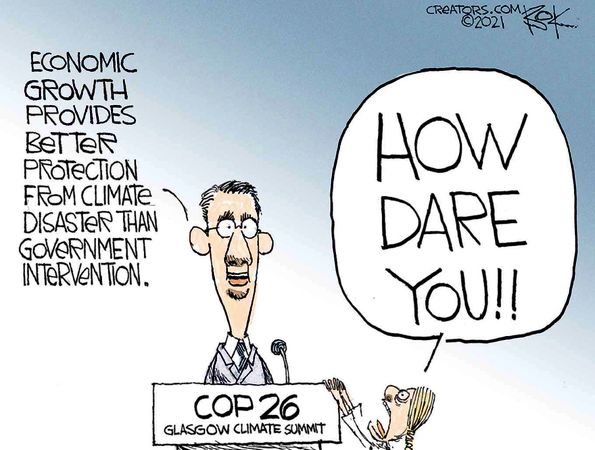
Even 3°C Warming Can’t Stop World Prosperity

Ron Clutz's avatarScience Matters

The 3°C Scenario: What’s the economic impact of severe global warming?  James Pethokoukis writes at his substack.  Excerpts in italics with my bolds and added images.

Even with an extreme scenario, the world should be richer and more capable in 2050

You may have noticed some concerning climate headlines popping up today in your smartphone notifications:

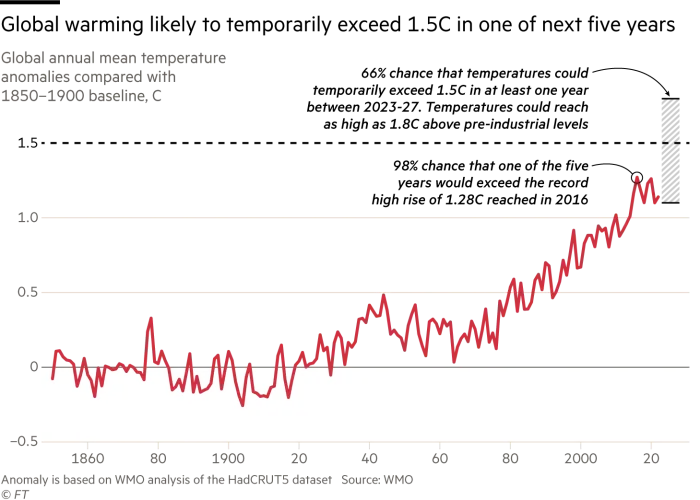
  • “‘Sounding the alarm’: World on track to breach a critical warming threshold in the next five years” – CNN
  • “Global warming likely to exceed 1.5C within five years, says weather agency” – Financial Times
  • “Global warming set to break key 1.5C limit for first time” – BBC

As the above FT chart neatly shows, the newsy forecast is about breaching the 1.5°C level in a single year, not a permanent increase. That said, the UN’s Intergovernmental Panel on Climate Change says humanity better get used to 1.5° and higher without a drastic shift away…

View original post 667 more words

Previous Older Entries Next Newer Entries

Bassett, Brash & Hide

Celebrating humanity's flourishing through the spread of capitalism and the rule of law

Truth on the Market

Scholarly commentary on law, economics, and more

The Undercover Historian

Beatrice Cherrier's blog

Matua Kahurangi

Celebrating humanity's flourishing through the spread of capitalism and the rule of law

Temple of Sociology

Celebrating humanity's flourishing through the spread of capitalism and the rule of law

Velvet Glove, Iron Fist

Celebrating humanity's flourishing through the spread of capitalism and the rule of law

Why Evolution Is True

Why Evolution is True is a blog written by Jerry Coyne, centered on evolution and biology but also dealing with diverse topics like politics, culture, and cats.

Down to Earth Kiwi

Celebrating humanity's flourishing through the spread of capitalism and the rule of law

NoTricksZone

Celebrating humanity's flourishing through the spread of capitalism and the rule of law

Homepaddock

A rural perspective with a blue tint by Ele Ludemann

Kiwiblog

DPF's Kiwiblog - Fomenting Happy Mischief since 2003

The Dangerous Economist

Celebrating humanity's flourishing through the spread of capitalism and the rule of law

Watts Up With That?

The world's most viewed site on global warming and climate change

The Logical Place

Tim Harding's writings on rationality, informal logic and skepticism

Doc's Books

A window into Doc Freiberger's library

The Risk-Monger

Let's examine hard decisions!

Uneasy Money

Commentary on monetary policy in the spirit of R. G. Hawtrey

Barrie Saunders

Thoughts on public policy and the media

Liberty Scott

Celebrating humanity's flourishing through the spread of capitalism and the rule of law

Point of Order

Politics and the economy

James Bowden's Blog

A blog (primarily) on Canadian and Commonwealth political history and institutions

Science Matters

Reading between the lines, and underneath the hype.

Peter Winsley

Economics, and such stuff as dreams are made on

A Venerable Puzzle

"The British constitution has always been puzzling, and always will be." --Queen Elizabeth II

The Antiplanner

Celebrating humanity's flourishing through the spread of capitalism and the rule of law

Bet On It

Celebrating humanity's flourishing through the spread of capitalism and the rule of law

History of Sorts

WORLD WAR II, MUSIC, HISTORY, HOLOCAUST

Roger Pielke Jr.

Undisciplined scholar, recovering academic

Offsetting Behaviour

Celebrating humanity's flourishing through the spread of capitalism and the rule of law

JONATHAN TURLEY

Res ipsa loquitur - The thing itself speaks

Conversable Economist

In Hume’s spirit, I will attempt to serve as an ambassador from my world of economics, and help in “finding topics of conversation fit for the entertainment of rational creatures.”

The Victorian Commons

Researching the House of Commons, 1832-1868

The History of Parliament

Articles and research from the History of Parliament Trust

Books & Boots

Reflections on books and art

Legal History Miscellany

Posts on the History of Law, Crime, and Justice

Sex, Drugs and Economics

Celebrating humanity's flourishing through the spread of capitalism and the rule of law

European Royal History

Exploring the Monarchs of Europe

Tallbloke's Talkshop

Cutting edge science you can dice with

Marginal REVOLUTION

Small Steps Toward A Much Better World

NOT A LOT OF PEOPLE KNOW THAT

“We do not believe any group of men adequate enough or wise enough to operate without scrutiny or without criticism. We know that the only way to avoid error is to detect it, that the only way to detect it is to be free to inquire. We know that in secrecy error undetected will flourish and subvert”. - J Robert Oppenheimer.

STOP THESE THINGS

The truth about the great wind power fraud - we're not here to debate the wind industry, we're here to destroy it.

Lindsay Mitchell

Celebrating humanity's flourishing through the spread of capitalism and the rule of law

Alt-M

Celebrating humanity's flourishing through the spread of capitalism and the rule of law

croaking cassandra

Economics, public policy, monetary policy, financial regulation, with a New Zealand perspective

The Grumpy Economist

Celebrating humanity's flourishing through the spread of capitalism and the rule of law

International Liberty

Restraining Government in America and Around the World