Radar Off-line: How Offshore Wind Turbines Have Wrecked America’s Defence Capability
15 Jul 2023 Leave a comment


Giant industrial wind turbines with the tips of their 50-80m blades clocking 350 kph play havoc with radar systems, giving false images and distorting real ones. The result is unnecessary danger for pilots dependent upon accurate weather reports, and air-traffic guidance, both essential for safe takeoffs and landings.
In a number of States, the US military has obtained legislation to prevent the construction of wind turbines anywhere near their airfields and training grounds.
Chris Smith, a Republican Congressman from New Jersey is not only incensed about the effect that America’s offshore wind industry is having (and if their plans come to fruition, will increasingly have) on radar, he’s equally wild about the effect these things will have on America’s ability to defend itself, more generally. Smith has joined with a group of fellow Republicans to investigate the serious and obviously negative effects these things have on our ability to…
View original post 1,033 more words
Project Cricket (and other nonsense)
14 Jul 2023 Leave a comment

I’ve been reading the papers released the other day by Treasury (in one case written jointly with IRD) on the Minister of Finance’s hankering to tax Australian banks more heavily, retrospectively.
There seem to be three such papers, a 10 February Treasury Report, a short 17 February Treasury aide-memoire, and a 10 March joint Treasury/IRD report. Nothing appears to have been withheld from the first two, but there are several, quite lengthy, bits withheld from the 10 March paper, in many cases apparently references to legal advice officials may have received.
The 10 February paper is titled “Windfall gains in the New Zealand banking sector, and responses”, apparently part of something called “Project Cricket”. Retrospective taxes targeted at companies the Minister of Finance doesn’t like and are just considered politically ripe for the plucking are…..really not cricket. But perhaps that irony escaped both the authors and the…
View original post 1,609 more words
BRYCE EDWARDS: Labour keeps the status quo on tax, but has it shot itself in the foot?
14 Jul 2023 Leave a comment

- Bryce Edwards writes –
The ultra-rich can breathe easy and progressive voters can scream into the void, because Prime Minister Chris Hipkins has ruled out any meaningful reform to our broken and unfair tax system. The Labour leader says it won’t happen on his watch.
Official documents were released on Wednesday showing the Government asked officials to draw up ideas for how a wealth tax might work. They then focused-grouped the idea and this exercise showed it wouldn’t be an easy win for Labour so, regardless of its merits, it was thrown on the bonfire.
Hipkins was then asked whether Labour might implement wealth taxes during its next term in government, and he categorically ruled out any such progressive reforms under his leadership.
The Progressive tax reforms that Labour rejected
We now know that Treasury put together a number of different models for how a major taxation reset could be…
View original post 1,473 more words
Using incumbency to lose
14 Jul 2023 Leave a comment

Dare we hope that this strong feeling there’ll be a change of government will be what happens?
. . .Appearing on AM’s political panel, Newstalk ZB’s senior political correspondent Barry Soper and Newshub’s Patrick Gower from Paddy Gower Has Issues slammed the current Labour Government.
“Chris Hipkins, he’s liked by his caucus, there’s no doubt about that, but he can’t remove himself from all of the decisions that were made in Cabinet,” Soper said.
He might like us to see him as a new Prime Minister but Hipkins was a senior Minister and responsible for many of the failings under the previous PM.
“You can have as many bonfires as you like, it’s still, essentially, the same Government and when it comes to people getting thrown out like Michael Wood, all the portfolios where do they go? They go to overworked ministers.”
Soper said earlier this year he told Hipkins…
View original post 167 more words
Solar Power Outfit Hit With $135m in Fines & Damages For Polluting Neighbour’s Land
13 Jul 2023 Leave a comment
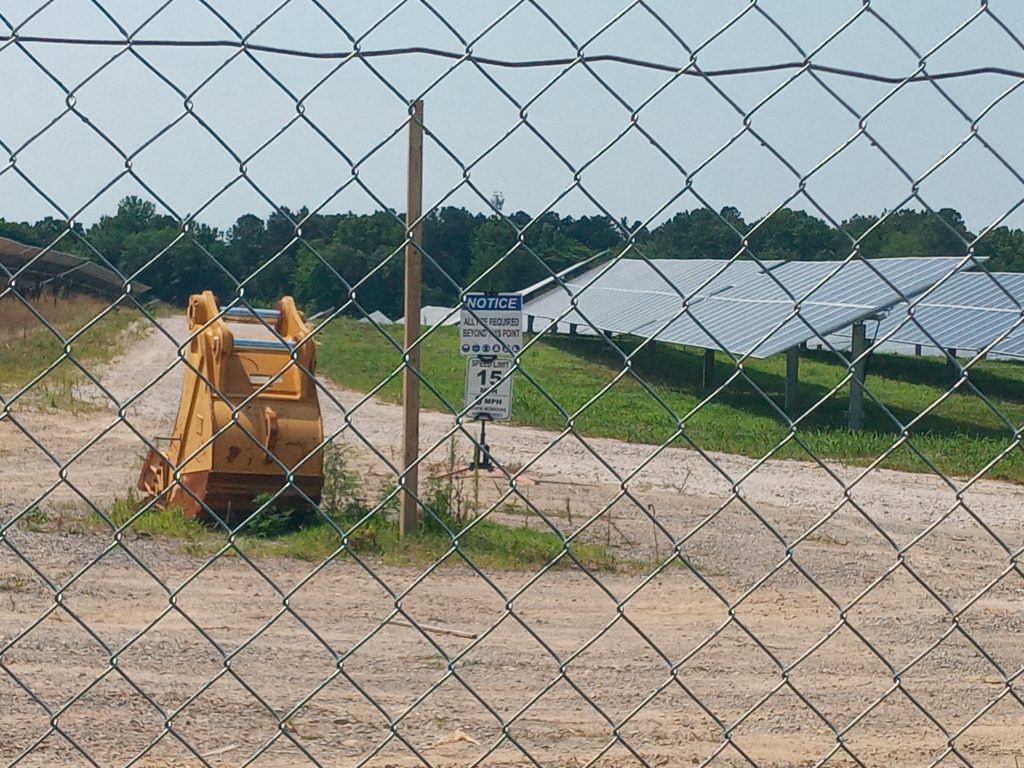
The wind and solar ‘industries’ always struggle with their neighbours, principally because they treat them as ‘roadkill’.
But that model doesn’t work when those neighbours are determined to fight back, using every legal means available.
Such is the case with Shaun and Amie Harris, who took a solar power outfit to court seeking damages for the nuisance that it had caused by polluting their land with silt and sediment.
The jury awarded them a cool US$10.5 million in damages, and whacked the solar generator and its construction contractors with a further US$125 million in fines for their egregious misconduct.
Bonner Cohen reports on the result below.
Solar farm runoff pollutes property, couple awarded $135 million
CFACT
Bonner Cohen
6 June 2023
Inflicting heavy fines on developers of a project billed as supplying clean, renewable energy, a federal jury has awarded a couple in southwest Georgia $135.5 million after runoff from…
View original post 570 more words
In Defence of Non-IPCC CO2 Science
13 Jul 2023 Leave a comment


Currently some Zero Carbon zealots are trying to discredit and disappear a peer reviewed study of CO2 atmospheric concentrations because its findings contradict IPCC dogma. The paper is World Atmospheric CO2, Its 14C Specific Activity, Non-fossil Component, Anthropogenic Fossil Component, and Emissions (1750–2018). by Skrable et al. (2022). The link is to the paper and also shows the comments recently addressed to the authors and the editor of the journal, as well as responses by both.
This came to my attention by way of a comment by one of the attackers on my 2022 post regarding this study. Text is below in italics with my bolds.
D. Andrews 10/7/2023
This post is over a year old, but in the interest of correcting the record, please note the following:
1. Skrable et al. have conceded that the data they “guesstimated” bore little resemblance to actual atmospheric radiocarbon data.
2. In…
View original post 3,898 more words
Govt. Green Rules Make Appliances Cost More and Do Less
12 Jul 2023 Leave a comment
 NYC going after pizza oven emissions. You’d have to burn a pizza stove 849 years to equal one year of John Kerry’s private jet
In his Master Resource article Energy Appliance Victory! (DC Circuit vs. DOE), Mark Krebs explains the DOE agency machinations targeting boilers as a case in point of government bureaucrats attacking everyone’s economic well-being in the name of saving the planet. First, a contextual piece describes the game plan behind all this. Later on, a synopsis of Kreb’s analysis of the tactics on the ground.
Background: Why This Judgment Matters
Biden’s Green Rules Make Appliances Cost More and Do Less
Authored by Kevin Stocklin at The Epoch Times, published at Planet Today. Excerpts in italics with my bolds and added images.
The Biden administration announced in December 2022 its pledge to take “more than 100 actions” to impose significantly tighter environmental standards on consumer goods is…
View original post 889 more words
Classic Film Review: McQueen plays but Jewison holds the Cards in “The Cincinnati Kid” (1965)
10 Jul 2023 Leave a comment





I was about five minutes into re-watching “The Cincinnati Kid” when it struck me that I needed to read or re-read director Norman Jewison’s autobiography, or hunt down the recent biography of the Canadian director.
He’s not exactly an obscure filmmaker, with seven Oscar nominations and films like “Moonstruck” and “The Russians are Coming, the Russians are Coming” in his extensive filmography.
But his fifth feature film, his first “serious” movie, has threads that turn up so often in his later work that one wonders, “What made him such a righteous dude?”
The Toronto native who made the groundbreaking “In the Heat of the Night,” “A Soldier’s Story” and the very impressive bio-pic “The Hurricane” was astutely in touch with America’s shifting attitudes on race. And he made sure his films were ahead of the curve in that regard.
Jewison, a child of the Great Depression, took over a 1930s…
View original post 804 more words
An external MPC member speaks
10 Jul 2023 Leave a comment
has a central banker ever admitted that inflation is a monetary problem and they are part of the problem
This blog has been a bit quiet in recent weeks (if anyone has insights on what sections 15D and 98 of the Government Superannuation Fund Act do and don’t allow I’ll be happy to hear from you) but I hope to make up for it this week.
In the 4+ years the statutory Monetary Policy Committee has been in existence, there has been not a single public speech given by any of the three external members. There have been no serious interviews either, just one petulant and testy set of responses to some emailed questions late last year, responses that I characterised at the time this way:
At times, Harris displays all the grace and constructive open and engagement we might expect in a rebellious 15 year old told they have to make conversation with Grandma at the family Christmas celebrations. If the answers aren’t quite monosyllabic grunts. most of…
View original post 2,186 more words
Government looks an “utter shambles” – so why does it still have a chance of re-election?
10 Jul 2023 Leave a comment

After a succession of ministerial stumbles, some of them fatal for the respective political careers of the stumblers, the Labour government is still buoyed by its own polling. And even independent commentators think the parties of the left are level-pegging with those on the right.
How could this be? There is little argument NZ has been hit by a cost-of-living crisis, families are going hungry, hospital emergency departments are overflowing. Others cite ministerial fumbling for the failure to deliver on policy announcements. Economists point to the deficits in the public accounts getting worse and net debt climbing.
Wherever voters look, the Labour government has a dismal story to present.
So why aren’t Opposition parties racing ahead?
View original post 630 more words
Power Supplier Sued For Gaming Market Around Wind & Solar Output Collapses
09 Jul 2023 Leave a comment
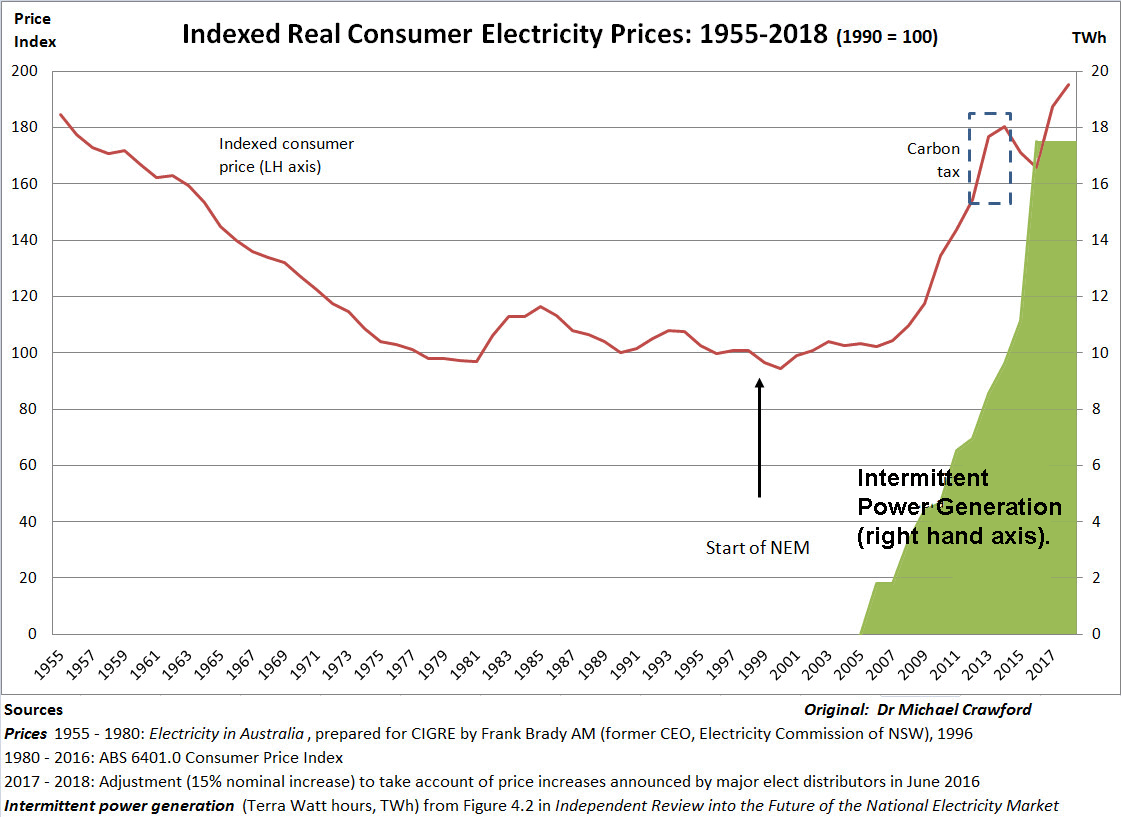
Intermittent wind and solar deliver guaranteed grid chaos and rocketing power prices. Every single country that’s chased the wind and solar pipe dream has watched their power prices go through the roof, with no exception.
STT has been banging on about this since December 2012. So, don’t say we didn’t warn you. The graphic above from Dr Michael Crawford spells it out: add massively subsidised and chaotically intermittent wind and solar to your power grid and watch power prices spiral out of control.
As STT has pointed out a number of times, power market gaming – of the kind that made Eron infamous – is a natural consequence of a very natural set of phenomena: wind and solar power output collapses that occur whenever the sun sets and/or calm weather sets in:
Wind Power Output Collapses Send Power Prices into Orbit: The World’s Biggest Joke Just Got Serious
and
View original post 900 more words
I’ll be buying a brand new petrol car just before the 2030 ban: Matt Ridley
09 Jul 2023 Leave a comment
Finally, a Legal Rebuttal on the Merits of Kids’ Climate Lawsuit
09 Jul 2023 Leave a comment

As reported last month, the Oregon activist judge invited the plaintiffs in Juliana vs US to reopen that case even after the Ninth Circuit shot it down. Now we have a complete and thorough Motion from the defendant (US government) to dismiss this newest amended complaint. Most interesting is the section under the heading starting on page 30. Excerpts in italics with my bolds and added images.
Plaintiffs’ Claims Fail on the Merits
Because Plaintiffs’ action fails at the jurisdictional threshold, the Ninth Circuit never reached—and this Court need not reach—the merits of the claims. . . Plaintiffs’ second amended complaint, which supersedes the first amended complaint, asserts the same claims that were brought in the first amended complaint, which this Court addressed in orders that the Ninth Circuit reversed. Defendants thus renew their objection that Plaintiffs’ claims fail on the merits and should be dismissed pursuant to Fed…
View original post 991 more words


Recent Comments