A perspective on the overweening conceit of youth
14 Jul 2015 Leave a comment
in applied welfare economics, behavioural economics, economics of crime, economics of education, labour economics, law and economics Tags: child development, cognitive psychology, economics of personality traits, political psychology

Bill Easterly on the other people are stupid fallacy
20 May 2015 Leave a comment
in applied price theory, behavioural economics, comparative institutional analysis Tags: Bill Easterly, Nudging, Other people are stupid fallacy

Persuasive power of quoting a number
29 Apr 2015 Leave a comment
in applied price theory, applied welfare economics, behavioural economics, econometerics, economic history, economics of information Tags: cognitive biases, cognitive psychology, data mining, economics of persuasion, evidence-based policy
Politicians & statistics. My proposal in today's @FT : ft.com/cms/s/0/dcf46a… http://t.co/HYbV4V2ps2—
Jonathan Portes (@jdportes) January 26, 2015
Essay questions for the Royal Economic Society Economics Essay Competition for 2015
19 Apr 2015 Leave a comment
in applied welfare economics, behavioural economics, economics of education, history of economic thought Tags: academic bias, British politics, UK politics
Here are the choices of essay questions for the RES Economics Essay Competition for 2015 beta.tutor2u.net/economics/blog… http://t.co/iurHfRGOd9—
tutor2u Economics (@economicsuk) April 19, 2015
Do Paul Samuelson’s criticisms of behavioural economics make him a double secret Austrian economist?
13 Mar 2015 Leave a comment
in applied price theory, Austrian economics, behavioural economics, comparative institutional analysis, entrepreneurship, industrial organisation, survivor principle Tags: efficient markets hypothesis, entrepreneurial alertness, Paul Samuelson
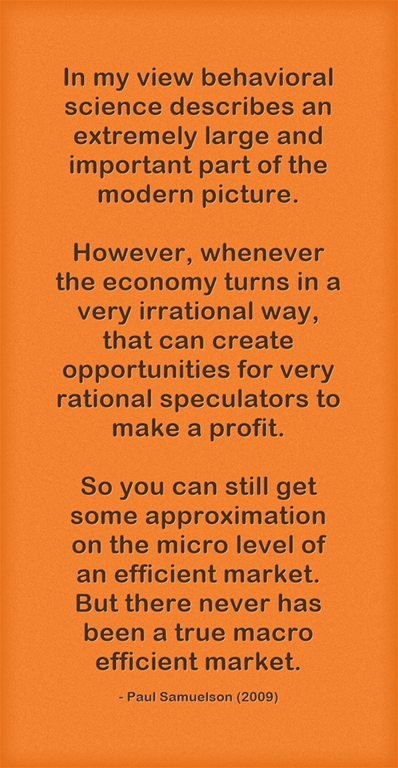
via Samuelson vs. Friedman, David Henderson | EconLog | Library of Economics and Liberty and An Interview With Paul Samuelson, Part One — The Atlantic.
John Cleese on Stupidity
27 Feb 2015 Leave a comment
in behavioural economics, economics of education, economics of information, economics of media and culture, health economics, human capital Tags: Dunning-Kruger effect


The cognitive biases of regulators by James Cooper
18 Dec 2014 Leave a comment
in behavioural economics, comparative institutional analysis, economics of regulation
|
BIAS |
DESCRIPTION |
IMPLICATION FOR REGULATORS |
|
Availability heuristic |
Place undue weight on recent, salient events |
Engage in regulatory overreaction |
|
Hindsight bias |
Overestimate the ex ante probability of an event occurring given that it has occurred |
Are too likely to find that practices causing harm violated a legal standard |
|
Myopia/hyperbolic discounting |
Discount future benefits at too high a rate versus current costs |
Pursue policies that maximize short-run rewards rather than long-run goals |
|
Confirmation bias |
Discount true information contrary to prior beliefs |
Resistant to change regulatory course even in face of contrary evidence |
|
Optimism |
Overestimate the probability of a good outcome |
Overestimate the success of a regulatory initiative |
|
Status quo bias |
Are irrationally wedded to current state |
Cause regulatory inertia and path dependency |
Economics is a social science alert: Gary Becker on the flaws of behavioural economics
16 Dec 2014 Leave a comment
in behavioural economics, Gary Becker

The World Bank underrates the sense of initiative and personal responsibility of the poor
12 Dec 2014 Leave a comment
in behavioural economics, development economics, growth disasters, growth miracles Tags: World Bank


Richard Posner on behavioural economics and its real-world applications
19 Nov 2014 Leave a comment
in applied price theory, behavioural economics, comparative institutional analysis, labour economics, occupational choice, Richard Posner Tags: behavioural economics, experimental economics, Richard Posner

 Utopia, you are standing in it!
Recent Comments