The British Empire, which at its height ruled over a quarter of the world’s population and landmass, remains one of the most consequential forces in global history. Its legacy is deeply contested: defenders emphasize the spread of law, education, and infrastructure, while critics highlight the violence, exploitation, and cultural destruction it entailed. A balanced assessment […]
The Costs and Benefits of British Colonialism
The Costs and Benefits of British Colonialism
20 Oct 2025 1 Comment
in comparative institutional analysis, constitutional political economy, development economics, economic history, growth disasters, growth miracles Tags: age of empires, economics of colonialism
Sorry, But Pope Leo Is Mistaken
13 Oct 2025 Leave a comment
in applied price theory, development economics, economics of religion, growth disasters, growth miracles Tags: The Great Enrichment
TweetHere’s a letter to a new correspondent. Mr. __: Thanks for sharing Sohrab Ahmari’s tweet, which I’d not otherwise have noticed. It is, frankly, pathetically inept. In order to criticize the pro-free-market Acton Institute, Ahmari favorably quotes Pope Leo’s assertion that “pseudo-scientific data are invoked to support the claim that a free market economy will…
Sorry, But Pope Leo Is Mistaken
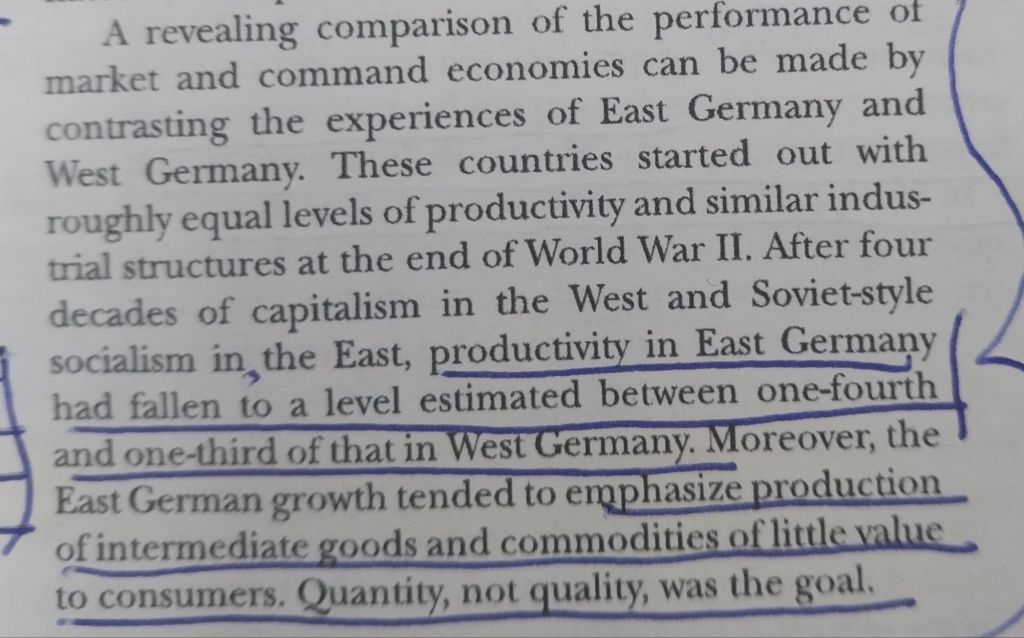
Samuelson on socialism
25 Sep 2025 Leave a comment
in applied price theory, development economics, economic history, growth disasters, growth miracles, history of economic thought, Marxist economics Tags: East Germany, economics of central planning, West Germany
Inside India’s endless trials
03 Sep 2025 1 Comment
in comparative institutional analysis, development economics, economic history, economics of crime, growth disasters, growth miracles, law and economics, property rights Tags: India
The FT’s Krishn Kaushik covers the courts in India: …in one recent example a Delhi court concluded a property dispute after 66 years. Both the original litigants were dead. Still, the lawyer for one of the warring parties cautioned that the conclusion was in fact not the end, as the ruling would be appealed. Three […]
Inside India’s endless trials
The Ongoing Tragedy of Cuban Socialism
30 Aug 2025 Leave a comment
in applied price theory, development economics, econometerics, economic history, economics of bureaucracy, growth disasters, history of economic thought, industrial organisation, law and economics, Marxist economics, property rights, Public Choice Tags: Cuba

I’ve written several articles about the failure of Cuban socialism (2024, 2022, 2021, 2019, and 2016). My leftist friends almost always respond by claiming that U.S.-imposed trade restrictions are the primary reason for Cuba’s terrible economy. Since I like free trade, I certainly agree that trade restrictions are bad for growth (a lesson I wish […]
The Ongoing Tragedy of Cuban Socialism
The Most Important Election(s) of 2025
28 Aug 2025 Leave a comment
in applied price theory, Austrian economics, development economics, economic growth, economics of regulation, fiscal policy, growth disasters, labour economics, labour supply, law and economics, liberalism, libertarianism, macroeconomics, monetary economics, Public Choice, unemployment Tags: Argentina

Javier Milei has generated amazingly good results in just 20 months. But more reform is needed to undo the damage of 80 years of Peronism, which is why I explain that Argentina’s mid-term elections will be very important. Milei wants to turn Argentina into the world’s freest economy. That won’t be possible so long as […]
The Most Important Election(s) of 2025
Milei’s Achievements…and Challenges
17 Aug 2025 1 Comment
in development economics, economic growth, economics of bureaucracy, economics of regulation, fiscal policy, growth disasters, income redistribution, industrial organisation, labour economics, law and economics, liberalism, libertarianism, macroeconomics, Marxist economics, monetary economics, property rights, Public Choice, public economics, rentseeking, unemployment Tags: Argentina

I’m back in Argentina, the South American country with the world’s best leader. What Javier Milei has accomplished is amazing. And the economic effects have been wonderful. One of my meetings earlier this week was with Marcelo Elizondo, the head of the International Chamber of Commerce for Argentina. He shared a presentation with me that […]
Milei’s Achievements…and Challenges
A Great Enrichment
06 Aug 2025 Leave a comment
in development economics, economic history, growth disasters, growth miracles, transport economics, urban economics Tags: India

The Tragedy of India’s Government-Job Prep Towns
04 Aug 2025 Leave a comment
in applied price theory, development economics, economics of bureaucracy, economics of regulation, growth disasters, growth miracles, labour economics, labour supply, occupational choice, Public Choice Tags: India
In Massive Rent-Seeking in India’s Government Job Examination System I argued that the high value of government jobs has distorted India’s entire labor market and educational system. India’s most educated young people—precisely those it needs in the workforce—are devoting years of their life cramming for government exams instead of working productively. These exams cultivate no […]
The Tragedy of India’s Government-Job Prep Towns
Expanding the Milei Miracle: Trade Liberalization
25 Jul 2025 Leave a comment
in development economics, growth disasters, growth miracles, international economics, liberalism, libertarianism Tags: Argentina, tariffs

Part I of this series celebrated Javier Milei’s amazing success, Part II pointed out that labor market liberalization is still a big challenge, while Part III noted that the tax system still needs to be fixed. This final video in the series explains the need for free trade. As noted in the video, Milei inherited […]
Expanding the Milei Miracle: Trade Liberalization
The Milei Miracle, Part II
23 Jul 2025 Leave a comment
in applied price theory, budget deficits, comparative institutional analysis, constitutional political economy, development economics, economic growth, fiscal policy, growth disasters, growth miracles, law and economics, liberalism, libertarianism, macroeconomics, property rights Tags: Argentina

I almost feel sorry for the 108 leftist economists who predicted back in 2023 that Argentina would suffer if Javier Milei won the presidential election. Not only were they disappointed when he enjoyed a landslide victory, but the subsequent events in Argentina have shown that they were wildly wrong (all of which is discussed in […]
The Milei Miracle, Part II
The Cross of Gold: Brazilian Treasure and the Decline of Portugal (due to the resource curse)
18 Jul 2025 Leave a comment
in applied price theory, comparative institutional analysis, constitutional political economy, development economics, economic growth, economic history, growth disasters, international economics, law and economics, macroeconomics, property rights, Public Choice, rentseeking, resource economics Tags: Portugal, resources curse
By Davis Kedrosky and Nuno Palma. Published in The Journal of Economic History.In the book The Economics of Macro Issues which I used as a supplemental text, they mention that Russia has many resources but its per capita income is less than that of Luxembourg which has few resources. The book suggests that the economic…
The Cross of Gold: Brazilian Treasure and the Decline of Portugal (due to the resource curse)
Expanding the Milei Miracle: Labor Market Deregulation
12 Jul 2025 1 Comment
in development economics, economics of bureaucracy, economics of regulation, growth disasters, labour economics, labour supply, Public Choice Tags: Argentina, employment law

Part I of this video series gave a brief summary of how Javier Milei’s free market policies have rejuvenated Argentina’s economy. But more reform is needed and this second video makes the case for labor market deregulation. Politicians impose so-called employment protection laws because of “public choice.” To be more specific, they understand that the […]
Expanding the Milei Miracle: Labor Market Deregulation
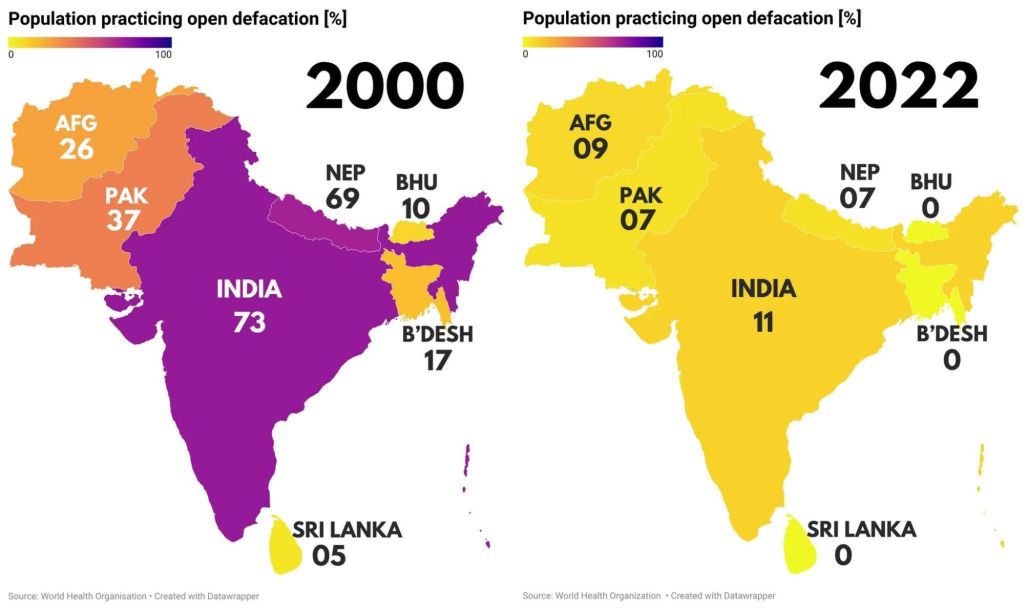
#TheGreatEscape
11 Jul 2025 Leave a comment
in development economics, economic history, growth disasters, growth miracles, health economics Tags: India, Pakistan
Massive Rent-Seeking in India’s Government Job Examination System
03 Jul 2025 1 Comment
in applied price theory, development economics, economics of bureaucracy, economics of education, growth disasters, growth miracles, labour economics, occupational choice, personnel economics, Public Choice Tags: India
In India, government jobs pay far more than equivalent jobs in the private sector–so much so that the entire labor market and educational system have become grossly distorted by rent seeking to obtain these jobs. Teachers in the public sector, for example, are paid at least five times more than in the private sector. It’s […]
Massive Rent-Seeking in India’s Government Job Examination System
 Utopia, you are standing in it!
Recent Comments