The contribution of China to The Great Escape from extreme poverty
02 Jul 2016 Leave a comment
in development economics, economic history, growth disasters, growth miracles
Poverty, Inc. | Official Trailer
02 Jul 2016 Leave a comment
in development economics, economic history, growth disasters, growth miracles Tags: The Great Escape
The West Wing: “In This White House” (2000)
28 Jun 2016 Leave a comment
in development economics, economics of media and culture, growth disasters, growth miracles, health economics, Public Choice, public economics Tags: drug prices, intellectual monopolies, patents and copyrights
Does Child Labor Help Children in Poverty?
12 Jun 2016 Leave a comment
in development economics, economic history, growth disasters, growth miracles, industrial organisation, labour economics, labour supply Tags: child labour
#MiltonFriedman v. @berniesanders
05 Jun 2016 Leave a comment
in applied price theory, applied welfare economics, comparative institutional analysis, constitutional political economy, development economics, economic history, economics, economics of regulation, entrepreneurship, growth disasters, growth miracles, income redistribution, industrial organisation, labour economics, macroeconomics, Milton Friedman, minimum wage, occupational choice, politics - USA, Public Choice, public economics Tags: 2016 presidential election, Leftover Left
3 common myths about capitalism
05 Jun 2016 Leave a comment
in applied price theory, applied welfare economics, development economics, economic history, growth disasters, growth miracles, industrial organisation Tags: capitalism and freedom, The Great Fact
Coal is the best resource we have in the fight to end poverty
04 Jun 2016 Leave a comment
in development economics, economic history, energy economics, environmental economics, global warming, growth disasters, growth miracles Tags: coal prices, rational irrationality, The Great Escape
The Reversal of Fortune
31 May 2016 Leave a comment
in development economics, economic history, economics, growth disasters, growth miracles Tags: The Great Fact
BS @WorldBank that #climateaction = no sacrifice 4 poor countries @cjsnowdon @RichardTol @BjornLomborg @WBG_Climate
30 May 2016 Leave a comment
in applied welfare economics, development economics, economics, economics of media and culture, energy economics, environmental economics, global warming, growth disasters, growth miracles Tags: climate alarmism, The Great Escape
Night-light maps shows huge need 4 #infrastructure investment in African #cities. Video: wrld.bg/Ufzpy https://t.co/BJXzwAZPyE—
World Bank (@WorldBank) November 10, 2015
The Great Escape into the middle class in Latin America and the Caribbean (LAC)
30 May 2016 Leave a comment
in development economics, economic history, growth disasters, growth miracles Tags: Latin America, The Great Escape, Withering away of the proletariat
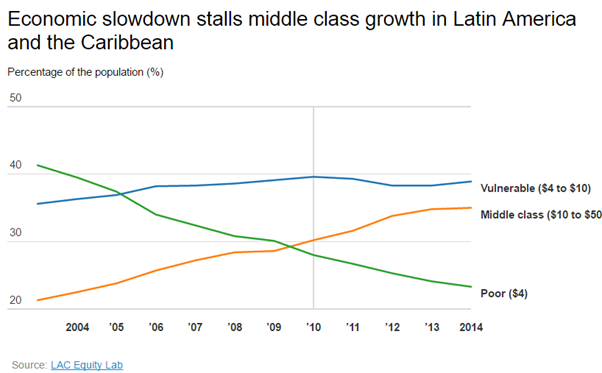
Source: World Bank Economic slowdown puts the brakes on middle class growth in Latin America | The Data Blog
The contributions of William Easterly
24 May 2016 Leave a comment
in Bill Easterly, comparative institutional analysis, development economics, economics, growth disasters, growth miracles
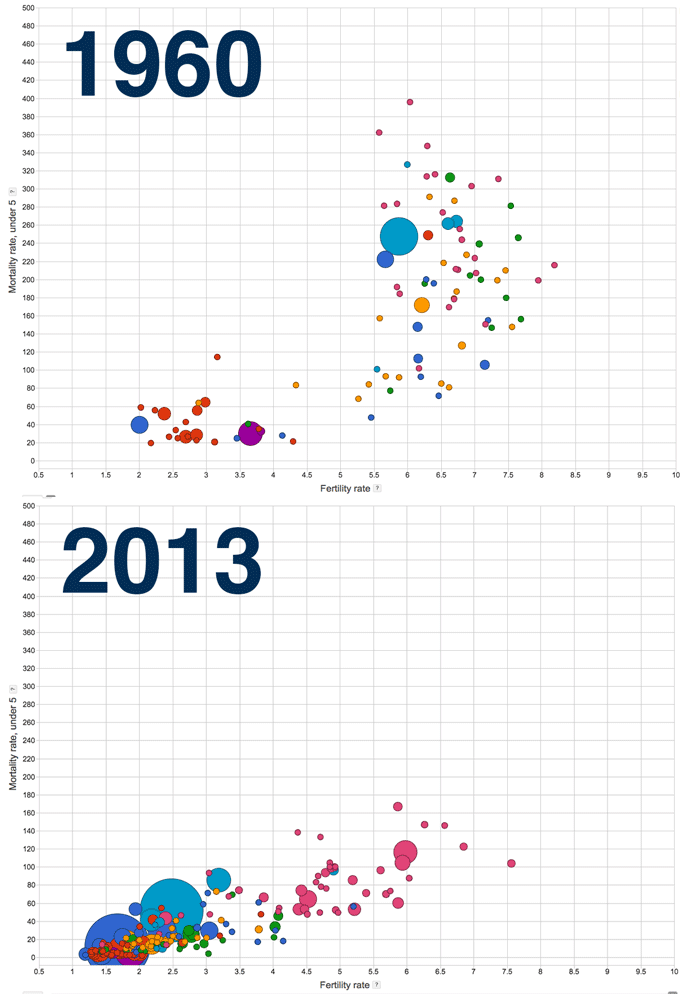
The Great Escape in one picture of fertility and infant mortality
24 May 2016 Leave a comment
in development economics, economics of education, growth disasters, growth miracles, health economics Tags: child mortality, economics of fertility, infant mortality, The Great Escape
Without one-child policy, China still might not see baby boom, gender balance
20 May 2016 Leave a comment

Extreme poverty in Uganda, Swaziland and Botswana @jasonhickel @Carolyn_nth
17 May 2016 Leave a comment
in development economics, economic history, growth disasters, growth miracles, health economics Tags: antimarket bias, Botswana, economics of AIDS, life expectancies, reactionary left, Swaziland, The Great Escape, Uganda
Since 1985, extreme poverty has halved in Botswana and dropped by a 3rd in Swaziland and Uganda.

Source: World Poverty – Our World In Data.
Life expectancies are increasing again in Swaziland and Botswana after the HIV epidemic has come under more control.

Source: Life Expectancy by Age in selected Country from 1990 to 2013 | Health Intelligence

Source: Life Expectancy by Age in selected Country from 1990 to 2013 | Health Intelligence
Closer to achieving #foodsecurity in #WestAfrica w/ 60% decline in under-nourished since 90s bit.ly/1M1Fzvt https://t.co/ezPM05lbEo—
(@OECD) October 28, 2015
The battle against Polio in Africa http://t.co/LYB2nGZlAB—
Amazing Maps™ (@amazingmap) June 30, 2015
"Freedom is making gradual progress in Africa…the trends are in the right direction" @bill_easterly #hayek15 https://t.co/Ua1GON7ha2—
IEA (@iealondon) December 02, 2015
 Utopia, you are standing in it!
Recent Comments