Degrowth’s prophets offer little more than hand-waving in response to the most elementary questions about their prescription.
Wash Post Editorial Board Denounces ‘De-Growth Communism’ – ‘Ending Growth Won’t Save the Planet’
Wash Post Editorial Board Denounces ‘De-Growth Communism’ – ‘Ending Growth Won’t Save the Planet’
26 Jun 2024 Leave a comment
in development economics, energy economics, environmental economics, environmentalism, global warming, growth disasters Tags: climate activists, cranks
Does visiting South Africa make you more right-wing or more left-wing?
19 Jun 2024 Leave a comment
in development economics, economic history, growth disasters Tags: South Africa
Perhaps “both” is the correct answer? The right-wing tendencies are easiest to explain. South Africa is obviously much wealthier than the rest of sub-Saharan Africa, and of course Westerners play a larger role in its history and also in its present. You can put different glosses on that, but a variety of those paths lead […]
Does visiting South Africa make you more right-wing or more left-wing?
Rivers in India
14 Jun 2024 Leave a comment
in development economics, growth disasters, growth miracles, health economics Tags: India, water pollution
On electing gangsters
10 Jun 2024 Leave a comment
in comparative institutional analysis, development economics, economic history, economics of bureaucracy, economics of crime, growth disasters, growth miracles, income redistribution, law and economics, Public Choice, rentseeking Tags: economics of corruption, India
In India it’s common for politicians to have criminal cases against them. Why do voters vote for criminals? One compelling explanation provided by political scientist Milan Vaishnav is that voters often care less about their represntative’s ability to deliver broad-based development or draft good laws, and more about the effectiveness at helping them access limited […]
Haan, goonda hai, magar hamara goonda hai
Did the British Empire REALLY Drive the Industrial Revolution? IEA Debates
06 Jun 2024 Leave a comment
in applied price theory, comparative institutional analysis, constitutional political economy, economic history, economics of bureaucracy, growth disasters, growth miracles, income redistribution, Public Choice, rentseeking Tags: Age of Discovery, age of empires, economics of colonialism
*Best Things First*
01 Jun 2024 Leave a comment
in applied price theory, applied welfare economics, development economics, growth disasters, health economics Tags: The Great Escape
The author is Bjorn Lomborg, and the subtitle is The 12 most efficient solutions for the world’s poorest and our global SDG promises. I missed this book when it first came out last year. Here is what Lomborg presents as the twelve best global investments, in no particular order: Tuberculosis Maternal and newborn health Malaria […]
*Best Things First*
Development Policies with the Best Benefit-Cost Ratios
29 May 2024 Leave a comment
in applied price theory, applied welfare economics, development economics, econometerics, growth disasters, growth miracles, public economics
In a world with lots of problems and even more proposed policies to address each of these problems, it makes sense to study the possibilities–and then to prioritize policies with highest estimated ratio of benefits to costs. The Copenhagen Consensus think tank carried out this exercise and came up with 12 policies. A special issue…
Development Policies with the Best Benefit-Cost Ratios
India, Dependency, and the 17th Theorem of Government
28 May 2024 Leave a comment
in applied price theory, development economics, economic history, financial economics, growth disasters, growth miracles, income redistribution, macroeconomics, Public Choice, public economics, rentseeking Tags: India
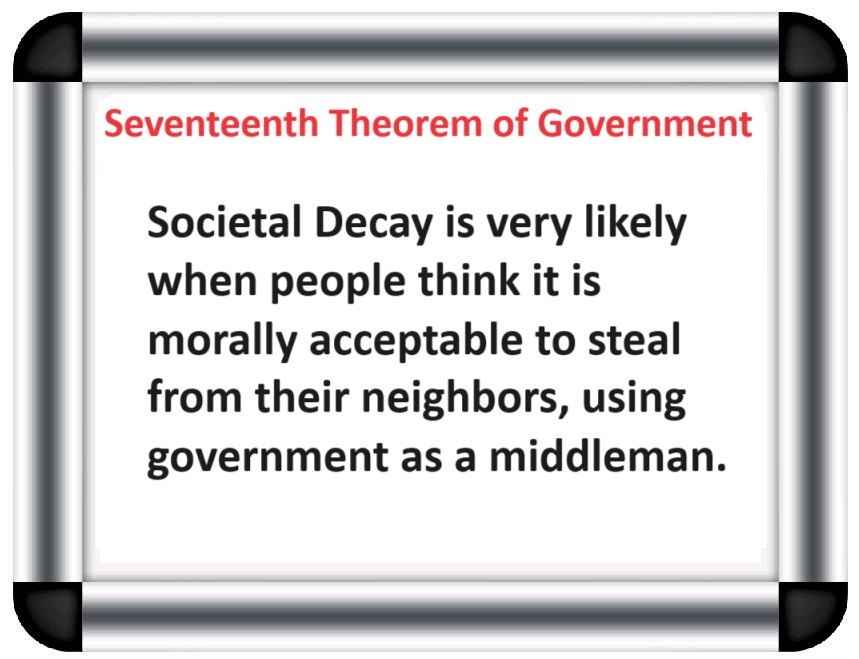
I released my First Theorem of Government in 2015 and today I’m going to unveil the 17th iteration in the series. But I’ll confess upfront that I’m doing a bit of recycling. My latest Theorem is very similar to something I shared back in 2014. I decided to upgrade my 2014 column to a Theorem […]
India, Dependency, and the 17th Theorem of Government
The cost of colonialism
26 May 2024 Leave a comment
in development economics, economic history, growth disasters, growth miracles, income redistribution, law and economics, Public Choice, rentseeking, transport economics Tags: China

There is still reason to hope despite the fact that more than three-quarters of Americans say the United States is headed in the wrong direction
21 May 2024 Leave a comment
in development economics, economic growth, economic history, growth disasters, growth miracles, health economics, liberalism, macroeconomics Tags: The Great Enrichment
See The Case for Hope by Nicholas Kristof of The NY Times. Excerpts:”whenever I hear that America has never been such a mess or so divided, I think not just of the Civil War but of my own childhood: the assassinations of the 1960s; the riots; the murders of civil rights workers; the curses directed at…
There is still reason to hope despite the fact that more than three-quarters of Americans say the United States is headed in the wrong direction
The Rise and Decline and Rise Again of Mancur Olson
09 May 2024 Leave a comment
in applied price theory, comparative institutional analysis, constitutional political economy, development economics, economic history, growth disasters, growth miracles, history of economic thought, income redistribution, industrial organisation, law and economics, property rights, Public Choice, public economics, rentseeking

Mancur Olson’s The Rise and Decline of Nations is one of my favorite books and a classic of public choice. Olson may well have won the Nobel prize had he not died young. He summarized his book in nine implications of which I will present four: 2. Stable societies with unchanged boundaries tend to accumulate […]
The Rise and Decline and Rise Again of Mancur Olson
More Good Results from Argentina
28 Apr 2024 Leave a comment
in budget deficits, business cycles, comparative institutional analysis, development economics, economic growth, economic history, economics of bureaucracy, economics of regulation, fiscal policy, growth disasters, income redistribution, labour economics, liberalism, libertarianism, macroeconomics, Marxist economics, monetary economics, Public Choice, rentseeking, unemployment Tags: Argentina
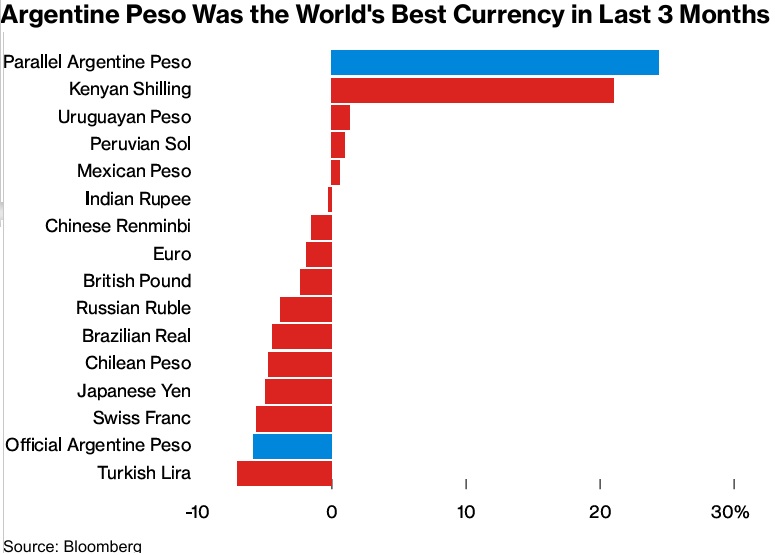
The most important election of 2023 took place in Argentina, where that nation’s voters elected the libertarian candidate, Javier Milei, as their new president. I discussed the outlook for Milei’s agenda on a recent appearance of the Schilling Show. Here’s a brief excerpt. As you can see, I’m worried that Milei faces enormous obstacles. Argentina […]
More Good Results from Argentina
Why Socialism Won’t Die
26 Apr 2024 Leave a comment
in applied price theory, comparative institutional analysis, constitutional political economy, development economics, economic history, economics of bureaucracy, entrepreneurship, growth disasters, history of economic thought, income redistribution, industrial organisation, law and economics, liberalism, Marxist economics, property rights, Public Choice Tags: economics of socialism

“to employ a hundred people is… exploitation, but to command the same number [is] honorable.” That’s an actual book by the way, explaining that although communism has failed in the past across different nations, races and cultures, it might work in the future where machines can create anything we want. Think Star Trek’s replicator technology. […]
Why Socialism Won’t Die
Why the Global Free Market Will Save the World
23 Apr 2024 Leave a comment
in applied price theory, applied welfare economics, comparative institutional analysis, constitutional political economy, development economics, economic growth, economic history, energy economics, environmental economics, global warming, growth disasters, growth miracles, health economics, history of economic thought, income redistribution, labour economics, law and economics, liberalism, macroeconomics, Marxist economics, politics - Australia, politics - New Zealand, politics - USA, poverty and inequality, property rights, Public Choice, public economics, rentseeking Tags: anticapitalist mentality, capitalism and freedom
Cuba Libre
05 Apr 2024 Leave a comment
in applied price theory, comparative institutional analysis, constitutional political economy, development economics, economic history, economics of bureaucracy, economics of crime, growth disasters, history of economic thought, human capital, income redistribution, industrial organisation, labour economics, labour supply, law and economics, liberalism, Marxist economics, politics - USA, poverty and inequality, Public Choice, public economics, rentseeking Tags: Cuba
Martin Gurri has a very good, deep-dive on the current situation in Cuba. The wreckage of the Cuban economy really can’t be exaggerated. The perpetual blackouts are an apt symbol of a country that is headed for the dark ages. For the first time since the revolution, Cuba is begging the United Nations for food aid. Nearly […]
Cuba Libre
 Utopia, you are standing in it!
Recent Comments