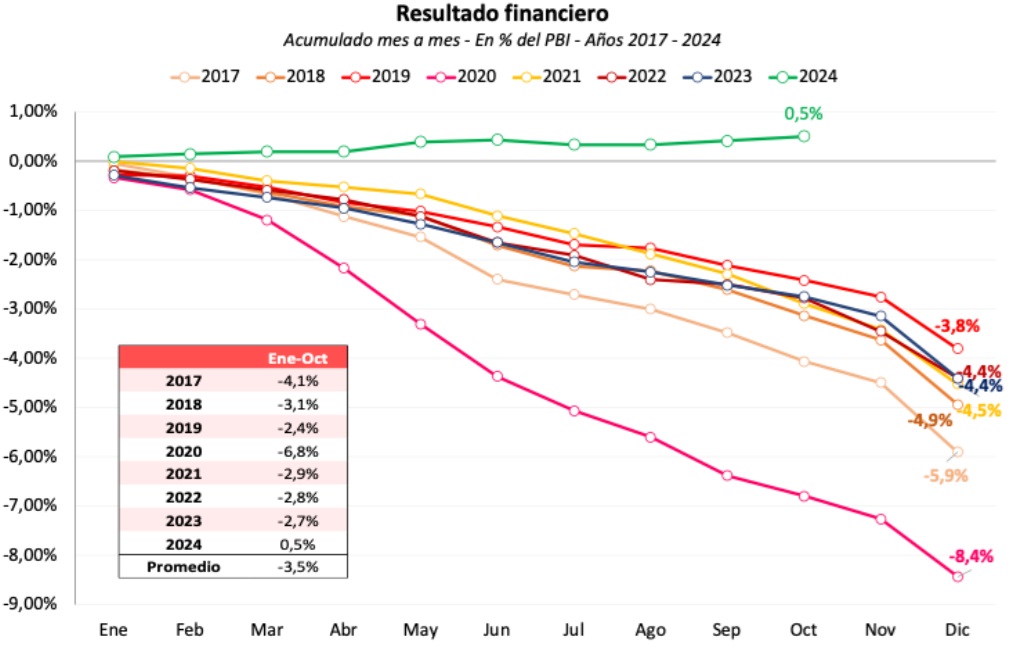
I almost feel sorry for the 108 leftist economists who predicted back in 2023 that Argentina would suffer if Javier Milei won the presidential election. Not only were they disappointed when he enjoyed a landslide victory, but the subsequent events in Argentina have shown that they were wildly wrong (all of which is discussed in […]
TweetMr. Howard Lutnick Secretary, U.S. Department of Commerce Washington, DC Mr. Lutnick: Yesterday you tweeted this: Our trade deal with Vietnam is a massive win for America’s businesses, manufacturers, and farmers! For the FIRST TIME EVER, Vietnam will open its market to the United States. They will pay 20% to sell their products here, and…
In India, government jobs pay far more than equivalent jobs in the private sector–so much so that the entire labor market and educational system have become grossly distorted by rent seeking to obtain these jobs. Teachers in the public sector, for example, are paid at least five times more than in the private sector. It’s […]
In our textbook, Modern Principles, Tyler and I contrast basic U.S. labor law, at-will employment—where employers may terminate workers for any reason not explicitly illegal (e.g., racial or sexual discrimination), without notice or severance—with Portugal’s “just cause” regime, which requires employers to prove a valid reason, give advance notice, pay severance, and endure extensive regulatory […]
India won’t bow to carbon taxes and it won’t join an unscientific climate war that sacrifices its future. The U.K. and EU would do well to listen, lest they find themselves on the losing end of an Asian-dominated trade battle over manufactured goods.
Chris Trotter writes – What does India want from New Zealand? Not our dairy products, that’s for sure, it’s got plenty of those. Indeed 45 percent of the Indian population are small-scale farmers, most of them running a few head of cattle – not to eat, you understand – but to milk. If it once […]
John Cochrane recommends the Economist article Aid cannot make poor countries rich. From 2004 to 2014, foreign aid increased by 75%, but it didn’t help: 2004, William Easterly: aid was just as likely to shrink the world’s poorest economies as to help them grow. 2005, World Bank: grants and loans did not move the needle…
Economist: In the coming years Africa will become more important than at any time in the modern era. Over the next decade its share of the world’s population is expected to reach 21%, up from 13% in 2000, 9% in 1950 and 11% in 1800. As the rest of the world ages, Africa will become…
In the comments to my post, India has Too Few Tourists, many people worried about the food, the touts and the poverty. Many of these comments are mistaken or apply only if you are traveling to India on the cheap as an adolescent backpacker (nothing wrong with that but I suspect the MR audience is […]
TweetGMU Econ alum Holly Jean Soto busts the myth of “greedflation.” Scott Lincicome identifies an interesting contrast between the facts and opinion about China. George Will decries the spinelessness of the modern U.S. Congress. A slice: The incoming president will be able, on a whim, to unilaterally discombobulate international commerce — and the domestic economy…
It’s easy to mock economists. Consider the supposedly prestigious left-leaning academics who asserted in 2021 that Biden’s agenda was not inflationary. At the risk of understatement, they wound up with egg on their faces.* Today, we’re going to look at another example of leftist economists making fools of themselves. It involves Argentina, where President Javier […]
I am sad to hear about the passing of Manmohan Singh at age 92. Singh was perhaps the most influential Indian policymaker in the last five decades. An Oxbridge educated trade economist, he became India’s most important technocrat in the 1980s and 1990s – occupying every top position in economic policy – finance secretary; deputy […]
Why Evolution is True is a blog written by Jerry Coyne, centered on evolution and biology but also dealing with diverse topics like politics, culture, and cats.
“We do not believe any group of men adequate enough or wise enough to operate without scrutiny or without criticism. We know that the only way to avoid error is to detect it, that the only way to detect it is to be free to inquire. We know that in secrecy error undetected will flourish and subvert”. - J Robert Oppenheimer.

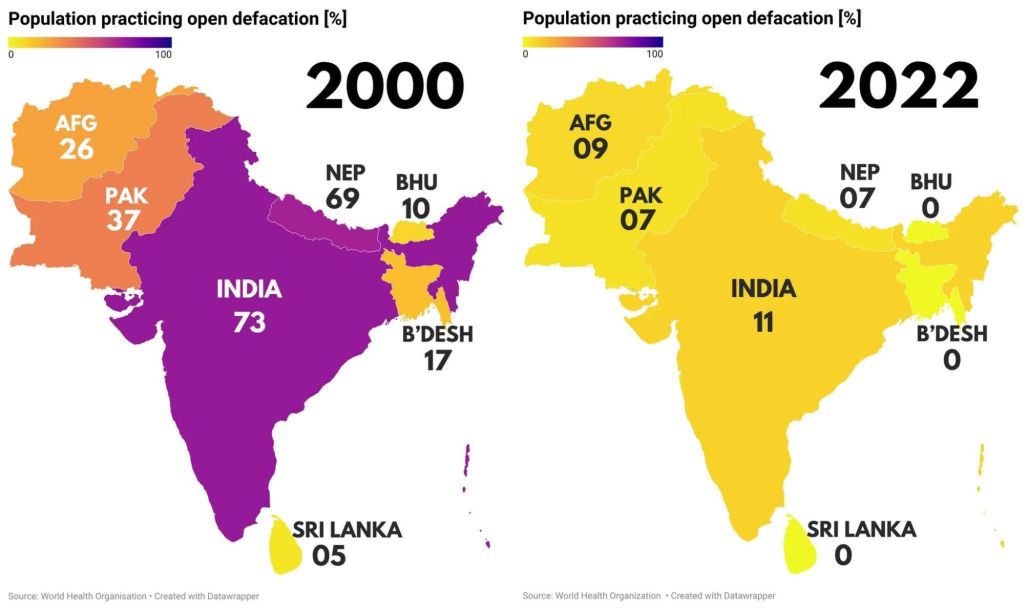

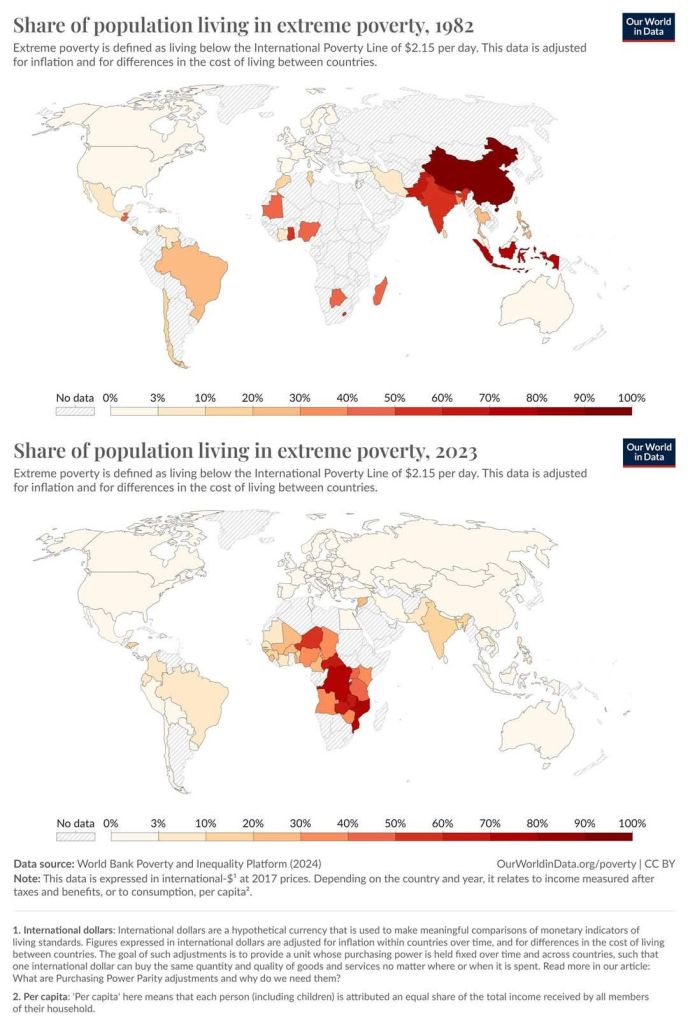
 Utopia, you are standing in it!
Recent Comments