What Was the Industrial Revolution? Robert E. Lucas Jr.
25 Oct 2017 Leave a comment
in development economics, economic growth, economic history, labour economics, labour supply, macroeconomics, occupational choice Tags: industrial revolution
Many more are surviving to live a lot longer
24 Oct 2017 Leave a comment
in development economics, economic history, growth miracles

The triumph of the car city
23 Oct 2017 Leave a comment
in economic history, urban economics
The reason most commuters drive to work across New Zealand is privately owned cars are more comfortable, faster, more private, more convenient in trip timing, and they are more flexible for multiple tasks on one trip than any bus or train can ever hope to offer. What cannot be avoided is:
As household incomes rise around the world, more and more people shift from slower, less expensive modes of movement to privately owned cars and trucks (Downs 2004).
Time is increasingly prized because of rising incomes and an explosion of consumer choice. Goods and services which are time intensive to use including buses and trains as the commuting option are just not popular. Downs argues that it is time to settle down and accept what cities are:
….peak-hour traffic congestion is inescapable in large modern metropolitan areas the world over. Business firms want most people on the job during the same hours so that workers can interact efficiently. Many firms also want to locate in low-density establishments scattered across the landscape. Households want a range of choices of where to live and work, and most want to live in low-density settlements that are separate from poorer households, use private vehicles for most travel and be able to carry out multiple errands on a single trip (Downs 2001).
The reality is most people drive in rush hours because they live in low-density areas that buses, trains and cycle-ways cannot efficiently even start to serve. Traffic congestion is the result of prosperity:
Peak-hour traffic congestion in almost all large and growing metropolitan regions around the world is here to stay. In fact, it is almost certain to get worse during at least the next few decades, mainly because of rising populations and wealth. This will be true no matter what public and private policies are adopted to combat congestion (Downs 2004).
About 97% of the benefits in benefit-cost analysis of road investments is from savings on journey times. Saving on journey times is what drives an urban transport policy that serves the interests of commuters, taxpayers and sustainable transport. Much of the remaining benefits are from reductions in accidents and fatalities. Cars are here to stay.
It is not a case of under-investment denying buses and trains their day in the sun. The overseas evidence is rail cost estimates and passenger forecasts are much more politicised than those for roads because of the political pressures to invest in more public transport no matter what (Flyvbjerg et al. 2006).
There is more organised political support for buses and trains and considerable organised (often NIMBY based) opposition to road building. A major driver of cost blow-outs in the road projects reviewed by the Ministerial Advisory Group on Roading Costs (2006) was scope changes to appease local political pressures to mitigate community and environmental impacts. Community group driven litigation under the Resource Management Act to frustrate NZTA road projects is proliferating. Their High Court loss which prevented the building of the Basin Overpass in Wellington is a recent example.
In contrast, light rail proposals such as a billion-dollar proposal in Wellington City for a few kilometers of track including a $400 million tunnel were entertained for far longer than any sensible benefit cost analysis could justify. Quite fanciful fast-rail proposals costing many hundreds of millions of dollars are floated in by-elections and from time to time by the commentariat and rent seekers. The proposed upgrade the Auckland to Northland railway line and the rail link to the port was costed by the Taxpayers’ Union (2015) at $198 million. Dreams of fast rail receives a generous hearing despite mind blowing costs and incredulous and sometimes impossible freight and passenger forecasts.
Buses and trains are not the forgotten children of urban transport policy. The Greens are passionate about massive investment in buses and trains at the expense of roads. Labour is also competing for the same urban middle-class votes so it too champions more public transport. In an MMP Parliament, all parties have an incentive respond to political pressures in a fine-tuned way when voting on budgets.
Public transport advocates do well in the scramble for taxpayers’ money. The road with the worst benefit-cost ratio of all in the post implementation reviews was the Auckland Northern Busway, which cost $182 million. It had a cost benefit ratio of a miserable 1.2 at approval and a no better 1.3 after its completion. With a benefit-cost ratio rounding down to one with ease, this bus network upgrade must have had political muscle behind it to dam the taxpayers, full steam ahead.
Supporters of public transport claim that better buses and trains and more compact city growth reduces combined housing and movement costs. The higher housing costs are offset by lower transportation costs so public policy should invest in buses and trains and limit outward urban growth (Downs 2002).
Supporters of more investment in roads claim the contrary, especially in cities where land prices are already high (Downs 2002). In addition, supporters of road funding point out that increasing urban densities in existing neighbourhoods (and the expansion of rail networks such as through light rail) will be “decisively rejected by the NIMBY-orientated residents” (Downs 2002).
There are strong national and local constituencies to use of zoning laws, district plans and the Resource Management Act for the foreseeable future to limit the supply of existing and new land for an expansion of medium density housing in inner-cities. Combining massive public transport expansions with greater urban intensification is unlikely to be a political feasible. NIMBYs enter the fray with big political boots well before politicians ask taxpayers to vote for taking twice as long to commute the same distance.
Video tape industry is still going!!
21 Oct 2017 Leave a comment
in economic history, industrial organisation, labour supply, survivor principle Tags: creative destruction
Has @WJRosenbergCTU shown @jacindaardern’s first lie in office?
21 Oct 2017 Leave a comment
in economic history, politics - New Zealand, poverty and inequality
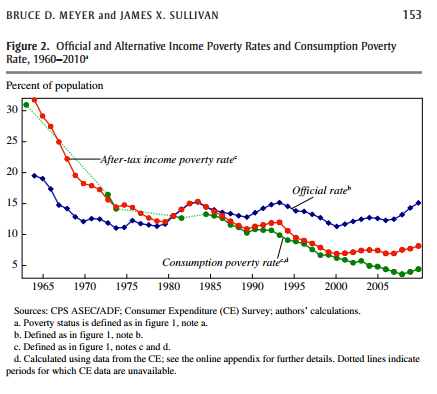
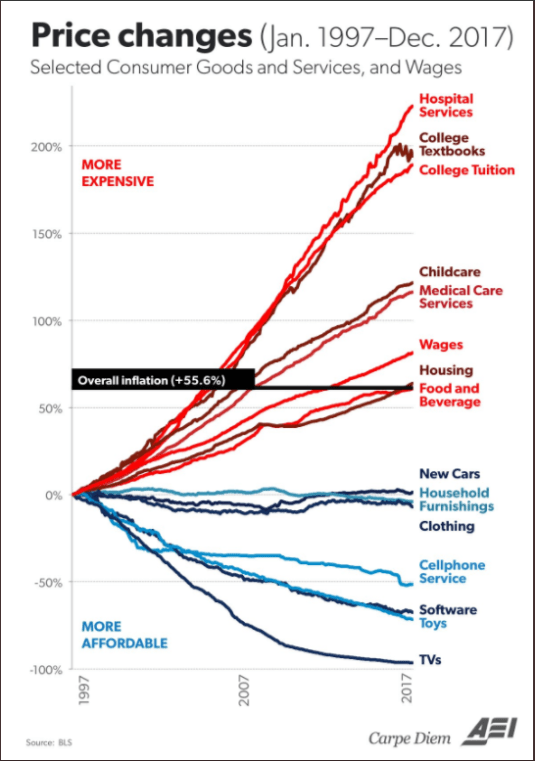
Ardern said there had been market failures in New Zealand such as … most people’s incomes not keeping up with inflation…

New work by Chris Ball and John Creedy shows substantial *declines* in NZ inequality.
initiativeblog.com/2015/06/24/ine… http://t.co/f94fw4Bhae—
Eric Crampton (@EricCrampton) June 24, 2015

#moreinclusivenz @povertymonitor Killer graphs & #infographics by NZ Children's Commissioner. Shameful content, NZ http://t.co/mG987C5kh0—
Isabella Cawthorn (@fixiebelle) July 26, 2015

.@sarahinthesen8 @SenatorMRoberts and beneficiaries living better than kings of 200 years ago; dumb and dumber alert
16 Oct 2017 Leave a comment
in economic history, politics - Australia
You probably enjoy a better life than John D. Rockefeller did 100 years ago. Rockefeller lived in a big draughty house with lots of servants. Cars were primitive as was medicine. No refrigerators, washing machines or other domestic appliances we take for granted. Running water, much less safe tap water were brand new inventions at best. He lived a long life. The odds of getting to the age of 15 when he was born were probably better than 50%.

People forget how horrible the good old days before the Industrial Revolution really were.

The great increase in life expectancy of all classes of people should never be underrated.

The robots are coming but innovation is getting harder too! What gives?
14 Oct 2017 Leave a comment
in economic history, entrepreneurship, industrial organisation, labour economics
What is novel in the latest bout of technology anxiety is the public intellectuals are arguing not only that the robots are coming, but we have also at the end of growth.
This pessimism bias normally cycles from the robots are coming to stagnation is ahead but with a merciful interval in between that allows us sceptics to get back to our lives. It is unusual for so conflicting doomsday predictions to be in the headlines at the same time but they are.
The seeds of my renewed technology optimism is in of all places The End of Growth by American economist Robert Gordon. Reminiscent of Joseph Schumpeter, Gordon argues that technology comes in waves. Each wave is one big invention with ripples of secondary innovations to make each great invention into practical products. Economic growth slows between these waves of great innovation.
My digression is labour markets coped with the disruption from past waves of great innovation: steam and railroads, the telegraph, electricity, internal combustion engine, indoor plumbing, air conditioning, telephones, mass communications, aircraft, petrochemicals, antibiotics, computers, and now PCs, the web and smart-phones.
The labour market finessed the many past industrial revolutions despite most of the affected workers not finishing high school. Labour markets coped with growth miracles in Japan, Singapore, Hong Kong, Taiwan and now in China with ease with even less educated work-forces. Japan moved workers off the farm into factories and then offices and shops in one working life. China cruised through these same gales of creative destruction in half that time.
Workers displaced by robots are business opportunities. Innovation is not manna from heaven; it is a profit-seeking quest for untapped markets. The first industrial revolution was about profiting from moving ill-educated workers off the land into factories. An under-utilised worker is a profit opportunity to the entrepreneurs who discover how to employ them better.
The idea that innovation is getting harder has more legs than the robots are finally coming. American economist Ben Jones found that the age when Nobel prize winners made their great discoveries increased by 6 years in the 20th century. He also showed that scientists are spending longer at university and work in larger and larger teams because so much more must be learnt before getting started. The best years of our creative lives start later but finish just as early.
Jones called this rising educational burden of progress the death of the Renaissance Man. This narrowing of expertise and longer periods of initial study can slow the pace of innovation. There is a fishing-out effect too. All the easy inventions were discovered first. The next invention is more complex than the last and require more skill, effort and greater detail to master. Rising technological complexity retards technology diffusion because human capital, R&D efforts and on-the-job learning are spread thinner over a growing proliferation of new products.
Then there is the trend rate of GDP growth in the 20th century not increasing despite many more graduates and R&D workers joining the workforce. It is still about 2% per year in the US despite spending on intellectual property products rising from 1% of GDP in 1950 to 5% now. Robert Gordon and Tyler Cowen (in his Average is Over) both say that we will eventually tap out on increasing the number of graduates as a way to maintaining GDP growth at 2%.
But peak innovation is not upon us. As in the past, we are in a race with the machines, not against them. Electrification and mechanisation were far greater technology disruptions than anything ahead of us. The next great inventions will come as much as a surprise as always. The big difference is we have a more educated workforce able to speed their diffusion. As for low-skilled workers, there are plenty of jobs for them as long as they are friendly and reliable. That is what employers look for.
Open markets, a lower company tax rate and less labour market regulation are the biggest contributions governments can make to maintaining the capacity to grow. Higher after-tax returns and the ability to easily hire and let workers go without legal fuss emboldens entrepreneurs to chance their arm on new-fangled technologies and untried market and catch-up with the disruptive technologies pioneered by entrepreneurs faster footed than them.
These used to be a hell of a lot of railway workers
14 Oct 2017 Leave a comment
in economic history, labour economics, unemployment

Source: Deirdre McCloskey, The Myth of Technological Unemployment – Reason.com
Is Growth of Government Inevitable? | Sam Peltzman
12 Oct 2017 Leave a comment
in applied price theory, economic history, fiscal policy, macroeconomics, Public Choice, public economics, Sam Peltzman Tags: Director's Law, growth of government
No Considerations: Doing Business in India Without Bribes
11 Oct 2017 Leave a comment
in applied price theory, development economics, economic history, economics of regulation, entrepreneurship, growth disasters, growth miracles Tags: India, permit raj


Recent Comments