Elvis Costello & The Attractions – Everyday I Write The Book
04 May 2016 Leave a comment
in economics of media and culture, Music Tags: Elvis Costello
The Four Phases of Fascism
03 May 2016 Leave a comment
in economics of media and culture
So, Austria has in large numbers, voted right. Far right. Ally this to the Jobbik thugs in Hungary, the toxic religio-nationalist rhetoric of the Slovaks, the bubbling threat of the Golden Dawn, the slipping towards legal autocracy of Poland, the rise of Alternative for Deutschland, the rise of xenophobic politics in the UK (for that, at heart, is what drives Brexit), the rise everywhere of anti-migrant feeling, and one wonders – is fascism in all its varieties an endemic virus in most european countries? For all its many problems Irish politics has been remarkably resilient to the siren calls of the far right, for which we should be thankful.
A point that needs to be made is that the modern fascist doesn’t, mostly, wear snazzy Hugo Boss designed uniforms, but suits; doesn’t have an army of thugs, but of astroturfers; cloaks the vileness in honeyed words to avoid the anti-fascism…
View original post 61 more words
Just 40 light years from Earth, three planets might host life forms adapted to infrared worlds
03 May 2016 Leave a comment
in economics of media and culture
Artist’s impression [credit: ESO/M. Kornmesser]
From Phys.org:
Is there life beyond our solar system? If there is, our best bet for finding it may lie in three nearby, Earth-like exoplanets.
For the first time, an international team of astronomers from MIT, the University of Liège in Belgium, and elsewhere have detected three planets orbiting an ultracool dwarf star, just 40 light years from Earth.
The sizes and temperatures of these worlds are comparable to those of Earth and Venus, and are the best targets found so far for the search for life outside the solar system. The results are published today in the journal Nature.
View original post 431 more words
Martin van Creveld looks at our military white elephants
03 May 2016 Leave a comment
in economics of media and culture
Summary: Today Martin van Creveld looks at one of the most exceptional aspects of US defense policy, our weapons. A naïf would describe it as quite mad, unaware of the lavish salaries and great corporate fortunes created by tapping the almost limitless flow of taxes from the apathetic and credulous citizens of America.
“In the year 2054, the entire defense budget will purchase just one aircraft. This aircraft will have to be shared by the Air Force and Navy 3-1/2 days each per week except for leap year, when it will be made available to the Marines for the extra day.
— One of Augustine’s Laws.

“White Elephants”
By Martin van Creveld
From his website, 28 April 2016
Posted with his generous permission
At least since 9/11, and possibly since the First Gulf War back in 1991, it has been clear that the most immediate threat facing…
View original post 1,350 more words
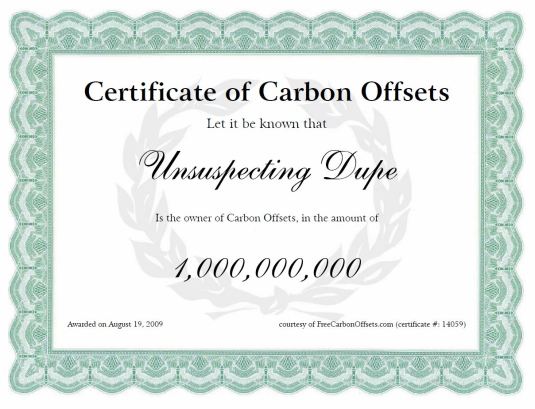
Australian Politics – The Australian Labor Party Is Signing Australia Up For An International Rort In Carbon Offsets
03 May 2016 Leave a comment
in economics of media and culture
By Andrew Bolt ~
The Australian Labor Party will open us up to being rorted blind by carbon credit shysters trading in hot air.
Labor’s Climate Change Action Plan will … create new opportunities for Australian firms to trade and engage with other ETS [emissions trading scheme] jurisdictions – already 40 per cent of the world’s economy.
Labor’s plan [is] for an Emissions Trading Scheme with access to international carbon offsets…
Here is New Zealand’s latest experience with such schemes which allow business to buy a certificate from people overseas who claim they’ve cut their own emissions by so much that their certificate allows the buyer to emit a little more – at a modest charge:
The New Zealand government may have participated in major climate fraud through the use of dodgy “hot air” carbon credits issued by the Ukraine and Russia, according to a new…
View original post 546 more words
Darwin awards (Wingsuit Flight Through 2 Meter Cave division)
03 May 2016 Leave a comment
in economics of media and culture
Cost to Develop and Win Marketing Approval for a New Drug Is $2.6 Billion
03 May 2016 Leave a comment
in economics of media and culture, health economics Tags: drug lags
The $2,558 million figure per approved compound is based on estimated:
- Average out-of-pocket cost of $1,395 million
- Time costs (expected returns that investors forego while a drug is in development) of $1,163 million
Estimated average cost of post-approval R&D—studies to test new indications, new formulations, new dosage strengths and regimens, and to monitor safety and long-term side effects in patients required by the U.S. Food and Drug Administration as a condition of approval—of $312 million boosts the full product lifecycle cost per approved drug to $2,870 million. All figures are expressed in 2013 dollars.
Source: PR Tufts CSDD 2014 Cost Study | Tufts Center for the Study of Drug Development
More proposed market interventions to control drug costs
03 May 2016 Leave a comment
in economics of media and culture
The science of attraction
03 May 2016 Leave a comment
in economics of love and marriage, economics of media and culture, health economics Tags: dating market
What happens if you drop a knife or wine glass. I know I am being negative.
03 May 2016 Leave a comment
in economics of media and culture
25 different ways to wear a scarf
03 May 2016 Leave a comment
in economics of media and culture Tags: fashion
Barbara Guastaferro: Disowning Edmund Burke? The Constitutional Implications of EVEL on Political Representation
02 May 2016 Leave a comment
in economics of media and culture
UK Constitutional Law Association
“Parliament is not a congressof ambassadors from different and hostile interests; which interests each must maintain, as an agent and advocate, against other agents and advocates” but rather “a deliberativeassembly of one nation, with one interest, that of the whole” (E. Burke, Speech to the Electors of Bristol, 3 November 1774). With these words, Edmund Burke conveyed a clear message to his electors on 3 November 1744: though chosen in a specific constituency, he was “not a member of Bristol”, but “a member of Parliament”. What does it mean, after the introduction of the EVEL procedure into the House of Commons, to be a Member of Parliament? Is there a risk that “different and hostile interests” will prevail upon “the interest of the whole”?
These questions stem from the observation that EVEL procedure, introduced on 22 October 2015 by amending the Standing Orders, “territorializes” the House of…
View original post 1,805 more words
Richard Clapton – Deep Water
02 May 2016 Leave a comment
in economics of media and culture, Music Tags: Richard Clapton
Labor’s Climate Change Action Plan will … create new opportunities for Australian firms to trade and engage with other ETS [emissions trading scheme] jurisdictions – already 40 per cent of the world’s economy.
Recent Comments