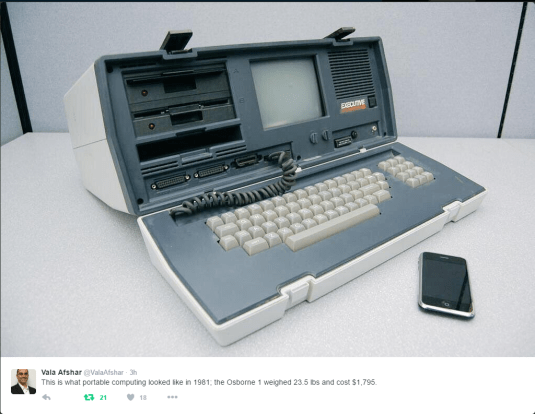
@danielbenami on Ferraris For All
20 Mar 2016 Leave a comment
in development economics, economic growth, economics, economics of media and culture Tags: The Great Enrichment
Which actor has died most often?
17 Mar 2016 Leave a comment
in economics of media and culture, movies
@BernieSanders lies more often than @HillaryClinton
16 Mar 2016 Leave a comment
in economics of media and culture, politics - USA
The presidential scorecards so far @realdonaldtrump
16 Mar 2016 Leave a comment
in economics of media and culture, politics - USA
@TheDailyBlogNZ just does not understand why @JohnKeypm is popular and beats them
16 Mar 2016 Leave a comment
in economics of media and culture, politics - New Zealand Tags: Attack Ads, Key derangement syndrome, media bias, Ronald Reagan
The latest example of Key derangement syndrome, a photo essay, reminded me of a story about some prime time TV network current affairs coverage of Ronald Reagan early in his first term. It was a long piece arguing that he was not a very good president.
The White House communications director Mike Dever rung up the journalist and thanked him for the coverage. The journalist did not understand why did not understand why.
Dever said that collection of TV clips they put together were excellent – some of the best they have seen. They showed Reagan meeting congressional leaders, business, the public and foreign leaders. Dever said the only thing that the public will remember is the images of Reagan as a hard-working world leader but still a man of the people.
Dodging the #Trump Bullet: @zingales (2011) on @realdonaldtrump’s previous run for president
14 Mar 2016 Leave a comment
in economics of media and culture, politics - USA, Public Choice, rentseeking
Read what Zingales wrote five years ago on City Journal that was part of what was cut out of his book “A Capitalism for the People” because Donald Trump running seriously for president was never supposed to happen.

Source: Dodging the Trump Bullet | City Journal.
Zingales is no kinder in his recent op-ed recalling the lost book chapter, which is paywalled.
Hilarious story of Oberlin cry-baby students fleeing to safe rooms
13 Mar 2016 Leave a comment
in economics of media and culture, liberalism, politics - USA, Public Choice Tags: cry-baby left, political correctness, safe rooms, safe spaces
An Economic Approach to School Integration: Public Choice with Tie-ins
12 Mar 2016 Leave a comment
in applied price theory, constitutional political economy, discrimination, economics of education, economics of media and culture, rentseeking
Thomas Borcherding “An Economic Approach to School Integration: Public Choice with Tie-ins.” Public Choice, 1977, argues that a reason for racial or ethnic discrimination in the public sector is politics encourages the coercive transfer of income from the racial, religious or ethnic group to those with more political influence.
Race can be used as a means of organizing coalitions to lobby for fiscal and economic discrimination in favour of even a previously unprejudiced group.
Preferences of each group to locate in a common geography and the severe control over entry or exit from the group that such things as skin colour, language, caste, and religious dogma impose make the organization of racial or ethnic coalitions by political entrepreneurs fairly cheap and minimises free riding and defection.
Prejudice may reinforce the solidarity of each group and help to monitor via custom, mores, and folkways the behavior of those that would attempt to bring persons of other groups into the former coalition. Further, prejudice may also serve as a device to rationalize exploitation of another group by fiscal or other means.

Borcherding argues that integration, racial balancing, quotas, and busing of school children take on a new logic when income transfers can be tied to fairly immutable characteristics such as race.
Mixing of children by race reduces the ability of a white dominated school board to differentially favour its own partisans’ children and to discriminate against those of blacks.
This paper anticipated Becker’s point that the competition among pressure groups for political influence for looks for lower cost ways of redistributing wealth so as to as much as possible limits the largess as much as possible to the pressure groups that lobby for it and their allies.
Fruits and vegetables, wild vs. domesticated
12 Mar 2016 Leave a comment
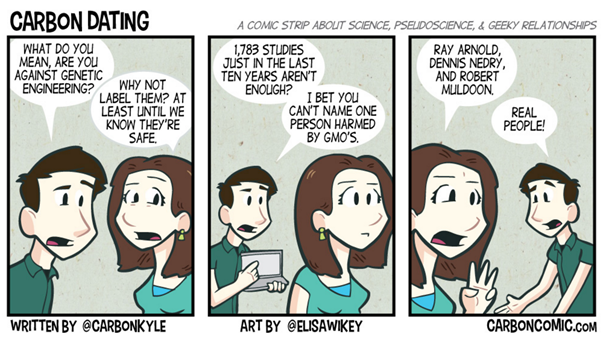
in economic history, economics of information, economics of media and culture, economics of regulation, environmental economics, health economics Tags: agricultural economics, antiscience left, food snobs, GMOs, organic food
@UKIP supporters are slightly to the left of @LibDems supporters
12 Mar 2016 Leave a comment
in economics of media and culture, Public Choice
Data generated by 17,281 England-only users of the WhoGetsMyVoteUK application. Before to the 2015 general election, users expressed their opinions on thirty policy statements including taxation, welfare, the EU and immigration. Their answers were matched with the party or parties that best corresponded with those views.

Where UKIP supporters distinguish themselves from other parties is on the cultural dimension. They are, to use David Goodhart’s phrase, far more “communitarian” (i.e. anti-immigration, anti-EU, localist, anti gay marriage and English nationalist) than “cosmopolitan” Green, Labour and Liberal Democrat supporters, while Conservative supporters occupy a “middle-of-the-road” position on the cultural scale.
This conforms well to Ford and Goodwin’s characterisation of UKIP as older blue-collar workers who feel threatened by social change and cling to past certainties. In this respect, UKIP is similar to other right-wing populist parties in Europe that draw their support from globalisation’s “losers”…


Recent Comments