A Century of Movies About World War: reddit.com/r/dataisbeauti… #dataviz http://t.co/sGsb0d0s3J—
Randy Olson (@randal_olson) February 24, 2015
The demand and supply of war movies
25 Apr 2015 Leave a comment
in economics of natural disasters, movies, war and peace Tags: Anzac Day, Armistice Day, World War I, World War II
Great Alaska earthquake, magnitude 9.2.
22 Mar 2015 Leave a comment
in economic history, economics of natural disasters Tags: Alaska, earthquakes
BBC – How to survive a disaster
05 Mar 2015 Leave a comment
in economics of natural disasters Tags: Dad's army, disasters, panic, Psychology
Rather than madness, or an animalistic stampede for the exits, it is often people’s disinclination to panic that puts them at higher risk…
The prevailing psychological explanation for these kinds of behaviours – passivity, mental paralysis or simply carrying on as normal in the face of a crisis – is that they are caused by a failure to adapt to a sudden change in the environment.
Survival involves goal-directed behaviour: you feel hungry, you look for food; you feel isolated, you seek companionship. Normally, this is straightforward (we know how to find food or companions).
But in a new, unfamiliar environment, particularly a stressful one such as a sinking ship or a burning aircraft, establishing survival goals – where the exit is and how to get to it – requires a lot more conscious effort…
But it’s a good idea to imagine that you will: to be aware that there are threats out there, and that you can prepare for them, without sliding into paranoia.
“All you have to do is ask yourself one simple question,” says Leach. “If something happens, what is my first response? Once you can answer that, everything else will fall into place. It’s that simple.”
Should car insurance be run like earthquake insurance in New Zealand?
07 Feb 2015 1 Comment
in economics of natural disasters, politics - New Zealand Tags: Christchurch earthquake, disaster relief
Would you think it is a good idea that you have two car insurers if and only if your car is hit by a pink car? That’s how they run earthquake insurance in New Zealand.
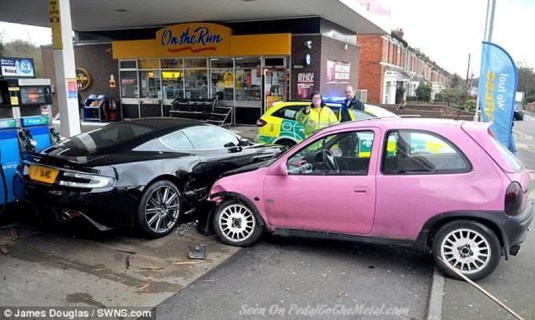
This is how the system of earthquake in insurance in New Zealand would run for a car: if your car is in an accident with a pink car, the first say $2000 of the damages is paid for by a special insurer. After that, your normal car insurance policy applies.
I don’t know of anyone who insures their car with two different people depending on the probability of different events, possibly because I don’t know that many people who are extremely stupid.
In New Zealand, the first $100,000 of earthquake damage is insured by a government insurance company called the Earthquake Commission. After that, your normal homeowners insurance covers the rest of the earthquake damage. The premium for the earthquake insurance with the Earthquake Commission is collected as part of your normal insurance premium to your home insurance provider.
Fortunately for you, if this scheme of insurance applied to your car, the repairs are not delayed for several years with High Court litigation over whether the Christchurch earthquake was a single event or a succession of separate earthquakes. If the two major earthquakes in Christchurch together with the thousands of after-shocks was a succession of separate earthquakes, the first $100,000 of damages for each of these several thousand after-shocks is the responsibility of the Earthquake Commission, not the normal insurer of the house.
Would it make sense to insure cars in the same way earthquake insurance is run in New Zealand? The answer is no. Any sensible person buys their insurance from one company and lets that insurance company sought out reinsurance of major and rare events with the global reinsurance pools.
With global reinsurance pools, there is no reason for a separate government insurance against earthquakes in New Zealand. The Earthquake Commission and its separate scheme of insurance for earthquakes should be abolished as superfluous and a magnet for litigation over insurance company liabilities in the case of major earthquakes.
Politics and disaster aid in the Philippines – The Washington Post
11 Dec 2014 Leave a comment
in applied welfare economics, development economics, economics of natural disasters, growth disasters, growth miracles Tags: corruption, natural disaster relief, Philippines, rent seeking, Tacloban

The good news is that we find that fund allocations do indeed respond to the location and intensity of typhoons and tropical storms.
However, political ties between members of Congress and local mayors, specifically party and clan ties, are also associated with greater funding for a given municipality.
One of the most devastated cities in the aftermath of Typhoon Haiyan is Tacloban City, with a population of 221,174 people.
Our research suggests that for a municipality of this size, a match in party affiliation between the member of Congress and the mayor increases the distribution of funds by PHP 1.74 million ($40,000), while a match in clan affiliation increases this distribution by PHP 6.23 million ($142,000).
The result that clan ties have a much larger effect than party ties on the distribution of per capita reconstruction funds underscores the relative importance of clan loyalty in decision-making by Philippine congressional representatives.
via Politics and disaster aid in the Philippines – The Washington Post.
The politics of the Philippines’ vulnerability to natural disasters – The Washington Post
11 Dec 2014 Leave a comment
in applied welfare economics, development economics, economics of natural disasters, growth disasters, growth miracles Tags: corruption, disaster relief, Philippines, rent seeking

Regrettably, we find no evidence that poverty, vulnerability to disasters, or other objective measures of infrastructure needs are determinants of road construction and repair expenditures at the local level.
Instead, our evidence highlights the importance of political connections and electoral strategies.
Consistent with the story in many other countries in the developing world, we find that mayors divert construction funding to electorally contested areas where they need to win more votes, while congressmen use their discretionary funding to shore up political connections by allocating funding to localities where the mayor is an ally.
via The politics of the Philippines’ vulnerability to natural disasters – The Washington Post.
San Francisco, after the earthquake, 1906
09 Dec 2014 Leave a comment
in economics of natural disasters, politics - New Zealand, politics - USA Tags: earthquakes, natural disasters, San Francisco earthquake

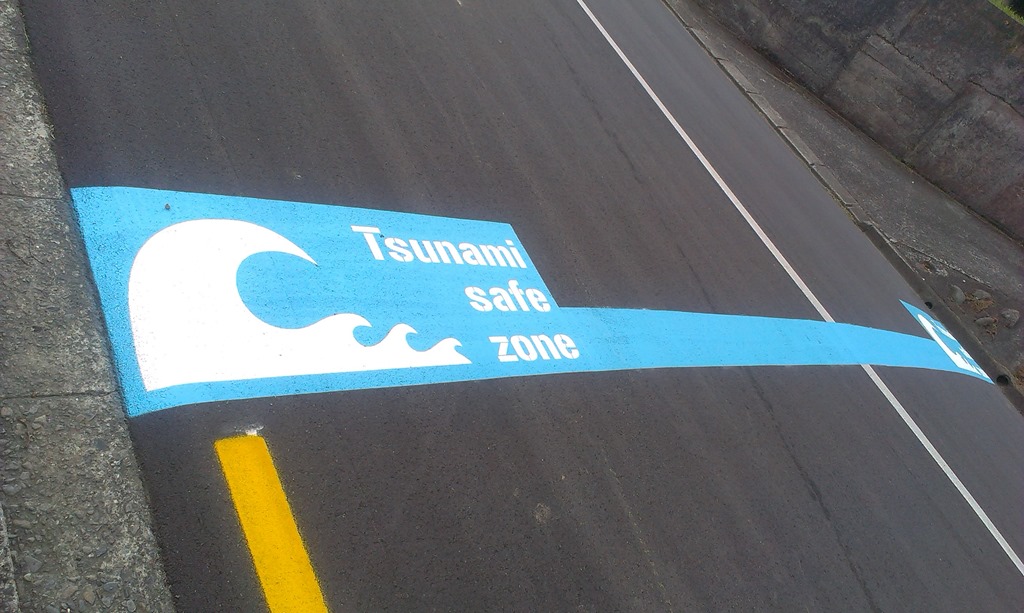
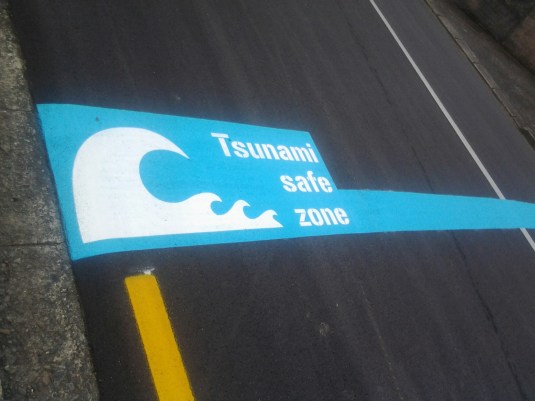
The new tsunami safe zone line down the road from us – must check effect on land values
13 Oct 2014 2 Comments
in economics of natural disasters Tags: earthquakes, Tsunami, Wellington
Climate Consensus: Do Little for Now
16 Sep 2014 1 Comment
in applied price theory, applied welfare economics, economics of natural disasters, environmental economics, global warming, health economics, liberalism, technological progress Tags: climate alarmism, cost benefit analysis, global warming, moral panic, richer is safer, wealthier is healthier


Christchurch Earthquake | Libertarianz TV
04 Aug 2014 Leave a comment
in economics of natural disasters, economics of regulation, liberalism, libertarianism, politics - New Zealand, urban economics Tags: Christchurch earthquake, economics of natural disasters
Devastating effect of government bureaucracy following the earthquakes of 2010 and 2011. As told by two business owners, an economist and an engineer. Concludes with the Libertarianz policy to make Christchurch a free enterprise zone.
Gary Becker on the economics of natural disasters
27 Jun 2014 Leave a comment
in economics of natural disasters, Gary Becker Tags: Gary Becker, JS Mill, natural disasters

In the 19th century, John Stuart Mill commented on the rapidity of economic recovery from national disasters and wars. He recognized that nations recover quickly as long as they retain their knowledge and skills, the prime engines of economic growth.
America retains its vast supply of both, which suggests that, contrary to fears, the Sept. 11 attacks are unlikely to worsen the medium- to long-term economic outlook.
The effects of the earthquake that hit the Japanese city of Kobe in 1995 illustrate Mill’s conclusion. This quake destroyed more than 100,000 buildings, badly damaged many others, and left hundreds of thousands homeless. Over 6,000 people died. Estimates place the total loss at about $114 billion (more than 2% of Japanese GDP at the time). Yet it took only a little over a year before GDP in the Kobe region returned to near pre-quake levels.
Stephen Franks: Time to call out the earthquake sooks-updated
20 Apr 2014 Leave a comment
in economics of natural disasters, economics of regulation, politics - Australia, politics - New Zealand Tags: earthquake building standards, Stephen Franks
An over-the-top blog post title spoiled a great round-up by Stephen Franks of the costs and benefits of higher building standards regarding earthquakes:
- Employees are pressing employers to avoid premises seen as risky even if the earthquake risk is a fraction of the risks faced by employees in their homes, or getting to and from work;
- Retroactive earthquake strengthening may cost more than the cost of a completely new building (the Canterbury Earthquake Royal Commission mentions up to 120%);
- Retroactively strengthening buildings outside our highest seismic risk regions is rarely likely to pass any rational cost/benefit test because few if any of them will ever cause an injury.
- The Martin Jenkins & Associates cost benefit study mentioned by the Canterbury Earthquake Royal Commission showed no retrospective upgrading policy that could deliver net economic benefit.
- Rationally, almost all existing weaker buildings should be allowed to end their useful life naturally and be replaced.
- In high risk Wellington the $60m the Council is looking at spending on the Town Hall would save more lives if spent on dedicated cycle-ways.
via StephenFranks.co.nz » Blog Archive » Time to call out the earthquake sooks.
I remember reading a justifiably bitter op-ed by a woman who survived the bus on which a wall fell on and flattened in the second Canterbury Earthquake in February 2011. Eleven died.
That historic wall was known to be in risk is collapse both before and after the first Canterbury Earthquake in 2010.
The wall could not be demolished because of restrictions under the Historic Places Act.
A relative sat on a council committee in a small country town that was among other things trying to demolish a derelict building. The building was protected by heritage legislation.
Permission was refused to demolish the derelict building even after it caught fire and nearly burnt down the pub next door.
 Utopia, you are standing in it!
Recent Comments