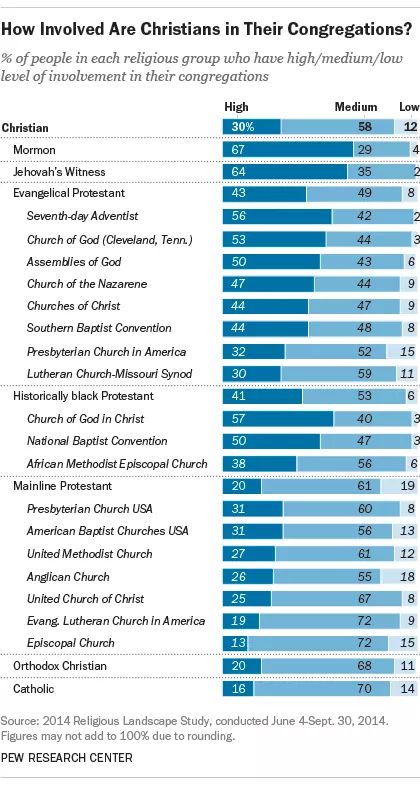
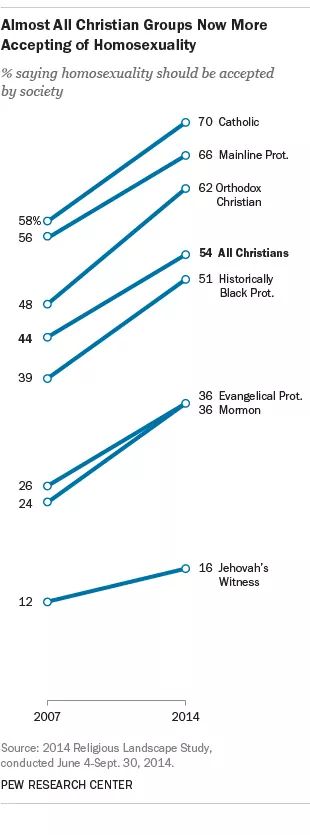
Catholics are the most tolerant!
13 Mar 2018 Leave a comment
in economics of religion, liberalism Tags: gay marriage, gay rights

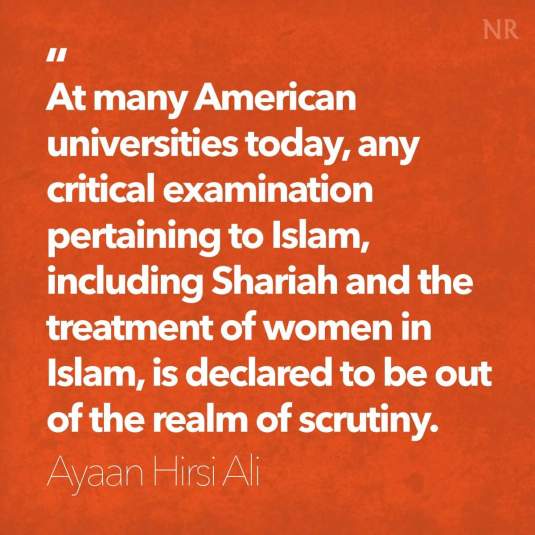
Dare debate about our freedom to leave Islam
11 Mar 2018 Leave a comment
in economics of religion Tags: political correctness
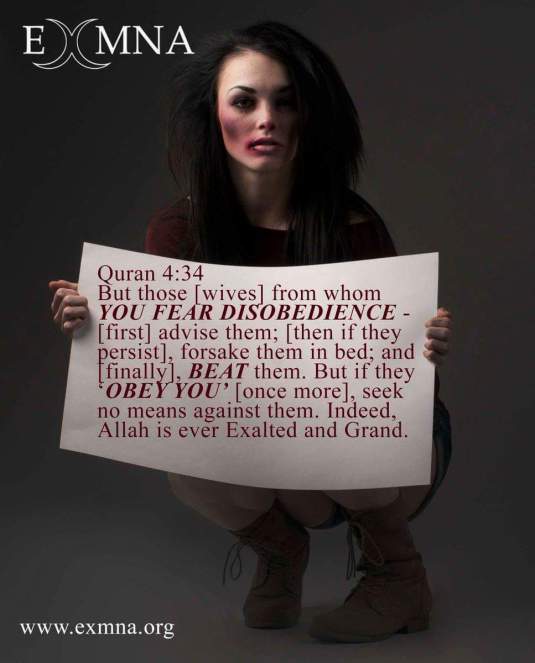
#InternationalWomensDay What happened when I stopped praying and took off my headscarf #WorldHijabDay #AllahIsGay
08 Mar 2018 Leave a comment
in discrimination, economics of crime, economics of religion, gender, law and economics Tags: free speech, political correctness
#InternationalWomensDay ex-Muslims and the charge of islamophobia – @SarahTheHaider, Maryam Namazie & Muhammad Syed
08 Mar 2018 Leave a comment
in discrimination, economics of religion, gender, law and economics Tags: free speech, political correctness
#InternationalWomensDay: #WorldHijabDay is an insult to millions of women and girls who do not have the choice to take off their hijab
08 Mar 2018 1 Comment
in discrimination, economics of religion, gender, labour economics, law and economics Tags: political correctness
#AllahIsGay @golrizghahraman & family bigotry against not wearing the #hijab versus coming out as gay
02 Mar 2018 1 Comment
in discrimination, economics of religion, gender, liberalism Tags: free speech, Leftover Left, political correctness
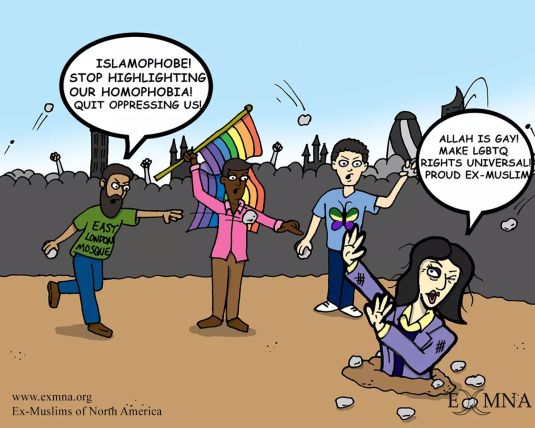
Our politically correct betters defend the right to wear the hijab and to come out as gay.
Are they equally tolerant of hostile reactions by a Christian family against coming out as gay and a Muslim family against a daughter casting off the hijab?
Both involve moral judgements about people expressing their right of free speech and free association.
https://twitter.com/ExMuslimTV/status/952680188017627136Rat bags do have rights but you still should call them out as rat bags for doing what they do.
https://twitter.com/groonhu/status/947305131225346048Does the left understand the difference between toleration and approval?
Our green MPs in New Zealand will defend to the death the right to wear the hijab.
https://twitter.com/ExMuslimTV/status/955384880300478464They and the Left forgets the I disagree with everything you say or do predicate to defending a right.
The Green MP Catherine Delahunty was right to politely but strongly criticise the modest dress of women at a farm run by a fundamentalist Christian sect in New Zealand and what it stood for in terms of the right to be the author of their own lives:
I looked at the gorgeous, yet regimented girls in their identical clothing and wondered how a physicist, an international lawyer or a plumber might blossom if the only role models she was exposed to were those in her own community. We agreed to disagree, because you can’t argue with religious certainty and a literal interpretation of a religious text.
This community feels they are under attack by people like me and throughout the day the women and men I met did their best to share their vision of a safe, structured and practical world led entirely by men who consult with women. I appreciated their generosity, their hospitality and their candour, but I also felt claustrophobic
Later buying fish and chips in Westport we talked to a group of young women who had chosen to travel down from Rotorua to study deep sea fishing. I found their sturdy independence a relief. Their world may not be so “safe” but they looked like they were living on their own terms.
It is a pity that her fellow green MPs do not extend this willingness to defend rights with a willingness to judge how those rights are exercised.
The fundamentalist Christians are not alone in ostracising those who stand up on their own two feet and chose to be the author of their own lives despite their family’s wishes.
https://twitter.com/rlolopez/status/890539940106338305
The supreme arrogance of @CanberraQuakers hits a new high on #SSM and antidiscrimination law exceptions
22 Feb 2018 Leave a comment
in defence economics, economics of religion, law and economics
One religion lecturing another on whether their beliefs are valid, are fundamental to their faith has never ended well.

What supreme arrogance. Quakers are happy to make others obey the laws they support but claim exemption from an otherwise valid law of general application because of their religious scruples. In common with George Orwell, I have no truck with pacifists:
Pacifism is objectively pro-Fascist. This is elementary common sense. If you hamper the war effort of one side you automatically help that of the other. Nor is there any real way of remaining outside such a war as the present one. In practice, ‘he that is not with me is against me’. The idea that you can somehow remain aloof from and superior to the struggle, while living on food which British sailors have to risk their lives to bring you, is a bourgeois illusion bred of money and security. Mr Savage remarks that ‘according to this type of reasoning, a German or Japanese pacifist would be “objectively pro-British”.’ But of course he would be! That is why pacifist activities are not permitted in those countries (in both of them the penalty is, or can be, beheading) while both the Germans and the Japanese do all they can to encourage the spread of pacifism in British and American territories. The Germans even run a spurious ‘freedom’ station which serves out pacifist propaganda indistinguishable from that of the P.P.U. They would stimulate pacifism in Russia as well if they could, but in that case they have tougher babies to deal with. In so far as it takes effect at all, pacifist propaganda can only be effective against those countries where a certain amount of freedom of speech is still permitted; in other words it is helpful to totalitarianism.
Quakers would be most upset if there was no conscientious objection provisions from military service but they will not grant the right to hold foolish moral and religious views to reactionary religions over same-sex marriage.
If the separation of church and state means anything, the views of one religion of another carries no weight. The wall separating the church and the state is equally high for all religions. It is not for the state to judge some religions as more sensible.
Quakers and other pacifists stand back on high, feeling good about themselves when others do the dirty work of keeping the world safe for democracy and freedom. Churchill said
We sleep safely at night because rough men stand ready to visit violence on those who would harm us.
Pacifists are no better than those deserters at the fall of Singapore, arrested by military police and led away but laughing at those soldiers who stood to fight the Japanese. They were laughing because they expected to survive because there is no death penalty for cowardice and desertion in the Australian Army. The brave died to protect their liberties. The English actor Donald Pleasence was a pacifist once:
Having registered as a conscientious objector, he joined the RAF when he saw how fellow-pacifists regarded without apparent emotion or guilt the Nazi bombing of London; and as a member of a bomber’s crew he flew 60 missions over Germany before being shotdown and imprisoned.
John Rawls’ Law of Peoples had as its key point that the fundamental division is not between democratic and non-democratic peoples or liberal and non-liberal, but decent and non-decent or outlaw peoples. Decent peoples allow toleration and subscribe to eight principles:
- Peoples are free and independent, and their freedom and independence are to be respected by other peoples.
- Peoples are to observe treaties and undertakings.
- Peoples are equal and are parties to the agreements that bind them.
- Peoples are to observe a duty of non-intervention.
- Peoples have the right of self-defence but no right to instigate war for reasons other than self-defence.
- Peoples are to honour human rights.
- Peoples are to observe certain specified restrictions in the conduct of war.
- Peoples have a duty to assist other peoples living under unfavourable conditions that prevent their having a just or decent political and social regime.
An individual’s religious beliefs does not excuse him from compliance with an otherwise valid law of general application prohibiting conduct that governments are free to regulate. Justice Frankfurter wrote in 1940:
conscientious scruples have not in the course of the long struggle for religious toleration relieved the individual from obedience to a general law not aimed at the promotion or restriction of religious beliefs. The mere possession of religious convictions which contradict the relevant concerns of political society does not relieve the citizen from the discharge of political responsibilities
Religious freedom bars laws that prohibit:
- the holding of a religious belief,
- the right to communicate those beliefs to others, and
- the right of parents to direct the religious education of their children.
This approach has the advantage of not placing courts into the position of having to determine the importance of a particular belief in a religion or the plausibility of a religious claim when weighing it against government interests and the objectives of the disputed law.
It might be said that there should be a compelling government interest before a religious objection can be overridden. Deciding what is a compelling government interest raises questions of public policy.
Men and women decide what is more or less important in the course of making legislation goes to the very heart of democratic decision-making. This clash of opinions and visions of the good society and what laws should be passed or not are all resolved peacefully through the ballot box and free speech even in the most desperate times.
This is not to say that a parliament may if it wishes exempt people from certain obligations on the basis of religious objections or making other accommodations. What it does require is that religions take their chances in democratic politics like the rest of us when seeking exemptions from a law.
It is up to the political process to decide whether to disadvantage those religious practices that are not widely engaged in, but a unavoidable consequence of democratic government must be preferred to a system in which each conscience is a law unto itself. To quote Frankfurter again:
Its essence is freedom from conformity to religious dogma, not freedom from conformity to law because of religious dogma. Religious loyalties may be exercised without hindrance from the state, not the state may not exercise that which except by leave of religious loyalties is within the domain of temporal power. Otherwise each individual could set up his own censor against obedience to laws conscientiously deemed for the public good by those whose business it is to make laws…
The validity of secular laws cannot be measured by their conformity to religious doctrines. It is only in a theocratic state that ecclesiastical doctrines measure legal right or wrong
Quakers want to be a law unto themselves when it comes to military service but are just as hectoring as all the other God bothers when it comes to same-sex marriage and discrimination laws. My religious scruples are superior to your religious scruples.
I am all for exemptions from antidiscrimination laws for religions but not because I wish them well. Napoleon said never interrupt your enemy when they are making a mistake.
I have no wish to drag any church into the Age of Enlightenment, kicking and screaming. I want everyone to see them for what they, warts and all. They have made no positive contribution to civilisation as Bertrand Russell explained
My own view on religion is that of Lucretius. I regard it as a disease born of fear and as a source of untold misery to the human race. I cannot, however, deny that it has made some contributions to civilization. It helped in early days to fix the calendar, and it caused Egyptian priests to chronicle eclipses with such care that in time they became able to predict them. These two services I am prepared to acknowledge, but I do not know of any others….
What is true of Christianity is equally true of Buddhism. The Buddha was amiable and enlightened; on his deathbed he laughed at his disciples for supposing that he was immortal. But the Buddhist priesthood – as it exists, for example, in Tibet – has been obscurantist, tyrannous, and cruel in the highest degree
I want religions to have these exemptions because it makes them look ridiculous. If you do not think casinos and poker machines are a good thing, do not support laws that make casinos and poker machine halls more inviting. Same goes for religion.
Why anti-discrimination laws shouldn’t apply to religion. It sanitises religion, drags it into the Age of Enlightenment, kicking and screaming.
22 Feb 2018 Leave a comment
in discrimination, economic history, economics of religion Tags: antidiscrimination laws, Freedom of religion, gay marriage, political correctness

What happens when we die? Jewish, Buddhist and Catholic perspective
14 Feb 2018 Leave a comment
in economics of religion, television
Fleeing Saudi blasphemy law. Finding Canadian blasphemy law.
13 Feb 2018 Leave a comment
in economics of religion Tags: Canada, free speech, Freedom of religion


Recent Comments