UN Climate Panel says climate impact is small @GreenpeaceNZ @OxfamNZ @YoungGreensNZ
08 Sep 2017 Leave a comment
in energy economics, environmental economics, global warming
So @Greenpeacenz @NZGreens @Oxfamnz want to stop carbon emissions by 2021?
07 Sep 2017 Leave a comment
in environmental economics, global warming
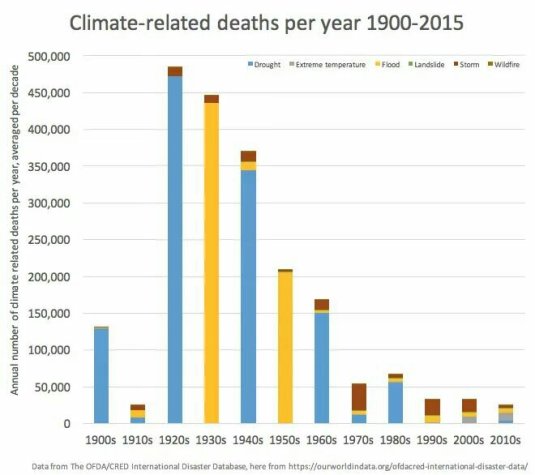
Wealthier is healthier
01 Sep 2017 Leave a comment
in development economics, economic history, environmental economics, global warming
Climate economics (UG): Adaptation policy
30 Aug 2017 Leave a comment
in applied price theory, applied welfare economics, development economics, environmental economics, global warming, growth disasters, growth miracles
An underreported IPCC consensus
21 Aug 2017 Leave a comment
in environmental economics, global warming Tags: climate alarmism

Bjorn Lomborg explains why Paris Climate Treaty doesn’t solve Global Warming
10 Aug 2017 Leave a comment
in economics, environmental economics, global warming Tags: climate alarmists
Why is the reduction in GDP levels so small? @GreenpeaceNZ @Oxfamnz
30 Jul 2017 Leave a comment
in applied welfare economics, climate change, economic growth, energy economics, environmental economics, global warming
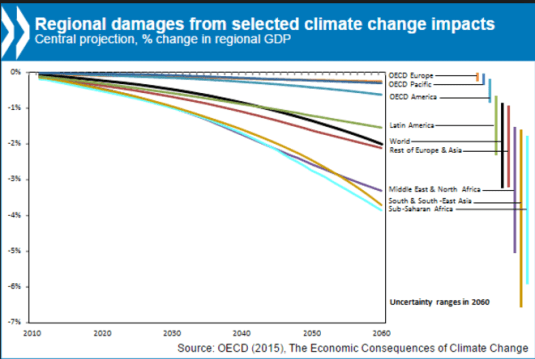
The global reduction in the level of GDP between now and 2060 is estimated to range between 0.6% and 4.4% if nothing is done. In the case of developing countries undergoing growth miracles, we are all talking about 6 months GDP growth! Russia and Canada will be overrun by tourists in the event of runaway climate change.
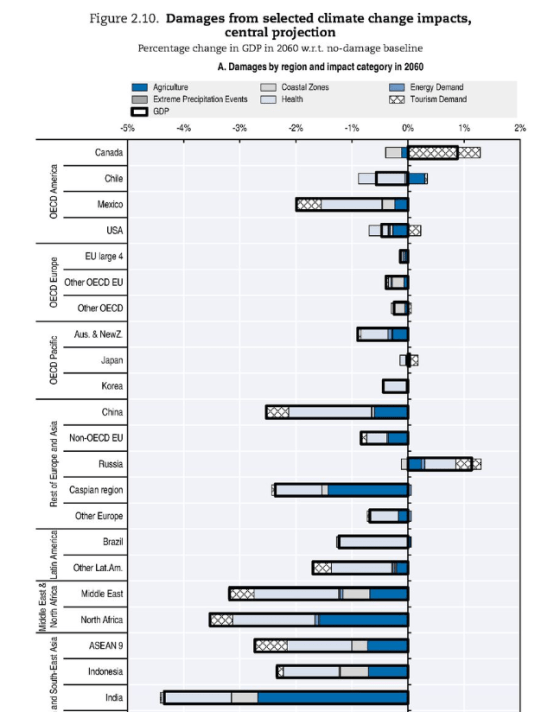
Source: The Economic Consequences of Climate Change The damages from selected climate change impacts to 2060 DOI:http://dx.doi.org/10.1787/9789264235410-5-en
Are unilateral carbon emission cuts the next best thing to an effective multilateral agreement?
17 Jul 2017 Leave a comment
in applied price theory, environmental economics, global warming, politics - New Zealand
Carbon emission reductions are an international public good which will always be undersupplied. The benefits of emission cuts are available to all irrespective of whether they cut emissions or not so there is always the temptation to not cut your own emissions unless your reduction is decisive. It is agreed in the recent court case that New Zealand’s carbon emissions are trivial on the global scale.

Free riding is much more likely for international public goods because there is no effective mechanism for compelling nations to cut their carbon emissions short of a green tariff war. Even a green tariff war fails unless it is most countries ganging up on a few recalcitrant carbon emitters.
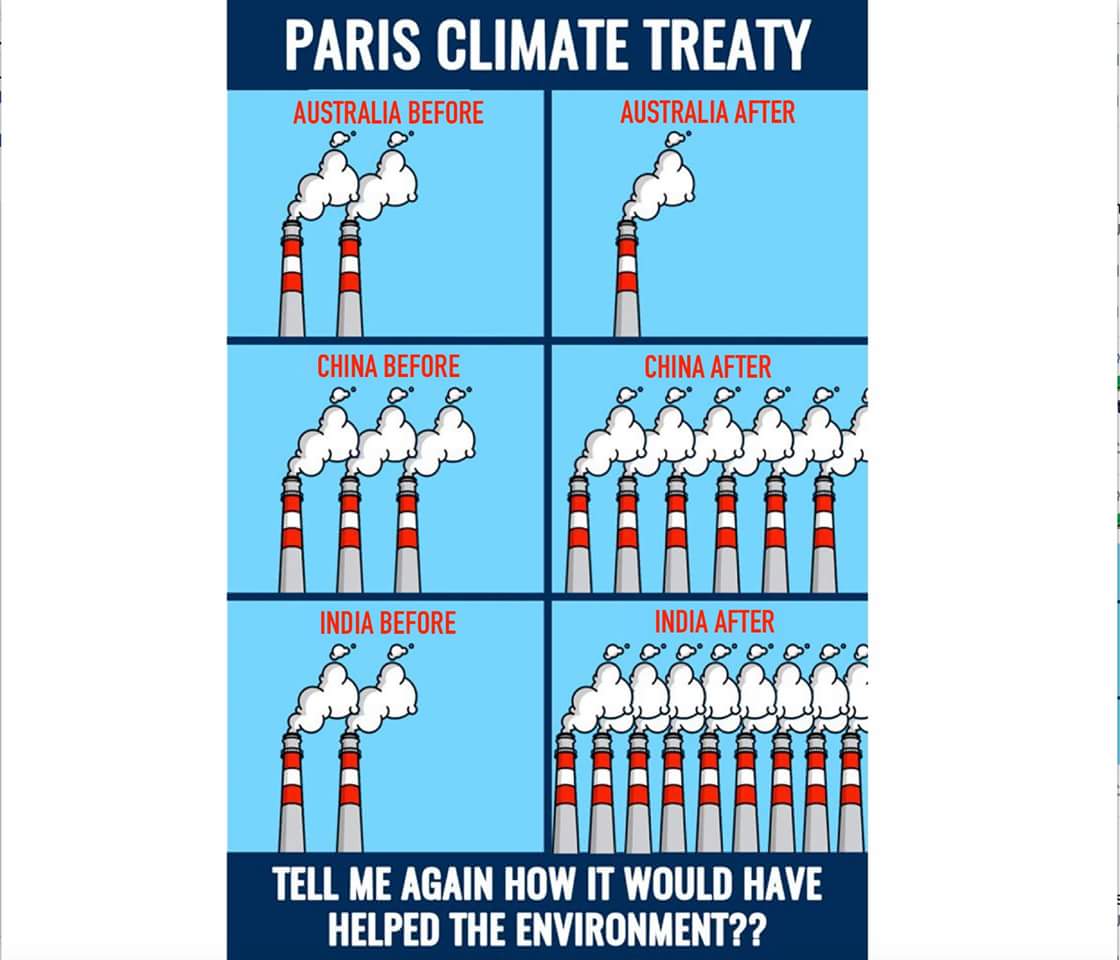
Even if the major emitters cut back, the developing countries have made it clear that they will not sacrifice their development for global climate objectives. Many developed countries are dragging their feet on cutting emissions and that is before we mention the Trump administration withdrawing from the relatively modest targets in the Paris agreement of 2 years ago.
In the absence of the provision of an international public good to a sufficient level, which are emission cutbacks of about 10 times the Paris targets, unilateral contributions to the provision of that global public good make NZ poorer. Will making ourselves unilaterally poorer help us adapt to the runaway climate change that has been foretold by so many?
What is even worse is handcuffing relatively efficient agricultural industries with a high carbon price. This will provide a good incentive for the export of dirty production to less enlightened countries. Our dairy exporters would lose market share to higher carbon emitting countries.
It can be argued that unilateral reductions by NZ because of a higher than the international average carbon price could quicken global warming. The point of carbon taxes is to encourage industries to migrate to the most efficient places of production and therefore lowest carbon emissions.
Making our dairy industry less efficient because of unilaterally higher carbon taxes means more dairy is produced in other countries that are not restraining their carbon emissions. In consequence, carbon emissions globally may increase but New Zealand is poorer for its unilateral restraint.
The carbon tax is supposed to give people the right incentives about what to buy and where to produce. Making the world’s most efficient dairy producer produce less does not sit well with that.
The whole point of putting a price on carbon emissions is to shift the economy out of high carbon emission activities into low carbon emission activities. The risk of a even higher price on carbon in New Zealand relative to the rest of the world is the reverse will happen.
The most likely international scenario is not much is done at all about cutting carbon emissions. Things will be done here and there but as soon as cutting emissions becomes costly, political support will fade. Tony Abbott will not be the only politician to describe a carbon tax as a great big new tax.
In such a world, is it in anyone’s interest for the most efficient agricultural producers to be shooting themselves in the foot. Should not they be taking on as much production as they can because their efficiency reduces total global emissions.
Given this gloomy outlook, Greenpeace and the Greens should be born-again supply-side economists pushing every Rogernomics reform they can find to increase economic growth. Richer is safer, wealthier is healthier. A richer New Zealand is more able to roll with the punches of their foretold runaway climate change and make the necessary adaptations.
Climate change activists must swallow two dead rats rather than one if they really want to deal with the runaway climate change they foretell so often. Not only must they embrace nuclear power, they must go a 2nd ideological bridge too far and embrace a competitive market economy with gusto.
If there is no effective multilateral agreement to cut emissions, do not assume unilateral cutbacks are the next best thing. The best solutions call for strange bedfellows if there is no planet B.
Climate economics (UG): International environmental agreements in practice
14 Jul 2017 Leave a comment
in applied price theory, comparative institutional analysis, constitutional political economy, development economics, economic history, economics of bureaucracy, energy economics, environmental economics, global warming, international economics, International law, Public Choice, rentseeking Tags: international public goods
Climate economics (UG): Economic impacts of climate change
08 Jul 2017 Leave a comment
in applied price theory, applied welfare economics, development economics, economic history, energy economics, environmental economics, global warming Tags: global warming
Climate economics (UG): International environmental agreements in theory
26 Jun 2017 Leave a comment
in applied price theory, comparative institutional analysis, economics of bureaucracy, energy economics, environmental economics, global warming, international economics, Public Choice Tags: free riding, game theory, global warming, international public goods
 Utopia, you are standing in it!
Recent Comments