Douglass North and Timur Kuran: Institutions and Economic Performance
17 Oct 2019 Leave a comment
in applied price theory, applied welfare economics, Austrian economics, comparative institutional analysis, constitutional political economy, defence economics, development economics, economic history, economics of bureaucracy, economics of education, economics of regulation, economics of religion, financial economics, growth disasters, growth miracles, history of economic thought, income redistribution, industrial organisation, law and economics, property rights, Public Choice, rentseeking, survivor principle Tags: The Great Enrichment
“I vividly remember traders screaming, ‘The market’s broken! I can’t get a price, any price! Said @JARRODWKERR IN @THESPINOFFTV?
15 Oct 2019 Leave a comment
in economic history, financial economics, global financial crisis (GFC), macroeconomics, monetary economics

Figures 7A and 7B display data for the interest rate on commercial paper with a maturity of 90 days for financial and non-nancial corporations2 . These figures show that, during the financial crisis, this interest rate has risen for financial institutions and has barely budged for non-financial institutions with a AA rating. It has risen fairly dramatically for non-financial corporations with an A2/P2 rating. Note that, even though the interest rate for financial institutions has risen recently, it is still well below the levels that prevailed from the beginning of 2006 to the middle of 2007. These figures show that the financial crisis has not led commercial paper rates to rise to levels well beyond historical levels. Taken together, Figures 6A through 7B show that the third claim is false, at least as of October 15.
Did interbank lending dry up at onset of the #GFC as claimed by @JarrodWKerr in @TheSpinoffTV?
15 Oct 2019 1 Comment
in economic history, financial economics, global financial crisis (GFC), macroeconomics, monetary economics
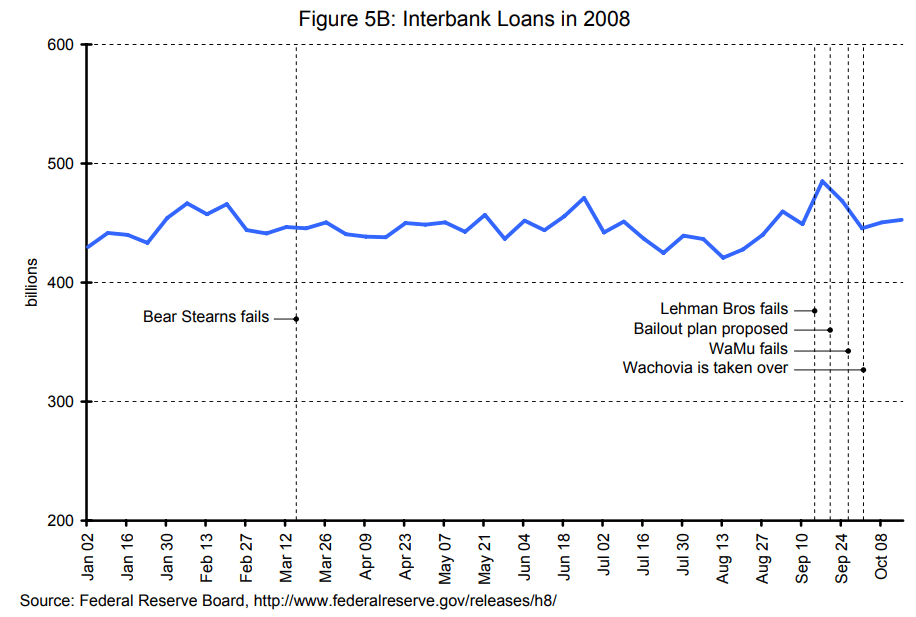
“We knew we were witnessing history, but at the same time, we were haemorrhaging,” he wrote in a piece for The Spinoff marking the crash’s 10th anniversary. “I vividly remember traders screaming, ‘The market’s broken! I can’t get a price, any price!’… The fear of contagion crippled financial markets, and each bank was asking the same question of the other: ‘what dodgy exposure do you have?'”
From https://thespinoff.co.nz/business/sme/15-10-2019/the-economist-who-forgot-everything-he-learned/
BTW, what Kerr really said:
We knew we were witnessing history, but at the same time, we were haemorrhaging. I vividly remember traders screaming, ‘The market’s broken, the market’s broken! I can’t get a price, any price!’. Screens and keyboards were smashed, and millions were lost. I still to this day struggle to believe the so-called ‘major banks’ refused to deal with each other. The fear of contagion crippled financial markets, and each bank was asking the same question of the other: ‘What dodgy exposure do you have?’ The market for bank bills, the short-term pieces of paper (IOUs) that banks buy off each other and which account for a large part of their funding, froze. An interest rate that was ‘always’ 7bps (percentage points) above the cash rate (OCR) sudden became 180bps above cash. That’s banker talk for ‘bloody hell, the cost of everything we do has just blown out’. Credit, the availability of money to do stuff like buy a home, is the oil in the economic engine and when it dries up the engine seizes. What we had was a recession, and it was a bad one. Bailouts came in a number of forms but many feared it wasn’t enough. (emphasis by this blog)
BTW, one basis point (BP) is one hundredth of one percentage point, not a whole percentage point as the editor of his article suggested.
Want to Make a Big Bet on Oil Prices? Try Measuring Shadows | @WSJ
13 Oct 2019 Leave a comment
in defence economics, economic history, economics of information, energy economics, entrepreneurship, financial economics, industrial organisation, international economics, market efficiency, survivor principle, transport economics, war and peace Tags: entrepreneurial alertness
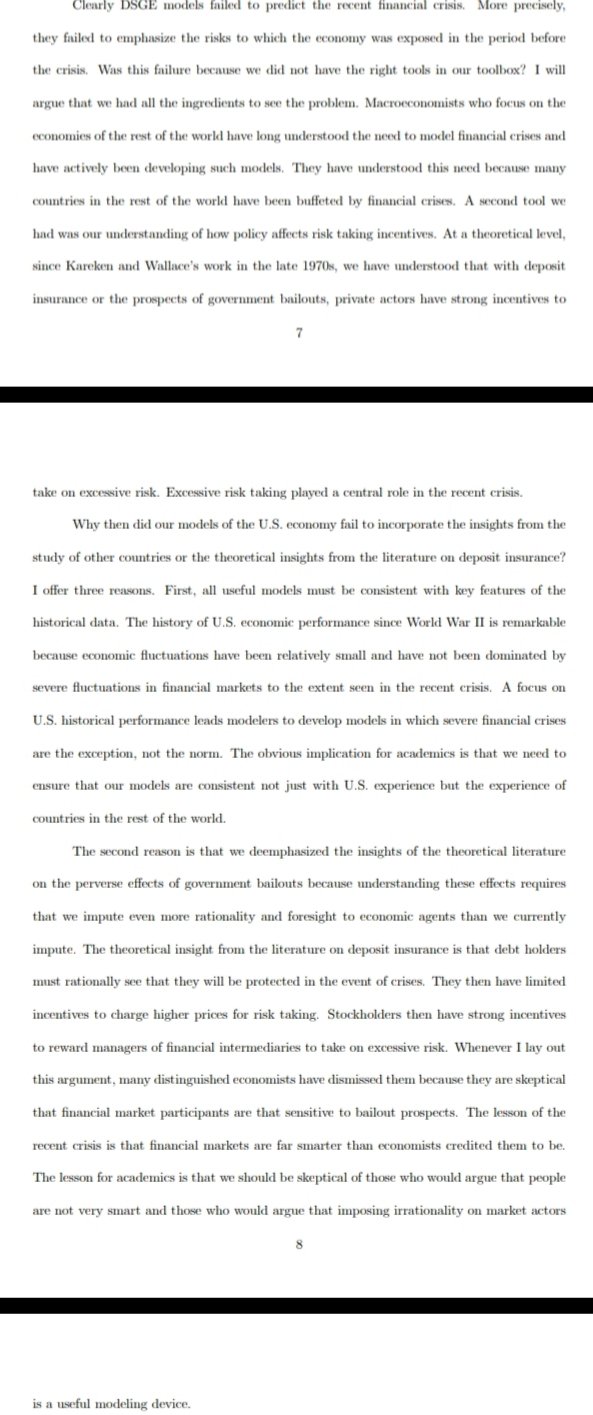
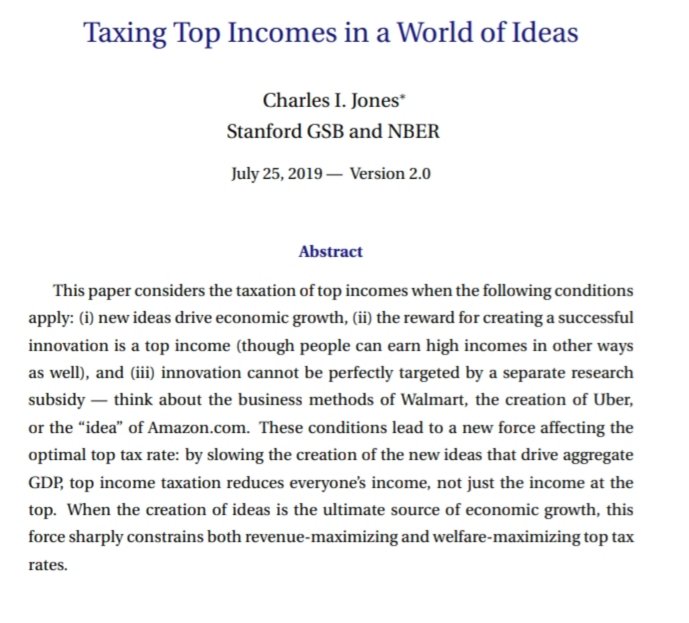
V.V. Chari testifies on modern macroeconomics and information prerequisites to predicting the GFC
09 Oct 2019 Leave a comment
Richard Posner: Fiscal Irresponsibility Clouds the Future
23 Sep 2019 Leave a comment
in economic history, economics of bureaucracy, financial economics, fiscal policy, global financial crisis (GFC), great recession, industrial organisation, law and economics, macroeconomics, monetary economics, Public Choice, Richard Posner Tags: bank panics

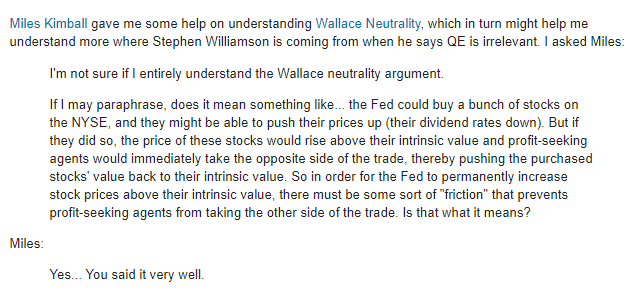
Wallace neutrality or quantitative easing as an asset exchange
21 Sep 2019 Leave a comment
in financial economics, macroeconomics, monetary economics
Are markets efficient?
20 Sep 2019 Leave a comment
in economics of information, financial economics Tags: efficient markets hypothesis
Top 15 Biggest Companies by Market Capitalization 1993 – 2019; No Apple until 2009, no Facebook or Amazon until 2015!
20 Sep 2019 Leave a comment
in economic history, entrepreneurship, financial economics, industrial organisation, survivor principle Tags: creative destruction
In Pursuit of the Perfect Portfolio: Eugene F. Fama
19 Sep 2019 Leave a comment
in financial economics Tags: active investing, efficient markets hypothesis, passive investing
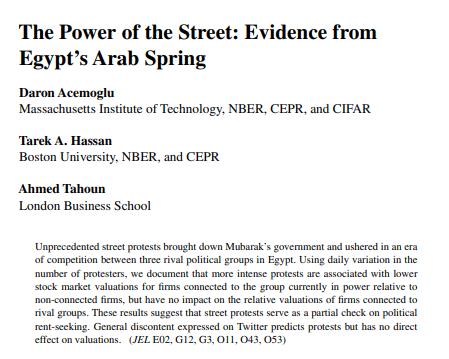
The share market speaks
19 Sep 2019 Leave a comment
in development economics, financial economics, Public Choice
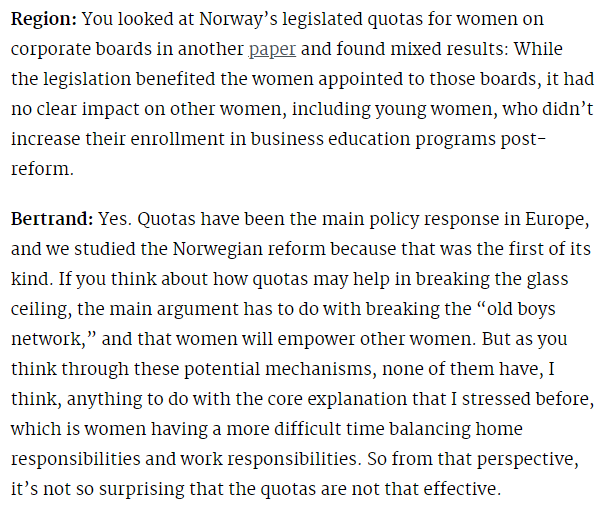
Do quotas break the glass ceiling in the boardroom?
17 Sep 2019 Leave a comment
in discrimination, financial economics, gender, occupational choice
Richard A. Posner, “The Embattled Corporation”
12 Sep 2019 Leave a comment
in applied price theory, comparative institutional analysis, economic history, economics of information, economics of regulation, financial economics, industrial organisation, law and economics, managerial economics, organisational economics, property rights, Public Choice, Richard Posner, survivor principle Tags: adverse selection, moral hazard
 Utopia, you are standing in it!
Recent Comments