
Didn’t know Starbucks and McDonald’s were doing so well
16 Mar 2018 Leave a comment
in economic history, entrepreneurship, financial economics, industrial organisation, survivor principle

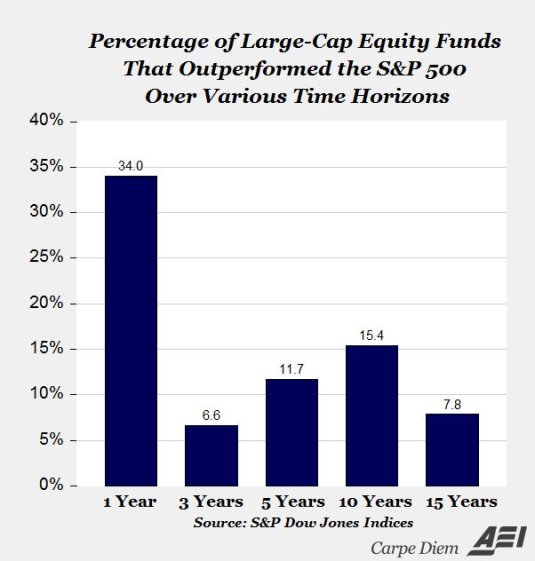
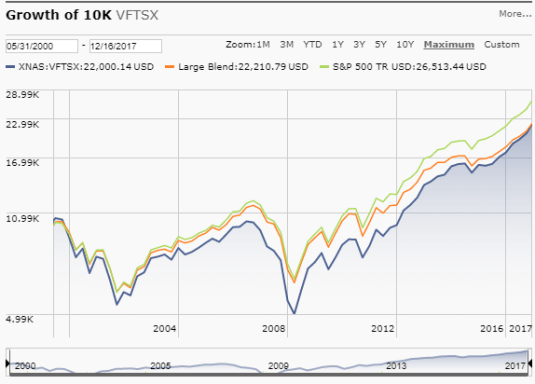
.@NZSuperFund still struggles to beat reference portfolio @TaxpayersUnion; 1.45% p.a. since inception
26 Nov 2017 Leave a comment
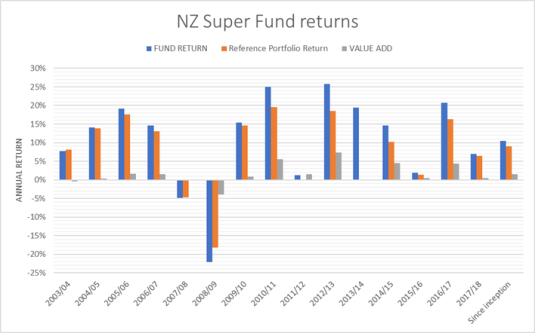
from https://www.nzsuperfund.co.nz/performance-investment/monthly-returns
Little wonder that no hedge fund headhunts from the New Zealand superannuation fund. Their staff turnover ratios are below 10% and often 5% and the CEO is paid a pittance by hedge fund standards.
Page 32 of "An Illustrated Guide to Income" more economic #dataviz at: bit.ly/12SEI9p http://t.co/HYm0II2UNI—
Catherine Mulbrandon (@VisualEcon) May 08, 2013
Page 33 of "An Illustrated Guide to Income" more economic #dataviz at: bit.ly/10M7lqR http://t.co/FcmaqZWB32—
Catherine Mulbrandon (@VisualEcon) May 09, 2013
A century of America’s 10 largest companies
21 Nov 2017 Leave a comment
in economic history, financial economics, industrial organisation, survivor principle
Eugene Fama Why Small Caps and Value Stocks Outperform
11 Oct 2017 Leave a comment
in entrepreneurship, financial economics
Financial regulation and financial crisis | Sam Peltzman
11 Oct 2017 Leave a comment
in applied price theory, economics of regulation, financial economics, global financial crisis (GFC), macroeconomics, monetary economics, Sam Peltzman Tags: offsetting behaviour, unintended consequences
Are markets efficient? Fama debates Thaler
10 Oct 2017 1 Comment
in behavioural economics, entrepreneurship, financial economics Tags: efficient markets hypothesis
Graphic that was not published with my op-ed in the @NZHerald
28 Sep 2017 Leave a comment
in financial economics, managerial economics, organisational economics
Op-ed is here.
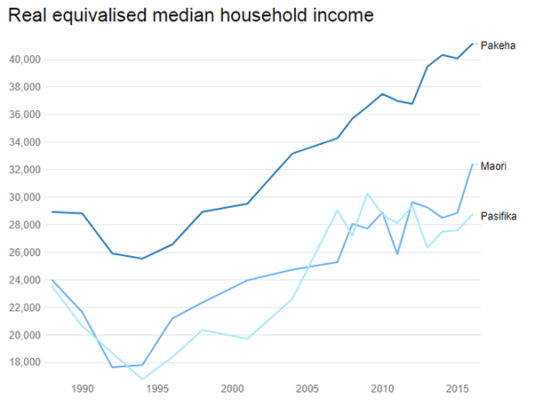
Source: MSD, Household incomes in New Zealand: Trends in indicators of inequality and hardship, 1982 to 2016; graphic at https://datawrapper.dwcdn.net/cJKvY/1/
The house always wins even among sin shares
28 Sep 2017 Leave a comment
in economic history, financial economics
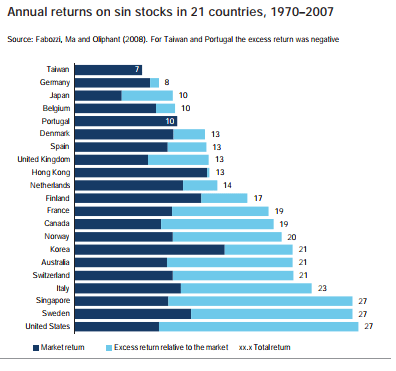
… the mean excess return varies from a low of 5.3% (alcohol), through 9.6% (biotech), 10.0% (adult services), 14.7% (tobacco) and 24.6% (weapons), to a high of 26.4% (gaming).
Source: Dimson E; Marsh P; and Staunton M. “Responsible investing: does it pay to be bad?” Global investment returns yearbook. Credit Suisse Research Institute 2015.
Ben Bernanke only owned tobacco shares when he became chair of the Fed
28 Sep 2017 Leave a comment
in financial economics, health economics

During the transition period, 1947-1965, shares in the tobacco industry underperformed by 3 percent per year in the USA. Still, it was a temporary trend and the decades from the 1960s to the 2000s, when the health impact of tobacco was well known, saw tobacco companies outperforming comparable firms by over +3 percent per year.
Source: Responsible Investing: Does It Pay to Be “Bad”? – Credit Suisse.
 Utopia, you are standing in it!
Recent Comments