Sir Ian Taylor starts his open letter to Jacinda Ardern with praise for the initial Covid response but then he gets critical: . . . People put politics aside and tried to help. Offering real solutions, safe, proven ways to save both lives and livelihoods. Business-led initiatives, technology-enabled tracking, controlled pilot programs. These were not […]
Ouch
Ouch
06 Jul 2025 Leave a comment
in health economics, politics - New Zealand Tags: economics of pandemics
US Health Care Expenditures: An Ominous Trend Returns?
04 Jul 2025 Leave a comment
in health economics, politics - USA Tags: health insurance
In the 2010s, it appeared that US health care expenditures as a share of GDP had peaked. But there group at the Centers for Medicare and Medicaid Services that continually carries out and updates these estimates and forecasts. Their most recent projections suggest that US health spending is about to start rising again as a…
US Health Care Expenditures: An Ominous Trend Returns?
Vaccines matter
29 Jun 2025 Leave a comment
in economic history, health economics Tags: anti-vaccination movement, cranks, vaccines
Vaccines rule
28 Jun 2025 1 Comment
in health economics Tags: anti-vaccination movement, The Great Escape, vaccines
An important article by Andrew Sullivan
27 Jun 2025 1 Comment
in discrimination, gender, health economics, liberalism, Marxist economics, politics - USA Tags: free speech, political correctness, regressive left, sex discrimination
Before I leave for the airport, I wanted to call people’s attention to this new, long op-ed piece by Andrew Sullivan in the NYT. Click to read, or find it archived for free here: Sullivan’s thesis is that extreme trans-activism has not only been inimical for society in several ways, but has also eroded respect […]
An important article by Andrew Sullivan
The Great Escape
25 Jun 2025 Leave a comment
in economic history, health economics Tags: cancer survival rates, The Great Escape
Racial Disparities in Mortality by Sex, Age, and Cause of Death
25 Jun 2025 Leave a comment
in discrimination, econometerics, health economics, politics - USA Tags: cancer survival rates, life expectancies, racial discrimination
Racial differences in mortality are large, persistent and likely caused, at least in part, by racism. While the causal pathways linking racism to mortality are conceptually well defined, empirical evidence to support causal claims related to its effect on health is incomplete. In this study, we provide a unique set of facts about racial disparities […]
Racial Disparities in Mortality by Sex, Age, and Cause of Death
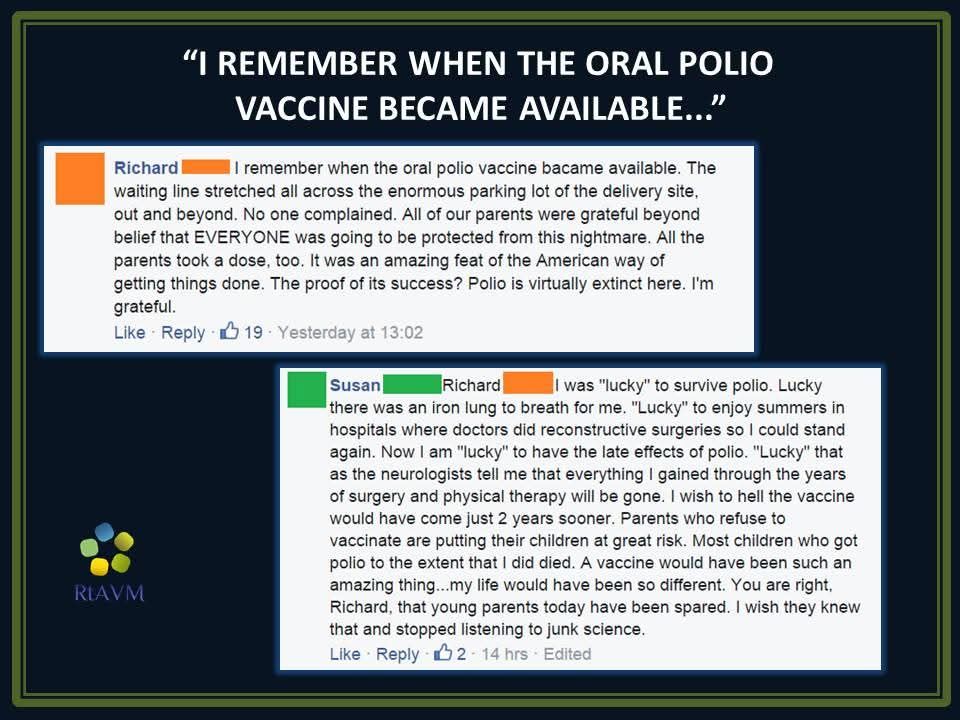
Polio
24 Jun 2025 Leave a comment
in economic history, health economics Tags: anti-vaccination movement, vaccines
Is ‘by Maori for Maori’ shifting the dial?
21 Jun 2025 Leave a comment
in discrimination, economics of bureaucracy, health economics, politics - New Zealand, Public Choice Tags: racial discrimination
On June 18, 2025, Health New Zealand published extensive data (March 2025 quarter) in a two-page spread contained in The Post. I assume this was replicated in other New Zealand newspapers. Included were childhood immunisation rates. At the bottom of the table for full immunisation at 24 months are Northland and Tairawhiti districts (improving trend) followed…
Is ‘by Maori for Maori’ shifting the dial?
The Supreme Court Delivers a Blow to Transgender Cases
21 Jun 2025 Leave a comment
in discrimination, economics of regulation, gender, health economics, law and economics, politics - USA, property rights Tags: political correctness, regressive left, sex discrimination

Yesterday, the Supreme Court issued its 6-3 ruling upholding a Tennessee ban on transgender medical treatments for adolescents. The ruling has major implications for pending transgender cases, particularly the concurrence of Justice Amy Coney Barrett rejecting the claim that transgender status qualifies as a group entitled to heightened scrutiny under the Constitution. One of those […]
The Supreme Court Delivers a Blow to Transgender Cases
U. S. Supreme Court affirms Tennessee’s ban on medical “gender-affirming care”
20 Jun 2025 Leave a comment
in gender, health economics, politics - USA

In 2023, Tennessee passed a bill to restrict access of minors to “affirmative care”, though only minors who wanted blockers or hormones to assume the identity of his/her non-natal sex or to relieve gender dysphoria. Tennessee is now one of 15 states that has passed laws restricting affirmative care. Note, though, that hormones and blockers […]
U. S. Supreme Court affirms Tennessee’s ban on medical “gender-affirming care”

A hugely important document for NZ to learn from.
07 Jun 2025 Leave a comment
in economic history, health economics, politics - New Zealand, politics - USA
The Whitehouse recently released a document titled: Make America Healthy Again. The health trends listed are stark – and the needed solutions are clear (even if is going to be like doing an Aircraft Carrier doing a u-turn in the Suez Canal). In many of the crisis stats NZ is not far behind. These are […]
A hugely important document for NZ to learn from.
How America Built the World’s Most Successful Market for Generic Drugs
06 Jun 2025 1 Comment
in applied price theory, economics of regulation, entrepreneurship, health economics, industrial organisation Tags: drug lags
The United States has some of the lowest prices in the world for most drugs. The U.S. generic drug market is competitive and robust—but its success is not accidental. It is the result of a series of deliberate, well-designed policy interventions. The 1984 Hatch-Waxman Act allowed generic drug manufacturers to bypass costly safety and efficacy […]
How America Built the World’s Most Successful Market for Generic Drugs
 Utopia, you are standing in it!
Recent Comments