Deirdre McCloskey: What Is Classical Liberalism? | Robinson’s Podcast #145
17 Jan 2024 Leave a comment
in applied price theory, applied welfare economics, comparative institutional analysis, economic history, economics of climate change, energy economics, environmental economics, global warming, history of economic thought, law and economics, liberalism, libertarianism, Marxist economics, political change, Public Choice, public economics
Mattei Misjudges Hawtrey
15 Jan 2024 Leave a comment
in budget deficits, business cycles, economic growth, economic history, fiscal policy, great depression, history of economic thought, macroeconomics, monetary economics
Clara Mattei, associate professor of economics at the New School for Social Research, recently published a book, The Capital Order: How Economists Invented Austerity and Paved the Way to Fascism, (University of Chicago Press) in which she argues that the fiscal and monetary austerity imposed on Great Britain after World War I to restore the […]
Mattei Misjudges Hawtrey
What Economics Gets Wrong Today – David Friedman | Podcast EP 29
15 Jan 2024 Leave a comment
in applied price theory, comparative institutional analysis, constitutional political economy, David Friedman, economic history, economics of crime, energy economics, environmental economics, global warming, history of economic thought, law and economics, liberalism, libertarianism, market efficiency, Marxist economics, Milton Friedman, property rights
Economists Love Fables And Parables (Or, The Essence Of Economic Analysis)
12 Jan 2024 Leave a comment
in applied price theory, history of economic thought
Nobel Prize winning economist Paul Krugman wrote the following in Slate magazine back in the 1990s:“Economic theory is not a collection of dictums laid down by pompous authority figures. Mainly, it is a menagerie of thought experiments–parables, if you like–that are intended to capture the logic of economic processes in a simplified way. In the…
Economists Love Fables And Parables (Or, The Essence Of Economic Analysis)
Zwolinski on the UBI
11 Jan 2024 Leave a comment
in applied price theory, history of economic thought, income redistribution, labour economics, labour supply, Public Choice, public economics, welfare reform Tags: negative income tax, universal basic income

Philosopher Matt Zwolinski, co-author of Universal Basic Income: What Everyone Needs to Know, was a core member of the old Bleeding Heart Libertarians blog, which shut down in 2020. Now’s he’s singledly-handed revived the BHL brand on his new Bleeding Heart Libertarian substack. Matt recently published a critique of my response to Chris Freiman on…
Zwolinski on the UBI
On Solow
08 Jan 2024 Leave a comment
in economic growth, history of economic thought, macroeconomics
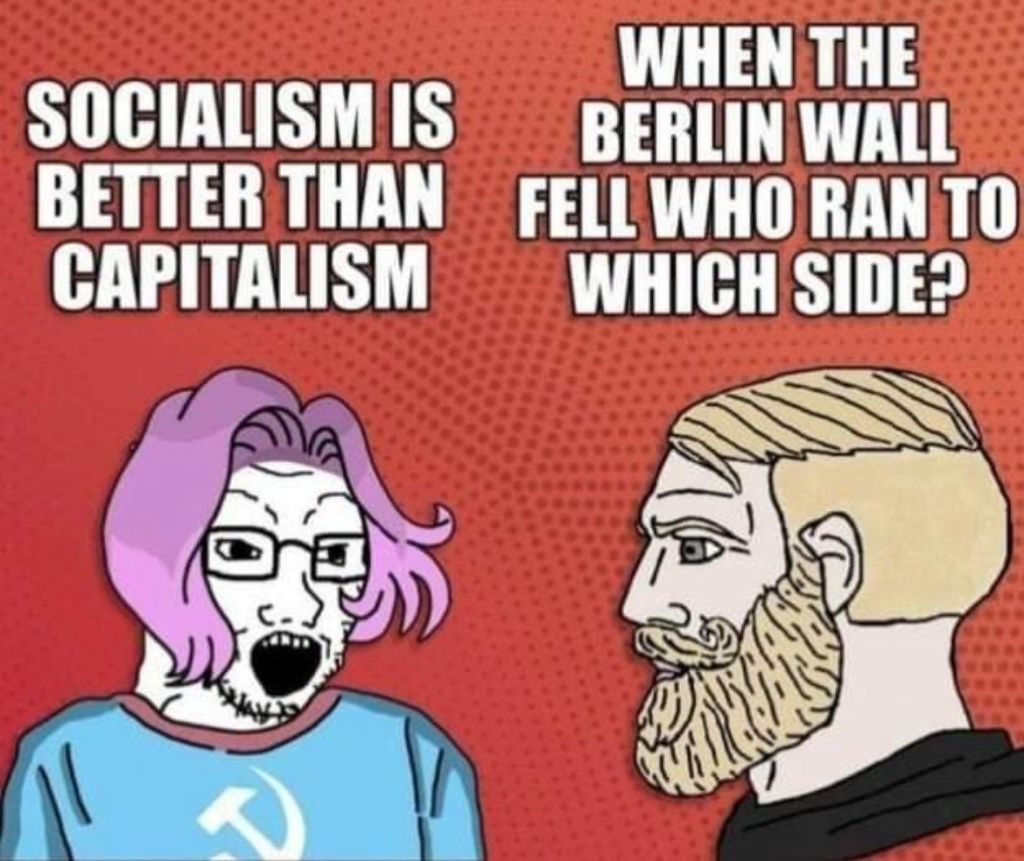
The authorities officially referred to the Berlin Wall as the Anti-Fascist Protection Rampart
06 Jan 2024 Leave a comment
in applied price theory, Austrian economics, comparative institutional analysis, constitutional political economy, development economics, economic history, growth disasters, growth miracles, history of economic thought, liberalism, Marxist economics Tags: fall of the Berlin wall, The Great Enrichment
The Bottom Billion: Why the Poorest Countries are Failing and What Can Be Done About It by Paul Collier (2007)
05 Jan 2024 Leave a comment
in applied price theory, defence economics, development economics, economic history, growth disasters, history of economic thought, war and peace Tags: Africa
Catching up is about radically raising growth in the countries now at the bottom…This book sets out an [aid] agenda for the G8 that would be effective. (The Bottom Billion, pages 12 and 13) Sir Paul Collier, Commander of the British Empire (CBE) and Fellow of the British Academy (FBA) is a British development economist […]
The Bottom Billion: Why the Poorest Countries are Failing and What Can Be Done About It by Paul Collier (2007)
Quotation of the Day…
01 Jan 2024 Leave a comment
in applied price theory, Austrian economics, behavioural economics, economic history, history of economic thought, human capital, industrial organisation, labour economics, labour supply, occupational choice Tags: capitalism and freedom, evolutionary psychology, The Great Enrichment
Tweet… is from my emeritus Nobel-laureate colleague Vernon Smith‘s splendid speech “Human Betterment Through Globalization,” delivered in September 2005 at the Irvington-on-Hudson then-headquarters of the Foundation for Economic Education: The challenge is that we all function simultaneously in two overlapping worlds of exchange. First, we live in a world of personal, social exchange based on…
Quotation of the Day…
John Stuart Mill on empirical economics and causal inference
01 Jan 2024 Leave a comment
in econometerics, history of economic thought Tags: conjecture and refutation, philosophy of science
Written by me, here is a passage from GOAT: Who is the Greatest Economist of All Time, and Why Should We Care? A System of Logic covers many different topics, but for our purposes the most important discussion is Mill’s treatment “Of the Four Methods of Experimental Inquiry,” sometimes called “Mill’s Methods” and indeed receiving […]
John Stuart Mill on empirical economics and causal inference
Solow on Market Advantages and Market Failures
31 Dec 2023 Leave a comment
in applied price theory, business cycles, economic growth, economic history, economics of regulation, entrepreneurship, history of economic thought, labour economics, macroeconomics, Milton Friedman, monetarism, monetary economics, unemployment
Robert Solow (1924-2023) died last week. As a starting point for understanding his life and his work on growth theory, the Nobel prize website, since he won the award in 1987, includes an overall description, a biographical essay, and his Nobel lecture. I can also strongly recommend an interview that Steven Levitt carried out with…
Solow on Market Advantages and Market Failures
190308 [Webinar] Consistent Economic Policy and Economic Development
29 Dec 2023 Leave a comment
in applied price theory, budget deficits, business cycles, defence economics, economic growth, economic history, economics of information, Euro crisis, fiscal policy, fisheries economics, global financial crisis (GFC), great recession, growth disasters, growth miracles, history of economic thought, human capital, inflation targeting, labour economics, labour supply, macroeconomics, monetary economics, Public Choice, public economics, unemployment
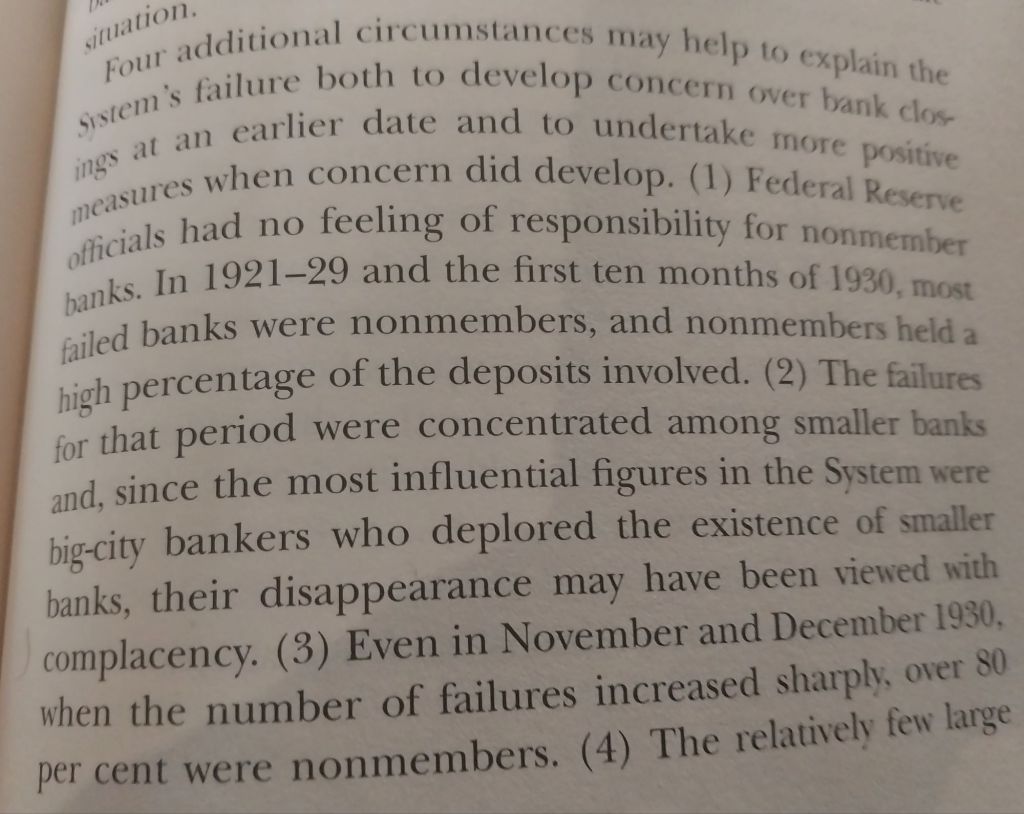
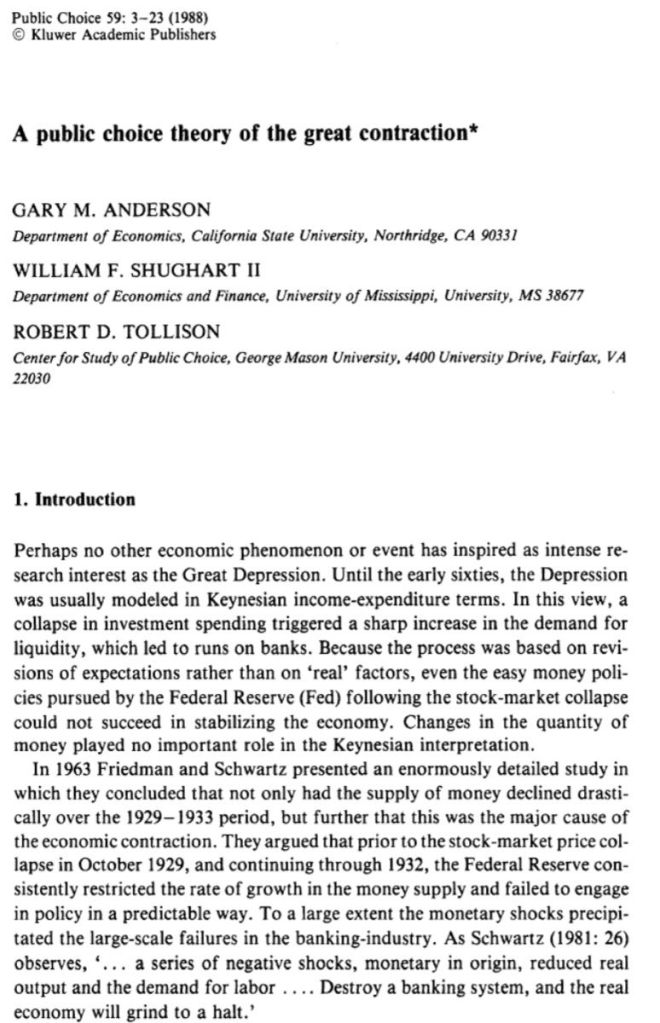
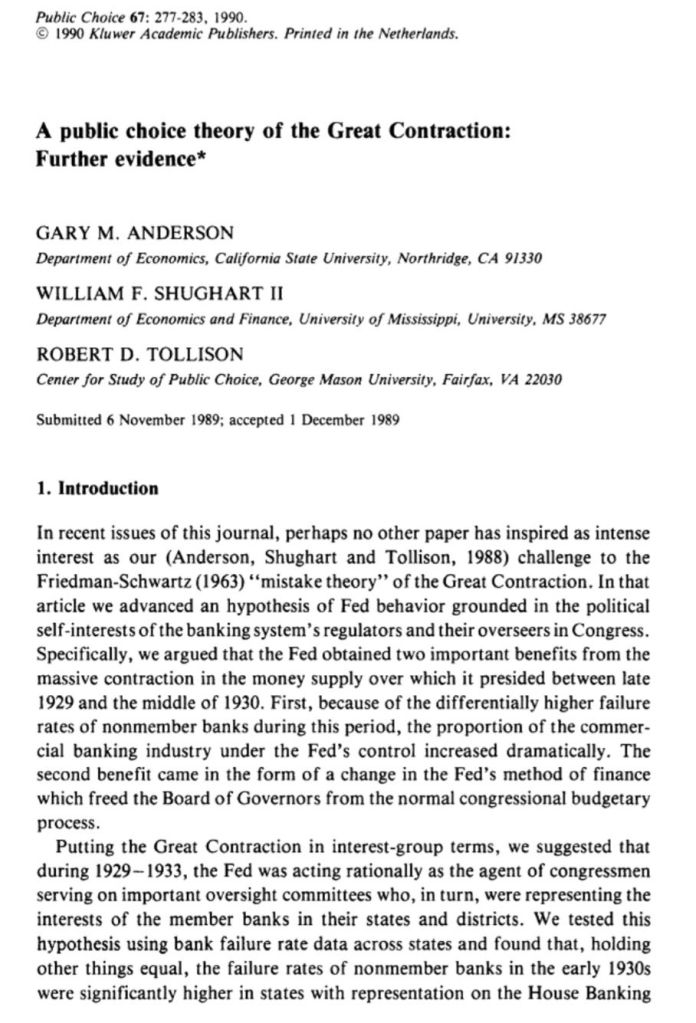
Friedman and Schwartz agreed with Anderson, Tollison and Shughart on the public choice origins of the Great Contraction!
28 Dec 2023 Leave a comment
in applied price theory, business cycles, economic history, economics of bureaucracy, great depression, history of economic thought, macroeconomics, Milton Friedman, monetarism, monetary economics, Public Choice, rentseeking Tags: monetary policy
Interview with Angus Deaton: Critiques of Cosmopolitan Prioritarianism and Randomized Control Trials
25 Dec 2023 Leave a comment
in applied price theory, development economics, econometerics, experimental economics, growth disasters, growth miracles, history of economic thought
David A. Price of the Richmond Fed carries out an interview titled “Angus Deaton: On deaths of despair, randomized controlled trials, and winning the Nobel Prize” (Econ Focus: Federal Reserve Bank of Richmond, Fourth Quarter 2023, pp. 18-22). Here are a few of Deaton’s comments that caught my eye: On his shift from “cosmopolitan prioritarianism” to…
Interview with Angus Deaton: Critiques of Cosmopolitan Prioritarianism and Randomized Control Trials
Argentina Milei reform impressions
23 Dec 2023 Leave a comment
in applied price theory, budget deficits, business cycles, comparative institutional analysis, constitutional political economy, development economics, economic growth, economics of bureaucracy, economics of regulation, fiscal policy, growth disasters, history of economic thought, income redistribution, international economics, labour economics, law and economics, liberalism, libertarianism, macroeconomics, Marxist economics, monetary economics, property rights, Public Choice, public economics, rentseeking, unemployment Tags: Argentina
I didn’t have much time in Argentina, but I can pass along a few impressions about how Milei is doing, noting I hold these with “weak belief”: 1. He is pretty popular with the general population. He is also popular in B.A. in particular. People are fed up with what they have been experiencing. It […]
Argentina Milei reform impressions
 Utopia, you are standing in it!
Recent Comments