FMI Public Speaker Series – Finn Kydland
23 Dec 2023 Leave a comment
in applied price theory, budget deficits, business cycles, comparative institutional analysis, development economics, economic growth, economic history, economics of bureaucracy, fiscal policy, global financial crisis (GFC), great depression, great recession, growth disasters, growth miracles, history of economic thought, human capital, income redistribution, labour economics, labour supply, macroeconomics, Public Choice, public economics, rentseeking
Finn E. Kydland Nobel Lecture at CERGE-EI
22 Dec 2023 Leave a comment
in applied price theory, budget deficits, business cycles, comparative institutional analysis, development economics, economic growth, economic history, economics of regulation, fiscal policy, global financial crisis (GFC), great depression, great recession, growth disasters, growth miracles, history of economic thought, human capital, income redistribution, labour economics, labour supply, macroeconomics, monetary economics, Public Choice, public economics
Unconvincing
21 Dec 2023 Leave a comment
in business cycles, economic history, global financial crisis (GFC), great recession, history of economic thought, inflation targeting, macroeconomics, monetary economics, politics - New Zealand Tags: monetary policy

The Herald ran an op-ed yesterday under the heading “Why the Government’s new Reserve Bank mandate may lead to worse outcomes”. It was written by Toby Moore who served as an economic adviser in Grant Robertson’s office while he was Minister of Finance (a fact the Herald chose not to disclose to its readers). I’m more […]
Unconvincing
Central Banking and the Real-Bills Doctrine
21 Dec 2023 Leave a comment
in economic history, financial economics, great depression, history of economic thought, macroeconomics, monetary economics Tags: monetary policy
Robert Hetzel, a distinguished historian of monetary theory and of monetary institutions, deployed his expertise in both fields in his recent The Federal Reserve: A New History. Hetzel’s theoretical point departure is that the creation of the Federal Reserve System in 1913 effectively replaced the pre-World War I gold standard, in which the value […]
Central Banking and the Real-Bills Doctrine
Hawtrey on the Interwar Gold Standard
21 Dec 2023 Leave a comment
in business cycles, economic history, great depression, history of economic thought, macroeconomics, monetary economics
I just got a copy of Ralph Hawtrey’s Trade Depression and the Way Out (1933 edition, an expanded version of the first, 1931, edition published three days before England left the gold standard). Just flipping through the pages, I found the following tidbit on p. 9. The banking system of the world, as it was […]
Hawtrey on the Interwar Gold Standard
Fritz Machlup (1902-1983)
19 Dec 2023 Leave a comment
in applied price theory, Austrian economics, history of economic thought, international economics
TweetAmong the many bits of unearned good fortune that have come my way in life was to have been a student in two of Fritz Machlup‘s classes at NYU. (In Spring 1981 I was a student in the last graduate course he taught on one of his specialities, International Trade. That course was phenomenally good.…
Fritz Machlup (1902-1983)
Monetary policy turning points
18 Dec 2023 Leave a comment
in business cycles, economic growth, economic history, economics of bureaucracy, global financial crisis (GFC), great recession, history of economic thought, inflation targeting, macroeconomics, monetary economics, politics - New Zealand, Public Choice Tags: monetary policy

When the Reserve Bank MPC came out late last month with its last words on monetary policy before its extended summer break, my post then was headed “Really?“. It was a commentary on the disjunction between the Reserve Bank’s inflation forecasts on the one hand, that showed quarterly inflation collapsing (not really too strong a word […]
Monetary policy turning points
Claudia Goldin: “What’s ‘Greedy Work’ and Why Is It a Problem?” | People…
18 Dec 2023 Leave a comment
in applied price theory, discrimination, economic history, gender, history of economic thought, human capital, labour economics, labour supply, minimum wage, occupational choice Tags: gender wage gap, sex discrimination
Hetzel Withholds Credit from Hawtrey for his Monetary Explanation of the Great Depression
14 Dec 2023 Leave a comment
in business cycles, economic growth, economic history, financial economics, great depression, history of economic thought, labour economics, macroeconomics, Milton Friedman, monetarism, monetary economics, unemployment Tags: monetary policy
In my previous post, I explained how the real-bills doctrine originally espoused by Adam Smith was later misunderstood and misapplied as a policy guide for central banking, not, as Smith understood it, as a guide for individual fractional-reserve banks. In his recent book on the history of the Federal Reserve, Robert Hetzel recounts how the […]
Hetzel Withholds Credit from Hawtrey for his Monetary Explanation of the Great Depression
Reserve Bank of New Zealand (Economic Objective) Amendment Bill
13 Dec 2023 Leave a comment
in business cycles, economic history, history of economic thought, inflation targeting, labour economics, macroeconomics, monetary economics, politics - New Zealand, unemployment Tags: monetary policy

I guess it will be an Act by the end of the day, but for now the short bill giving effect to a return to a single statutory objective for monetary policy is here. Yesterday’s parliamentary debate (first and second reading) is here, here, and here. The heart of the bill is this clause Note […]
Reserve Bank of New Zealand (Economic Objective) Amendment Bill
An Upside-Down Economic History of Argentina
13 Dec 2023 Leave a comment
in budget deficits, business cycles, development economics, economic growth, economic history, economics of bureaucracy, fiscal policy, growth disasters, growth miracles, history of economic thought, income redistribution, labour economics, macroeconomics, Public Choice, public economics, rentseeking, Ronald Coase Tags: Argentina
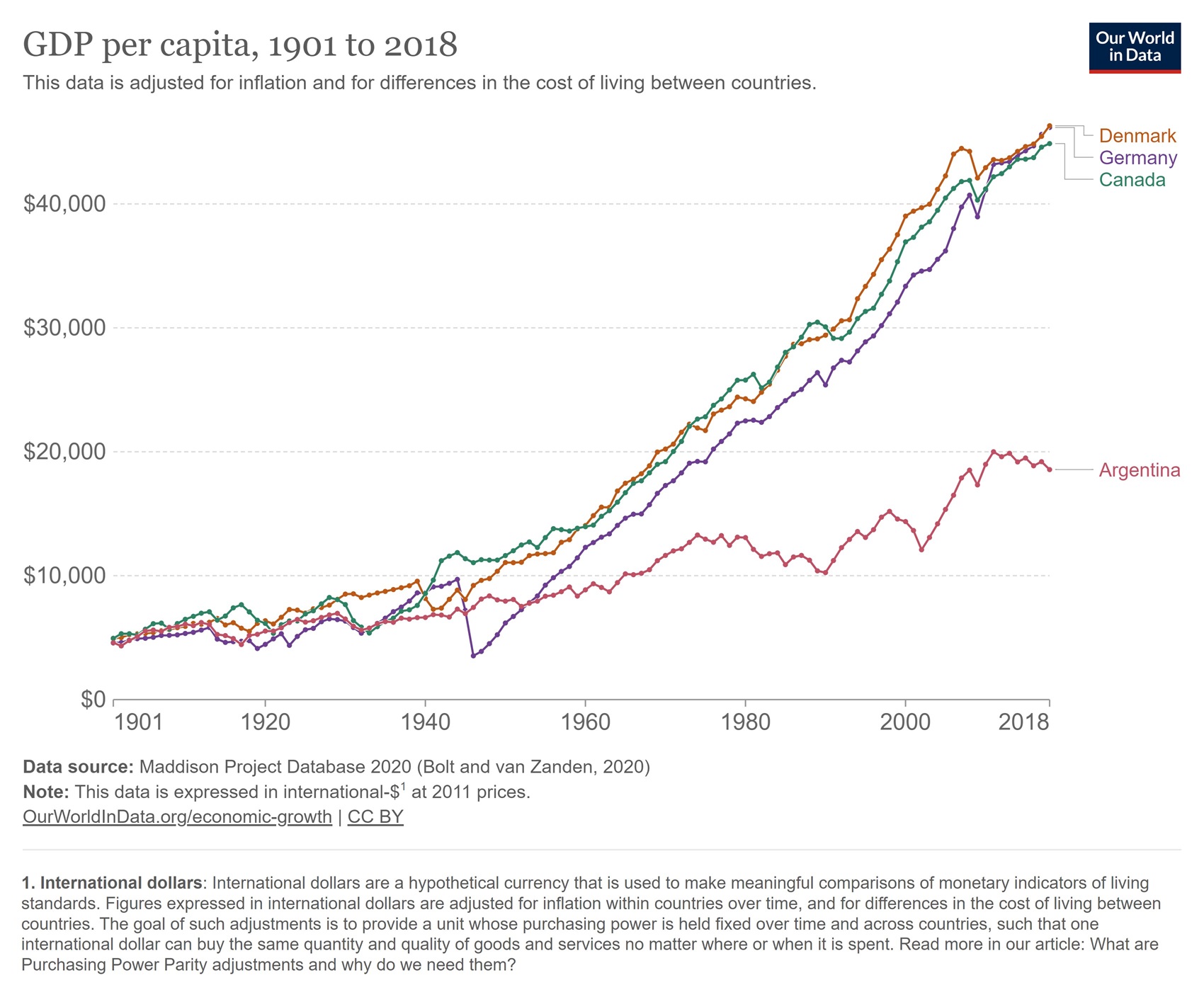
Argentina has a very interesting, but also rather tragic, economic history. During first half of the 20th century, it was one of the world’s richest nations. But thanks to dirigiste economic policies (known locally as Peronism) starting after World War II, Argentina has suffered a dramatic decline in relative living standards. However, something shocking has […]
An Upside-Down Economic History of Argentina
Lessons from Fighting 100 Inflations Since the 1970s
12 Dec 2023 Leave a comment
in budget deficits, business cycles, development economics, economic growth, economic history, fiscal policy, growth disasters, history of economic thought, inflation targeting, macroeconomics, monetarism, monetary economics, unemployment Tags: monetary policy

Inflation rates have come down since their peak in mid-2022. Does the Federal Reserve need to continue its inflation-fighting ways, keeping interest rates high? Anil Ari, Carlos Mulas-Granados, Victor Mylonas, Lev Ratnovski, and WeiZhao of the IMF look to historical and international experience in “One Hundred Inflation Shocks: Seven Stylized Facts” (September 2023, WP/23/190). As…
Lessons from Fighting 100 Inflations Since the 1970s
2023 prize lecture in economic sciences | Claudia Goldin
10 Dec 2023 Leave a comment
in discrimination, economic history, gender, history of economic thought, human capital, labour economics, labour supply, occupational choice Tags: gender wage gap, sex discrimination
Ayn Rand, Milton Friedman, and the Ethics of Capitalism – Jennifer Burns
05 Dec 2023 Leave a comment
in history of economic thought, liberalism, libertarianism, Milton Friedman Tags: Ayn Rand
A Pro-Globalization Banquet
05 Dec 2023 Leave a comment
in applied price theory, development economics, economic history, growth disasters, growth miracles, history of economic thought, income redistribution, international economics, liberalism, Marxist economics, Public Choice, rentseeking Tags: Age of Enlightenment, The Great Enrichment, The Great Escape
If you want to drink deeply of unabashedly pro-globalization essays, the Cato Institute has a “Defending Globalization” project underway. The well-written essays are mostly short or mid-length, and clearly aimed at the general public–including undergraduate students. I can’t hope to summarize the essays here, and indeed, more essays are on their way (and you can…
A Pro-Globalization Banquet
 Utopia, you are standing in it!
Recent Comments