
Henry Hazlitt on wise bureaucrats and farsighted politicians
21 Aug 2014 Leave a comment
in applied price theory, comparative institutional analysis, entrepreneurship, liberalism, Public Choice, rentseeking, survivor principle Tags: fatal conceit, Henry Hazlitt, pretence to knowledge

“Trapped” in Rental Contracts | Organizations and Markets
17 Aug 2014 Leave a comment
in applied price theory, Armen Alchian, comparative institutional analysis, entrepreneurship, industrial organisation, Ronald Coase, survivor principle, theory of the firm Tags: long-term contracts, mutual dependency, relationship dependent assets, transaction costs, vertical integration
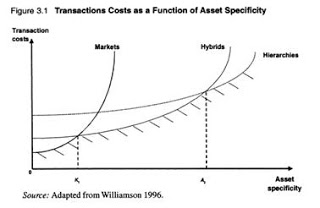
- Mercedes and BMW drivers trapped in lease contracts, rather than buying their cars with cash or credit
- Individuals trapped in wage and salary contracts, rather than raising the capital, arranging the inputs, and bearing the uncertainties to be sole proprietors
- Companies trapped in outsourcing agreements, rather than owning all upstream and downstream production processes directly, as vertically integrated firms
- Vacationers trapped in resort hotels, rather than owning their own vacation condos or timeshares
- Readers trapped by downloading and reading books on their Kindles, essentially “renting” them from Amazon, rather than buying physical books
- Movie fans trapped in DVD rental agreements with Netflix, rather than owning massive DVD libraries
via “Trapped” in Rental Contracts | Organizations and Markets.
Atomic Tests Were a Tourist Draw in 1950s Las Vegas – entrepreneurial alterness alert
10 Aug 2014 Leave a comment
in entrepreneurship, environmentalism, health and safety, market efficiency, survivor principle Tags: entreprunerial alterness, times have changed


Over 1000 tests from 1951 onwards.

Who Routinely Trounces the U.S. Stock Market? Try 2 Out of 2,862 Funds – NYTimes.com
30 Jul 2014 Leave a comment
in entrepreneurship, financial economics, survivor principle Tags: active investing, efficient markets hypothesis, indexed linked investing, passive investing, stock picking

For the three years ended March 2014, 14.10% of large-cap funds, 16.32% of mid-cap funds and 25.00% of small-cap funds maintained a top-half ranking over three consecutive 12-month periods. Random expectations would suggest a rate of 25%.
After five years, two funds are still beating the market in each of the last five years.The rest of fallen by the wayside.
via Who Routinely Trounces the Stock Market? Try 2 Out of 2,862 Funds – NYTimes.com
George Stigler on do business owners maximise profits?
29 Jul 2014 Leave a comment
in applied price theory, Armen Alchian, entrepreneurship, George Stigler, survivor principle, theory of the firm Tags: george stigler, market selection, profit-maximisation

Entrepreneurs often do not know why they survived in competition. George Stigler in his autobiography told this wonderful story about how you could not get businessmen to admit in a survey that they maximise profits.
You go to their office and asked them: Do they maximise profits?
Their answer would be, of course, not. I am here to provide employment to my workers and put a small amount aside for the education of my children.
The surveyor would then ask them: if you do were to raise your prices, do you expect to increase your profits?
The businessman answers no.
The surveyor how would then ask them: if you were to cut your prices, do you expect to increase your profits?
The businessman answers no.
The survey would then ask: can you point to a time in the last 12-months where you substituted profit for some other objective?
At this point of time, you would be thrown out of their office as some sort of lunatic.


The separation of ownership from control
24 Jul 2014 3 Comments
in Armen Alchian, industrial organisation, Ronald Coase, survivor principle, theory of the firm Tags: Armlen Alchian, Eugene Fara, Harold Demsetz, Ronald Coase, separation of ownership and control, theory of the firm

Eugene Fama divides firms into two types: the managerial firm, and the entrepreneurial firm.
The owners of a managerial firm advance, withdraw, and redeploy capital, carry the residual investment risks of ownership and have the ultimate decision making rights over the fate of the firm (Klein 1999; Foss and Lien 2010; Fama 1980; Fama and Jensen 1983a, 1983b; Jensen and Meckling 1976).
Owners of a managerial firm, by definition, will delegate control to expert managerial employees appointed by boards of directors elected by the shareholders (Fama and Jensen 1983a, 1983b). The owners of a managerial firm will incur costs in observing with considerable imprecision the actual efforts, due diligence, true motives and entrepreneurial shrewdness of the managers and directors they hired (Jensen and Meckling 1976; Fama and Jensen 1983b).
Owners need to uncover whether a substandard performance is due to mismanagement, high costs, paying the employees too much or paying too little, excessive staff turnover, inferior products, or random factors beyond the control of their managers (Jensen and Meckling 1976; Fama and Jensen 1983b, 1985). Any paucity in knowledge slows the reactions of owners in correcting managerial errors including slip-ups in the recruitment and the retention of experienced older employees.
The entrepreneurial firms are owned and managed by the same people (Fama and Jensen 1983b). Mediocre personnel policies and sub-standard staff retention practices within entrepreneurial firms are disciplined by these errors in judgement by owner-managers feeding straight back into the returns on the capital that these owner-managers themselves invested. Owner-managers can learn quickly and can act faster in response the discovery of errors in judgement. The drawback of entrepreneurial firms is not every investor wants to be hands-on even if they had the skills and nor do they want to risk being undiversified.
Many of the shareholders in managerial firms have too small a stake to gain from monitoring managerial effort, employee performance, capital budgets, the control of costs and the stinginess or generosity of wage and employment policies (Manne 1965; Fama 1980; Fama and Jensen 1983a, 1983b; Williamson 1985; Jensen and Meckling 1976). This lack of interest by small and diversified investors does not undo the status of the firm as a competitive investment.

Large firms are run by managers hired by diversified owners because this outcome is the most profitable form of organisation to raise capital and then find the managerial talent to put this pool of capital to its most profitable uses (Fama and Jensen 1983a, 1983b, 1985; Demsetz and Lehn 1985; Alchian and Woodward 1987, 1988).
More active investors will hesitate to invest in large managerial firms whose governance structures tolerate excessive corporate waste and do not address managerial slack and error. Financial entrepreneurs will win risk-free profits from being alert and being first to buy or sell shares in the better or worse governed firms that come to their notice.
The risks to dividends and capital because of manifestations of corporate waste, reduced employee effort, and managerial slack and aggrandisement in large managerial firms are risks that are well known to investors (Jensen and Meckling 1976; Fama and Jenson 1983b). Corporate waste and managerial slack also increase the chances of a decline in sales and even business failure because of product market competition (Fama 1980; Fama and Jensen 1983b). Investors will expect an offsetting risk premium before they buy shares in more ill-governed managerial firms. This is because without this top-up on dividends, they can invest in plenty of other options that foretell a higher risk-adjusted rate of return.
The discovery of monitoring or incentive systems that induce managers to act in the best interest of shareholders are entrepreneurial opportunities for pure profit (Fama and Jensen 1983b, 1985; Alchian and Woodward 1987, 1988; Demsetz 1983, 1986; Demsetz and Lehn 1985; Demsetz and Villalonga 2001). Investors will not entrust their funds to who are virtual strangers unless they expect to profit from a specialisation and a division of labour between asset management and managerial talent and in capital supply and residual risk bearing (Fama 1980; Fama and Jensen 1983a, 1983b; Demsetz and Lehn 1985). There are other investment formats that offer more predictable, more certain rate of returns.

Competition from other firms will force the evolution of devices within the firms that survive for the efficient monitoring the performance of the entire team of employees and of individual members of those teams as well as managers (Fama 1980, Fama and Jensen 1983a, 1983b; Demsetz and Lehn 1985). These management controls must proxy as cost-effectively as they can having an owner-manager on the spot to balance the risks and rewards of innovating.
The reward for forming a well-disciplined managerial firm despite the drawbacks of diffuse ownership is the ability to raise large amounts in equity capital from investors seeking diversification and limited liability (Demsetz 1967; Jensen and Meckling 1976; Fama 1980; Fama and Jensen 1983b; Demsetz and Lehn 1985).Portfolio investors may know little about each other and only so much about the firm because diversification and limited liability makes this knowledge less important (Demsetz 1967; Jensen and Meckling 1976; Alchian and Woodward 1987, 1988).
It is still unwise to still suppose that portfolio investors will keep relinquishing control over part of their capital to virtual strangers who do not manage the resources entrusted to them in the best interests of the shareholders (Demsetz 1967; Williamson 1985; Fama 1980, 1983b; Alchian and Woodward 1987, 1988).
Managerial firms who are not alert enough to develop cost effective solutions to incentive conflicts and misalignments will not grow to displace rival forms of corporate organisation and methods of raising equity capital and loans, allocating legal liability, diversifying risk, organising production, replacing less able management teams, and monitoring and rewarding employees (Fama and Jensen 1983a, 1983b; Fama 1980; Alchian 1950).
Entrepreneurs win profits from creating corporate governance structures that can credibly assure current and future investors that their interests are protected and their shares are likely to prosper (Fama 1980; Fama and Jensen 1983a, 1983b, 1985; Demsetz 1986; Demsetz and Lehn 1985). Corporate governance is the set of control devices that are developed in response to conflicts of interest in a firm (Fama and Jensen 1983b).
Aaron Director and the default answer to why hard to understand business practices exist is ‘monopoly’ and the default policy response is ‘call the cops’
21 Jul 2014 Leave a comment
in industrial organisation, survivor principle Tags: Aaron Director

There are the myriad of ways in which real world business practices behave differently from the caricaturing in textbooks. Those differences sometimes arouses suspicious responses from economists.
Visions of market power and deadweight loss triangles dance their heads, and some of the suspect practices have been constrained by anti-trust policy. Director rejected this kind of intellectual laziness, and he sought, sometimes successfully, to inoculate those around him against it.
Director approached all business practices with the methodology that entailed asking very basic questions and answering them in a rigorous logic that it appealed ultimately to facts.
The style was verbal – some combination of Socratic dialogue and Adam Smith. This style had the disadvantage of producing few closed-form solutions. But it had the advantage of permitting analysis of the kind of problems that eluded simple solutions.
Indeed I believe that one reason for Director’s lasting influence he was able to show that simple judgements about business practices often cannot withstand rigorous scrutiny.
Sam Peltzman

The perennial gale of creative destruction at work: those all-powerful television networks
14 Jul 2014 Leave a comment
in economics of media and culture, entrepreneurship, industrial organisation, survivor principle Tags: creative destruction, media bias, Schumpeter, television networks


What Sam Walton do to make his family rich?
10 Jul 2014 2 Comments
in applied price theory, applied welfare economics, entrepreneurship, industrial organisation, market efficiency, survivor principle, technological progress Tags: entrepreneurship, innovation, Walmart

HT: antidismal.blogspot via cafehayek

How does a free press emerge through the market process?
10 Jun 2014 Leave a comment
in economic history, economics of media and culture, industrial organisation, market efficiency, survivor principle Tags: competition as a discovery process, Free press

For much of the 19th century U.S. newspapers were public relations tools funded by politicians. Information hostile to a paper’s political views were ignored or dismissed as sophistry. Newspaper independence was rare. Fraud and corruption in 19th century America approached today’s more corrupt developing nations.
The newspaper industry underwent fundamental changes between 1870 and 1920 as the press became more informative and less partisan.
– 11 per cent of urban dailies were independent in 1870,
– 62 per cent were in 1920.
The rise of the informative press was the result of increased scale and competitiveness in the newspaper industry caused by technological progress in the newsprint and newspaper industries.
• From 1870 to 1920, when corruption appears to have declined significantly within the United States, the press became more informative, less partisan, and expanded circulation considerably.
• By the 1920s, the partisan papers no longer coupled allegations of the corruption of their party members with condemnation of the character of the person making the charge.
A reasonable hypothesis is rise of the informative press was one of the reasons why the corruption of the Gilded Age was sharply reduced during the Progressive Era.
A supply-side model suggesting that newspapers weigh the rewards of bias—politicians’ bribes or personal pleasure—against the cost of bias—lost circulation from providing faulty news.
The key predictions of the model are that, as the size of the market for newspapers rises, and as the marginal cost of producing a paper falls, newspapers will become less biased and invest more in gathering information.
Corruption declined because media proprietors discovered that they could maintain and boost circulation by exposing it. An independent press which kept a watchful eye over government and business was a spontaneous order that was a by-product of rising incomes and literacy of readers.
Politicians did not help the process along. Technological innovations and increased city populations caused a huge increase in scale.
Newspapers become big businesses; they increased readership and revenue by presenting factual and informative news. It is not from the benevolence of the butcher, the brewer, or the baker that we expect our dinner, it is from their high regard to their own interest.
Following these incentives, newspapers changed from political tools to impartial reporting. Those newspapers that did not did not survive in competition.
HT: The Rise of the Fourth Estate: How Newspapers Became Informative and Why It Mattered by Matthew Gentzkow, Edward L. Glaeser, and Claudia Goldin in Corruption and Reform: Lessons from America’s Economic History (2006).


Recent Comments