#MeToo: Movement or witch hunt? | FACTUAL FEMINIST
10 Feb 2018 Leave a comment
in discrimination, economics of crime, gender, health and safety, law and economics Tags: political correctness
The greatest escape of them all
03 Feb 2018 Leave a comment
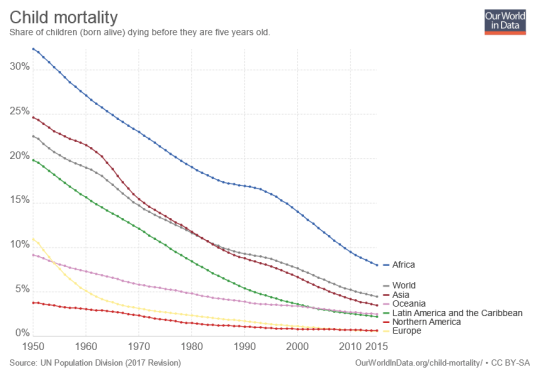
in development economics, economic history, health and safety
Since the dawn of space flight, 22 people have been killed in a spacecraft
14 Jan 2018 Leave a comment
in health and safety, transport economics Tags: space
Richard Burton on mining in his family
01 Jan 2018 Leave a comment
in energy economics, health and safety, labour economics, labour supply, movies, occupational choice Tags: mining
Lunch Atop A Skyscraper: The Story Behind The 1932 Photo | 100 Photos | TIME
01 Dec 2017 Leave a comment
in economic history, health and safety, labour economics, occupational choice
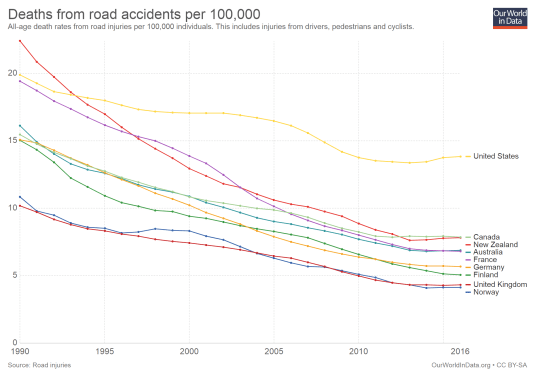
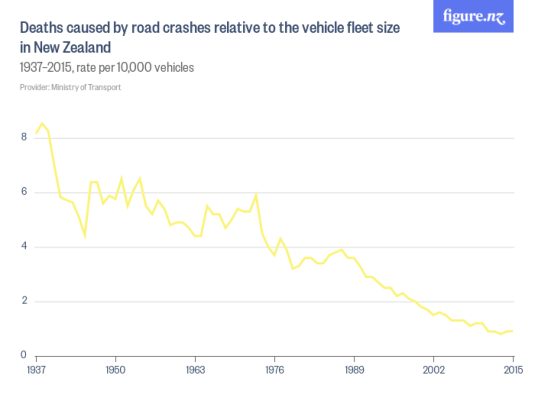
Icebreakers arrive in 1920s Helsinki – health and safety be damned
20 Nov 2017 Leave a comment
in economic history, health and safety
My letter to @ DomPost on trolly buses
03 Nov 2017 Leave a comment
in economics of natural disasters, health and safety, labour economics, television Tags: killer green technologies

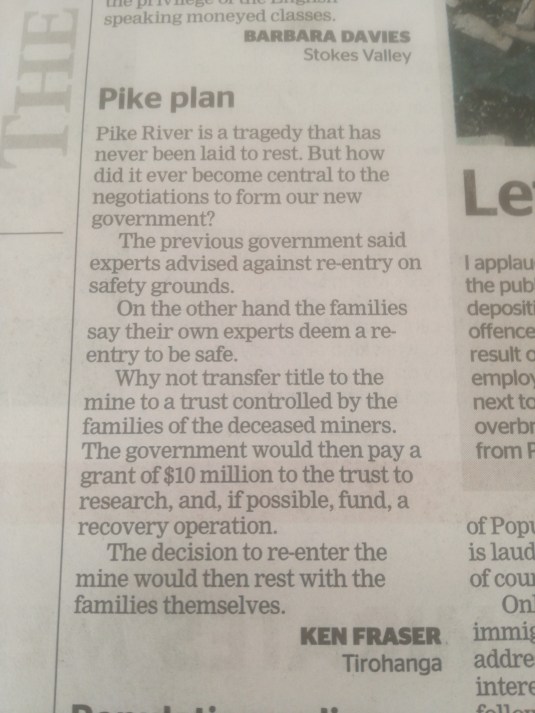
Smart idea: privatise Pike River reentry including H&S liability
10 Oct 2017 Leave a comment
in economics of regulation, health and safety, labour economics, politics - New Zealand
Why boxing headguards may be making the sport more dangerous
14 Sep 2017 Leave a comment
in health and safety, health economics, labour economics, occupational choice, sports economics Tags: offsetting behaviour
Swimming Pools Vs. Guns
09 Jun 2017 Leave a comment
in applied price theory, economics of crime, economics of information, economics of regulation, health and safety
Offsetting behaviour alert: boxing headguards @EricCrampton
04 May 2017 Leave a comment
in health and safety, labour economics, occupational choice, sports economics Tags: health and safety, offsetting behaviour, unintended consequences
The biggest gender gap that dare not speak its name
21 Apr 2017 1 Comment
in discrimination, gender, health and safety, labour economics, labour supply, occupational choice, politics - New Zealand Tags: and gender gap, compensating differentials, gender wage gap, value of life, workplace injuries
Gender gaps in injuries and fatalities go beyond those industries demanding physical.strength.
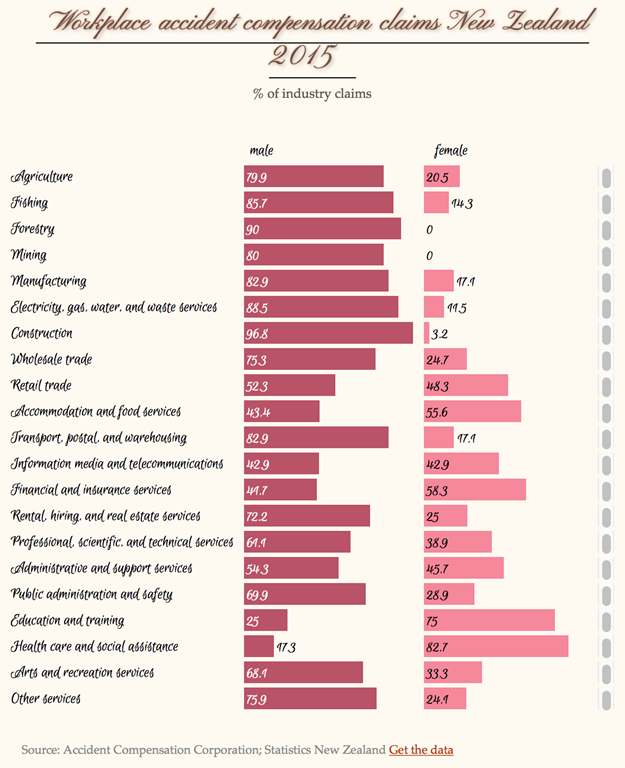
There are noticeable differences in the occupational choices of single people, parents, and single parents. Women choose safer jobs than men; single moms or dads are most averse to fatal risk because they have the most to lose. About one quarter of occupational differences between men and women can be attributed to the risks of injury and death.
All but 3 of the fatal workplace accidents in New Zealand in 2015 were men.
![image_thumb[1]](https://utopiayouarestandinginit.com/wp-content/uploads/2017/04/image_thumb13.png "image_thumb[1]")
Source: Accident Compensation Corporation, Statistics New Zealand.
This gender gap in the risk of injury and death can lead to a significant gender wage gap because of the wage premium associated with these risks and in particular the risk of death as Viscusi explained.
The bottom line is that market forces have a powerful influence on job safety. The $120 billion in annual wage premiums referred to earlier is in addition to the value of workers’ compensation. Workers on moderately risky blue-collar jobs, whose annual risk of getting killed is 1 in 10,000, earn a premium of $300 to $500 per year.
The imputed compensation per “statistical death” (10,000 times $300 to $500) is therefore $3 million to $5 million. Even workers who are not strongly averse to risk and who have voluntarily chosen extremely risky jobs, such as coal miners and firemen, receive compensation on the order of $600,000 per statistical death…
Other evidence that the safety market works comes from the decrease in the riskiness of jobs throughout the century. One would predict that as workers become wealthier they will be less desperate to earn money and will therefore demand more safety.
A German study was able to reduce a raw gender wage gap of 20% to 1% after accounting for differences between gender in the risk of injury and death in addition to the usual factors. This 2007 study found that they were the 2nd study ever to make this adjustment.
 Utopia, you are standing in it!
Recent Comments