Bryan Caplan will feel vindicated: This paper asks whether universal pre-kindergarten (UPK) raises parents’ earnings and how much these earnings effects matter for evaluating the economic returns to UPK programs. Using a randomized lottery design, we estimate the effects of enrolling in a full-day UPK program in New Haven, Connecticut on parents’ labor market outcomes […]
Further evidence for the babysitting theory of education
Further evidence for the babysitting theory of education
08 Oct 2024 Leave a comment
in applied price theory, applied welfare economics, economics of education, economics of love and marriage, human capital, labour economics, labour supply, law and economics Tags: economics of fertility
Should we keep the wealthy non-diversified? (from my email)
27 Sep 2024 Leave a comment
in applied price theory, economic history, entrepreneurship, history of economic thought, human capital, income redistribution, industrial organisation, labour economics, labour supply, liberalism, Marxist economics, occupational choice, poverty and inequality, Public Choice Tags: top 1%
Byrne Hobart writes to me: One of the purposes of inheritance taxes is to avoid compounding intergenerational wealth. But The Missing Billionaires points out that if all of America’s millionaires had put their money in broad market indices in 1900, their heirs would number 16,000 billionaires, even accounting for taxes, splitting estates among multiple children, etc. So […]
Should we keep the wealthy non-diversified? (from my email)
Equality Act 2010
18 Sep 2024 Leave a comment
in applied price theory, comparative institutional analysis, economic history, history of economic thought, human capital, job search and matching, labour economics, labour supply, law and economics, occupational choice, poverty and inequality Tags: British politics, compensating differences, pay equity

The UK’s Orwellian sounding Equality Act 2010 is strikingly Marxist. It demands equal pay for work of equal value where these are defined as follows: A’s work is equal to that of B if it is like B’s work, rated as equivalent to B’s work, or of equal value to B’s work. A’s work is […]
Equality Act 2010
The Economic Consequences of the French Wealth Tax
17 Sep 2024 Leave a comment
in applied price theory, econometerics, economic history, entrepreneurship, fiscal policy, human capital, income redistribution, labour economics, labour supply, macroeconomics, occupational choice, poverty and inequality, Public Choice, public economics Tags: taxation and entrepreneurship, taxation and investment, taxation and labour supply
By Eric Pichet, here is the abstract: Despite attempts to ‘unwind’ the Impôt de Solidarité sur la Fortune (‘Solidarity Wealth Tax,’ the French wealth tax) during the last legislature (2002-2007), ISF yields had soared by 2006, jumping from €2.5 billion in 2002 to €3.6 billion. Analysis of the economic consequences of this ISF wealth tax […]
The Economic Consequences of the French Wealth Tax
Tax-Motivated Domestic Migration
17 Sep 2024 Leave a comment
in applied price theory, economic growth, entrepreneurship, Federalism, fiscal policy, human capital, income redistribution, labour economics, labour supply, macroeconomics, occupational choice, politics - USA, poverty and inequality, Public Choice, public economics Tags: capital gains tax, taxation and investment taxation and entrepreneurship, taxation and labour supply
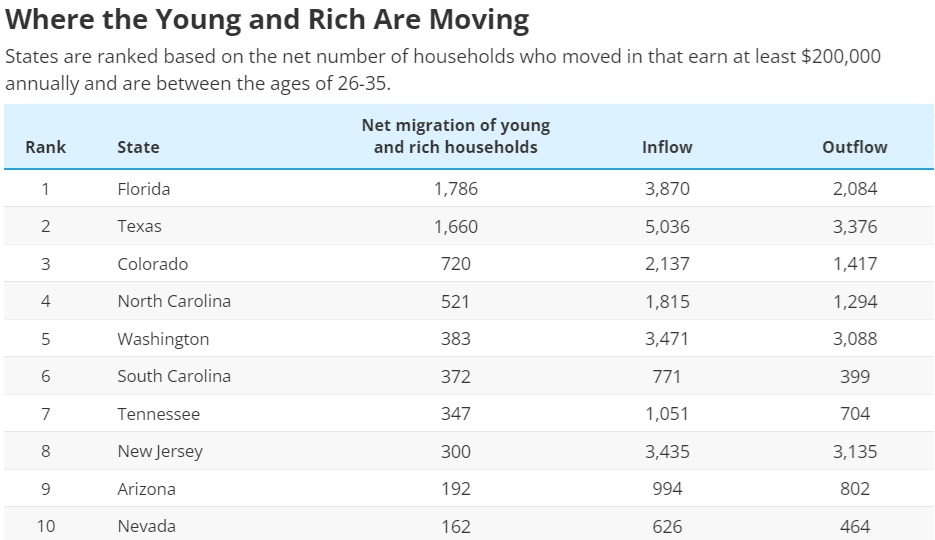
I’m a big fan of tax competition. I cheer when jobs, investment, and people (or even booze) move from high-tax jurisdictions to low-tax jurisdictions. This increases the rewards for good policy and also increases the punishment for bad policy. Given my interest in the topic, I obviously can’t resist sharing this chart, which shows the […]
Tax-Motivated Domestic Migration
Jim Crow and Black Economic Progress After Slavery
05 Sep 2024 Leave a comment
in applied price theory, discrimination, economic history, economics of education, human capital, labour economics, labour supply, politics - USA, poverty and inequality Tags: economics of slavery, racial discrimination
This paper studies the long-run effects of slavery and restrictive Jim Crow institutions on Black Americans’ economic outcomes. We track individual-level census records of each Black family from 1850 to 1940, and extend our analysis to neighborhood-level outcomes in 2000 and surname-based outcomes in 2023. We show that Black families whose ancestors were enslaved until […]
Jim Crow and Black Economic Progress After Slavery
Marx explained
01 Sep 2024 Leave a comment
in applied price theory, Austrian economics, entrepreneurship, history of economic thought, human capital, income redistribution, labour economics, labour supply, law and economics, liberalism, Marxist economics, occupational choice, poverty and inequality, property rights, Public Choice

Why the @NZGreens are beside the point
31 Aug 2024 Leave a comment
in applied welfare economics, Austrian economics, comparative institutional analysis, constitutional political economy, development economics, economic growth, economic history, entrepreneurship, growth miracles, history of economic thought, human capital, income redistribution, industrial organisation, labour economics, labour supply, law and economics, liberalism, macroeconomics, Marxist economics, politics - New Zealand, poverty and inequality, property rights, Public Choice, rentseeking, technological progress Tags: child poverty, family poverty, The Great Enrichment
European Policies = European Stagnation
31 Aug 2024 Leave a comment
in applied price theory, applied welfare economics, Austrian economics, comparative institutional analysis, constitutional political economy, economic growth, economic history, economics of bureaucracy, entrepreneurship, human capital, income redistribution, labour economics, labour supply, liberalism, macroeconomics, Marxist economics, politics - USA, poverty and inequality, Public Choice, public economics, rentseeking, welfare reform Tags: Europe, social insurance
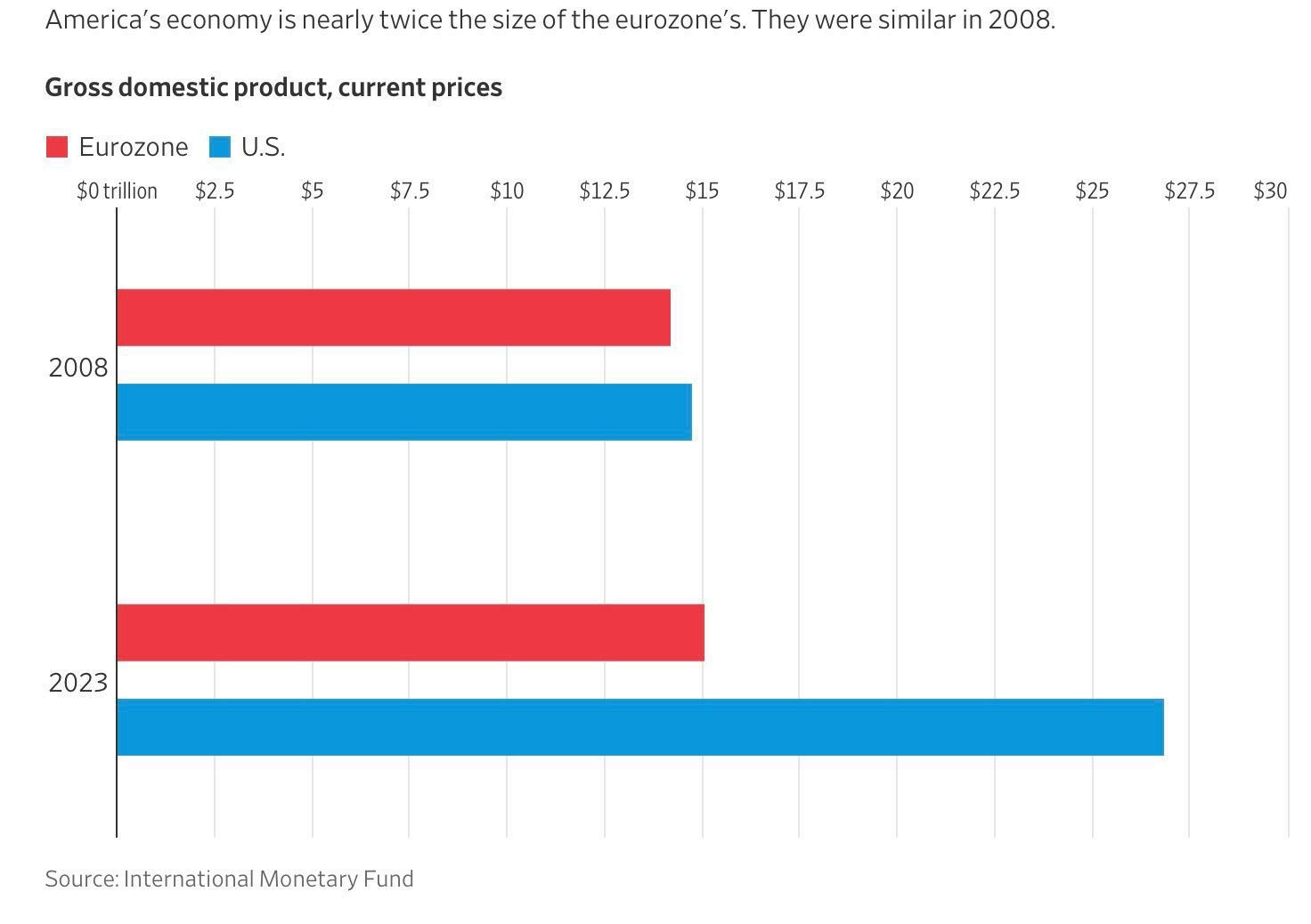
I’ve written many times about how Americans are much richer than Europeans. And I’ve also written many times that the U.S. economy has been growing faster (which shouldn’t happen according to convergence theory). There’s a simple reason for America’s superior performance. The U.S. is burdened by a medium-sized welfare state and a bad tax system […]
European Policies = European Stagnation
Why Top CEOs Earn Big Paychecks
22 Aug 2024 Leave a comment
in applied price theory, economic history, economics of education, entrepreneurship, human capital, industrial organisation, labour economics, labour supply, liberalism, managerial economics, market efficiency, occupational choice, organisational economics, personnel economics, politics - USA, poverty and inequality, survivor principle Tags: CEO pay, superstar wages

CEO compensation at large firms is high, especially in comparison to average worker wages, sparking debates over income inequality. Critics argue that such pay packages are unfair and disproportionate to actual company performance. Proponents contend that high pay reflects productivity and is necessary to attract scarce top talent to large firms. Let’s go to the […]
Why Top CEOs Earn Big Paychecks
The economics of the falling total fertility rate in New Zealand
31 Jul 2024 Leave a comment
in human capital, labour economics, labour supply, politics - New Zealand, population economics Tags: ageing society, economics of fertility

Earlier this week, I was interviewed by Paul Brennan on Reality Check Radio, on New Zealand’s declining birth rate. You can listen to the interview here. We didn’t have time to go through all of the questions I was given beforehand, so I thought I would add some points here, along with some links to…
The economics of the falling total fertility rate in New Zealand
Claudia Goldin with Kiana Scott: The Century-Long Fight to Close the Gen…
28 Jul 2024 Leave a comment
in applied price theory, discrimination, economic history, economics of education, gender, human capital, labour economics, labour supply, occupational choice, poverty and inequality Tags: gender wage gap, sex discrimination
Gender gaps
26 Jul 2024 Leave a comment
in discrimination, economics of education, gender, human capital, labour economics Tags: gender wage gap, sex discrimination
The employment effects of a guaranteed income
23 Jul 2024 Leave a comment
in applied price theory, econometerics, human capital, labour economics, labour supply, occupational choice, poverty and inequality Tags: basic income
By Eva Vivalt, Elizabeth Rhodes, Alexander W. Bartik, David E. Broockman, Sarah Miller, Here is the link, but I am still sleeping. Here is the abstract: We study the causal impacts of income on a rich array of employment outcomes, leveraging an experiment in which 1,000 low-income individuals were randomized into receiving $1,000 per month […]
The employment effects of a guaranteed income
Trump’s Backdoor to Open Borders
30 Jun 2024 Leave a comment
in economics of education, human capital, labour economics, labour supply, politics - USA Tags: 2024 presidential election, economics of immigration

Donald Trump recently endorsed a glorious-on-net immigration proposal: giving a green card to every foreigner who graduates from a U.S. university. I was stunned when I read the fine print: Let me just tell you that it’s so sad when we lose people from Harvard, MIT, from the greater schools and lesser schools that are…
Trump’s Backdoor to Open Borders


Recent Comments