4 Ways Economists Think We’re All Wrong – Econ Chronicles – Learn Liberty
16 Feb 2019 Leave a comment
in applied price theory, applied welfare economics, comparative institutional analysis, constitutional political economy, economic history, economics of regulation, income redistribution, international economics, labour economics, labour supply, law and economics, politics - USA, Public Choice, public economics, unemployment Tags: anti-foreign bias, anti-market bias, make-work bias, rational irrationality
Gay and lesbian pay gaps
15 Feb 2019 Leave a comment
in applied price theory, discrimination, economics of education, economics of media and culture, human capital, labour economics, labour supply, law and economics, poverty and inequality

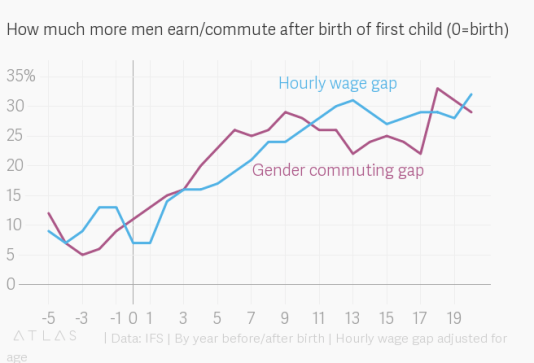
The gender commuting gap widens considerably in the first decade after childbirth
15 Feb 2019 Leave a comment
in discrimination, economics of love and marriage, gender, labour economics, labour supply, occupational choice, transport economics Tags: gender wage gap
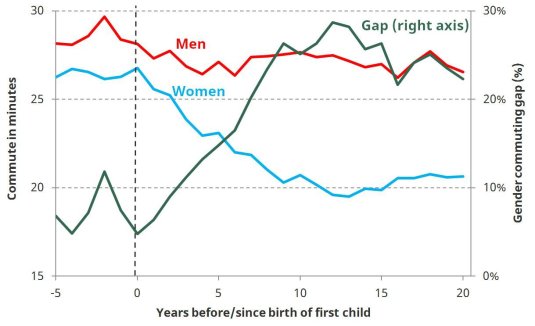
The gender commuting gap explodes with motherhood as does the raw gender wage gap in the UK
13 Feb 2019 Leave a comment
in discrimination, gender, labour economics, labour supply, occupational choice, transport economics Tags: gender wage gap
Caplan Hanson Debate: Robots will eventually dominate the world
12 Feb 2019 Leave a comment
in applied price theory, economic history, industrial organisation, labour economics, labour supply, survivor principle Tags: automation
Capitalists in the Twenty-First Century
09 Feb 2019 Leave a comment
in applied price theory, econometerics, economic history, entrepreneurship, human capital, income redistribution, industrial organisation, labour economics, labour supply, occupational choice, politics - USA, poverty and inequality, Public Choice, rentseeking, survivor principle Tags: top 1%
My next readings from left to right
07 Feb 2019 Leave a comment
in applied price theory, comparative institutional analysis, defence economics, development economics, economic history, human capital, labour economics, labour supply, laws of war, occupational choice, poverty and inequality, Thomas Sowell, war and peace


The Truth Cannot be Sexist – Steven Pinker on the biology of sex differences
06 Feb 2019 Leave a comment
in discrimination, economics of education, economics of love and marriage, gender, human capital, labour economics, labour supply, law and economics, occupational choice Tags: evolutionary psychology
Walter Williams: Suffer No Fools – Full Video
06 Feb 2019 Leave a comment
in applied price theory, comparative institutional analysis, discrimination, economics of crime, economics of education, human capital, labour economics, labour supply, law and economics, minimum wage, politics - USA, poverty and inequality, Public Choice, unemployment, unions, welfare reform Tags: racial discrimination
Q&A: Thomas Sowell 2005
05 Feb 2019 Leave a comment
in applied price theory, discrimination, economic history, economics of crime, economics of education, economics of regulation, human capital, labour economics, labour supply, law and economics, occupational choice, poverty and inequality, Public Choice, Thomas Sowell, welfare reform
Walter Williams: Up From the Projects
03 Feb 2019 Leave a comment
in applied price theory, comparative institutional analysis, discrimination, economics of education, human capital, labour economics, labour supply, poverty and inequality, unemployment, welfare reform Tags: racial discrimination
Jason Brennan counters critics of ‘Markets Without Limits
24 Jan 2019 Leave a comment
in applied price theory, Austrian economics, comparative institutional analysis, constitutional political economy, economic history, economics of regulation, history of economic thought, industrial organisation, labour economics, labour supply, law and economics, liberalism, Public Choice, public economics, Rawls and Nozick


Recent Comments