#InternationalWomensDay ex-Muslims and the charge of islamophobia – @SarahTheHaider, Maryam Namazie & Muhammad Syed
08 Mar 2018 Leave a comment
in discrimination, economics of religion, gender, law and economics Tags: free speech, political correctness
#InternationalWomensDay: #WorldHijabDay is an insult to millions of women and girls who do not have the choice to take off their hijab
08 Mar 2018 1 Comment
in discrimination, economics of religion, gender, labour economics, law and economics Tags: political correctness
Football, Dementia, and the Future of Sports
08 Mar 2018 1 Comment
in health and safety, health economics, labour economics, labour supply, occupational choice, sports economics
The real reason there aren’t more female scientists | FACTUAL FEMINIST
08 Mar 2018 Leave a comment
in discrimination, economics of education, gender, human capital, labour economics, occupational choice Tags: gender wage gap, reverse gender gap
How To Not Be Poor
08 Mar 2018 Leave a comment
in economics of education, economics of love and marriage, health economics, human capital, labour economics, occupational choice, poverty and inequality, unemployment, welfare reform Tags: child poverty, family poverty
Philip Payton Jr.: The Crusading Capitalist Who Outwitted New York’s Racist Landlords
08 Mar 2018 Leave a comment
in applied price theory, discrimination, economic history, entrepreneurship, poverty and inequality, urban economics Tags: racial discrimination
Why Women Prefer Male Bosses
06 Mar 2018 Leave a comment
in discrimination, gender, labour economics, managerial economics, organisational economics, personnel economics Tags: gender gap
SJW Triggered by “men are taller than women” – gets swiftly removed by taller, stronger man
03 Mar 2018 Leave a comment
in discrimination, gender, health economics Tags: political correctness
The last surviving female pilot from World War II
03 Mar 2018 Leave a comment
in defence economics, discrimination, gender Tags: World War II
#AllahIsGay @golrizghahraman & family bigotry against not wearing the #hijab versus coming out as gay
02 Mar 2018 1 Comment
in discrimination, economics of religion, gender, liberalism Tags: free speech, Leftover Left, political correctness
Our politically correct betters defend the right to wear the hijab and to come out as gay.
Are they equally tolerant of hostile reactions by a Christian family against coming out as gay and a Muslim family against a daughter casting off the hijab?
Both involve moral judgements about people expressing their right of free speech and free association.
https://twitter.com/ExMuslimTV/status/952680188017627136Rat bags do have rights but you still should call them out as rat bags for doing what they do.
https://twitter.com/groonhu/status/947305131225346048Does the left understand the difference between toleration and approval?
Our green MPs in New Zealand will defend to the death the right to wear the hijab.
https://twitter.com/ExMuslimTV/status/955384880300478464They and the Left forgets the I disagree with everything you say or do predicate to defending a right.
The Green MP Catherine Delahunty was right to politely but strongly criticise the modest dress of women at a farm run by a fundamentalist Christian sect in New Zealand and what it stood for in terms of the right to be the author of their own lives:
I looked at the gorgeous, yet regimented girls in their identical clothing and wondered how a physicist, an international lawyer or a plumber might blossom if the only role models she was exposed to were those in her own community. We agreed to disagree, because you can’t argue with religious certainty and a literal interpretation of a religious text.
This community feels they are under attack by people like me and throughout the day the women and men I met did their best to share their vision of a safe, structured and practical world led entirely by men who consult with women. I appreciated their generosity, their hospitality and their candour, but I also felt claustrophobic
Later buying fish and chips in Westport we talked to a group of young women who had chosen to travel down from Rotorua to study deep sea fishing. I found their sturdy independence a relief. Their world may not be so “safe” but they looked like they were living on their own terms.
It is a pity that her fellow green MPs do not extend this willingness to defend rights with a willingness to judge how those rights are exercised.
The fundamentalist Christians are not alone in ostracising those who stand up on their own two feet and chose to be the author of their own lives despite their family’s wishes.
https://twitter.com/rlolopez/status/890539940106338305
Changing times
02 Mar 2018 Leave a comment
in discrimination, politics - USA Tags: political correctness

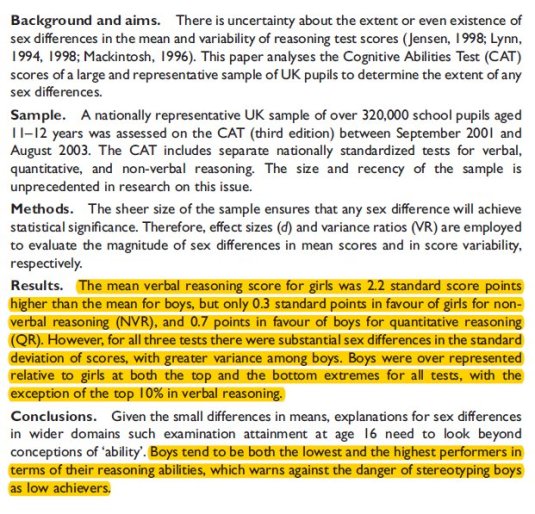
The importance of understanding variance as well as means and medians
02 Mar 2018 Leave a comment
in discrimination, econometerics, gender, labour economics Tags: reverse gender gap
Union unemployment insurance schemes were super tough on malingerers
27 Feb 2018 2 Comments
in labour economics, unemployment
An early role of trade unions was to provide unemployment insurance for members. Majority of British unions in 1908 provided unemployment insurance for members for 6 months or more. These union provided unemployment benefits were about 30% of the take-home pay of the time.
British unions had extremely tough safeguards against moral hazard. The Amalgamated Engineers forced each applicant to make his claim at the next meeting of his branch.
- If the members present, some of whom were his fellow workmen, determined that he was not eligible for benefits, he forfeited the benefits and was “liable to such other punishment as the branch may consider the case deserves.”
- A worker deemed eligible for benefits had to “sign … the ‘vacant-book’ of his branch once every day between certain hours” to collect relief.
- The branch secretary would direct an unemployed member to any local firm in need of labour. A member who refused a job offer, or who did not apply for a job when informed of a vacancy by the branch secretary, would forfeit his unemployment benefit unless he could show sufficient cause for his action at the next branch meeting. This is a common theme among mutual aid societies. They use local knowledge to root out shirking.
Mutual aid societies were formed by people with a common denominator such as the same occupation or ethnic, geographic, or religious background and later, on union membership. This appears to be an attempt to both profit from advantageous selection and to deal with moral hazard by personal knowledge of new members or signs of other forms of good character such as religious fervour. Building societies and credit unions arose out of these mutual aid societies. There were burial societies, factory societies, which make provision for its employees for accident, sickness or burial, and fraternal societies that provided for widows and old-age pensions.
In 1908 Britain, 1 ½ million trade unionists were eligible for unemployment insurance through their union; four million British also belonged to the sickness societies which predated the union movement. Trade unions were superior to mutual aid societies as providers of unemployment insurance because of their greater ability to monitor the eligibility and job search of members through local branches. Few mutual aid and friendly societies provided unemployment insurance.
Friendly societies did not fail; in the UK for example, they were displaced by the National Insurance Acts of 1911 and 1948. When national insurance was first introduced in Britain, people could file claims either with the government bureaucracy or with their friendly society.
The unemployment benefits paid by national insurance were small. Most unions continued to provide insurance benefits throughout the interwar period. It was not until the post-war development of the welfare state that most unions ended their unemployment insurance policies. The 1948 Act created a government monopoly. At the time of the 1911 National Insurance Act, 9 million people were covered by voluntary insurance societies. These provided for widows and burial expenses and medical care. Some provided help in times of distress and grants to travel to new jobs.


Recent Comments