Why leave a tip? You have already received whatever food or service you are going to receive. Maybe if you are a very regular customer, tipping could lead to better service in the future. But most people who leave tips do so even if they are stopping off at, say, a restaurant in a city…
Some Economics of Tipping
Some Economics of Tipping
01 May 2024 Leave a comment
in applied price theory, economic history, industrial organisation, labour economics, labour supply Tags: asymmetric information, moral hazard, tipping
More Good Results from Argentina
28 Apr 2024 Leave a comment
in budget deficits, business cycles, comparative institutional analysis, development economics, economic growth, economic history, economics of bureaucracy, economics of regulation, fiscal policy, growth disasters, income redistribution, labour economics, liberalism, libertarianism, macroeconomics, Marxist economics, monetary economics, Public Choice, rentseeking, unemployment Tags: Argentina
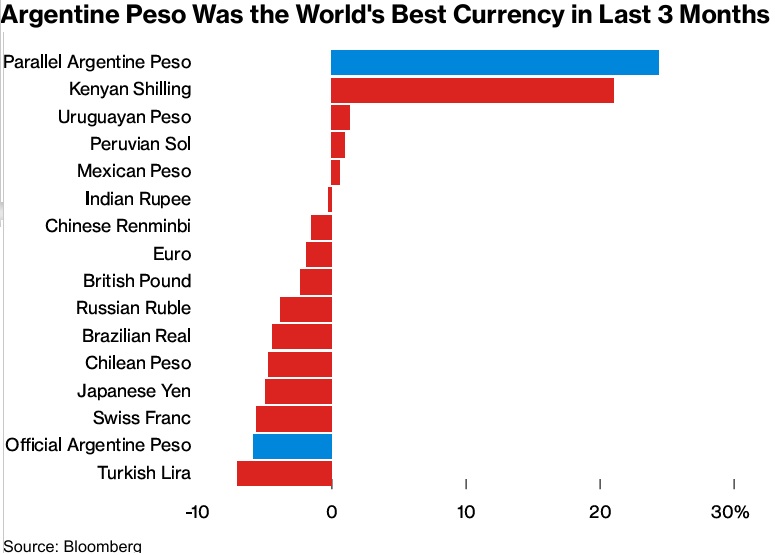
The most important election of 2023 took place in Argentina, where that nation’s voters elected the libertarian candidate, Javier Milei, as their new president. I discussed the outlook for Milei’s agenda on a recent appearance of the Schilling Show. Here’s a brief excerpt. As you can see, I’m worried that Milei faces enormous obstacles. Argentina […]
More Good Results from Argentina
LINDSAY MITCHELL: Is Oranga Tamariki guilty of neglect?
26 Apr 2024 Leave a comment
in discrimination, economics of bureaucracy, economics of crime, law and economics, politics - New Zealand, Public Choice Tags: crime and punishment, law and order

One of reasons Oranga Tamariki exists is to prevent child neglect. But could the organisation itself be guilty of the same? Oranga Tamariki’s statistics show a decrease in the number and age of children in care. “There are less children in care now than as at 30 June 2019 when there were 6450 children and…
LINDSAY MITCHELL: Is Oranga Tamariki guilty of neglect?
“Deactivated”: Columbia Reportedly Blocks Jewish Professor from Access to Campus
24 Apr 2024 Leave a comment
in defence economics, discrimination, International law, labour economics, law and economics, war and peace Tags: free speech, Gaza Strip, Middle-East politics, racial discrimination, regressive left, war against terror

Professor Shai Davidai, an assistant professor at Columbia Business School, was reportedly denied access to the main campus on Friday as his school ID was “deactivated” during the recent protests over the Israeli-Gaza conflict. What was equally concerning is that the university did so for his own protection out of concern that, as an outspoken […]
“Deactivated”: Columbia Reportedly Blocks Jewish Professor from Access to Campus
Why the Global Free Market Will Save the World
23 Apr 2024 Leave a comment
in applied price theory, applied welfare economics, comparative institutional analysis, constitutional political economy, development economics, economic growth, economic history, energy economics, environmental economics, global warming, growth disasters, growth miracles, health economics, history of economic thought, income redistribution, labour economics, law and economics, liberalism, macroeconomics, Marxist economics, politics - Australia, politics - New Zealand, politics - USA, poverty and inequality, property rights, Public Choice, public economics, rentseeking Tags: anticapitalist mentality, capitalism and freedom
Hiring discrimination sentences to ponder
23 Apr 2024 Leave a comment
in applied price theory, discrimination, econometerics, economics of education, economics of information, human capital, labour economics, labour supply, law and economics, managerial economics, organisational economics, personnel economics, politics - USA, poverty and inequality Tags: gender wage gap, implicit bias, racial discrimination, sex discrimination
Several common measures — like employing a chief diversity officer, offering diversity training or having a diverse board — were not correlated with decreased discrimination in entry-level hiring, the researchers found. But one thing strongly predicted less discrimination: a centralized H.R. operation. The researchers recorded the voice mail messages that the fake applicants received. When a company’s […]
Hiring discrimination sentences to ponder
“The Simple Macroeconomics of AI”
21 Apr 2024 Leave a comment
in applied price theory, economic growth, entrepreneurship, human capital, industrial organisation, labour economics, labour supply, macroeconomics, poverty and inequality Tags: artificial intelligence
That is the new Daron Acemoglu paper, and he is skeptical about its overall economic effects. Here is part of the abstract: Using existing estimates on exposure to AI and productivity improvements at the task level, these macroeconomic effects appear nontrivial but modest—no more than a 0.71% increase in total factor productivity over 10 years.…
“The Simple Macroeconomics of AI”
19 Apr 2024 Leave a comment
in budget deficits, business cycles, economic growth, economic history, fiscal policy, great depression, history of economic thought, labour economics, macroeconomics, monetarism, monetary economics, unemployment
Agent-principal conflicts
18 Apr 2024 Leave a comment
in economics of crime, economics of information, economics of media and culture, labour economics, labour supply, law and economics, managerial economics, organisational economics, personnel economics Tags: agency costs, asymmetric information, moral hazard, screening

Diverse MBA teams perform worse
14 Apr 2024 Leave a comment
in applied price theory, discrimination, economics of education, entrepreneurship, gender, human capital, labour economics, labour supply, occupational choice, poverty and inequality Tags: gender wage gap, sex discrimination
From “Diversity and Performance in Entrepreneurial Teams” (SSRN): Among the randomly-assigned teams [of MBA students], greater diversity along the intersection of gender and race/ethnicity significantly reduced performance. However, the negative effect of this diversity is alleviated … [when teams can choose their teammates]…teams with more female members perform substantially better when their faculty section leader was also…
Diverse MBA teams perform worse
A Socialist Explains Why Socialism Can’t Work
13 Apr 2024 Leave a comment
in applied price theory, comparative institutional analysis, development economics, economic history, economics of bureaucracy, economics of regulation, history of economic thought, human capital, income redistribution, industrial organisation, labour economics, labour supply, law and economics, liberalism, Marxist economics, poverty and inequality, property rights, Public Choice, public economics, survivor principle, theory of the firm Tags: economics of socialism, regressive left

Not that the socialist in question, Professor Richard D. Wolff, realises that’s what he’s doing in the Q&A video below – and he’s not talking about traditional Communist Command and Controlled Economies. What he’s actually describing is a very pure form of socialism, the sort only vaguely imagined by Marx, Engels and other communists when […]
A Socialist Explains Why Socialism Can’t Work
Dawkins and Sokal on the dumb ideological ploy maintaining that human sex is “assigned at birth”
10 Apr 2024 Leave a comment
in discrimination, economics of education, gender, health economics, labour economics, law and economics, politics - USA Tags: free speech, political correctness, regressive left, sex discrimination
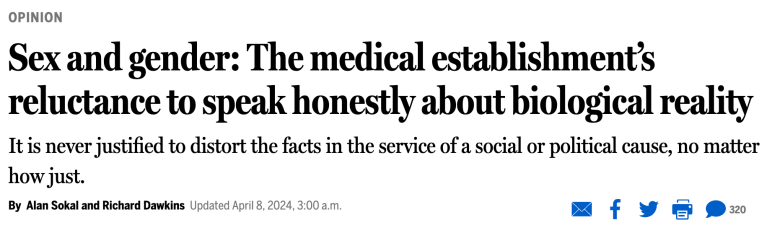
What a pair! The renowned biologist and the hoax-exposer/mathematician, teamed up to attack the medical profession’s new and woke tendency to deny the existence of biological sex as a reality. (Yes, all animals have exactly two sexes, which are not made up by society.) This eloquent op-ed is in the Boston Globe, and you can […]
Dawkins and Sokal on the dumb ideological ploy maintaining that human sex is “assigned at birth”
Handbag authenticators (creative destruction and how the economy just keeps creating new types of occupations & professions)
10 Apr 2024 Leave a comment
in applied price theory, development economics, economics of information, human capital, industrial organisation, labour economics, labour supply, occupational choice, poverty and inequality Tags: consumer fraud, creative destruction
I’ve posted about many new jobs like this. See related posts below. Also, this post is based on yesterday’s post You Spent $6,000 on a Secondhand Chanel Bag. Now Find Out if It Is Real. It had excerpts from an article by Chavie Lieber of The WSJ. Here are excerpts related to today’s post:”Many secondhand luxury shoppers…
Handbag authenticators (creative destruction and how the economy just keeps creating new types of occupations & professions)
A Conversation with Gary Becker
10 Apr 2024 Leave a comment
in applied price theory, behavioural economics, comparative institutional analysis, discrimination, economic history, economics of education, economics of information, Gary Becker, gender, history of economic thought, human capital, labour economics, labour supply, occupational choice, poverty and inequality
Harris’ Major Malfunction
09 Apr 2024 Leave a comment
in economics of education, economics of media and culture, health economics, human capital, labour economics, labour supply, occupational choice, poverty and inequality Tags: behavioural genetics

Judith Harris’ The Nurture Assumption was a huge influence on me, and the top inspiration for my Selfish Reasons to Have More Kids. Her book’s first main lesson is that family resemblance, defined in the broadest possible way to include physical, psychological, and social outcomes, is mostly driven by genetics rather than upbringing. Her book’s…
Harris’ Major Malfunction
 Utopia, you are standing in it!
Recent Comments