Why Should My Boss Get All the Profits?
28 Oct 2018 Leave a comment
in applied welfare economics, Austrian economics, entrepreneurship, financial economics, labour economics, labour supply, poverty and inequality Tags: labour theory of value
Rejoinder to @TVNZ reply to @BSA_NZ complaint
25 Oct 2018 Leave a comment
in politics - New Zealand, poverty and inequality
My rejoinder is TVNZ is so sloppy with the facts that it is spent most of its reply on the exemption in cases of where paternity is uncertain or disputed. That has nothing to do with my complaint about their failure to mention in their broadcast the exemption in the case of threats of violence.
To support their reply, TVNZ attached a rambling paper from Auckland action against poverty and a Herald op-ed about the need to have a lawyer’s letter. TVNZ misread the rambling Auckland action for poverty document with talks about needing a lawyer to get the exemption lifted. This is different to when first applying for the benefit. The New Zealand Herald op-ed is unclear about which exemption is under discussion: for threats of violence or for disputed paternity.
TVNZ interviewed the minister about the exemption but put none of the activist allegations to her according to the attached official information response of TVNZ. An opportunity lost for balance.
I put the allegation that a lawyer is required to apply for the exemption in case of threats of violence through official information requests to the Minister and her ministry. Both the Minister and the ministry said that was not so: a lawyer is not required to apply for the exemption. The Ministry also explained that benefit applicants are interviewed by the case manager and briefed on their options.
TVNZ included the link https://www.workandincome.govt.nz/map/income-support/core-policy/child-support/carer-unable-to-provide-written-proof-of-the-risk-of-violence.html

I clicked on the link Exempting section 70A reductions https://www.workandincome.govt.nz/map/income-support/core-policy/child-support/exempting-section-70a-reductions.html and then clicked on Risk of Violence link https://www.workandincome.govt.nz/map/income-support/core-policy/child-support/risk-of-violence-01.html and then clicked on Carer required to provide proof of risk of violence link https://www.workandincome.govt.nz/map/income-support/core-policy/child-support/carer-required-to-provide-proof-of-the-risk-of-violence.html

The above screenshot lists all the 3rd parties who are credible witnesses. TVNZ had to go through these links to find the link Carer unable to provide written proof of the risk of violence at https://www.workandincome.govt.nz/map/income-support/core-policy/child-support/carer-unable-to-provide-written-proof-of-the-risk-of-violence.html

Sole parent beneficiary applicants are not asked for a letter from a lawyer as claimed by TVNZ. The link supplied in the TVNZ reply says applicants are advised to speak to a family violence coordinator or a service centre manager at WINZ. TVNZ is convicted by the information it supplied to the BSA.
In summary, TVNZ never mentioned the exemption on air. When I complained, it relied on allegations from activists that were never put to the Minister or her ministry despite opportunities to do so in an interview with the Minister. In the reply to the complaint, TVNZ provided written proof to the BSA from WINZ that applicants are advised to speak a family violence coordinator or a WINZ service centre manager if they are having trouble documenting the threats or abuse. The link provided by TVNZ shows there is no requirement for a letter from a lawyer. The exemption was never mentioned on air nor its purported shortcomings. The claim that TVNZ did not need to mention the exemption because it was unworkable because of the need to hire a lawyer has no foundation in fact and was never put to the minister or WINZ for comment and balance.
Labor Ethics | Political Philosophy with Jason Brennan
24 Oct 2018 Leave a comment
in applied price theory, development economics, economic history, economics of bureaucracy, economics of crime, health and safety, human capital, income redistribution, labour economics, labour supply, law and economics, minimum wage, occupational choice, politics - USA, poverty and inequality, Public Choice, public economics, rentseeking
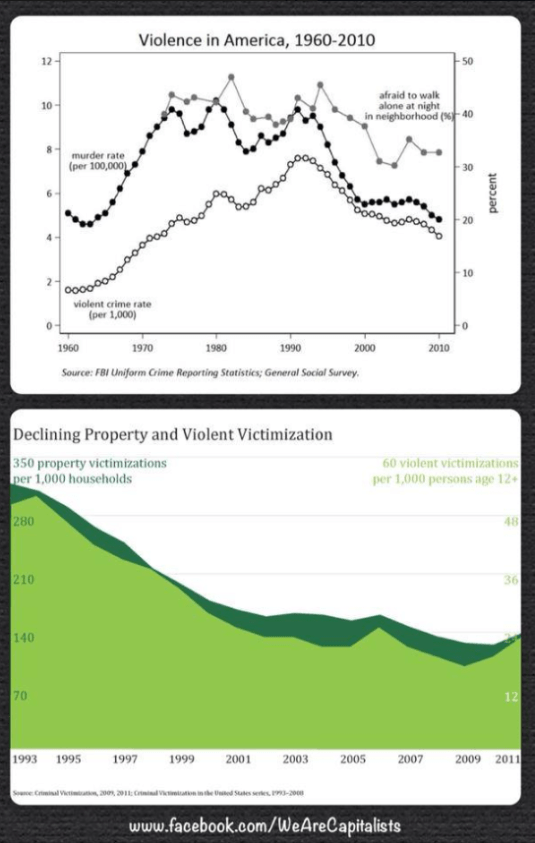
I blame rising inequality
20 Oct 2018 Leave a comment
in economic history, economics of crime, politics - USA, poverty and inequality
Data manipulation in The Spirit Level
19 Oct 2018 Leave a comment
in applied price theory, applied welfare economics, development economics, econometerics, economics of information, economics of media and culture, poverty and inequality Tags: top 1%

$850m lost in benefit fraud @CarmelSepuloni @_AAAP_ @MaramaDavidson @RMarchNZ @TaxpayersUnion
15 Oct 2018 Leave a comment
in economics of crime, politics - New Zealand, poverty and inequality
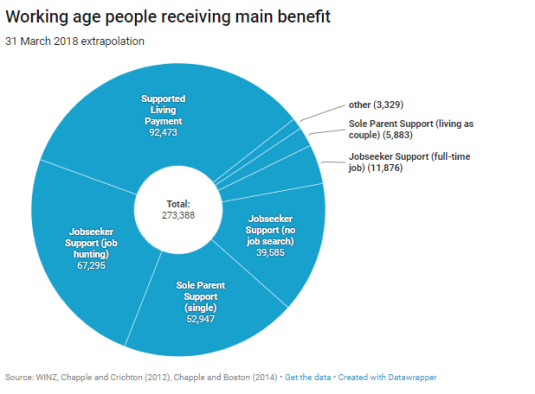
The estimates are based on the self-reported benefit fraud in the 2012 Chapple and Crichton paper which must be a minimum bound because you would expect at least some benefit fraudsters to be discreet in their dealings with government and the statistics bureau.
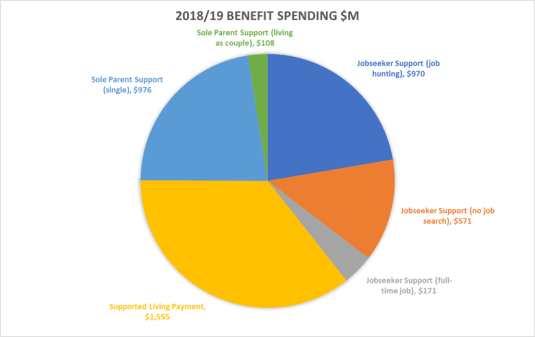
Computed from 2018 Budget papers, WINZ benefit data, Chapple and Crichton (2012), Chapple and Boston (2014). See too https://www.taxpayers.org.nz/benefit_sanctions
How many beneficiaries make fraudulent claims? @CarmelSepuloni @_AAAP_ @MaramaDavidson @RMarchNZ
14 Oct 2018 Leave a comment
in economics of crime, politics - New Zealand, poverty and inequality, public economics
Doesn’t this also show a lot fewer people are on poverty wages? @EconomicPolicy
12 Oct 2018 Leave a comment
in economic history, politics - USA, poverty and inequality
Ben Shapiro on Donald Trump, Bernie Sanders, and Hillary
11 Oct 2018 Leave a comment
in defence economics, economics of bureaucracy, economics of regulation, income redistribution, industrial organisation, politics - USA, poverty and inequality, Public Choice, rentseeking, survivor principle Tags: 2016 presidential election
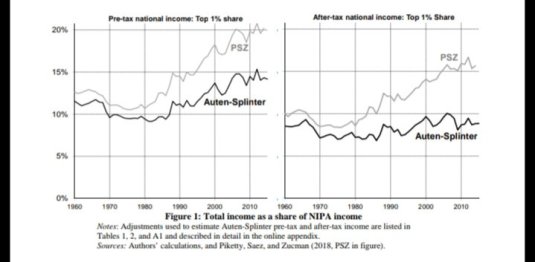
Class war cancelled- Piketty data crashes and burns
11 Oct 2018 Leave a comment
in econometerics, economic history, politics - USA, poverty and inequality Tags: top 1%
Claudia Goldin (2018) on the last chapter in the Quest for Career and Family @NZPSA @women_nz
08 Oct 2018 Leave a comment
in applied price theory, discrimination, economics of education, entrepreneurship, gender, health economics, human capital, labour economics, managerial economics, occupational choice, organisational economics, personnel economics, poverty and inequality Tags: gender wage gap
@NZPSA should have killed my op-ed with silence. Now have another chance to go at them again.
04 Oct 2018 Leave a comment
in applied price theory, discrimination, gender, human capital, labour economics, labour supply, occupational choice, politics - New Zealand, poverty and inequality Tags: gender wage gap


 Utopia, you are standing in it!
Recent Comments