Cato has a good summary of Deregulation in Argentina: The end of Argentina’s extensive rent controls has resulted in a tripling of the supply of rental apartments in Buenos Aires and a 30 percent drop in price. The new open-skies policy and the permission for small airplane owners to provide transportation services within Argentina has […]
Argentina’s DOGE
Argentina’s DOGE
27 Mar 2025 Leave a comment
in applied price theory, development economics, economics of information, economics of regulation, growth disasters, health economics, industrial organisation, labour economics, law and economics, liberalism, Marxist economics, property rights, regulation Tags: Argentina
Bosses Don’t Need a ‘What Did You Do’ Email. They’re Already Tracking You. (and how this might be related to Keynes’ theory of sticky wages)
27 Mar 2025 Leave a comment
in applied price theory, human capital, labour economics, labour supply, law and economics, macroeconomics, managerial economics, monetary economics, organisational economics, personnel economics, property rights, unemployment Tags: efficiency wage, wage rigidity
Elon Musk’s email to federal employees prompted angst, but lots of employers use technology for continuous feedback on worker performanceBy Natasha Khan and Ray A. Smith. Excerpts:”What did you do last week?The question that Elon Musk lobbed to federal workers in an email set off anger and angst from unions and employees. It also prompted…
Bosses Don’t Need a ‘What Did You Do’ Email. They’re Already Tracking You. (and how this might be related to Keynes’ theory of sticky wages)
US Supreme Court Rejects Long Running Youth Climate Lawsuit
26 Mar 2025 Leave a comment
in economics of climate change, energy economics, environmental economics, environmentalism, global warming, law and economics, politics - USA, property rights Tags: climate activists, nuisance suits

Bye bye Juliana v. United States.
US Supreme Court Rejects Long Running Youth Climate Lawsuit
A Brief History of Anti-Semitism
26 Mar 2025 Leave a comment
in economic history, economics of crime, law and economics Tags: antisemitism, The Holocaust
The True Story of the Great Escape
25 Mar 2025 1 Comment
in defence economics, economics of crime, law and economics, laws of war, war and peace Tags: Nazi Germany, World War II

During World War II, one of the most daring and ambitious prisoner-of-war (POW) escapes in history took place in the German POW camp Stalag Luft III. Known as “The Great Escape,” this remarkable event was executed by Allied airmen who demonstrated extraordinary resilience, ingenuity, and bravery in their pursuit of freedom. While the escape itself […]
The True Story of the Great Escape
A great new research paper
25 Mar 2025 Leave a comment
in discrimination, economics of crime, economics of education, gender, law and economics, liberalism, Marxist economics, politics - USA, property rights Tags: free speech, political correctness, regressive left, sex discrimination
Jerry Coyne has found a wonderful new research paper. The abstract is: This article offers a queer lesbian feminist analysis attuned to lesbian-queer-trans-canine relationalities. Specifically, the article places queer and lesbian ecofeminism in conversation with Donna Haraway’s work on the cyborg and companion species to theorize the interconnected queer becomings of people, nature, animals, and […]
A great new research paper
All is Fair in Love & War: Sex during World War I
23 Mar 2025 Leave a comment
in defence economics, economics of crime, International law, law and economics, laws of war, war and peace Tags: World War I
Mann loses 99.5% of his damages
23 Mar 2025 Leave a comment
in economics of climate change, economics of education, energy economics, environmental economics, environmentalism, global warming, law and economics, politics - USA Tags: climate activists, climate alarmism, defamation
Climate scientist Michael Mann won $1 million in a defamation lawsuit against writer Mark Steyn. However the damages have been reduced to $5,000 due to false claims by Mann about lost grants. Some extracts from the recent court ruling: It seems Dr Mann has done more damage to his own reputation through this lawsuit, than […]
Mann loses 99.5% of his damages
Book Nook Reading Notes on *Selfish Reasons to Have More Kids*
22 Mar 2025 Leave a comment
in economics of crime, economics of education, human capital, labour economics, labour supply, law and economics, occupational choice, poverty and inequality Tags: College premium, signaling
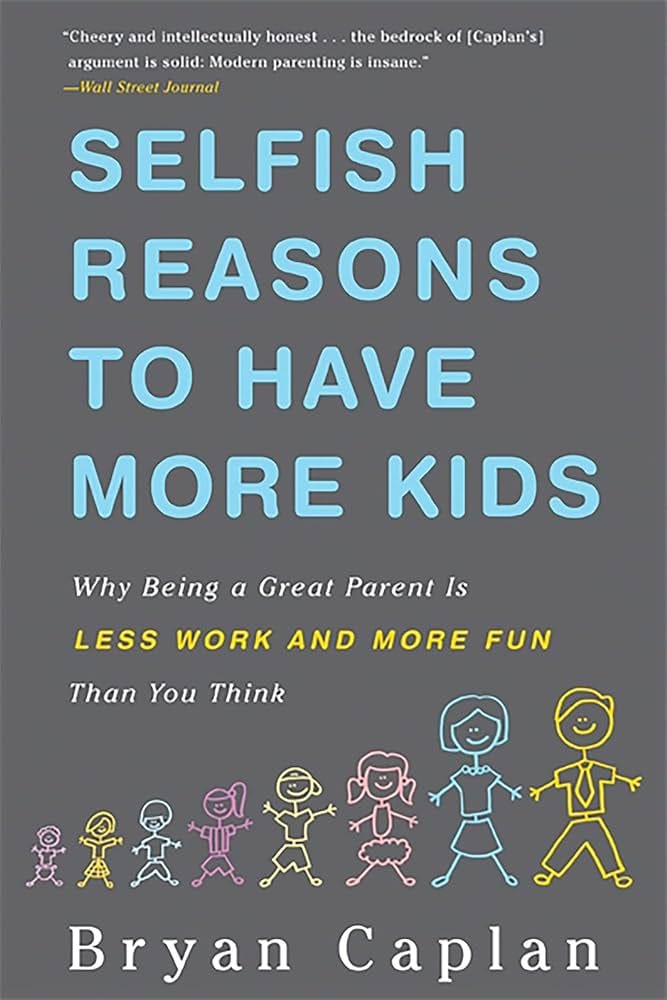
Bet On It reader Dan Barrett wrote these notes for his Book Nook book club on my Selfish Reasons to Have More Kids: Why Being a Great Parent Is Less Work and More Fun Than You Think. Dan’s idea:I’m organizing reading groups packaged as the Book Nook to help colleagues (1) guide their own learning…
Book Nook Reading Notes on *Selfish Reasons to Have More Kids*
The Anatomy of Marital Happiness
22 Mar 2025 Leave a comment
in applied price theory, econometerics, economic history, economics of love and marriage, industrial organisation, labour economics, population economics Tags: dating markets, economics of fertility, marriage and divorce, marriage premium
How can I not link to a new Sam Peltzman piece on such a topic? Here goes: Since 1972, the General Social Survey has periodically asked whether people are happy with Yes, Maybe or No type answers. Here I use a net “happiness” measure, which is percentage Yes less percentage No with Maybe treated as […]
The Anatomy of Marital Happiness
Stop waiting for a foreign hero: NZ’s supermarket sector needs competition from within
21 Mar 2025 Leave a comment
in applied price theory, economics of regulation, industrial organisation, law and economics, politics - New Zealand Tags: competition law
Lisa M. Katerina Asher, Catherine Sutton-Brad and Drew Franklin write – New Zealand’s concentrated supermarket sector is back in the spotlight after Finance Minister Nicola Willis said she was open to offering “VIP treatment” to a third international player willing to create competition. However, New Zealanders hoping for a foreign hero to break up the […]
Stop waiting for a foreign hero: NZ’s supermarket sector needs competition from within
McCaskill: Trump is Trying to “Disappear” People Like Putin
20 Mar 2025 Leave a comment
in economics of crime, Economics of international refugee law, international economics, International law, labour economics, labour supply, law and economics, politics - USA Tags: 2024 presidential election, economics of immigration, law and order, law enforcement

MSNBC analyst and former Democratic Sen. Claire McCaskill has long been criticized for unhinged rhetoric. That was evident on “Morning Joe” recently when McCaskill said that the deportation of alleged Venezuelan gang members was akin to Putin “disappearing” people. It is not the first such analogy by McCaskill, who has called those opposing the censorship […]
McCaskill: Trump is Trying to “Disappear” People Like Putin
The Trans-Saharan Railway: A Forgotten Chapter of Vichy Oppression
20 Mar 2025 Leave a comment
in defence economics, economics of crime, International law, law and economics, laws of war, war and peace Tags: France, Nazi Germany, The Holocaust, World War II

The phrase “From hero to zero” is perhaps the most fitting way to describe the trajectory of Philippe Pétain’s legacy. Once hailed as a national savior and military genius, his descent into infamy was marked by his collaboration with Nazi Germany and his betrayal of France’s republican values. Pétain: From World War I Hero to […]
The Trans-Saharan Railway: A Forgotten Chapter of Vichy Oppression
Greens think prisoners are the victims!
19 Mar 2025 Leave a comment
in economics of crime, labour economics, law and economics, occupational choice, politics - New Zealand Tags: crime and punishment, criminal deterrence, law and order, regressive left
David Farrar writes – The Herald reported: The Greens’ Tamatha Paul has expressed “regret” about a claim she made on social media that the “vast majority” of people in prison are there for non-violent offences that they’ve “had to do as a response to poverty”. Police and Corrections Minister Mark Mitchell has described comments in her video as “total nonsense” and an […]
Greens think prisoners are the victims!
Auckland Uni Law School teacher: we must decolonize the universities and undo the damage of the “colonial project”
18 Mar 2025 Leave a comment
in discrimination, economic history, economics of bureaucracy, law and economics, liberalism, Marxist economics, politics - New Zealand, property rights, Public Choice, rentseeking Tags: Age of Enlightenment, free speech, political correctness, racial discrimination, regressive left

It’s not so surprising that Auckland University harbors a Māori activist like Eru Kapa-Kingi; what is surprising is that Auckland University has publicized his words and activities, amd they seem proud of them! For Kapa-Kingi’s goal is apparently to decolonize not just Auckland University (once the best university in New Zealand, now a hotpot of identity […]
Auckland Uni Law School teacher: we must decolonize the universities and undo the damage of the “colonial project”
 Utopia, you are standing in it!
Recent Comments