Invercargill Mayor Nobby Clark recently found himself in a media furore as he asserted his right to use colourful racial terms. Ratepayers might regret the distraction from local concerns, but part of my job in Parliament is to consider speech issues in a serious way. And I’ve concluded that free speech is indeed under threat…
TODD STEPHENSON: FREE SPEECH GOES BOTH WAYS
TODD STEPHENSON: FREE SPEECH GOES BOTH WAYS
03 Apr 2024 Leave a comment
in discrimination, economics of crime, law and economics, liberalism, Marxist economics, politics - New Zealand, property rights Tags: free speech, political correctness, regressive left
Three cheers for the Green Party mayor!
02 Apr 2024 Leave a comment
in economic history, economics of regulation, law and economics, politics - New Zealand, property rights, urban economics Tags: zoning

The crews bracing themselves for a rise in electric car fires
02 Apr 2024 Leave a comment
in energy economics, environmental economics, global warming, health and safety, labour economics, law and economics, property rights Tags: electric cars

Firefighter: “Our preferred approach is to let them burn themselves out”. EV fires ‘create a variety of toxic chemicals’. They ‘have to be “quarantined” away from other vehicles even after the fire appears to have been put out’, in case they re-ignite days or even 2-3 weeks later. Other types of car are still available, […]
The crews bracing themselves for a rise in electric car fires
Anthony Willy on the SOE case and partnership fiction
01 Apr 2024 Leave a comment
in comparative institutional analysis, constitutional political economy, economic history, International law, law and economics, politics - New Zealand, property rights, Public Choice, public economics Tags: constitutional law
Former Judge and barrister Anthony Willy has an excellent post on the famous SOE case which is held up to have decided that the Treaty of Waitangi was a partnership. He demolishes this argument by quoting, well the actual judgment. The case was about acting in good faith. Well worth a read.
Anthony Willy on the SOE case and partnership fiction
Spotlight on the Courts
01 Apr 2024 Leave a comment
in economics of bureaucracy, income redistribution, law and economics, politics - New Zealand, property rights, Public Choice, public economics, rentseeking Tags: constitutional law
Muriel Newman writes – “Houston, we have a problem!” New Zealand’s Supreme Court – the highest court in our land – has been captured by activist judges. What is heartening, is the emergence of a wide range of eminent legal voices all openly criticising the Court and calling for this problem to be addressed. But […]
Spotlight on the Courts
Why NZ First shouldn’t get any apologies for the SFO’s failed prosecution
28 Mar 2024 Leave a comment
in economics of crime, law and economics, politics - New Zealand, property rights Tags: crime and punishment, law and order
Bryce Edwards writes – New Zealand’s biggest-ever political donations scandal is finally at an end. But what is the conclusion? No one can really be sure. The Court of Appeal released its judgement on Tuesday about the Serious Fraud Office case against the NZ First Foundation. On the face of it, the court found in […]
Why NZ First shouldn’t get any apologies for the SFO’s failed prosecution
*Who’s Afraid of Gender?*
26 Mar 2024 Leave a comment
in discrimination, economics of crime, economics of education, gender, law and economics, property rights Tags: Age of Enlightenment, conjecture and refutation, free speech, philosophy of science, political correctness, regressive left
That is the title of the new Judith Butler book, focusing mostly on trans issues. To be clear, on most practical issues concerning trans, I side with the social conservatives. For instance, I don’t think trans women have a right to compete in women’s weightlifting contests. And I have not been happy with how many […]
*Who’s Afraid of Gender?*
“Blatantly Misogynistic”: UC Berkeley Students Declare That They Feel Unsafe After Professor Shares Dating Advice
24 Mar 2024 Leave a comment
in economics of crime, economics of education, economics of media and culture, law and economics, politics - USA, property rights Tags: free speech, political correctness, regressive left

This week, parents of students at the University of California at Berkeley took the extreme step of hiring private security to protect their children at the school after years of complaints over rising crime and anti-police policies. The university, however, is focused this week on another threat that has led students to object that they […]
“Blatantly Misogynistic”: UC Berkeley Students Declare That They Feel Unsafe After Professor Shares Dating Advice
ROGER PARTRIDGE: HOW TO REIN IN AN ACTIVIST SUPREME COURT
22 Mar 2024 Leave a comment
in comparative institutional analysis, constitutional political economy, economic history, economics of bureaucracy, law and economics, liberalism, Marxist economics, politics - New Zealand, property rights, Public Choice Tags: constitutional law, rule of law
My earlier column this month, New Zealand’s highest court could be facing a turning point, prompted a flood of feedback from business readers and lawyers alike. A common query was what Parliament can do to restrain an overreaching judiciary. This week I discuss two steps Parliament should not hesitate to take. But first a quick recap. The…
ROGER PARTRIDGE: HOW TO REIN IN AN ACTIVIST SUPREME COURT
Do Me a Personal Favor: Please Pre-Order *Build, Baby, Build* Now
22 Mar 2024 Leave a comment
in applied price theory, applied welfare economics, comparative institutional analysis, constitutional political economy, economics of bureaucracy, economics of regulation, income redistribution, law and economics, liberalism, Marxist economics, politics - USA, property rights, Public Choice, public economics, rentseeking Tags: land supply, zoning

I started writing Build, Baby, Build: The Science and Ethics of Housing Regulation, in the early weeks of Covid. Now, with the kind cooperation of the Cato Institute, my second non-fiction graphic novel releases on May 1, 2024. That’s less than six weeks away.The official coverPlease forgive my laughable arrogance, but I assure you that…
Do Me a Personal Favor: Please Pre-Order *Build, Baby, Build* Now
Nikole Hannah-Jones on reparations for descendants of slaves
21 Mar 2024 Leave a comment
in discrimination, economics of crime, economics of education, human capital, income redistribution, labour economics, labour supply, law and economics, liberalism, Marxist economics, occupational choice, politics - USA, poverty and inequality, property rights, Public Choice, rentseeking Tags: affirmative action, free speech, political correctness, racial discrimination, regressive left

As you know, I go back and forth on the question of affirmative action for college and professional-school admissions, and even after I thought I’d settled on a view (i.e., give some preference to minorities among those equally qualified for admission), it still keeps changing. After I read the long New York Times piece below […]
Nikole Hannah-Jones on reparations for descendants of slaves
GARY JUDD KC: On judicial imperialism
19 Mar 2024 Leave a comment
in comparative institutional analysis, constitutional political economy, law and economics, liberalism, libertarianism, Marxist economics, politics - USA, property rights
Why judges must ‘stay in their lane’ This article with minor differences was published by The Law Association’s Law News on 15 March 2024 Provoked by the Supreme Court’s decision in Smith v Fonterra and others [2024] NZSC 5, Professor James Allan, Garrick Professor of Law at the University of Queensland, a Canadian who taught law at…
GARY JUDD KC: On judicial imperialism
100 Years of Rent Control in Sweden
17 Mar 2024 Leave a comment
in applied price theory, economic history, economics of bureaucracy, economics of regulation, history of economic thought, income redistribution, law and economics, property rights, Public Choice, public economics, rentseeking, urban economics Tags: rent control, Sweden
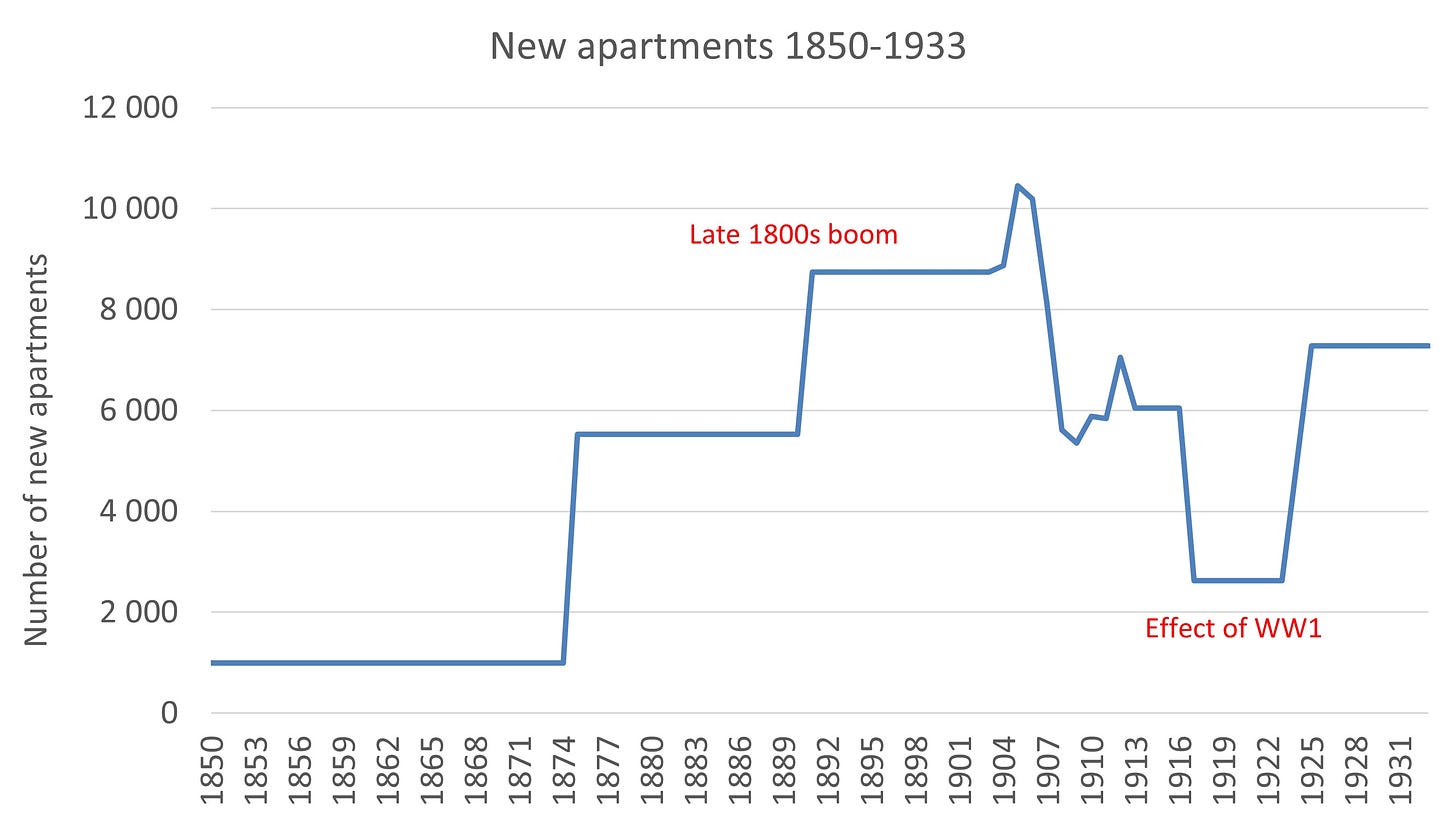
Bet On It reader Vanja Månborg knows a lot about rent control in Sweden. If you think Sweden is a country of thoughtful technocrats where government intervention works well, reading his guest post may make you think again. Here’s Vanja:Sweden has had rent control regulations since 1917 with less than two decades of pause between…
100 Years of Rent Control in Sweden
Further integrity problems for the Greens in suspending MP Darleen Tana
16 Mar 2024 Leave a comment
in economics of crime, law and economics, politics - New Zealand, property rights Tags: regressive left
Bryce Edwards writes – Is another Green MP on their way out? And are the Greens severely tarnished by another integrity scandal? For the second time in three months, the Green Party has secretly suspended an MP over integrity issues. Mystery is surrounding the party’s decision to first suspend Darleen Tana from her small business […]
Further integrity problems for the Greens in suspending MP Darleen Tana


Recent Comments