FMI Public Speaker Series – Finn Kydland
23 Dec 2023 Leave a comment
in applied price theory, budget deficits, business cycles, comparative institutional analysis, development economics, economic growth, economic history, economics of bureaucracy, fiscal policy, global financial crisis (GFC), great depression, great recession, growth disasters, growth miracles, history of economic thought, human capital, income redistribution, labour economics, labour supply, macroeconomics, Public Choice, public economics, rentseeking
Finn E. Kydland Nobel Lecture at CERGE-EI
22 Dec 2023 Leave a comment
in applied price theory, budget deficits, business cycles, comparative institutional analysis, development economics, economic growth, economic history, economics of regulation, fiscal policy, global financial crisis (GFC), great depression, great recession, growth disasters, growth miracles, history of economic thought, human capital, income redistribution, labour economics, labour supply, macroeconomics, monetary economics, Public Choice, public economics
An Upside-Down Economic History of Argentina
13 Dec 2023 Leave a comment
in budget deficits, business cycles, development economics, economic growth, economic history, economics of bureaucracy, fiscal policy, growth disasters, growth miracles, history of economic thought, income redistribution, labour economics, macroeconomics, Public Choice, public economics, rentseeking, Ronald Coase Tags: Argentina
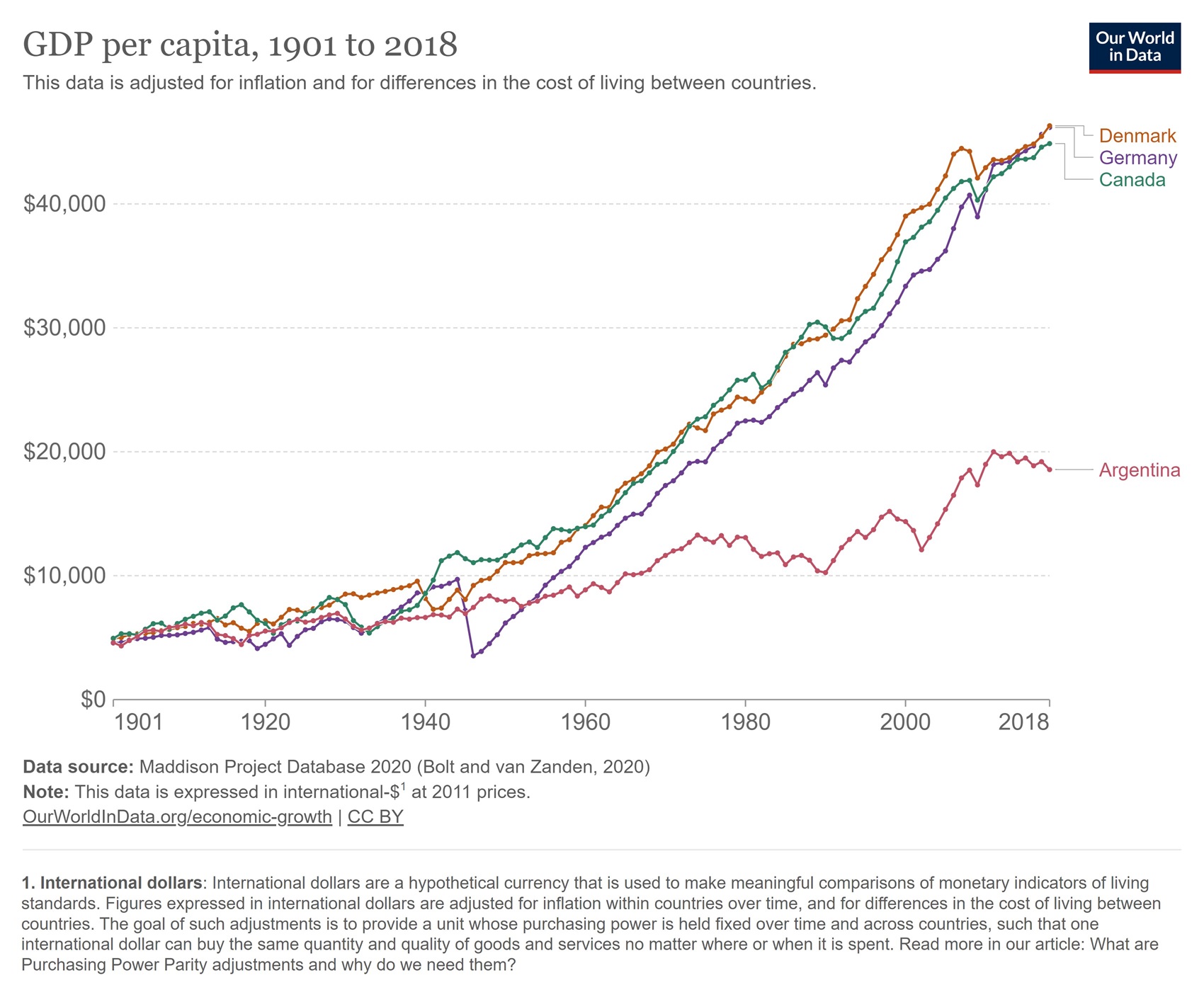
Argentina has a very interesting, but also rather tragic, economic history. During first half of the 20th century, it was one of the world’s richest nations. But thanks to dirigiste economic policies (known locally as Peronism) starting after World War II, Argentina has suffered a dramatic decline in relative living standards. However, something shocking has […]
An Upside-Down Economic History of Argentina
Can Argentina Be Rescued, Part III
12 Dec 2023 Leave a comment
in applied price theory, budget deficits, comparative institutional analysis, development economics, economic growth, economic history, economics of regulation, fiscal policy, growth disasters, income redistribution, international economics, labour economics, liberalism, libertarianism, macroeconomics, Marxist economics, Milton Friedman, monetary economics, Murray Rothbard, Public Choice Tags: Argentina
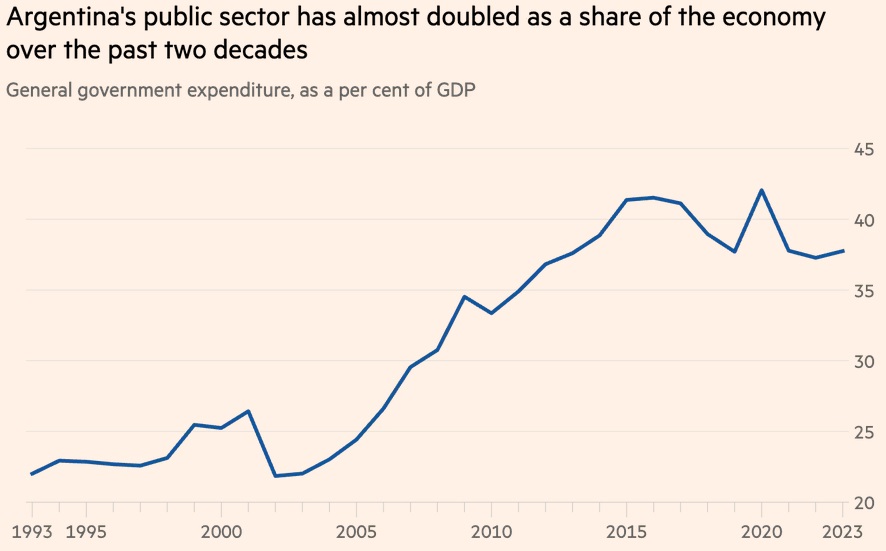
My trip to Argentina last year motivated me to write Part I of this series, which focused on whether things might get better in that tragic country for the simple reason that they couldn’t possibly get any worse. In Part II of this series, I analyzed whether a libertarian candidate’s surprisingly strong performance in Argentina’s […]
Can Argentina Be Rescued, Part III
Lessons from Fighting 100 Inflations Since the 1970s
12 Dec 2023 Leave a comment
in budget deficits, business cycles, development economics, economic growth, economic history, fiscal policy, growth disasters, history of economic thought, inflation targeting, macroeconomics, monetarism, monetary economics, unemployment Tags: monetary policy

Inflation rates have come down since their peak in mid-2022. Does the Federal Reserve need to continue its inflation-fighting ways, keeping interest rates high? Anil Ari, Carlos Mulas-Granados, Victor Mylonas, Lev Ratnovski, and WeiZhao of the IMF look to historical and international experience in “One Hundred Inflation Shocks: Seven Stylized Facts” (September 2023, WP/23/190). As…
Lessons from Fighting 100 Inflations Since the 1970s
Really?
06 Dec 2023 Leave a comment
in budget deficits, business cycles, economic growth, fiscal policy, inflation targeting, labour economics, macroeconomics, monetary economics, politics - New Zealand, unemployment Tags: monetary policy

It doesn’t seem to have been the best week for the Reserve Bank since the release of the latest Monetary Policy Statement last Wednesday. Of course, one could make a pretty compelling case that in the Orr years few weeks have been, and especially not any weeks when Bank figures actually say or do anything. […]
Really?
Government net debt: how does NZ compare?
02 Dec 2023 1 Comment
in budget deficits, fiscal policy, macroeconomics, politics - New Zealand

In my post yesterday on the new OECD Economic Outlook fiscal numbers I included this chart Even if you leave off the last two observations (OECD projections based on current – Labour government – fiscal policy) recent trends have hardly been something to take any comfort in. But at least we were still a bit […]
Government net debt: how does NZ compare?
Why Argentina’s dollarization is likely to come in sudden, messy ways
30 Nov 2023 Leave a comment
in budget deficits, business cycles, currency unions, development economics, fiscal policy, growth disasters, macroeconomics, monetary economics Tags: Argentina, dollarisation
Yes, I do still favor it, but here is part of the problem, as I explain in my latest Bloomberg column: The simplest way for Argentina to dollarize would be to inflate the peso even more. For purposes of argument, imagine a peso inflation rate of one billion percent a year. Pesos would be worthless, […]
Why Argentina’s dollarization is likely to come in sudden, messy ways
Review of “Milton Friedman: The Last Conservative” by Jennifer Burns
29 Nov 2023 Leave a comment
in budget deficits, business cycles, economic growth, fiscal policy, global financial crisis (GFC), great depression, great recession, history of economic thought, macroeconomics, Milton Friedman, monetarism, monetary economics
Milton Friedman: The Last Conservative by Jennifer Burns 592 pages Farrar, Straus and Giroux Published: Nov 2023 Released two weeks ago, Jennifer Burns’s “Milton Friedman: The Last Conservative” is the most significant biography of Friedman ever published. Burns is an associate professor of history at Stanford and a research fellow at the Hoover Institution. She […]
Review of “Milton Friedman: The Last Conservative” by Jennifer Burns
Understanding Fiscal Inflation — Keynote Speech by Eric Leeper
22 Nov 2023 Leave a comment
in budget deficits, business cycles, economic growth, economic history, fiscal policy, global financial crisis (GFC), great depression, great recession, history of economic thought, inflation targeting, macroeconomics, monetary economics Tags: monetary policy
George Selgin on the New Deal and Recovery (and Relief and Reform)
18 Nov 2023 Leave a comment
in budget deficits, business cycles, economic growth, economic history, fiscal policy, great depression, labour economics, labour supply, macroeconomics, monetary economics, unemployment
TweetWant to get a few hours’ worth of solid learning in less than 35 enjoyable minutes? Listen to my Mercatus Center colleague David Beckworth’s podcast (from October 2022) with George Selgin on the New Deal. Seriously. It will be 34-plus minutes very well spent. George’s book – False Dawn – is forthcoming from the University…
George Selgin on the New Deal and Recovery (and Relief and Reform)
Milton Friedman: The Last Conservative | Hoover Institution
15 Nov 2023 Leave a comment
in applied price theory, budget deficits, business cycles, economic growth, economic history, fiscal policy, global financial crisis (GFC), great depression, great recession, history of economic thought, inflation targeting, labour economics, macroeconomics, Milton Friedman, monetarism, monetary economics, unemployment Tags: monetary policy
Filling in the Gaps: Next Steps for the Fiscal Theory of the Price Level
15 Nov 2023 Leave a comment
in applied price theory, budget deficits, business cycles, econometerics, economic history, financial economics, fiscal policy, great depression, great recession, history of economic thought, inflation targeting, macroeconomics, monetarism, monetary economics Tags: monetary policy
Book Presentation with John Cochrane: “The Fiscal Theory of the Price Le…
09 Nov 2023 Leave a comment
in budget deficits, business cycles, econometerics, economic growth, economic history, Euro crisis, fiscal policy, global financial crisis (GFC), great depression, great recession, history of economic thought, inflation targeting, macroeconomics, Milton Friedman, monetarism, monetary economics, public economics Tags: monetary policy
Heterogeneous Agent Fiscal Theory
14 Oct 2023 Leave a comment
in budget deficits, business cycles, fiscal policy, macroeconomics, monetary economics

Today, I’ll add an entry to my occasional reviews of interesting academic papers. The paper: “Price Level and Inflation Dynamics in Heterogeneous Agent Economies,” by Greg Kaplan, Georgios Nikolakoudis and Gianluca Violante. One of the many reasons I am excited about this paper is that it unites fiscal theory of the price level with heterogeneous agent…
Heterogeneous Agent Fiscal Theory
 Utopia, you are standing in it!
Recent Comments