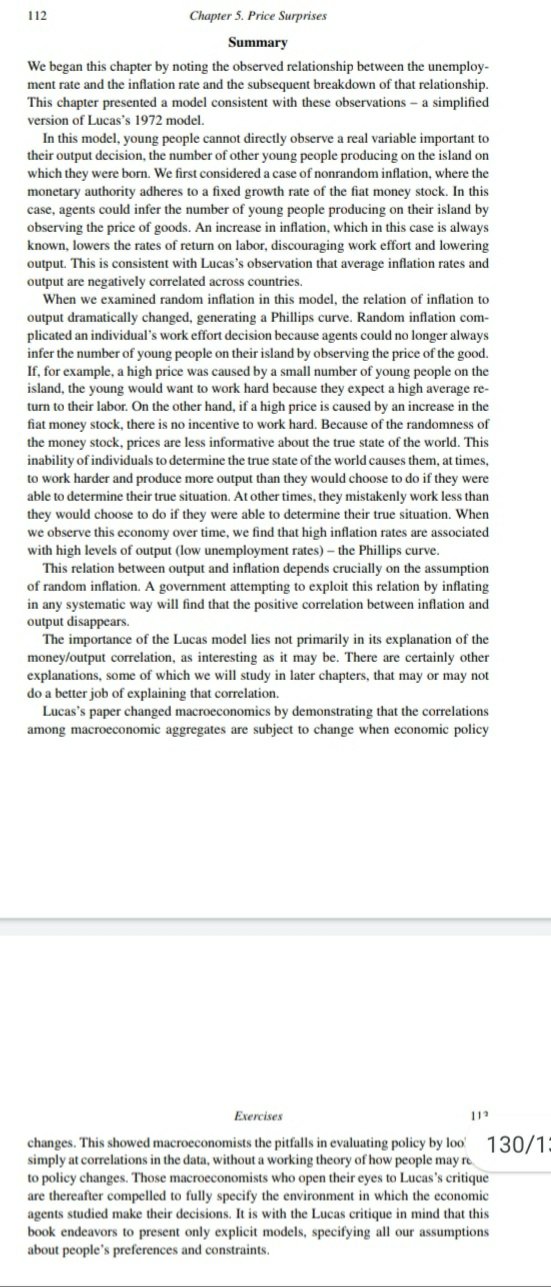
Freeman and Champ explain the Lucas revolution
15 Apr 2022 Leave a comment
in business cycles, economic growth, history of economic thought, labour economics, labour supply, macroeconomics, monetarism, monetary economics, Robert E. Lucas, unemployment
Israel 1983: A bout of unpleasant monetarist arithmetic
13 Apr 2022 Leave a comment
in applied price theory, budget deficits, economic history, financial economics, fiscal policy, macroeconomics, monetarism, monetary economics Tags: hyperinflation
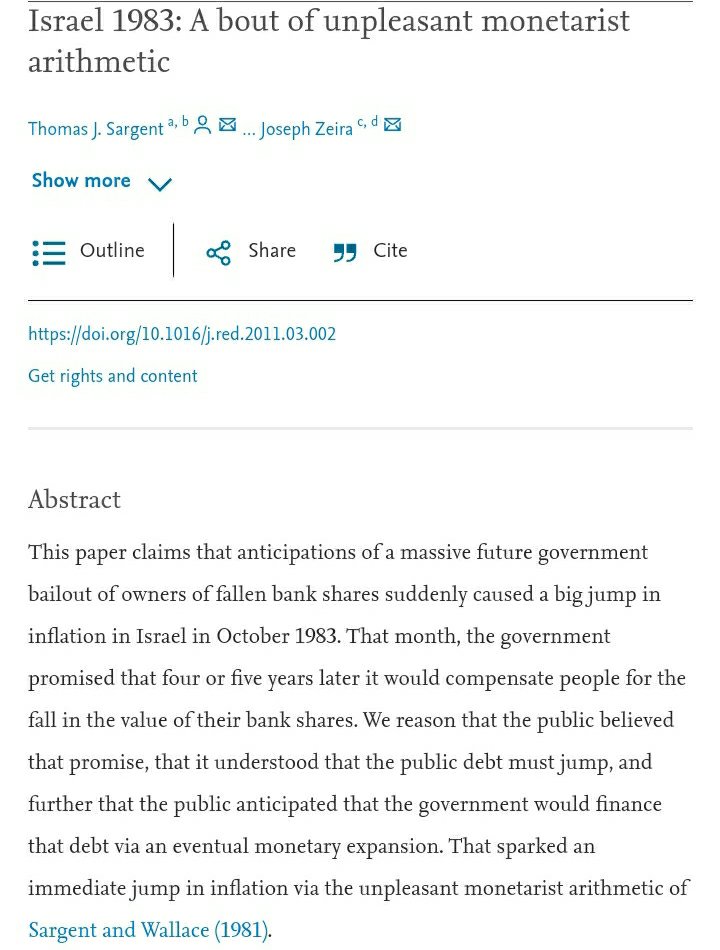
Thomas Sargent pioneered the fiscal theory of the price level by studying both the end of hyper-inflations and moderate inflations
07 Apr 2022 Leave a comment
in budget deficits, business cycles, economic history, fiscal policy, history of economic thought, macroeconomics, monetarism, monetary economics

From Stopping Moderate Inflations: The Methods of Poincaré and Thatcher (1982) by Thomas Sargent
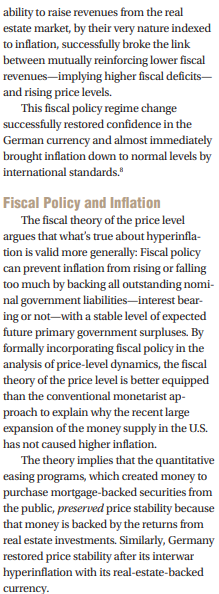
Tutino and Zarazaga on why the fiscal theory of the price level is so compelling! Quantity theory struggles to explain the sudden end of hyperinflations and the failure of previous stabilisation attempts
05 Apr 2022 Leave a comment
in economic history, history of economic thought, macroeconomics, monetarism, monetary economics, unemployment

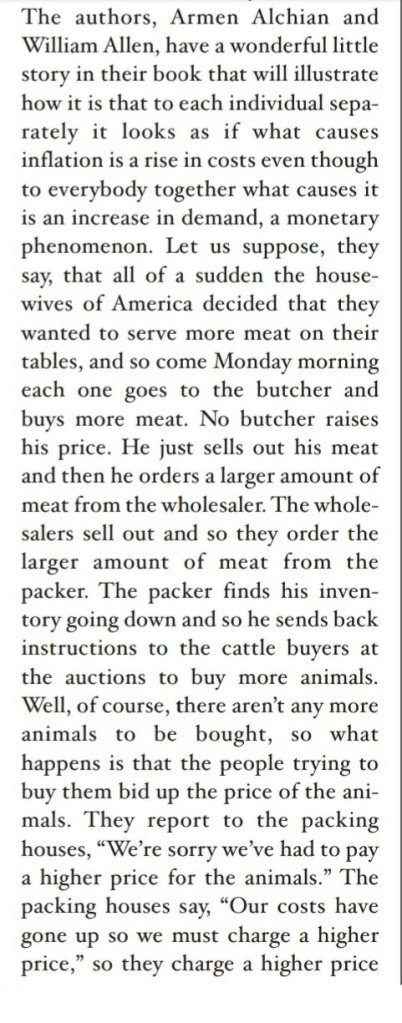
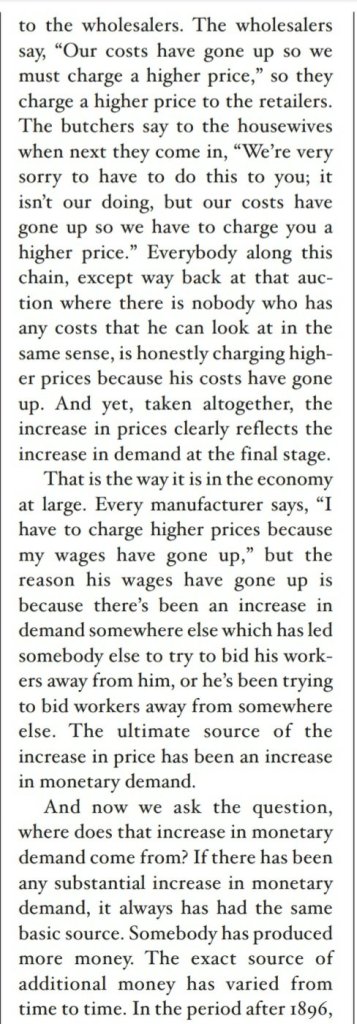
Friedman and the process of inflation
28 Mar 2022 Leave a comment
in Armen Alchian, economic history, macroeconomics, Milton Friedman, monetarism, monetary economics
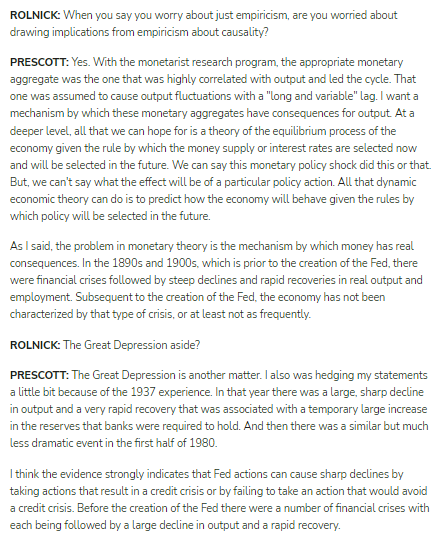
Can the central bank cause a recession?
04 Mar 2022 Leave a comment
in business cycles, economic history, Edward Prescott, financial economics, history of economic thought, macroeconomics, monetary economics
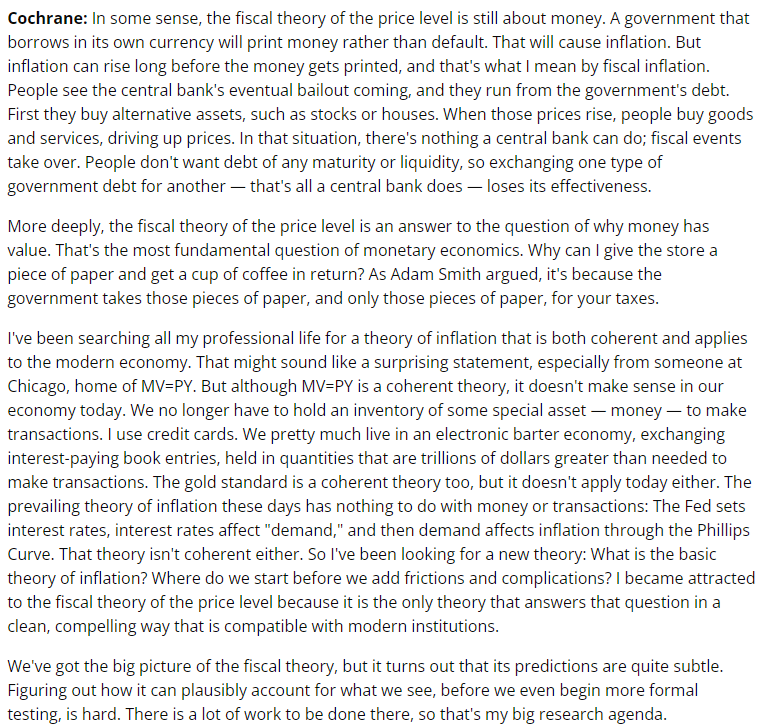
Fiscal theory of the price level = inflation ultimately comes from government debt, as opposed to the central bank printing money
25 Feb 2022 Leave a comment
in Adam Smith, financial economics, fiscal policy, history of economic thought, macroeconomics, monetarism, monetary economics
(QE) — the Fed’s massive purchases of Treasuries and other assets to push down long-term interest rates
24 Feb 2022 Leave a comment
in business cycles, financial economics, macroeconomics, monetary economics
How did Medieval Banking Work?
24 Feb 2022 Leave a comment
in economic history, financial economics, law and economics, macroeconomics, monetary economics, property rights
We wanted to see what happens if you don’t have the usual financial factors in there—not one word about banks, the Federal Reserve, the collapse of Lehman Brothers, et cetera
22 Feb 2022 Leave a comment
in business cycles, Edward Prescott, global financial crisis (GFC), great recession, macroeconomics, monetary economics
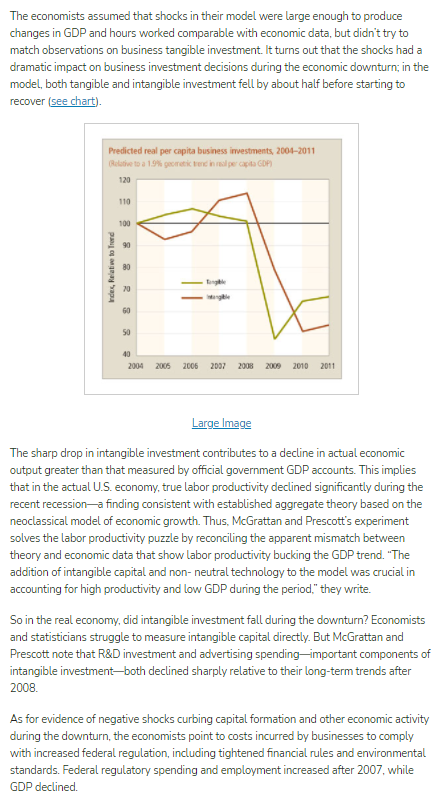
For McGrattan and Prescott, two leading proponents of the use of quantitative, dynamic business cycle modeling to analyze macroeconomic trends, including intangible capital investment in total economic output is the key to making sense of head-scratching countercyclical movements in labor productivity over the past 25 years.
From https://www.minneapolisfed.org/article/2012/unmeasured-investment
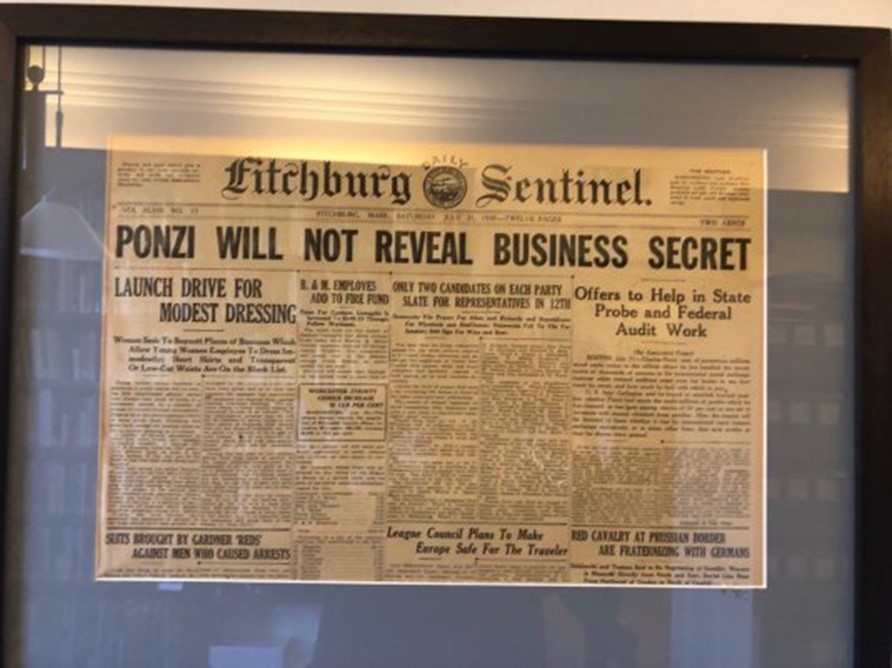
My submission on Crown deposit insurance for finance company Ponzi schemes
21 Feb 2022 Leave a comment
in global financial crisis (GFC), macroeconomics, monetary economics
Selgin on central banks
09 Feb 2022 Leave a comment
in Austrian economics, business cycles, economic history, history of economic thought, law and economics, macroeconomics, monetary economics Tags: monetary policy
 Utopia, you are standing in it!
Recent Comments