A week ago Jay Bhattacharya gave a great talk at the weekly Stanford Classical Liberalism workshop. (Link in case the embed doesn’t work.) He detailed the story of government+media Covid censorship, along with the dramatic injunction in the Missouri v. Biden case. The discovery in that case alone, detailing how the administration used the threat of…
Bhattacharya on Covid censorship
Bhattacharya on Covid censorship
21 Oct 2023 Leave a comment
in health economics Tags: economics of pandemics
New questions about the war
21 Oct 2023 Leave a comment
As Israel’s troops and tanks sit waiting at the border to invade Gaza, I’m starting to wonder if they really will invade. For when I remember that Israel’s avowed aim is to get rid of Hamas, and then think of the options Israel has (I’ve concluded that a ground invasion was the best tactic), I […]
New questions about the war
Upzoning with Strings Attached
21 Oct 2023 Leave a comment
in economics of regulation, income redistribution, Public Choice, rentseeking, urban economics Tags: offsetting behavior, unintended consequences, zoning
The subtitle of this paper is: “Evidence from Seattle’s Affordable Housing Mandate.” Here is the abstract: This paper analyzes the effects of a major municipal residential land use reform on new home construction and developer behavior. We examine Seattle’s Mandatory Housing Affordability (MHA) program, which relaxed zoning regulations while also encouraging affordable housing construction in […]
Upzoning with Strings Attached
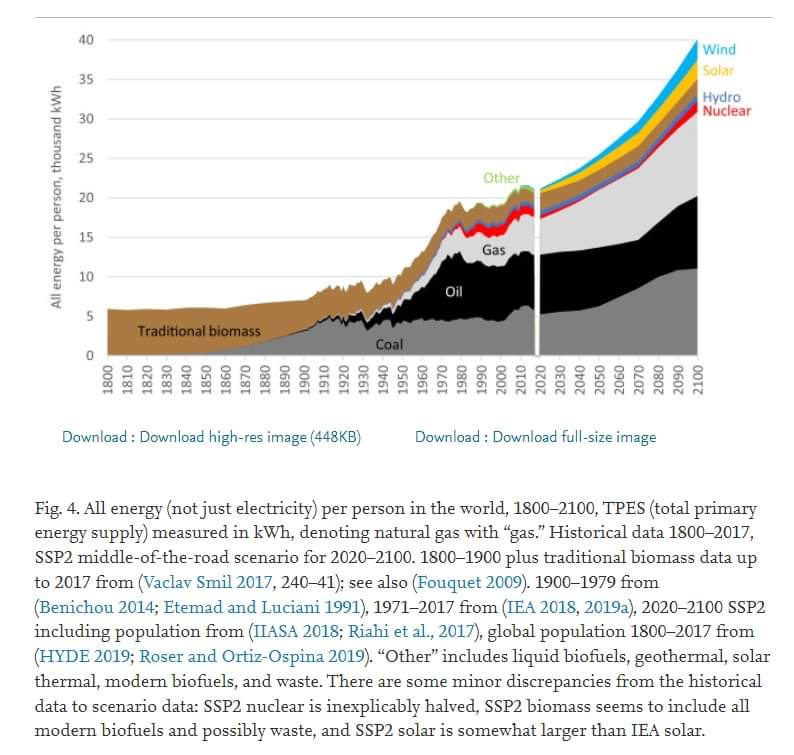
David Friedman on climate change
21 Oct 2023 Leave a comment
in applied price theory, applied welfare economics, David Friedman, development economics, energy economics, environmental economics, global warming, law and economics, property rights
Transition to Poverty: If Wind and Solar Get Any Cheaper, We’ll All Go Broke
21 Oct 2023 Leave a comment
in energy economics, environmental economics, global warming Tags: celebrity technologies, wind power
The grand wind and solar ‘transition’ guarantees households and businesses get to suffer crushing power bills. Or, in cases where the massive subsidies to wind and solar power outfits are collected from taxpayers, rather than from power consumers through their power bills, those bills may be cheaper as a result. But the buck still stops […]
Transition to Poverty: If Wind and Solar Get Any Cheaper, We’ll All Go Broke
The Trump Gag Order Should Be Struck Down
21 Oct 2023 Leave a comment
Below is my column in The Hill on the imposition of a gag order on former President Donald Trump by U.S. District Judge Tanya Chutkan. Despite my long-standing criticism of Trump’s personal attacks on judges and critics, this gag order should be curtailed or struck down on appeal. While the odds tend to favor the lower…
The Trump Gag Order Should Be Struck Down
The Unravelling: High Hopes and Missed Opportunities in Iraq by Emma Sky (2015)
20 Oct 2023 Leave a comment
‘The Coalition promised regime change but instead brought about state collapse.’ (Unnamed Iraqi general quoted on page 101) This is a disappointing book. Emma Sky is mentioned half a dozen time in Thomas E. Ricks’s book The Gamble: General David Petraeus and the American Military Adventure in Iraq, 2006 to 2008. Her story is extraordinary. […]
The Unravelling: High Hopes and Missed Opportunities in Iraq by Emma Sky (2015)
Book recommendations (in no particular order)
20 Oct 2023 Leave a comment
Randomistas: Fighting Poverty with Science by Esther Duflo Rationality: What It Is, Why It Seems Scarce, Why It Matters by Steven Pinker Enlightenment Now: The Case for Reason, Science, Humanism, and Progress by Steven Pinker Everybody Lies: Big Data, New Data, and What the Internet Can Tell Us About Who We Really Are by Seth…
Book recommendations (in no particular order)
The manufacturing sector
20 Oct 2023 Leave a comment

I’ve written a few sceptical posts here over the years about the annual (or so) Technology Investment Network’s (TIN) boosterish reports on the New Zealand tech sector. The overall story was just even close to as upbeat as the reports liked to make out. Yesterday a link to a new TIN report turned up in […]
The manufacturing sector
Jon Haidt on a new book, the silence of university leaders, self-censorship, and America’s loss of confidence in higher education
20 Oct 2023 Leave a comment
in discrimination, economics of education Tags: affirmative action, political correctness, racial discrimination, regressive left, sex discrimination

UPDATE: See a positive review of this new book (as well as a related one by Yacha Mounk) at The Economist. This week, Jon Haidt’s short Substack piece (click on title screenshot below to read it), does four things: he introduces a new book, explains why University leaders remained largely silent (or waited a few […]
Jon Haidt on a new book, the silence of university leaders, self-censorship, and America’s loss of confidence in higher education
NYT “explains” changing headlines about hospital bombings as a result of taking what Hamas says as “news”
20 Oct 2023 Leave a comment

The other day I reproduced the montage of headlines below from The Free Press, a montage showing how New York Times headlines about the Gazan hospital “explosion” changed from day to day. First it was an “Israeli strike” that killed hundreds in the hospital, then just a “strike” (there must have been some doubt then…
NYT “explains” changing headlines about hospital bombings as a result of taking what Hamas says as “news”
The Ultimate Knowledge Problem
20 Oct 2023 Leave a comment
in Austrian economics, F.A. Hayek Tags: economics of central planning
TweetOver at EconLog, Kevin Corcoran has an excellent post refuting a naive-person’s assertion that central planners can acquire all the knowledge they need to successfully ‘plan’ an economy simply by asking people, questionnaire-style, what they want. But there’s an additional point to be made in response to this naive-person’s assertion. The additional point is this:…
The Ultimate Knowledge Problem
David D. Friedman – The Externality problem: Population, Climate, Pandemic
19 Oct 2023 Leave a comment
in applied price theory, applied welfare economics, comparative institutional analysis, constitutional political economy, David Friedman, development economics, economic history, economics of climate change, economics of regulation, energy economics, environmental economics, global warming, history of economic thought, law and economics, liberalism, libertarianism, population economics, property rights, Public Choice
What should be done about the Reserve Bank?
19 Oct 2023 Leave a comment
in business cycles, economic history, economics of bureaucracy, inflation targeting, macroeconomics, monetary economics, politics - New Zealand, Public Choice Tags: monetary policy

Monday’s post was on the important place effective accountability must have when government agencies are given great discretionary power which – as is in the nature of any human institutions – they will at times exercise poorly. My particular focus is on the Reserve Bank, both because it is what I know best, because it […]
What should be done about the Reserve Bank?


Recent Comments