Lee Kuan Yew’s Prediction on Afghanistan in 2009
03 Sep 2021 Leave a comment
in defence economics, development economics, economic history, growth disasters, war and peace Tags: Afghanistan, war against terror
Mustafa Kemal Atatürk I WHO DID WHAT IN WORLD WAR 1?
03 Sep 2021 Leave a comment
in defence economics, war and peace Tags: World War I
The Real (and Growing) Problem with Social Security
02 Sep 2021 Leave a comment

In an ideal world, Americans would have personal retirement accounts, just like workers in Australia, Sweden, Chile, Hong Kong, Israel, Switzerland, and a few dozen other nations.
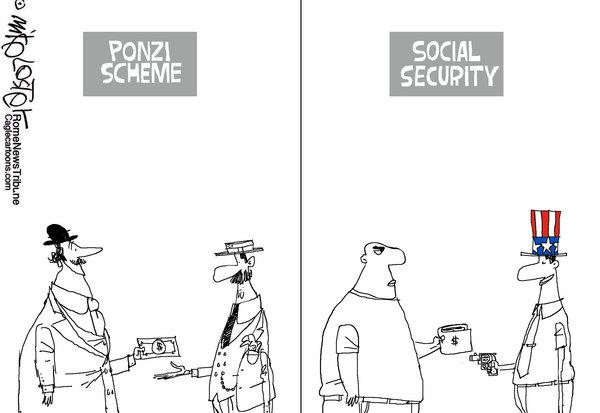 But we’re not in that ideal world. We are forced to participate in a Ponzi Scheme known as Social Security.
By the way, that’s not necessarily a disparaging description. A Ponzi Scheme can work if there are always enough new people in the system to pay off the old people.
But because of demographic changes (increasing lifespans and decreasing birthrates), that’s not what we have in the United States.
And this is why Social Security faces serious long-run problems.
How serious? The Social Security Administration finally released the annual Trustees Report. This document has a wealth of data on the program’s financial condition, and Table VI.G9 is where the rubber meets the…
View original post 361 more words
The Great Escape
02 Sep 2021 Leave a comment
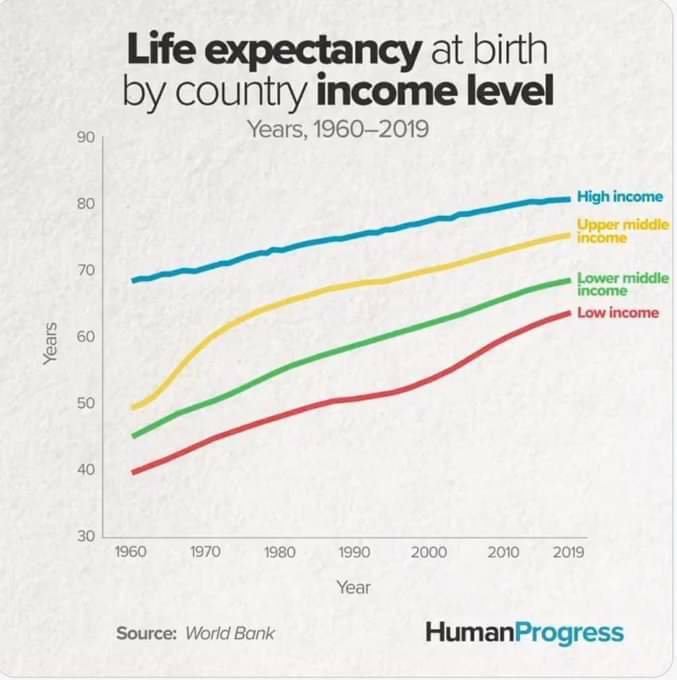
in development economics, economic history, growth disasters, growth miracles, health economics Tags: child mortality, life expectancies, The Great Escape
Afghanistan deserves attention, but don’t lose sight of Iran
02 Sep 2021 Leave a comment

Introduction
While global attention is understandably focused on the turmoil in Afghanistan, another major challenge for US President Joe Biden is likely to be the restoration of the Iran Nuclear Deal/JCPOA (Joint Comprehensive Program of Action). While to begin with the negotiations between Iran and other signatories (the US was part of these indirect talks) to the 2015 JCPOA offered a ray of hope, since June there has been no progress.
Iran’s nuclear program, and its foreign policy in the Middle East (especially its support to proxies), have emerged as the contentious issues between Iran and other signatories to the 2015 JCPOA.
In an important statement, Iran’s supreme leader Ayatollah Ali Khamenei recently said that:
America’s current administration is no different from the previous one, because what it demands from Iran on the nuclear issue is different in words, but the same thing that Trump demanded
After facing flak for…
View original post 547 more words

The Walras-Marshall Divide in Neoclassical Theory, Part II
02 Sep 2021 Leave a comment

In my previous post, which itself followed up an earlier post “General Equilibrium, Partial Equilibrium and Costs,” I laid out the serious difficulties with neoclassical theory in either its Walrasian or Marshallian versions: its exclusive focus on equilibrium states with no plausible explanation of any economic process that leads from disequilibrium to equilibrium.
The Walrasian approach treats general equilibrium as the primary equilibrium concept, because no equilibrium solution in a single market can be isolated from the equilibrium solutions for all other markets. Marshall understood that no single market could be in isolated equilibrium independent of all other markets, but the practical difficulty of framing an analysis of the simultaneous equilibration of all markets made focusing on general equilibrium unappealing to Marshall, who wanted economic analysis to be relevant to the concerns of the public, i.e., policy makers and men of affairs whom he regarded as his primary audience.
View original post 1,552 more words
SkyLab – Maybe the Most Important Space Programs So Far
02 Sep 2021 Leave a comment
in economic history, economics of media and culture Tags: space
Friedrich von Hayek and Dr. Axel Leijonhufvud Part I & II
02 Sep 2021 Leave a comment
in Austrian economics, business cycles, economic history, F.A. Hayek, history of economic thought, macroeconomics, monetary economics, unemployment
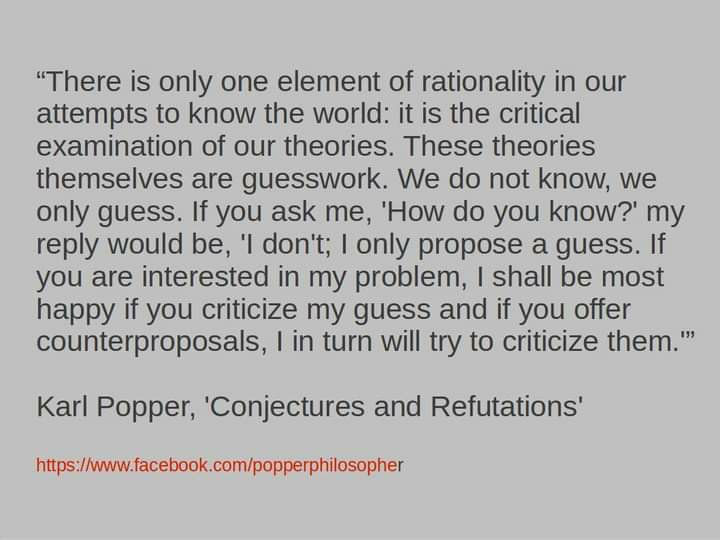
Popper on rationality
02 Sep 2021 Leave a comment
in economics of education, Karl Popper Tags: conjecture and refutation, philosophy of science
Competition and Entrepreneurship Kirzner
02 Sep 2021 Leave a comment
in applied price theory, Austrian economics, economics of information, entrepreneurship, history of economic thought, industrial organisation, Israel Kirzner
xkcd: Earth Temperature Timeline
02 Sep 2021 Leave a comment
in economic history, energy economics, environmental economics, global warming



Recent Comments