Bryan Caplan – The Case Against Education
18 Aug 2021 Leave a comment
in applied price theory, applied welfare economics, economics of education, economics of information, human capital, labour economics, labour supply, occupational choice, personnel economics Tags: adverse selection, asymmetric information, screening, signaling
Indian Insurrection: Thousands of Rural Protesters Revolt Against Threatened Wind Farm
17 Aug 2021 Leave a comment


Another day, another rural community revolts against industrial wind power. This time it’s thousands of Indian villagers fighting back to prevent the destruction of their precious forests and fertile farmlands.
In the absence of massive subsidies, the wind industry would pose no threat, to anyone, anywhere. But, for as long as governments dole out taxpayer and power consumers’ money in the form of endless subsidies, mandates and targets, wind power outfits will continue to ride roughshod over hard-working farmers and their families.
While the charge NIMBY is often levelled by wind industry rent-seekers at those protesting against the prospect of having 260m high monsters speared into their backyards, in STT’s view there is no place for industrial wind turbines, anywhere, ever. Our argument starts with the unassailable fact that weather-dependent wind power simply cannot deliver meaningful electricity on demand; never has, never will. Accordingly, wind power is, and will always…
View original post 1,602 more words
Pascal’s Wager: Crash Course Philosophy #15
17 Aug 2021 Leave a comment
in economics of education, economics of media and culture, economics of religion Tags: conjecture and refutation, Freedom of religion, philosophy of science
Why It’s OK to Want to Be Rich Jason Brennan
17 Aug 2021 Leave a comment
in applied price theory, applied welfare economics, comparative institutional analysis, constitutional political economy, development economics, economic history, economics of religion, entrepreneurship, growth disasters, growth miracles, history of economic thought, human capital, industrial organisation, labour economics, labour supply, occupational choice, poverty and inequality, survivor principle Tags: top 1%
The Age of Capital: 1848 to 1875 by Eric Hobsbawm (1975)
16 Aug 2021 Leave a comment

The astonishing world-wide expansion of capitalism in the third quarter of the [nineteenth] century…
(The Age of Capital, page 147)
Eric Hobsbawn (1917 to 2012) was one of Britain’s leading historians. A lifelong Marxist, his most famous books are the trilogy covering what he himself termed ‘the long 19th century’, i.e. from the outbreak of the French Revolution in 1789 to the Great War in 1914. These three books are:
- The Age of Revolution: Europe 1789–1848 (1962)
- The Age of Capital: 1848–1875 (1975)
- The Age of Empire: 1875–1914 (1987)
To which he later appended his account of the ‘short’ 20th century, The Age of Extremes: The Short Twentieth Century, 1914 to 1991 (1994).
The Age of Capital: 1848 to 1875
The Age of Capital: 1848 to 1875 does what it says on the tin and provides a dazzlingly panoramic overview of the full economic, political and social events right across…
View original post 6,929 more words
Real Energy Solution: Intermittent Wind & Solar No Match For Small Nuclear Reactors
16 Aug 2021 Leave a comment

200 small nuclear reactors are presently powering 160 ships and submarines all around the world, and have been for decades.
What’s on foot is a move to bring those reactors onshore and use them to shore up power grids being wrecked by the chaotic intermittency of wind and solar.
STT promotes nuclear power because it works: safe, affordable, reliable and the perfect foil for those worried about human-generated carbon dioxide gas – because it doesn’t generate any, while generating power on demand, irrespective of the weather – unlike the forever unreliables: wind and solar.
One of the feeble ‘arguments’ against it, is that nuclear power plants are of such vast scale that they take longer to build than the pyramids of Giza, and cost twice as much. SMR technology takes the sting out of that case.
And, as Walter Starck outlines below, SMRs provide the perfect opportunity to reintroduce our…
View original post 1,333 more words
The Demise of Bretton Woods Fifty Years On
16 Aug 2021 Leave a comment

Today, Sunday, August 15, 2021, marks the 50th anniversary of the closing of the gold window at the US Treasury, at which a small set of privileged entities were at least legally entitled to demand redemption of dollar claims issued by the US government at the official gold price of $35 an ounce. (In 1971, as in 2021, August 15 fell on a Sunday.) When I started blogging in July 2011, I wrote one of my early posts about the 40th anniversary of that inauspicious event. My attention in that post was directed more at the horrific consequences of Nixon’s decision to combine a freeze on wages and price with the closing of the gold window, which was clearly far more damaging than the largely symbolic effect of closing the gold window. I am also re-upping my original post with some further comments, but in this post, my attention…
View original post 3,913 more words
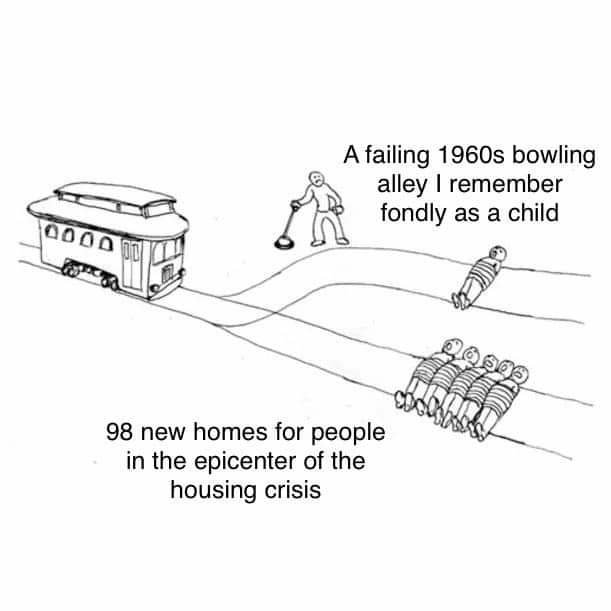
NIMBYISM to a tee
16 Aug 2021 Leave a comment
in economics of regulation, law and economics, Marxist economics, politics - Australia, politics - New Zealand, politics - USA, property rights, Public Choice, rentseeking, urban economics Tags: housing affordability, land supply


Recent Comments