Crossroads of Freedom: Antietam, the battle the changed the course of the American Civil War by James M. McPherson (2002)
02 Aug 2021 Leave a comment

The 160 pages or so of this tidy little book are like a pendant to ‘Battle Cry of Freedom’, McPherson’s vast 860-page history of the Civil War Era, which I have reviewed at length.
Crossroads of Freedom is part of a series called Pivotal Moments in American History. In his introduction McPherson says that, as you might expect, there were numerous important moments in the American Civil War, before going on to explain why he thinks the Battle of Antietam on September 17, 1862 justifies his focus.
Why Antietam?
Closest the South ever came to victory In a nutshell it’s because Antietam was the closest the South came to taking Washington DC, an event which would have not just demoralised the North and possibly fatally weakened its army. Far more importantly, it would have a decisive step toward achieving the South’s primary war aim which was Recognition by the International…
View original post 4,544 more words
Some ‘Transition’: German Wind Power Output Plummets 20%: Coal-Fired Power Generation Jumps 38%
02 Aug 2021 Leave a comment

 What’s really powering Germany …
Germany’s 30,000 wind turbines continue to disappoint those who reckon ‘coal is dead’. In the first half of 2021, wind power output plummeted by more than 20%, whereas Germany’s coal-fired power generators increased output by a whopping 38% over the same period.
So much for Germany’s ‘inevitable transition’ to an all wind and sun powered future – aka the ‘Energiewende’.
It’s almost like there’s some kind of conspiracy at work, with an outbreak of dead calm and cloudy weather all across Germany.
Pierre Gosselin reports on the latest lament from Germany’s wind and solar worshippers.
German Wind Power Production Plummets 20% In First Half 2021… Coal Power Consumption Jumps 38%!
No Tricks Zone
Pierre Gosselin
27 July 2021
What would we do without coal?
The first half of 2021 saw a massive 20% drop in wind power production in Germany … while “coal power saw…
View original post 245 more words
Polls results won’t deter Labour from its reform programme – but they shouldn’t unnerve the Nats, either
02 Aug 2021 Leave a comment

Latest opinion polling has created a stir among the political cognoscenti. On one side, ACT’s rise is being seen as a big problem for National. From another, Labour’s fall by 9.7 points from the previous poll points to sharp disillusion with the Ardern government.
TV3’s AM Show told viewers ACT’s four-point rise to 11 % constitutes “soaring popularity”. Well, not quite.
Then there seemed to be a general judgement that Judith Collins’ fall below ACT leader David Seymour’s rating signalled her imminent demise as National leader.
In reality, the Newshub Reid Research poll’s findings, while recording sharp shifts from its previous sampling, weren’t much different from the Colmar Brunton post-Budget poll which recorded Labour down to 46% from its previous highs in the fifties.
View original post 636 more words
August 1, 1714: The Elector of Hanover becomes King George I of Great Britain and Ireland. Part I.
02 Aug 2021 Leave a comment

George I (George Louis; German: Georg Ludwig; May 28, 1660 – June 11, 1727) was King of Great Britain and Ireland from August 1, 1714 and ruler of the Duchy and Electorate of Brunswick-Lüneburg (Hanover) within the Holy Roman Empire from January 23, 1698 until his death in 1727. He was the first British monarch of the House of Hanover.
George was born in the city of Hanover in the Duchy of Brunswick-Lüneburg in the Holy Roman Empire. He was the eldest son of Ernst August, Duke of Brunswick-Lüneburg, and his wife, Sophia of the Palatinate. Sophia was the granddaughter of King James I-VI of England, Scotland and Ireland through her mother, Elizabeth Stuart, Queen of Bohemia.
For the first year of his life, George was the only heir to the German territories of his father and three childless uncles. George’s brother, Friedrich August, was born in 1661, and the…
View original post 775 more words
Why did Sweden Support the Vietcong?
02 Aug 2021 Leave a comment
in defence economics, International law, laws of war, liberalism, libertarianism, Marxist economics, war and peace Tags: Vietnam war
Should Congress Raise the Minimum Wage?: A Debate with Lee Ohanian and Daron Acemoglu
02 Aug 2021 Leave a comment
in applied price theory, applied welfare economics, labour economics, labour supply, minimum wage, poverty and inequality, unemployment
Large Rival Monkey Gangs Fight in Thailand
01 Aug 2021 Leave a comment

This took place in front of a Buddhist temple in Lop Buri, Thailand and a similar incident took place in the city last year. While monkey gang fights in the Lopburi are nothing new, the number of the animals is massive. This largely due to reduced tourism resulting from the coronavirus outbreak in which tourists typically feed the monkeys.
Image byAndre MoutonfromPixabay
Solar and wind growth failing to outpace demand growth (except during an economic crisis)
01 Aug 2021 Leave a comment

The good news keeps on coming: Belgium is worldwide in the top 15 of “Wind and Solar countries”. More specifically, we are at 9th place having a share of 20% of our electricity production from solar and wind in 2020:
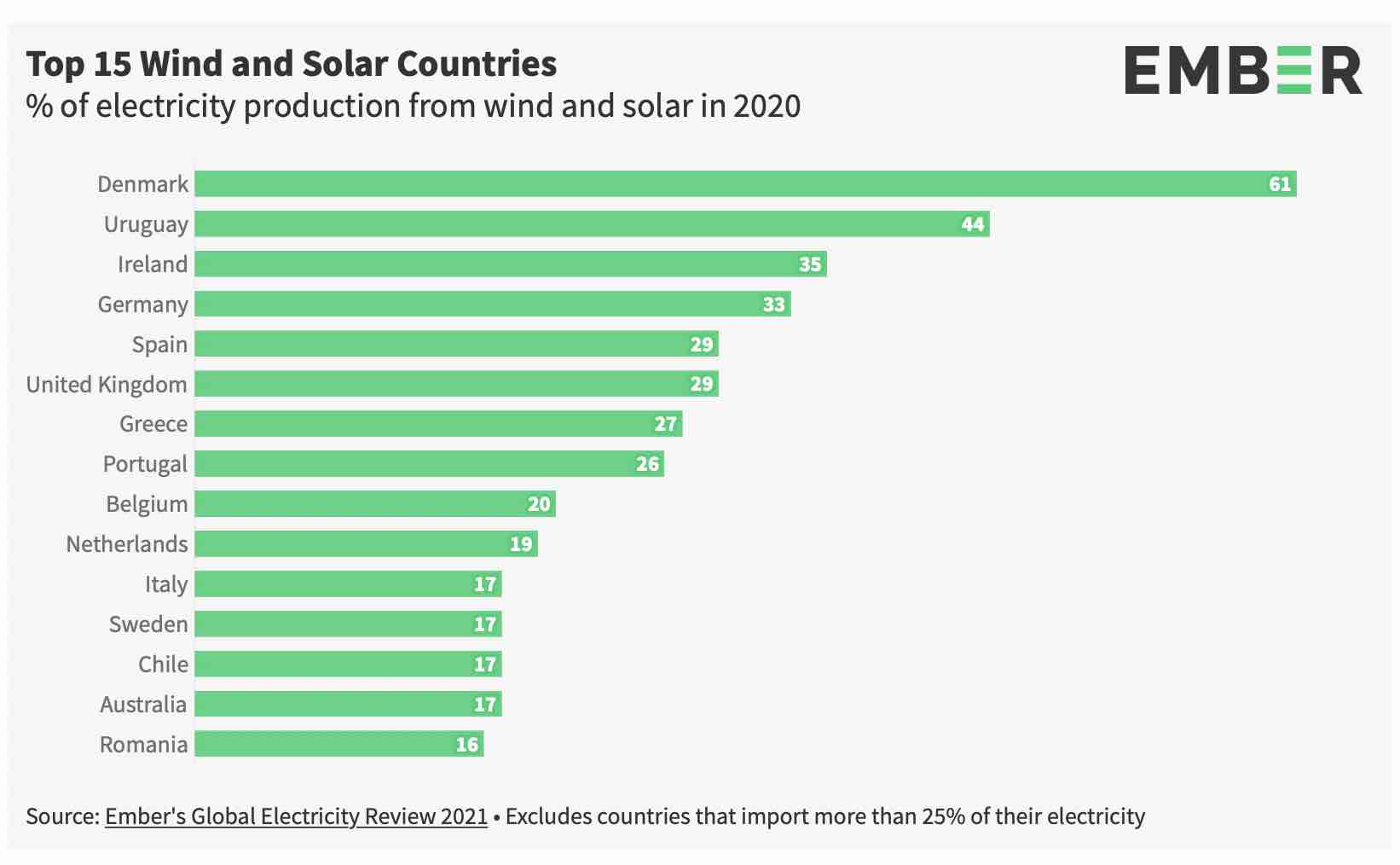
It didn’t end there. China, the EU-27 and the United States are responsible for more than two-thirds of global generation, Vietnam went from 0 to 14 TWh in just 3 years, Chile and South Korea have quadrupled their wind and solar generation since 2015, and many other countries (Brazil, China, India, Mexico, Turkey and Uruguay) have tripled it. Also, many countries now get around a tenth of their electricity, which is the global average for electricity generation from solar and wind.
Of course, the transition to solar and wind is going to be cheap. According the article, the cost for solar and wind are at a tipping point…
View original post 766 more words
The Birth of Experimental Science
01 Aug 2021 Leave a comment

by Tim Harding B.Sc. B.A.
(An edited version of this essay was published in The Skeptic magazine, June 2016, Vol 36, No. 2, under the title ‘Out of the Dark’. A talk based on this essay was also presented to the 2016 Australian Skeptics National Convention in Melbourne).
To the ancient Greeks, science was simply the knowledge of nature. The acquisition of such knowledge was theoretical rather than experimental. Logic and reason were applied to observations of nature in attempts to discover the underlying principles influencing phenomena.
After the Dark Ages, the revival of classical logic and reason in Western Europe was highly significant to the development of universities and subsequent intellectual progress. It was also a precursor to the development of empirical scientific methods in the thirteenth century, which I think were even more important because of the later practical benefits of science to humanity. The two most influential…
View original post 1,926 more words
Plans Are Doomed to Fail – The Battle of Galicia I THE GREAT WAR Week 6
01 Aug 2021 Leave a comment
in defence economics, war and peace Tags: World War I
Battery ‘Bombs’: More Giant Renewable Energy Batteries Explode in Toxic Fireballs
31 Jul 2021 Leave a comment

‘Bombs’ are designed to store and quickly release copious amounts of energy, so are the mega-batteries said to save wind and solar from their hopeless intermittency.
The notion is that giant lithium-ion batteries will quell the power delivery chaos that comes with attempting to rely wholly weather-dependent wind power and wholly sunshine-dependent solar power; thereby bringing stability and security to plenty a power grid teetering on the brink of collapse, all the consequence of our “inevitable transition” away from reliable and dependable power generation sources, like coal and gas.
But there’s nothing ‘stable and secure’ about lithium batteries.
As Samsung mobile phone owners are painfully aware, lithium batteries have a horrifying habit of spontaneous ignition. STT has fond memories of watching fellow airline passengers being berated for having a Samsung 7 in their pocket.
And there have been plenty of incidents where the lithium batteries in Tesla’s electric cars have…
View original post 949 more words


Recent Comments