Edward Glaeser & Paul Romer on Rapid Urbanization
06 Jul 2021 Leave a comment
in applied price theory, development economics, economic history, economics of bureaucracy, history of economic thought, human capital, industrial organisation, labour economics, labour supply, Public Choice, transport economics, urban economics
What Does “Keynesian” Mean?
05 Jul 2021 Leave a comment

Last week Simon Wren-Lewis wrote a really interesting post on his blog trying to find the right labels with which to identify macroeconomists. Simon, rather disarmingly, starts by admitting the ultimate futility of assigning people labels; reality is just too complicated to conform to the labels that we invent to help ourselves make sense of reality. A good label can provide us with a handle with which to gain a better grasp on a messy set of observations, but it is not the reality. And if you come up with one label, I may counter with a different one. Who’s to say which label is better?
At any rate, as I read through Simon’s post I found myself alternately nodding my head in agreement and shaking my head in disagreement. So staying in the spirit of fun in which Simon wrote his post, I will provide a commentary on his…
View original post 1,321 more words
Microfoundations (aka Macroeconomic Reductionism) Redux
05 Jul 2021 Leave a comment
In two recent blog posts (here and here), Simon Wren-Lewis wrote sensibly about microfoundations. Though triggered by Wren-Lewis’s posts, the following comments are not intended as criticisms of him, though I think he does give microfoundations (as they are now understood) too much credit. Rather, my criticism is aimed at the way microfoundations have come to be used to restrict the kind of macroeconomic explanations and models that are up for consideration among working macroeconomists. I have written about microfoundations before on this blog (here and here) and some, if not most, of what I am going to say may be repetitive, but obviously the misconceptions associated with what Wren-Lewis calls the “microfoundations project” are not going to be dispelled by a couple of blog posts, so a little repetitiveness may not be such a bad thing. Jim Buchanan liked to quote the following passage from…
View original post 2,609 more words
The Supreme Court ruling in Cherry/Miller (No.2), and the power of parliament
05 Jul 2021 Leave a comment

 This week’s Supreme Court judgment against Boris Johnson on parliament’s prorogation has shaken British politics and will be looked back on as a landmark case. Yet at the same time, Meg Russell argues, it simply reinforces the core principle of parliament’s centrality in our constitution. There has long been a myth of executive-dominance in the British system. Perhaps after this case, the fact that the government gains its power and authority from parliament will be better recognised – by those both inside and outside the system.
The Supreme Court’s judgment in the prorogation case was damning. Short of deciding that Boris Johnson had misled the Queen (which would be difficult to know, given private conversations) the court issued the strongest possible condemnation on all counts. The government had argued that prorogation was non-justiciable: i.e. not a matter in which the courts could get involved. The justices instead ruled it justiciable…
View original post 1,251 more words
Is the United States Defined by 1619 or 1776?
05 Jul 2021 Leave a comment

Since this is America’s Independence Day, I’m going to continue my tradition (see 2010, 2011, 2012, 2013, 2014, 2015, 2016, 2017, 2018, 2019, and 2020) of authoring a July 4-themed column.
What will make this year special, though, is that we’re going to tackle the heavy topic of whether the United States lives up to its own ideals.
Two years ago, the New York Times unveiled the “1619 Project,” which largely argues that slavery and racism are part of the nation’s DNA. The NYT states that the project “aims to reframe the country’s history by placing the consequences of slavery…at the very center of our national narrative.”
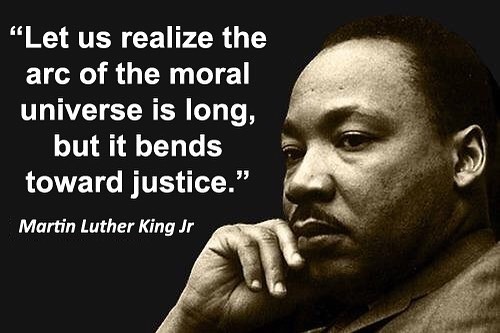 As a libertarian, I don’t believe our government is good and pure today, and I also don’t believe it was good and pure in the past. So I have…
View original post 955 more words
Waititi is championing a Treaty-based system of government – and we shouldn’t be surprised that democracy is not the objective
05 Jul 2021 Leave a comment

Democracy means government by the people, or a form of government in which the supreme power is vested in the people and exercised directly by them or by their elected agents under a free electoral system.
It is a state of society characterised by formal equality of rights and privileges.
And (in this definition, at least) it features
… the absence of hereditary or arbitrary class distinctions or privileges
Right there we can see why democracy might be problematic for Māori Party co-leader Rawiri Waititi, who would have surprised nobody when he outlined his vision for a ‘tiriti-centric Aotearoa’ where the majority doesn’t rule over Māori
In other words, he wants Maori to be politically privileged.
When he said this, he drew attention to a reality which Prime Minister Jacinda Ardern and her ministers won’t publicly acknowledge – that our democracy is being gradually debilitated by measures her…
View original post 622 more words
The End of Economic Growth? Unintended Consequences of a Declining Population
05 Jul 2021 Leave a comment
in applied price theory, applied welfare economics, economic growth, economic history, entrepreneurship, human capital, labour economics, labour supply, macroeconomics, population economics Tags: endogenous growth theory
A review on ‘The Friedman-Lucas transition in macroeconomics’
05 Jul 2021 Leave a comment

‘The book aims to develop what the author labels a “structuralist” approach to bring
into light the specificities of Robert Lucas’s methodology, especially in comparison to
the one argued and also applied by his predecessor, Milton Friedman. Accordingly, the book belongs to the field of methodology as well as to the history of economic analysis.’
The full text of the review is available here, on the page of The European Journal of the History of Economic Thought.


ACT MP Mark Cameron’s legislation is drawn from the “biscuit tin”
05 Jul 2021 Leave a comment
in economics of bureaucracy, economics of regulation, environmental economics, industrial organisation, politics - New Zealand, property rights, Public Choice
Tirole on applying lessons from modern economics to global health procurement.
04 Jul 2021 Leave a comment
in applied price theory, health economics, industrial organisation
Government Intervention and Unintended Consequences
04 Jul 2021 Leave a comment
Most people say the key feature of capitalism is competition. Hard to argue with that characterization, but I would go one step further and say that it is one of the consequences of competition – “creative destruction” – that best captures why free markets make it possible for entrepreneurs to deliver mass prosperity.
But what’s the key feature of government? Is it waste? Dependency? Corruption?
Those are all good answers, but perhaps “unintended consequences” should be first on the list. Courtesy of Reason, here are three examples.
I’ve previously written about both ethanol subsidies and so-called employment protection legislation, two of the three examples were already familiar to me.
I wasn’t aware, however, that businesses resorted to big concrete edifices to get around Vermont’s billboard ban (though I have read, in a classic case of baptists and bootleggers, that big…
View original post 108 more words
Alchian and Demsetz. Theory of the firm. Production, Information Costs, and Economic Organization
03 Jul 2021 Leave a comment

Sometimes the moment a renowned economist passes away is the day when somebody brings your attention to a particular aspect of his writings, and this happened to me about Prof. Demsetz and his paper (1) “Production, information costs and economic organization”, (written with Alchian in 1973).
They pose two questions:
- What drives nongovernmental organizations to do their specialized activities within the firm or across markets, and
- How do they structure their internal gears.
Thinking of fiat, authority or disciplinary action as a mechanism is a delusion for them. Firms don`t have these assets more than people may have in a contract relationship. Internally and externally they can punish others withholding additional business or seeking compensation in courts; long-term relationships don´t make firms either, as they exist between different players.
Let`s follow their proposals step by step.
1.- Why does the firm exist.
View original post 1,603 more words



Recent Comments