
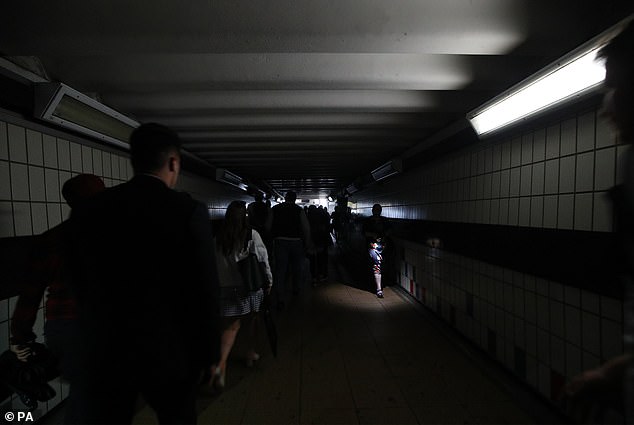
No country has ever powered itself entirely with wind and solar power; no country ever will. In Britain, the threat of blackouts now looms every time the wind drops off, thanks to an overreliance on unreliable wind power.
Back in August 2019 we reported on a mass blackout that struck Britain, when an offshore wind farm decided to down tools: Blackout Nation: Wind Power Output Collapse Leaves Millions of Brits Totally Powerless
To say that Britain’s once reliable power grid is under threat, is mastery in understatement. And, as Paul Homewood reports, things can only get worse from here.
Wind slump risks blackouts as Britain goes ‘green’
Not a Lot of People Know That
Paul Homewood
24 May 2021
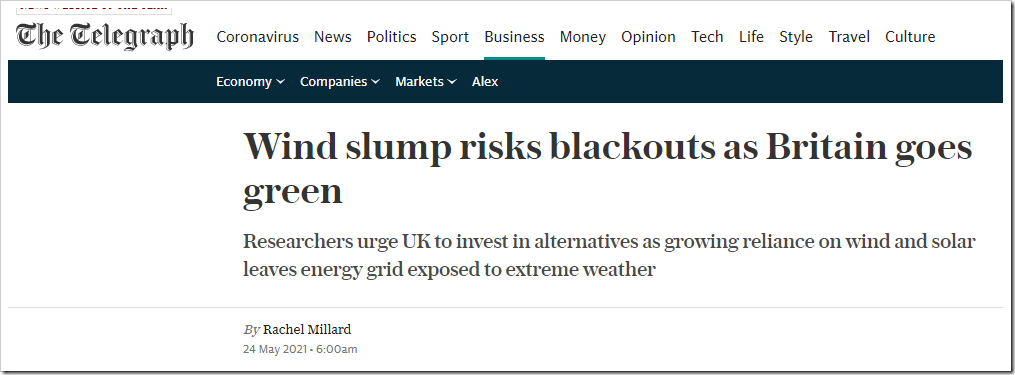
Wind Slumps risks Blackouts as Britain Goes Green
The Telegraph
Rachel Millard
24 May 2021
Prolonged periods of low wind and solar power could trigger blackouts as Britain races to ditch fossil…
View original post 298 more words


 Credit: planetsave.com

Recent Comments