Catastrophe Denied: The Science of the Skeptics
12 Nov 2020 Leave a comment
in energy economics, environmental economics, global warming
Tollison on Smith and corporate governance
12 Nov 2020 Leave a comment
in Adam Smith, comparative institutional analysis, development economics, economic history, economics of bureaucracy, economics of regulation, history of economic thought, industrial organisation, law and economics, managerial economics, market efficiency, organisational economics, property rights, Public Choice, rentseeking, survivor principle, theory of the firm Tags: corporate governance
Rolls-Royce to create 6,000 UK jobs to build 16 mini nuclear power stations
11 Nov 2020 Leave a comment

 SMR transporter
RR has also linked up with American and Czech nuclear firms with a view to developing the international market. Hard to see how the government can get anywhere near its ‘net zero’ electricity targets without this technology. They keep saying ‘build back better’ so here’s an obvious chance to do that, as existing UK nuclear is being retired.
– – –
A consortium led by the engine maker is hoping to secure a further £217m of funding from the government for the project, says Sky News.
A group led by Rolls-Royce has pledged to create 6,000 regional UK jobs within the next five years under plans to build 16 mini nuclear power stations.
The consortium said the jobs would help support the government’s “levelling up” agenda, with up to 80% of the power station components set to be made in factories across the Midlands and the north…
View original post 175 more words
Hour of Power: $2 Billion Spent on Solar Panels to ‘Power’ State With Sunshine for 60 Minutes
11 Nov 2020 Leave a comment

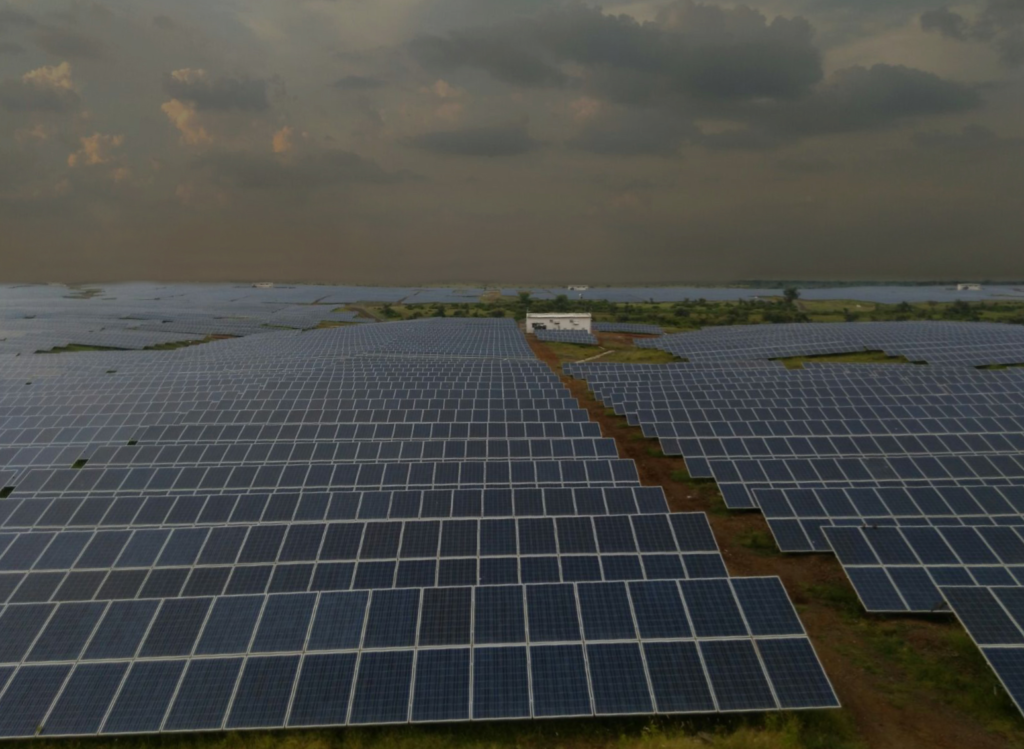 South Australians cross their fingers & hope for power tomorrow…
In the wacko wonderland of South Australia, a brief burst of sunshine managed to ‘power’ the economic backwater for a staggering 60 minutes. SA is venerated as Australia’s Wind and Solar capital; and the renewables cult is heralding this, apparently, momentous event as their ‘Hour of Power’.
Their childish cheering, ignores the fact that – thanks to an obsession with heavily subsidised and chaotically intermittent wind and solar – South Australians suffer the world’s highest retail power prices, the ignominy of suffering the country’s only statewide blackout and – as a consequence of both – the rapid decline in mineral processing, manufacturing and other energy hungry businesses.
Those trumpeting 60 minutes of solar power as the future, might well consider the other 23 hours of the day and, particularly, that rather expansive period between sundown and sunup, when in South…
View original post 1,023 more words

Robert Trivers: Parental Investment, Reciprocal Altruism, Self-Deception
11 Nov 2020 Leave a comment
in economics of education, health economics Tags: evolutionary biology, evolutionary psychology
Shredded: After 30 Years Wind & Solar ‘Industries’ Still Can’t Compete With Nuclear, Coal or Gas
10 Nov 2020 Leave a comment

Back in 1983 the American Wind Industry Association claimed that solar and wind would be “competitive and self-supporting on a national level by the end of the decade if assisted by tax credits and augmented by federally sponsored R&D”. That was 36 years ago. And there was no lack of assistance in the form of tax credits and federally sponsored R&D, along with a whole bunch of other punitive mandates and targets designed to cripple conventional generators and favour chaotically intermittent wind and solar.
Now, as then, claims from renewable energy rent seekers that wind and solar are truly competitive with nuclear, coal or gas evaporate the instant policymakers start talking about removing subsidies to wind and solar.
With their 40th birthdays approaching, the wind and solar ‘industries’ are a pair of perpetual infants who – like Peter Pan – are determined to never grow up.
We’ll hand over…
View original post 1,730 more words
November 9, 1918: Abdication of Wilhelm II, German Emperor and King of Prussia.
10 Nov 2020 Leave a comment

Wilhelm II (Friedrich Wilhelm Viktor Albert; January 27, 1859 – June 4, 1941) was the last German Emperor and King of Prussia, ruling the German Empire and the Kingdom of Prussia from June 15, 1888 to his abdication November 9, 1918. He was the eldest grandchild of Queen Victoria of the United Kingdom of Great Britain and Ireland and related to many monarchs and princes of Europe, most notably King George V of the United Kingdom and Emperor Nicholas II of Russia.
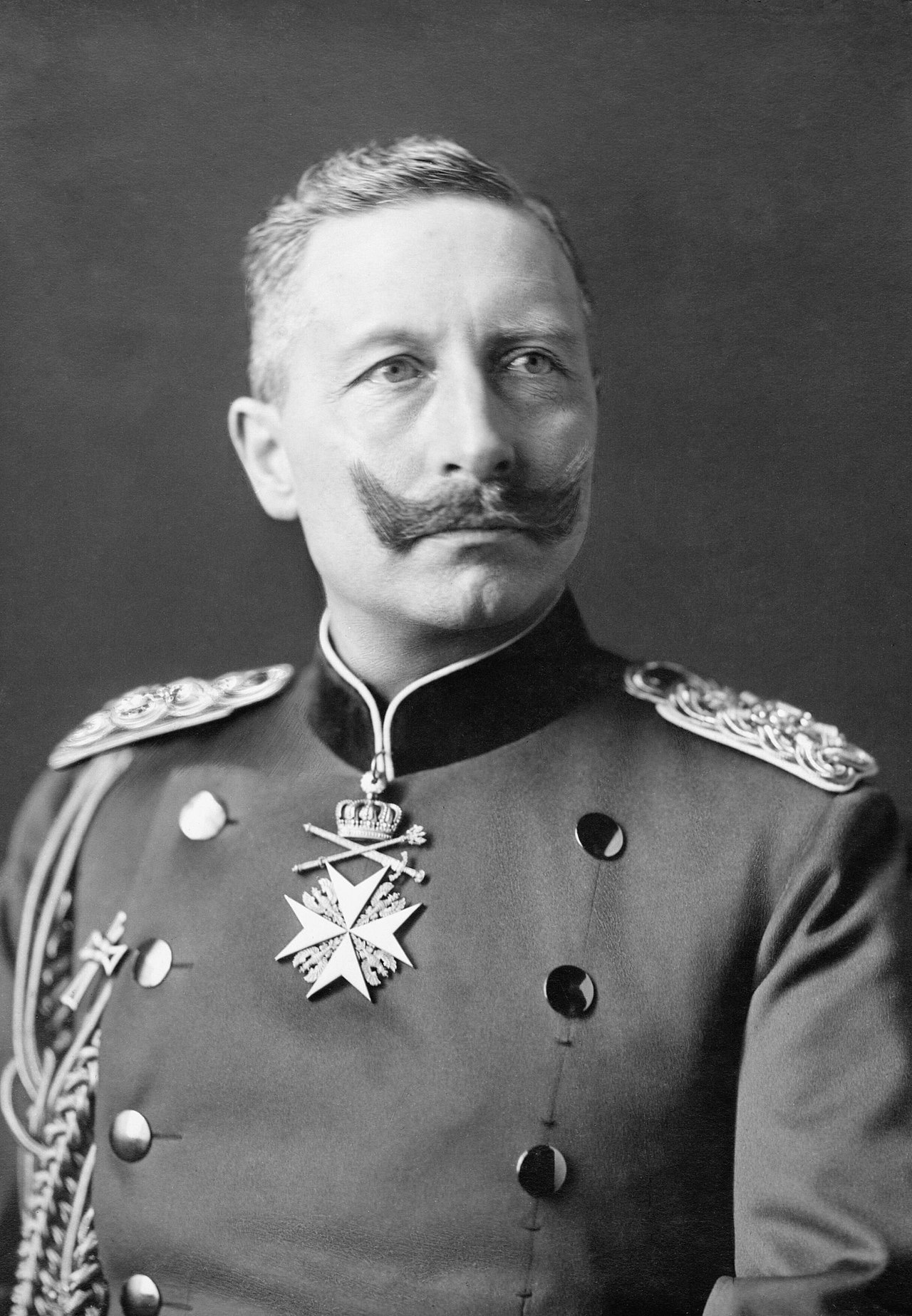
Wilhelm was born at the Crown Prince’s Palace, Berlin, to Prince Friedrich-Wilhelm of Prussia (the future Friedrich III) and his wife, Victoria, Princess Royal, the eldest daughter of Britain’s Queen Victoria and Prince Albert of Saxe-Coburg-Gotha.
At the time of his birth, his great-uncle Friedrich-Wilhelm IV was king of Prussia, and his grandfather and namesake Wilhelm was acting as Regent. He was the first grandchild of Queen Victoria and…
View original post 867 more words
Mikhaila Peterson Podcast #27 – Bjørn Lomborg: Climate Change Not Climate Panic
10 Nov 2020 Leave a comment
in applied welfare economics, energy economics, environmental economics, global warming, politics - Australia, politics - New Zealand, politics - USA Tags: climate alarmists
Milton Friedman on Minimum Wage
10 Nov 2020 Leave a comment
in applied price theory, comparative institutional analysis, discrimination, economic history, economics of education, history of economic thought, human capital, labour economics, labour supply, Milton Friedman, minimum wage, politics - USA, poverty and inequality, Public Choice, unemployment Tags: offsetting behaviour, racial discrimination, The fatal conceit, unintended consequences
Andrew Sullivan on campus extremism
09 Nov 2020 Leave a comment

When I put up one of my frequent posts about the ideological follies on American campuses—and yes, these often involve the Left—I’m sometimes told that these follies are irrelevant, and I should pay them no attention. It’s only a fringe element, people say, and the students will grow out of their Wokeness when they graduate. (Another criticism, along the lines of “Why don’t you go after Trump instead?”, is not worth answering today.)
My response has been that campus extremism may involve only a minority of students, but it’s a vocal minority, and that minority is the group that will take over—and has taken over—Leftist politics and media, as well as institutions like the schools themselves. (Campus administrators and professors are about as Leftist a group as you’ll find in “regular” jobs.)
Now I count myself among the Left, too; I’m referring here to Woke, identity-politics Left in which the…
View original post 1,229 more words
Andrew Sullivan on Trump’s appeal, Trump’s legacy, and the electoral repudiation of Wokeism
09 Nov 2020 Leave a comment
There’s been some argument around these parts about whether Wokeism will increase or decrease when Trump is gone. On the “increase”, side, Biden is seen as an enabler of Wokeism, supposedly instantiated in his increasing leaning toward the Left, and in the fact that now the “progressive” left now sees a big opportunity to advance its program. (We’ll ignore the Senate for the time being.)
On the “decrease” side, one could argue that Wokeism was aggravated by Trump’s racism and the ascendancy of Republicans, and will calm down after Trump leaves. Some have conjectured, too, that Wokeism is exacerbated by the pandemic: people with not a lot to do can nurture and express their grievances.
My own view is that Wokeism is not going away any time soon, for the fear of being labeled a bigot—one of the main motivation for the excesses of Leftism and identity politics—is too deeply…
View original post 1,702 more words
John Cochrane at talk at the ECB Conference on Monetary Policy
09 Nov 2020 Leave a comment
in budget deficits, business cycles, currency unions, economic growth, Euro crisis, fiscal policy, global financial crisis (GFC), great recession, inflation targeting, macroeconomics, monetary economics Tags: monetary policy


Recent Comments